Other PVC Plastic Strips
CN → US| HS Code | Tariff Rate | Origin | Destination | Doc |
|---|---|---|---|---|
| 3919102055 | 40.8% | CN | US | Official Doc |
| 3926909989 | 22.8% | CN | US | Official Doc |
| 3926909905 | 22.8% | CN | US | Official Doc |
| 4811594040 | 35.0% | CN | US | Official Doc |
Product Images


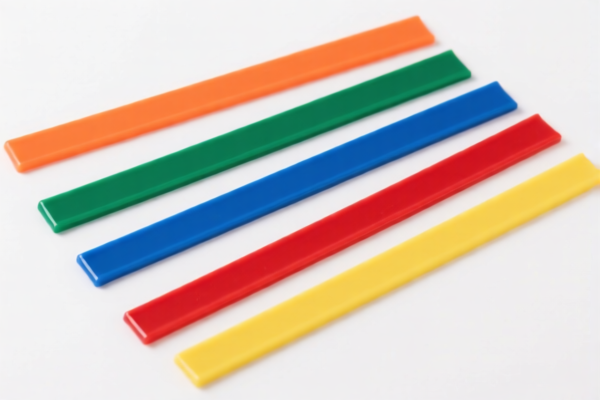
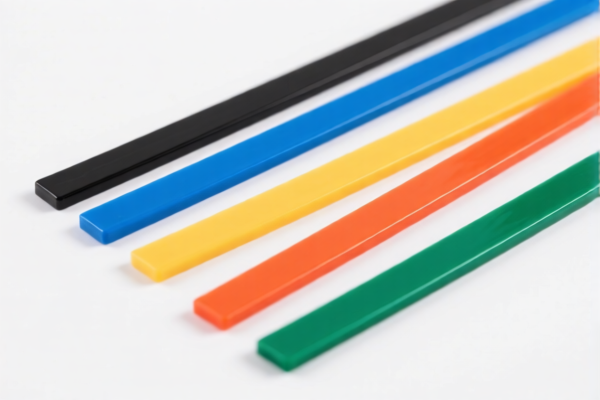
AI Analysis
🧪 PVC Plastic Self-Adhesive Strips (Other PVC Plastic Strips)
🌐 HS Code Classification & Customs Clearance Guide | 2024/2025 Latest Tariff Analysis | Strategic Compliance Strategy
📌 I. Product Definition & Classification: Do You Really Know "PVC Plastic Strips"?
"Other PVC Plastic Strips" typically refer to semi-finished or finished plastic products made primarily of Polyvinyl Chloride (PVC), shaped in strip, band, or roll formats. These are commonly used for sealing, bonding, edge protection, or decorative purposes in construction, packaging, and DIY projects.
In international trade, classification hinges on two critical factors: 1. Material Composition: Is it purely plastic? Or is it paper/cardboard coated with plastic? 2. Form & Function: Is it a basic "self-adhesive" tape/stick (often Chapter 39) or a specific "other" plastic article (Chapter 39 subheading 90 or Chapter 48 if paper-based)?
⚠️ Key Distinction Point:
- If the product is pure PVC (even if self-adhesive) and doesn't fit specific adhesive tape definitions elsewhere → Look at Chapter 39 (Plastics).
- If the product is paper/cardboard coated with PVC → Look at Chapter 48 (Paper).
- If it is a "self-adhesive" plastic strip, it often falls under the "Other" categories in Heading 39.19 or 39.26, depending on whether it's a "sheet/strip" or a general "article."
📦 II. HS Code Classification Details (Based on Provided Data)
| HS Code | Product Description | Application Scenario | Material Type | Total Tax Rate |
|---|---|---|---|---|
3919.10.20.55 |
Self-adhesive plates, sheets, film, foil, tape, strip, and other flat shapes, of plastics, whether or not in rolls | Basic self-adhesive plastic strips, tapes, seals | Pure PVC Plastic | 40.8% |
3926.90.99.89 |
Other articles of plastics and articles of other materials of heading 39.01 to 39.14 | General PVC plastic strips (non-adhesive or specific adhesive types not covered in 39.19), decorative strips, edge bands | Pure PVC Plastic | 22.8% |
3926.90.99.05 |
Other articles of plastics, not specified elsewhere | Similar to above; often used for industrial PVC components, seals, or non-tape forms | Pure PVC Plastic | 22.8% |
4811.59.40.40 |
Paper, paperboard, cellulose wadding and webs of cellulose fiber, coated, impregnated, covered, surface-colored, surface-decorated or printed, in rolls or sheets | Paper/Cardboard strips coated with PVC/plastic. Common in packaging or adhesive backing tapes where the base is paper. | Paper + PVC Coating | 35.0% |
🔍 Critical Warning:
- Pure PVC Strips: Usually classified under 3919 (if clearly self-adhesive tapes/strips) or 3926 (if "other" articles).
- Coated Paper Strips: If the base material is paper/cardboard and PVC is just a coating, it must go to 4811. Misclassification here leads to severe penalties.
- Tax Impact: The difference between 22.8% and 40.8% is significant. Choosing the right subheading is crucial for cost control.
💰 III. 2024/2025 Latest Tariff Rate Breakdown (Including Surcharge & Policy Add-ons)
✅ Applicable Country: United States (US)
✅ Origin: China (CN)
✅ Effective Date: Rates reflect current Section 301 and IEEPA surcharges.
🎯 1. 3919.10.20.55 —— Self-Adhesive Plastic Strips (High Tax Scenario)
| Item | Content |
|---|---|
| Base Duty | 5.8% (Ad Valorem) |
| Section 301 Surcharge | +25.0% |
| IEEPA Surcharge (Section 122/301 Extension) | +10.0% |
| Total Tax Rate | 40.8% |
| Tax Calculation | CIF Value × 40.8% |
| De Minimis Exemption | ❌ Not Eligible (High duty rate triggers scrutiny; often denied for Chinese origin under current policies) |
| Legal Basis Path | HTSUS:3919.10.20.55 → USITC:Footnote 9903.88.01 → IEEPA:9903.01.25 |
📌 Explanation:
- This code captures self-adhesive plastic strips. The high tax (40.8%) is due to the combination of base duty and aggressive US trade policies against Chinese plastic goods.
- Risk: High risk of customs delay if documentation does not clearly prove "plastic only" and "self-adhesive" nature.
🎯 2. 3926.90.99.89 & 3926.90.99.05 —— Other Plastic Articles (Medium Tax Scenario)
| Item | Content |
|---|---|
| Base Duty | 5.3% (Ad Valorem) |
| Section 301 Surcharge | +7.5% |
| IEEPA Surcharge | +10.0% |
| Total Tax Rate | 22.8% |
| Tax Calculation | CIF Value × 22.8% |
| De Minimis Exemption | ❌ Not Eligible |
| Legal Basis Path | HTSUS:3926.90.99.xx → USITC:Footnote 9903.88.01 → IEEPA:9903.01.24 |
📌 Explanation:
- These codes are for non-tape plastic strips or those not strictly defined as "self-adhesive sheets" in 39.19.
- Cost Saving: 18% lower than 3919.10.20.55. If the product can be legally classified as an "other article" (e.g., edge trim, seal, not a roll of tape), this is the preferred route.
- Key Argument: The product is not a "tape" in the traditional sense but a "strip" or "article" of plastic.
🎯 3. 4811.59.40.40 —— Coated Paper Strips (High Tax, Wrong Material Risk)
| Item | Content |
|---|---|
| Base Duty | 0.0% (Ad Valorem) |
| Section 301 Surcharge | +25.0% |
| IEEPA Surcharge | +10.0% |
| Total Tax Rate | 35.0% |
| Tax Calculation | CIF Value × 35.0% |
| De Minimis Exemption | ❌ Not Eligible |
| Legal Basis Path | HTSUS:4811.59.40.40 → USITC:Footnote 9903.88.01 → IEEPA:9903.01.25 |
📌 Explanation:
- Only applicable if the product is paper-based with PVC coating.
- Warning: If the product is 100% PVC, using this code is misdeclaration. It offers no advantage if the product is misidentified. Base duty is 0%, but surcharges make it 35%.
🛠️ IV. Customs Clearance Practical Advice (Battle-Tested Pitfall Guide)
✅ 1. Documentation Checklist (Non-Negotiable)
| Document | Required | Purpose |
|---|---|---|
| ✅ Product Specification Sheet | ✔️ | Detail material (100% PVC vs. Paper base), dimensions, adhesive type. |
| ✅ Material Test Report | ✔️ | Lab report proving "PVC" content vs. "Paper" content. Crucial for 39 vs. 48 distinction. |
| ✅ Product Photos | ✔️ | Show cross-section (to prove no paper core if claiming 3926) and adhesive side. |
| ✅ Commercial Invoice | ✔️ | Describe as "PVC Plastic Strip, Self-Adhesive, for Sealing" (Be precise!). |
| ✅ Packing List | ✔️ | Confirm no mixed shipments of paper and plastic items. |
| ✅ Certificate of Origin | ✔️ | To prove Chinese origin and apply relevant surcharges correctly. |
✅ 2. Declaration Strategy (Key Mantra)
🔥 "Material First, Form Second, Adhesive Third!"
| Scenario | Correct Declaration | Incorrect Action | Consequence |
|---|---|---|---|
| 100% PVC Strip, Self-Adhesive | 3919.10.20.55 |
Declare as "Plastic Article" (3926) | Under-declaration risk; penalties. |
| 100% PVC Strip, Non-Adhesive / Edge Trim | 3926.90.99.89 |
Declare as "Tape" (3919) | Overpay 18% in taxes. |
| Paper Base + PVC Coating | 4811.59.40.40 |
Declare as "Plastic Strip" (39xx) | Misdeclaration; seizure/fines. |
| Mixed Packaging (Plastic + Paper) | Split Declaration | Declare all as one HS Code | Customs holds entire shipment. |
✅ 3. Special Case Handling
| Situation | Handling Suggestion |
|---|---|
| OEM Custom Shapes | Provide CAD drawings to prove "article" status (3926) vs. "roll of tape" (3919). |
| Heavy Adhesive Layer | If adhesive is part of the plastic structure, it may still be 3919. Consult expert. |
| Small Quantities (De Minimis) | ❌ Do not rely on de minimis. Current US policies often deny de minimis for Chinese goods under $800 if duties are high. |
| Transshipment via Vietnam | Warning: US CBP is strictly monitoring "circumvention." If PVC is made in China and assembled in Vietnam, it may still be deemed Chinese origin. Ensure substantial transformation. |
🌍 V. Global Market Customs Comparison (2024/2025)
| Country/Region | Recommended HS Code | Tax Rate (China Origin) | Certification Required | Notes |
|---|---|---|---|---|
| 🇺🇸 USA | 3919.10.20.55 or 3926.90.99.89 |
40.8% or 22.8% | None specific (General) | High surcharges. Critical to classify correctly. |
| 🇨🇳 China | 3919.10 or 3926.90 |
~5-10% | None | Low duty, but import controls apply. |
| 🇪🇺 EU | 3919.10 or 3926.90 |
0-6.5% (MFN) | REACH, RoHS | No Section 301 equivalent. Lower taxes. |
| 🇬🇧 UK | 3919.10 or 3926.90 |
0-6.5% | UKCA, RoHS | Post-Brexit rules apply. |
| 🇯🇵 Japan | 3919.10 or 3926.90 |
0-6% | None | Low barrier. |
📌 Conclusion:
- USA is the most expensive market due to Section 301 and IEEPA surcharges.
- EU/UK/Japan offer significantly lower duty rates, making them more competitive for Chinese PVC products.
- Classification is Key: Saving 18% in tax rate in the US alone can determine profit margins.
📌 VI. Common Errors & Pitfall Guide (Lessons from the Field)
❌ Error 1: Declaring Paper-Coated PVC Strips as Pure Plastic (3919)
👉 Consequence: Customs lab test reveals paper base. 25-30% penalty + back taxes.
❌ Error 2: Declaring Self-Adhesive PVC Tapes as Other Articles (3926) to save tax
👉 Consequence: CBP argues it's a "tape" under 39.19. Audited, back taxes for 40.8% vs 22.8%.
❌ Error 3: Ignoring Adhesive Composition
👉 Consequence: Some adhesives require special labeling (e.g., flammability). Failure to declare can lead to safety holds.
❌ Error 4: Using "Plastic Strip" as a generic description
👉 Consequence: Ambiguity leads to customs examination, delays, and potential reclassification by CBP.
✅ Correct Approach:
"PVC Plastic Self-Adhesive Strip, 100% Polyvinyl Chloride, for Industrial Sealing, Roll of 100m, Model XYZ"
🎯 VII. Conclusion: Precision Classification Saves Money!
🎯 Remember the Mantra:
🔹 "Material Defines Chapter, Form Defines Heading!"
🔹 "3919 for Tape/Strip, 3926 for Other Articles, 4811 for Paper Base!"
🔹 "In the US, 18% Difference Means Profit or Loss!"
📌 Pro Tip:
- If your product is not a roll of tape but a cut strip or edge trim, argue for 3926.90.99.89 (22.8% tax) instead of 3919 (40.8%).
- Always include material test reports with your shipment to prove 100% PVC vs. Paper Base.
📣 Immediate Action:
📞 Consult a customs broker to review your product specifications.
📝 Prepare material certificates and high-resolution photos.
🚀 Ensure your HS Code is pre-declared and justified to avoid CBP scrutiny.
✨ Professional Clearance Starts with Accurate Classification!
💼 Every 1% of Tax Saved is Pure Profit!
Customer Reviews
About HS Code Classification
The Harmonized System (HS) is an internationally standardized nomenclature developed by the World Customs Organization (WCO) to classify traded products. Over 200 countries use the HS system as the basis for customs tariffs, trade statistics, and import/export regulations.
Each HS code follows a hierarchical structure:
- Chapter (2 digits) — Broad category of goods (e.g., Chapter 84: Machinery and Mechanical Appliances)
- Heading (4 digits) — More specific grouping within the chapter
- Subheading (6 digits) — Internationally standardized breakdown, used by all WCO member countries
- National subdivisions (8-10 digits) — Country-specific extensions for further classification, such as US HTSUS 10-digit codes
Correct HS code classification is essential for smooth customs clearance, accurate duty payment, and compliance with trade regulations. Misclassification can lead to customs delays, overpayment of duties, or penalties.
When importing from CN to US, the applicable tariff rates may include:
- Most-Favored-Nation (MFN) rate — The standard duty rate applied to WTO members
- General rate — Applied to countries without trade agreements
- Trade remedy duties — Additional tariffs such as Section 301 (anti-dumping), Section 232 (national security), or countervailing duties
The information provided on this page is for reference purposes only. For official classification, please consult with your local customs authority or a licensed customs broker.