Other Phenolic Resin Film
CN → USProduct Images
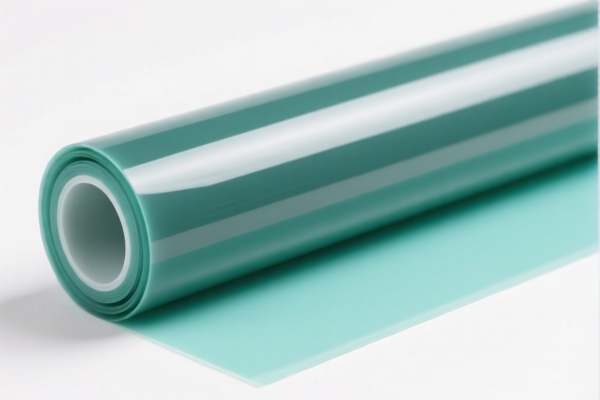
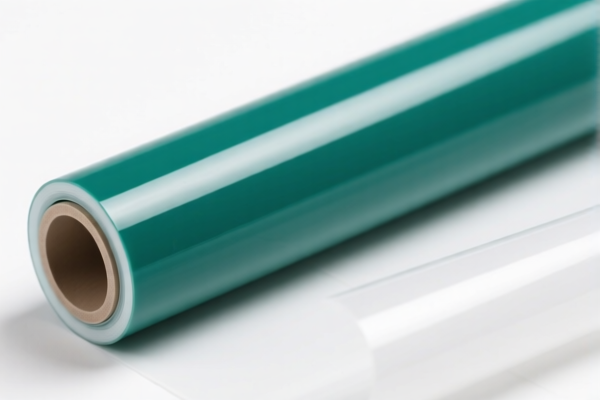
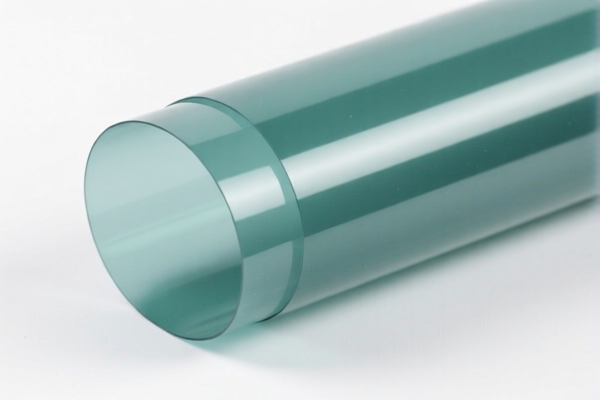
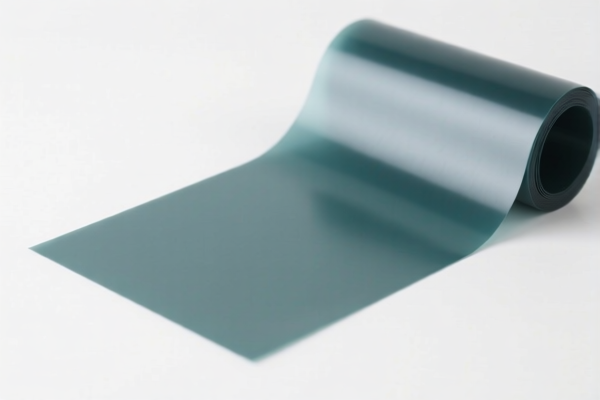
AI Analysis
🧪 Phenolic Resin Film (Other)
🌐 HS Code Reference & Customs Clearance Guide | 2026 Latest Tariff Analysis | Professional-Level Entry Strategy
📌 I. Product Definition and Classification: Do You Really Understand "Other Phenolic Resin Film"?
Phenolic resin films are thin sheets made from synthetic phenolic resins, widely used in the manufacturing of laminates, friction materials, circuit boards, and industrial coatings. In international trade, "Other Phenolic Resin Film" typically refers to films that do not fit into specific subcategories like reinforced phenolic laminates or those used exclusively for electrical insulation in defined capacities.
Key Distinction: * Non-Reinforced/Basic Films: Pure phenolic resin sheets without glass fabric or paper reinforcement. * Reinforced Films: Phenolic resin bonded with paper, glass fiber, or other substrates (often classified under different HS codes like 3920 or 3917 depending on composition).
⚠️ Critical Classification Point:
- If the film is unreinforced (pure resin) → Usually classified under 3920.49 or 3918.90 depending on thickness and use.
- If it is reinforced with fabric/paper → May fall under 3921.12 or 3918.90.
- Most common for "Other Phenolic Film" in generic trade: 3920.49.00 (Other plates, sheets, film, foil, and strip, of polymers of phenolic resins, non-cellular, not reinforced).
📦 II. HS Code Classification Details (2026 Latest Tariff Authority Comparison)
| HS Code | Product Description | Application Scenario | Reinforced? | Electrical Insulation? |
|---|---|---|---|---|
3920.49.00.00 |
Other plates, sheets, film, etc. of phenolic resins, non-cellular, not reinforced | General industrial films, bonding layers, base material for laminates | ❌ No | ✅ Often yes |
3918.90.90.00 |
Other floor coverings, of plastics | Flooring applications using phenolic compounds | ✅ Yes (usually composite) | ❌ Not primarily electrical |
3921.12.00.00 |
Plates, sheets, film, etc., of polymers of phenolic resins, reinforced with paper | Laminates for circuit boards (FR-1/FR-2) | ✅ Yes (Paper) | ✅ Yes |
3921.90.90.00 |
Other plates, sheets, film, etc., of plastics, not reinforced or only surface-treated with plastic | Specialty phenolic films for adhesive backing | ❌ No | ✅ Varies |
🔍 Key Reminder:
-3920.49.00.00is the most direct classification for "Other Phenolic Resin Film" if it is a pure, non-reinforced sheet/film.
- If used specifically for electrical insulating laminates, ensure it meets the definition of Chapter 39 vs. Chapter 85 components.
- Do not confuse with "Phenolic Resin" in bulk form (Chapter 3904). This entry is for film/sheet form.
💰 III. 2026 Latest Tariff Rate Details (Including Surtaxes & Policy Additions)
✅ Applicable Country: United States (US)
✅ Country of Origin: China (CN)
✅ Effective Date: November 10, 2025 onwards (for subsequent imports)
🎯 1. 3920.49.00.00 —— Other Phenolic Resin Films (Non-Reinforced)
| Item | Content |
|---|---|
| Basic Tariff Rate | 5.3% (Ad Valorem) |
| USITC Surtax (Section 301) | +7.5% (Based on USITC Footnote for Chapter 39 exclusions/inclusions) |
| IEEPA Surtax | +10% (For products from China/HK, effective from Nov 10, 2025) |
| Total Tariff Rate | 22.8% |
| Tax Calculation | CIF Value × 22.8% |
| De Minimis Eligibility | ❌ Not Eligible (deny_de_minimis) |
| Legal Basis Path | IEEPA:9903.01.25 → IEEPA:9903.01.24 → USITC:3920.49.00.00 → FOOTNOTE:9903.88.01 |
📌 Explanation:
- "USITC Surtax 7.5%" is part of the Section 301 tariffs targeting Chinese plastic products.
- "IEEPA 10%" is the additional surcharge under the International Emergency Economic Powers Act.
- Total 22.8% is a significant cost increase. Proper classification is crucial to avoid overpayment or penalties.
🎯 2. 3921.12.00.00 —— Reinforced Phenolic Films (Paper-Reinforced)
| Item | Content |
|---|---|
| Basic Tariff Rate | 5.3% |
| USITC Surtax | +7.5% |
| IEEPA Surtax | +10% |
| Total Tariff Rate | 22.8% |
| Tax Calculation | CIF × 22.8% |
| De Minimis Eligibility | ❌ Not Eligible |
| Legal Basis Path | IEEPA:9903.01.25 → IEEPA:9903.01.24 → USITC:3921.12.00.00 → FOOTNOTE:9903.88.01 |
📌 Note:
- If the film is reinforced with paper (common for low-cost PCB substrates), it falls here.
- The tariff rate is identical to the non-reinforced version under current 2026 rules, but classification accuracy affects downstream manufacturing duties.
🛠️ IV. Customs Clearance Practical Advice (Real-World Pitfall Avoidance Guide)
✅ 1. Required Documentation Checklist (None Missing)
| Document | Mandatory | Description |
|---|---|---|
| ✅ Product Specification Sheet | ✔️ | Include thickness, resin type, reinforcement material (if any), tensile strength |
| ✅ Certificate of Origin (CO) | ✔️ | Essential for determining preferential vs. standard duty |
| ✅ Commercial Invoice | ✔️ | Clearly state "Phenolic Resin Film, Not Reinforced" or "Reinforced with Paper" |
| ✅ Packing List | ✔️ | Detail dimensions, weight, and packaging type |
| ✅ Safety Data Sheet (SDS) | ✔️ | For chemical compliance (OSHA/EPA requirements) |
| ✅ Test Report | ✔️ | Flammability rating (UL94), dielectric strength |
✅ 2. Declaration Tips (Key Mantra)
🔥 "Clarify Reinforcement, Specify Resin, Avoid Generic Terms!"
| Scenario | Correct Declaration Method | Incorrect Practice |
|---|---|---|
| Pure phenolic film | 3920.49.00.00 + "Non-reinforced" |
Vague "Plastic Film" → Higher scrutiny |
| Paper-reinforced film | 3921.12.00.00 + "Paper-reinforced" |
Misclassified as 3920 → Penalty for misdeclaration |
| Glass-fabric reinforced | 3921.90.90.00 or specific subheading |
Misclassified as 3920 → Incorrect duty base |
| Bulk phenolic resin | 3907.20.00.00 |
Declare as film → Wrong chapter |
✅ 3. Special Situation Handling
| Situation | Handling Advice |
|---|---|
| Custom Cut Films | Provide precise dimensions; avoid generic "rolls" if cut to size for PCBs |
| Flame-Retardant Films | Declare UL94 rating (V-0, V-1, V-2) as it may affect safety inspections |
| High-Temperature Resistant | Specify thermal stability range; may qualify for different industrial categories |
| OEM/Contract Manufacturing | Provide contract details to prove origin and avoid forced labor checks (UFLPA) |
🌍 V. Global Major Market Clearance Comparison (2026 Latest)
| Country/Region | Recommended HS Code | Tariff | Certification Requirements | Notes |
|---|---|---|---|---|
| 🇺🇸 USA | 3920.49.00.00 |
22.8% (CN origin) | None specific | High surtax applies |
| 🇨🇳 China | 3920.49.00.00 |
5.3% | None | Standard import duty |
| 🇪🇺 EU | 3920.49.00.00 |
6.5% | REACH Registration | No extra surtax |
| 🇦🇺 Australia | 3920.49.00.00 |
5.0% | None | FTA eligible if from NZ/Japan |
| 🇯🇵 Japan | 3920.49.00.00 |
5.4% | PSE (if electrical) | CPTPP benefits possible |
📌 Conclusion:
- The US imposes the highest effective duty (22.8%) due to Section 301 and IEEPA tariffs.
- EU and Japan offer more competitive rates, but REACH/PSE compliance is critical.
- China remains a low-cost production hub, but finished goods entering the US face steep penalties.
📌 VI. Common Errors & Pitfall Guide (Lessons from Blood and Tears)
❌ Error 1: Declaring "Phenolic Film" without specifying reinforcement
👉 Consequence: Customs may misclassify as 3920 when it is 3921 (or vice versa) → Audit risk & back taxes!
❌ Error 2: Ignoring the "Non-Cellular" requirement
👉 Consequence: If the film has foam bubbles, it belongs in 3921.11 or 3921.12 → Incorrect duty base!
❌ Error 3: Using "Plastic Sheet" as a generic description
👉 Consequence: Lack of specificity leads to delays, sampling, and potential detention → Increased storage fees!
❌ Error 4: Failing to declare Flammability Rating
👉 Consequence: May be flagged by CPSC or DOT if used in electrical/auto applications → Compliance violation!
✅ Correct Approach:
"Phenolic Resin Film, Non-Cellular, Non-Reinforced, 0.5mm Thickness, UL94 V-0 Rated, for Industrial Lamination, Model PF-500"
🎯 VII. Conclusion: Precise Classification Saves Money!
🎯 Remember the Mantra:
🔹 "Reinforced vs. Non-Reinforced, Choose Chapter 39 Wisely!"
🔹 "3920 for Pure, 3921 for Reinforced, Tariffs Differ by 7.5%!"
📌 Pro Tip:
If your phenolic resin film is produced in Vietnam, Thailand, or Malaysia, you may apply for IEEPA Exemption, reducing tariffs to 0%~5.3%.
Recommend Apply for Advance Ruling before shipment to lock in classification and avoid customs disputes.
📣 Take Action Now:
📞 Contact a licensed customs broker + Provide Technical Data Sheet + Request HS Code Advance Ruling
🚀 Ensure smooth customs clearance, reduce costs, and boost your profit margin!
✨ Professional Customs Clearance Starts with Accurate Classification!
💼 Every Dollar of Tariff is Worth Calculating Precisely!
Customer Reviews
About HS Code Classification
The Harmonized System (HS) is an internationally standardized nomenclature developed by the World Customs Organization (WCO) to classify traded products. Over 200 countries use the HS system as the basis for customs tariffs, trade statistics, and import/export regulations.
Each HS code follows a hierarchical structure:
- Chapter (2 digits) — Broad category of goods (e.g., Chapter 84: Machinery and Mechanical Appliances)
- Heading (4 digits) — More specific grouping within the chapter
- Subheading (6 digits) — Internationally standardized breakdown, used by all WCO member countries
- National subdivisions (8-10 digits) — Country-specific extensions for further classification, such as US HTSUS 10-digit codes
Correct HS code classification is essential for smooth customs clearance, accurate duty payment, and compliance with trade regulations. Misclassification can lead to customs delays, overpayment of duties, or penalties.
When importing from CN to US, the applicable tariff rates may include:
- Most-Favored-Nation (MFN) rate — The standard duty rate applied to WTO members
- General rate — Applied to countries without trade agreements
- Trade remedy duties — Additional tariffs such as Section 301 (anti-dumping), Section 232 (national security), or countervailing duties
The information provided on this page is for reference purposes only. For official classification, please consult with your local customs authority or a licensed customs broker.