Other Plant Fiber Woven Binding Rope
CN → US| HS Code | Tariff Rate | Origin | Destination | Doc |
|---|---|---|---|---|
| 4602191800 | 39.5% | CN | US | Official Doc |
| 6702903500 | 19.0% | CN | US | Official Doc |
| 6702906500 | 34.5% | CN | US | Official Doc |
| 6307909891 | 24.5% | CN | US | Official Doc |
| 4602198000 | 37.3% | CN | US | Official Doc |
Product Images

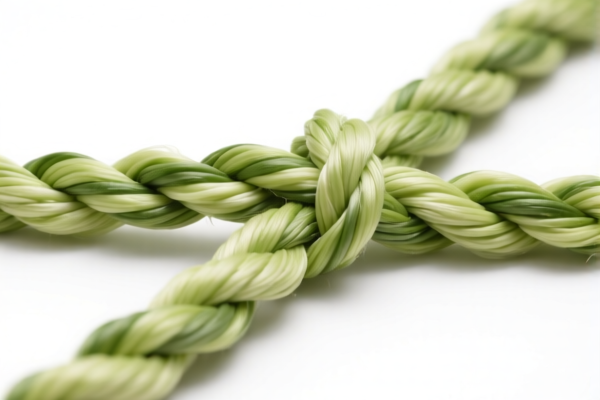
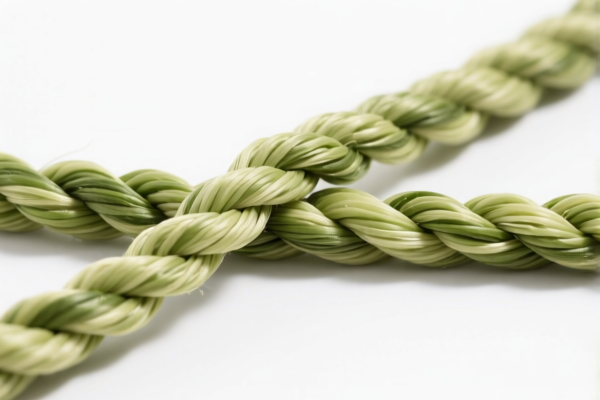

AI Analysis
🌿 Other Plant Fiber Woven Binding Rope
🌐 HS Code Reference & Customs Clearance Guide | 2026 Latest Tariff Analysis | Professional Clearance Strategy
📌 I. Product Definition & Classification: Do You Really Understand "Plant Fiber Rope"?
"Other Plant Fiber Woven Binding Rope" refers to binding, lashing, or decorative ropes made from natural plant fibers (such as jute, sisal, hemp, raffia, or coconut coir) that are woven or braided. In international trade, the classification depends heavily on the specific type of plant fiber, the weaving technique, and whether it is considered a "prepared" textile product or a "raw"编织 material.
⚠️ Key Distinction:
- If the rope is made from natural vegetable fibers (like jute/sisal) and is simply twisted or plaited without complex textile processing → It often falls under Chapter 46 (Products of weaving materials).
- If the fibers are prepared, spun, or woven into specific decorative or industrial forms distinct from standard ropes → It may fall under Chapter 67 (Prepared feathers/down; artificial flowers; articles of human hair) or Chapter 63 (Other made-up textile articles).
- Crucial Point: The destination market (USA) applies different "Section 301" and "IEEPA" tariffs based on whether the HS code is in Chapter 46 (often higher base + 301) or Chapter 67/63 (varies).
📦 II. HS Code Classification Details (2026 Latest Tariff Authoritative Comparison)
Based on the provided data, here are the specific HS Codes applicable to "Other Plant Fiber Woven Binding Rope":
| HS Code | Product Description | Applicable Scenario | Base Tariff | Additional Tariffs | Total Tax |
|---|---|---|---|---|---|
4602.19.18.00 |
Other woven products of vegetable materials | Woven items from vegetable plaiting materials (e.g., jute mats, woven baskets, specific woven ropes not elsewhere specified) | 4.5% | 301: 25% + IEEPA: 10% | 39.5% |
6702.90.35.00 |
Other artificial flowers, foliage and fruits and parts thereof; articles made of artificial flowers, foliage or fruits | Artificial plant fiber items (if classified as "artificial" or decorative plant-fiber-like items under Ch. 67) | 9.0% | 301: 0% + IEEPA: 10% | 19.0% |
6702.90.65.00 |
Other artificial flowers, foliage and fruits and parts thereof | Similar to above, specific sub-category for other plant-fiber decorative items | 17.0% | 301: 7.5% + IEEPA: 10% | 34.5% |
6307.90.98.91 |
Other made-up articles, including dress patterns (other than knit or crochet) | Made-up textile articles (e.g., woven rope bags, specific binding materials classified as "other made-up") | 7.0% | 301: 7.5% + IEEPA: 10% | 24.5% |
4602.19.80.00 |
Other woven products of vegetable materials | General category for other woven vegetable materials (e.g., standard woven binding ropes) | 2.3% | 301: 25% + IEEPA: 10% | 37.3% |
🔍 Important Note:
- Chapter 46 (4602.19.**) items are subject to **25% Section 301 tariffs** + **10% IEEPA tariffs**, leading to high total taxes (37.3% - 39.5%). - **Chapter 67 (6702.90.) items may have lower or zero 301 tariffs (depending on the specific sub-code), resulting in lower total taxes (19.0% - 34.5%).
- Chapter 63 (`6307.90.) items have moderate 301 tariffs (7.5%) + IEEPA (10%), totaling 24.5%.
💰 III. 2026 Latest Tariff Rate Breakdown (Including Add-on Taxes, Policy Add-ons)
✅ Applicable Country: United States (US)
✅ Origin: China (CN)
✅ Effective Date: 2025-11-10 onwards (including subsequent imports)
🎯 1. 4602.19.18.00 —— Woven Products of Vegetable Materials (High Tax)
| Item | Content |
|---|---|
| Base Rate | 4.5% (ad valorem) |
| USITC Add-on (Section 301) | +25% (From USITC Footnote 9903.88.01) |
| IEEPA Add-on | +10% (Targeting China/HK products, effective 2025-11-10) |
| Total Tax Rate | 39.5% |
| Tax Calculation | CIF Value × 39.5% |
| De Minimis Eligibility | ❌ No (deny_de_minimis) |
| Legal Basis Path | IEEPA:9903.01.25 → IEEPA:9903.01.24 → USITC:4602.19.18.00 → FOOTNOTE:9903.88.01 |
📌 Explanation:
- 25% Section 301 Tariff: Applies to most goods from Chapter 46 under "List 4B" or similar high-tariff lists.
- 10% IEEPA Tariff: Additional tariff under the International Emergency Economic Powers Act.
- Total 39.5%: Very high cost. Must be factored into pricing strategy.
🎯 2. 6702.90.35.00 —— Artificial Plant Fiber Articles (Lowest Tax Option)
| Item | Content |
|---|---|
| Base Rate | 9.0% |
| USITC Add-on (Section 301) | 0% (If classified under this specific sub-code, it may be exempt from 301) |
| IEEPA Add-on | +10% |
| Total Tax Rate | 19.0% |
| Tax Calculation | CIF Value × 19.0% |
| De Minimis Eligibility | ❌ No (deny_de_minimis) |
| Legal Basis Path | IEEPA:9901.25 → IEEPA:9903.01.24 → USITC:6702.90.35.00 |
📌 Note:
- If your "plant fiber rope" can be argued as an "artificial flower/foliage part" or decorative item under Chapter 67, you save 20-25% in taxes compared to Chapter 46.
- This classification is often used for decorative woven items, not industrial binding ropes. Ensure the product description supports this.
🎯 3. 6702.90.65.00 —— Other Artificial Plant Fiber Articles
| Item | Content |
|---|---|
| Base Rate | 17.0% |
| USITC Add-on (Section 301) | +7.5% |
| IEEPA Add-on | +10% |
| Total Tax Rate | 34.5% |
| Tax Calculation | CIF Value × 34.5% |
| De Minimis Eligibility | ❌ No (deny_de_minimis) |
| Legal Basis Path | IEEPA:9901.25 → IEEPA:9903.01.24 → USITC:6702.90.65.00 |
📌 Note:
- A middle-ground option if the product doesn't fit6702.90.35.00.
🎯 4. 6307.90.98.91 —— Other Made-up Textile Articles (Moderate Tax)
| Item | Content |
|---|---|
| Base Rate | 7.0% |
| USITC Add-on (Section 301) | +7.5% |
| IEEPA Add-on | +10% |
| Total Tax Rate | 24.5% |
| Tax Calculation | CIF Value × 24.5% |
| De Minimis Eligibility | ❌ No (deny_de_minimis) |
| Legal Basis Path | IEEPA:9901.25 → IEEPA:9903.01.24 → USITC:6307.90.98.91 |
📌 Note:
- 24.5% is significantly lower than Chapter 46 options.
- This applies if the rope is considered a "made-up article" (e.g., finished binding kits, specific woven goods) rather than raw woven materials.
🎯 5. 4602.19.80.00 —— Other Woven Vegetable Materials (High Tax)
| Item | Content |
|---|---|
| Base Rate | 2.3% |
| USITC Add-on (Section 301) | +25% |
| IEEPA Add-on | +10% |
| Total Tax Rate | 37.3% |
| Tax Calculation | CIF Value × 37.3% |
| De Minimis Eligibility | ❌ No (deny_de_minimis) |
| Legal Basis Path | IEEPA:9903.01.25 → IEEPA:9903.01.24 → USITC:4602.19.80.00 → FOOTNOTE:9903.88.01 |
📌 Note:
- Despite a low 2.3% base rate, the 25% Section 301 and 10% IEEPA push the total to 37.3%.
- This is the default for many generic woven plant fiber products unless they can be classified under Chapter 63 or 67.
🛠️ IV. Customs Clearance Practical Advice (Real-World Pitfall Avoidance)
✅ 1. Documentation Checklist (Mandatory)
| Document | Required | Description |
|---|---|---|
| ✅ Product Specification Sheet | ✔️ | Material composition (e.g., 100% Jute), weaving type, diameter, length |
| ✅ Product Photos | ✔️ | Clear images of the rope, packaging, and any labels |
| ✅ Commercial Invoice | ✔️ | Describe as "Woven Plant Fiber Binding Rope" or "Decorative Plant Fiber Woven Item" (choose based on HS) |
| ✅ Packing List | ✔️ | Net/Gross weight, dimensions |
| ✅ Certificate of Origin (CO) | ✔️ | If applicable, to prove origin |
| ✅ Third-Party Test Report | ✔️ | Flammability, strength (if for industrial use) |
✅ 2. Declaration Tips (Key Mnemonic)
🔥 "Chapter 46: 25% Hit; Chapter 63/67: Lower Cost; Describe Precisely!"
| Scenario | Correct Declaration | Wrong Approach |
|---|---|---|
| Raw woven jute rope for industrial use | 4602.19.80.00 (37.3%) or 4602.19.18.00 (39.5%) |
Misdeclare as "Textile Rope" → Potential misclassification |
| Decorative woven plant fiber items | 6702.90.35.00 (19.0%) |
Misdeclare as "Industrial Rope" → Higher tax |
| Made-up binding kits/finished goods | 6307.90.98.91 (24.5%) |
Misdeclare as "Raw Material" → Higher tax |
| General woven vegetable products | 4602.19.80.00 (37.3%) |
Use vague description "Rope" → Delayed clearance |
📌 Critical Strategy:
- If the rope is decorative (e.g., for crafts, gift wrapping), argue for Chapter 67 (6702.90.35.00) to achieve 19.0% total tax.
- If the rope is functional/industrial, it may fall under Chapter 46 or Chapter 63.6307.90.98.91(24.5%) is a strong alternative if it’s a "made-up article."
✅ 3. Special Cases
| Scenario | Recommendation |
|---|---|
| OEM Custom Ropes | Provide design files to prove specific classification (e.g., decorative vs. industrial) |
| Mixed Material Ropes | If >50% plant fiber, classify under plant fiber rules; otherwise, check textile chapters |
| Rope with Plastic Coating | May fall under Chapter 39 or 59, not Chapter 46/63/67. Check new HS codes |
| Small Quantity Samples | Still subject to de minimis exemption denial for China-origin goods |
🌍 V. Global Market Clearance Comparison (2026 Latest)
| Country/Region | Recommended HS Code | Total Tariff (China Origin) | Certification | Notes |
|---|---|---|---|---|
| 🇺🇸 USA | 6702.90.35.00 (if decorative) |
19.0% | None | Best option if eligible |
| 🇺🇸 USA | 4602.19.80.00 (if industrial) |
37.3% | None | High tax due to 301/IEEPA |
| 🇨🇳 China | 4602.19.80.00 |
~5-7% | CCC (if applicable) | No add-on tariffs |
| 🇪🇺 EU | 4602.19.90 |
~4-6% | CE (if applicable) | No Section 301/IEEPA |
| 🇬🇧 UK | 4602.19.90 |
~4-6% | UKCA | Post-Brexit tariffs |
| 🇦🇺 Australia | 4602.19.90 |
~5% | None | No major add-ons |
📌 Conclusion:
- USA is the most expensive market due to 301 and IEEPA tariffs.
- Strategy: Maximize use of Chapter 67 (19.0%) or Chapter 63 (24.5%) if product characteristics allow. Avoid Chapter 46 if possible.
📌 VI. Common Errors & Pitfall Guide (Lessons Learned)
❌ Error 1: Declaring decorative woven plant fiber items as "Industrial Rope" (4602.19.80.00)
👉 Consequence: Pay 37.3% instead of 19.0% → 18.3% extra tax!
❌ Error 2: Declaring industrial jute rope as "Artificial Flower" (6702.90.35.00)
👉 Consequence: Customs may reject classification, demand back taxes + penalties.
❌ Error 3: Ignoring IEEPA 10% in cost calculation
👉 Consequence: Underpricing, margin erosion.
❌ Error 4: Using "Rope" as the only description
👉 Consequence: Customs unsure of material/usage → Delayed clearance.
✅ Correct Practice:
"Decorative Woven Raffia Rope, 100% Natural Plant Fiber, for Gift Wrapping, Model XYZ" → Aim for
6702.90.35.00(19.0%).
🎯 VII. Conclusion: Professional Declaration Saves Money!
🎯 Remember:
🔹 "Decorative = Ch. 67 (19%); Industrial = Ch. 46 (37-39%); Made-up = Ch. 63 (24.5%)"
🔹 "Choose the right chapter, save thousands!"
🔹 "IEEPA + 301 = High Tax; Prepare Early!"
📌 Pro Tip:
If your plant fiber rope can be justified as a decorative item or made-up article, pursue 6702.90.35.00 (19.0%) or 6307.90.98.91 (24.5%).
Consider applying for an Advance Ruling from U.S. Customs to confirm the HS code.
📣 Immediate Action:
📞 Contact a licensed customs broker + Provide product photos + Apply for HS Code Advance Ruling
🚀 Clear customs smoothly, reduce costs, boost profits!
✨ Professional Clearance Starts with Precise Classification!
💼 Every cent of cost matters!
Customer Reviews
About HS Code Classification
The Harmonized System (HS) is an internationally standardized nomenclature developed by the World Customs Organization (WCO) to classify traded products. Over 200 countries use the HS system as the basis for customs tariffs, trade statistics, and import/export regulations.
Each HS code follows a hierarchical structure:
- Chapter (2 digits) — Broad category of goods (e.g., Chapter 84: Machinery and Mechanical Appliances)
- Heading (4 digits) — More specific grouping within the chapter
- Subheading (6 digits) — Internationally standardized breakdown, used by all WCO member countries
- National subdivisions (8-10 digits) — Country-specific extensions for further classification, such as US HTSUS 10-digit codes
Correct HS code classification is essential for smooth customs clearance, accurate duty payment, and compliance with trade regulations. Misclassification can lead to customs delays, overpayment of duties, or penalties.
When importing from CN to US, the applicable tariff rates may include:
- Most-Favored-Nation (MFN) rate — The standard duty rate applied to WTO members
- General rate — Applied to countries without trade agreements
- Trade remedy duties — Additional tariffs such as Section 301 (anti-dumping), Section 232 (national security), or countervailing duties
The information provided on this page is for reference purposes only. For official classification, please consult with your local customs authority or a licensed customs broker.