Other Plant Fiber Woven Curtains
CN → US| HS Code | Tariff Rate | Origin | Destination | Doc |
|---|---|---|---|---|
| 4602191800 | 39.5% | CN | US | Official Doc |
| 6702903500 | 19.0% | CN | US | Official Doc |
| 6702906500 | 34.5% | CN | US | Official Doc |
| 6307909891 | 24.5% | CN | US | Official Doc |
| 4602198000 | 37.3% | CN | US | Official Doc |
Product Images
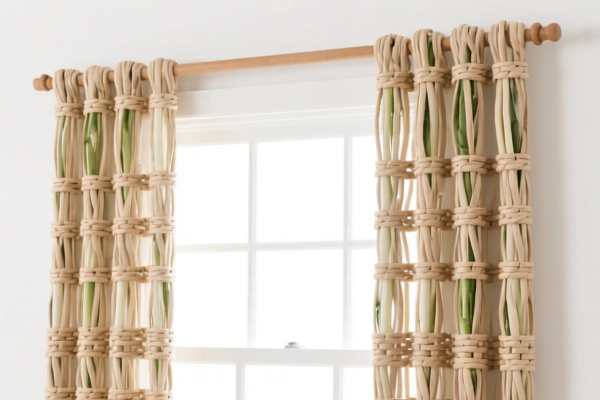
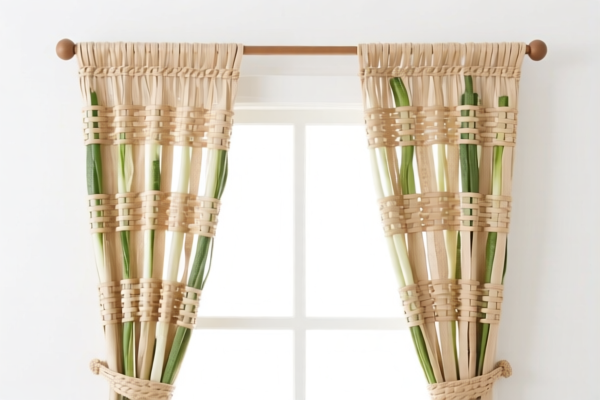
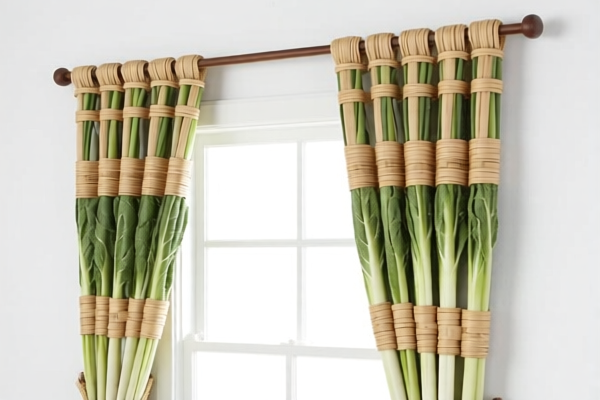
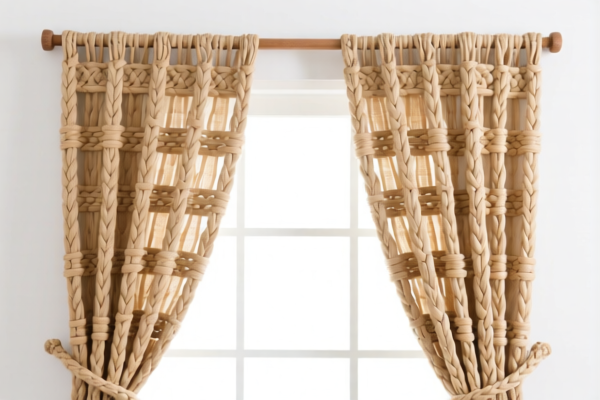
AI Analysis
🧺 Other Plant Fiber Woven Curtains (Woven Decorative Goods)
🌐 HS Code Reference & Customs Clearance Guide | 2026 Latest Tariff Analysis | Professional Strategy
📌 I. Product Definition & Classification: What are "Other Plant Fiber Woven Curtains"?
In international trade, "Other Plant Fiber Woven Curtains" generally refer to decorative woven goods made from natural plant fibers (such as bamboo, rattan, sisal, jute, or straw) that do not fall under specific standard curtain headings (like woven textiles). They are often used for decorative screens, window shades, room dividers, or aesthetic wall hangings rather than functional light-blocking drapes.
The key distinction lies in the material composition (plant fiber vs. synthetic/textile) and the processing method (woven structure).
⚠️ Critical Distinction:
- If the item is a finished woven article made from plant fibers (e.g., bamboo blinds, rattan panels) → It falls under Chapter 46 or Chapter 67.
- If the item is merely plant fiber material not yet woven into a specific article → Different classification.
- If the item is made of synthetic fibers (nylon, polyester) → Different HS Codes (Chapter 57 or 63).
- This guide strictly covers Plant Fiber Woven Goods as per the provided data.
📦 II. HS Code Classification Details (2026 Latest Tariff Authority Comparison)
The following HS Codes are derived from the provided dataset for "Other Plant Fiber Woven Decorative/Curtain-like items." Note that tariffs vary significantly based on the specific sub-heading and origin (China to USA implied by the 122/301 clauses).
| HS Code | Product Description | Application Scenario | Key Characteristics |
|--------|--------------------------|--------------------------|
| 4602.19.18.00 | Other woven articles of vegetable plaiting materials | Bamboo/Rattan woven screens, decorative panels | High tariff impact due to specific sub-category |
| 6702.90.35.00 | Woven plates, panels, etc., of plaiting materials | Refined plant fiber weaving (e.g., refined bamboo strips) | Mid-range tax profile |
| 6702.90.65.00 | Woven plates, panels, etc., of plaiting materials | Coarser or different plant fiber construction | Higher base tax |
| 6307.90.98.91 | Other made-up articles of textiles | Sometimes used for fabric-like plant fiber weaves (e.g., jute rugs/curtains) | Low base tax, high total due to add-on |
| 4602.19.80.00 | Other woven articles of vegetable plaiting materials | Miscellaneous plant fiber woven goods (catch-all) | Very low base, high punitive tax |
🔍 Key Reminder:
- Chapter 46 covers "Articles of straw, of esparto or of other plaiting materials."
- Chapter 67 covers "Prepared animal hair; dressed feathers... and manufactured flowers...; articles of human hair...". Note: 6702 includes "Woven plates, panels etc., of plaiting materials or of materials of heading 4601". This is a critical overlap for refined plant weaves.
- Chapter 63 covers "Other made-up textile articles." If the "plant fiber" is processed into a textile-like fabric (e.g., jute fabric), it might fall here, but Chapter 46/67 is more specific for true plant weaves.
💰 III. 2026 Latest Tariff Rate Breakdown (Including Surcharges & Policy Add-ons)
✅ Applicable Country: USA (US)
✅ Origin: China (CN) (Implied by the 10% "122 Clause" / Section 301 additional duty)
✅ Effective Time: Current Trade War Rates Apply
🎯 1. 4602.19.18.00 – Other Woven Articles of Vegetable Plaiting Materials
| Item | Content |
|---|---|
| Base Duty | 4.5% |
| Section 301 Additional Duty | 25.0% |
| "122 Clause" (Section 232/Other) | 10.0% |
| Total Effective Duty | 39.5% |
| Calculation Base | CIF Value × 39.5% |
| De Minimis Exemption | ❌ No (High duty goods are exempted from 80USD threshold) |
| Legal Path | HTSUS:4602.19.18.00 → USITC Footnote 9903.88.01 → IEEPA:9903.01.24 |
📌 Explanation:
- This code incurs the full 25% Section 301 tariff plus an additional 10% surcharge (often referred to as the "122 clause" in trade compliance data, linked to specific Chinese goods lists).
- Total 39.5% is a significant cost driver.
🎯 2. 6702.90.35.00 – Woven Plates/Panels of Plaiting Materials
| Item | Content |
|---|---|
| Base Duty | 9.0% |
| Section 301 Additional Duty | 0.0% |
| "122 Clause" | 10.0% |
| Total Effective Duty | 19.0% |
| Calculation Base | CIF Value × 19.0% |
| De Minimis Exemption | ❌ No |
| Legal Path | HTSUS:6702.90.35.00 → IEEPA:9903.01.24 |
📌 Note:
- Significant Savings: This code has 0% Section 301 additional duty. This is a critical advantage for importers.
- Why? HS Code6702(Woven plates of plaiting materials) may be excluded from certain 301 lists compared to4602(Articles of plaiting materials), depending on the specific executive order updates. Always verify current exclusions.
🎯 3. 6702.90.65.00 – Woven Plates/Panels of Plaiting Materials (Other)
| Item | Content |
|---|---|
| Base Duty | 17.0% |
| Section 301 Additional Duty | 7.5% |
| "122 Clause" | 10.0% |
| Total Effective Duty | 34.5% |
| Calculation Base | CIF Value × 34.5% |
| De Minimis Exemption | ❌ No |
| Legal Path | HTSUS:6702.90.65.00 → USITC Footnote 9903.88.01 → IEEPA:9903.01.24 |
📌 Explanation:
- Higher base tax (17%) and a partial additional duty (7.5%).
- Total burden is lower than4602.19.18.00but still substantial.
🎯 4. 6307.90.98.91 – Other Made-Up Textile Articles
| Item | Content |
|---|---|
| Base Duty | 7.0% |
| Section 301 Additional Duty | 7.5% |
| "122 Clause" | 10.0% |
| Total Effective Duty | 24.5% |
| Calculation Base | CIF Value × 24.5% |
| De Minimis Exemption | ❌ No |
| Legal Path | HTSUS:6307.90.98.91 → IEEPA:9903.01.24 |
📌 Note:
- If the plant fiber is processed into a textile-like fabric (e.g., woven jute curtain fabric), this code may apply.
- Lower Base + Lower Add-on makes this a potentially cost-effective option if the product definition allows it.
🎯 5. 4602.19.80.00 – Other Woven Articles (Catch-All)
| Item | Content |
|---|---|
| Base Duty | 2.3% |
| Section 301 Additional Duty | 25.0% |
| "122 Clause" | 10.0% |
| Total Effective Duty | 37.3% |
| Calculation Base | CIF Value × 37.3% |
| De Minimis Exemption | ❌ No |
| Legal Path | HTSUS:4602.19.80.00 → USITC Footnote 9903.88.01 → IEEPA:9903.01.24 |
📌 Warning:
- Despite the lowest base duty (2.3%), the full 25% Section 301 tariff applies.
- Total duty (37.3%) is nearly as high as the most expensive option. Do not assume low base = low total cost.
🛠️ IV. Customs Clearance Practical Advice (Risk Mitigation Guide)
✅ 1. Documentation Checklist (Must-Have)
| Document | Required | Purpose |
|---|---|---|
| ✅ Product Specification Sheet | ✔️ | Detail fiber type (bamboo, rattan, jute), weave density, dimensions |
| ✅ Material Composition Statement | ✔️ | Confirm % of plant fiber vs. any synthetic backing/glue |
| ✅ Product Photos | ✔️ | Show weave structure, finished form (curtain/screen/blinds) |
| ✅ Commercial Invoice | ✔️ | Clearly state "Other Plant Fiber Woven Decorative Curtains" |
| ✅ Packing List | ✔️ | Weight and dimensions of each woven panel |
| ✅ Origin Certificate (CO) | ✔️ | Proof of Chinese origin (triggers tariffs) |
✅ 2. Declaration Strategy (Key Formulas)
🔥 "Fiber Type Defines Code, Structure Defines Chapter, Tariff Depends on 301!"
| Scenario | Correct Declaration | Avoid |
|---|---|---|
| Bamboo/Rattan Woven Screen | 4602.19.18.00 or 4602.19.80.00 |
Misclassifying as "Furniture" |
| Refined Bamboo Strip Panels | 6702.90.35.00 or 6702.90.65.00 |
Misclassifying as "Textile" |
| Jute Fabric Curtain | 6307.90.98.91 |
Misclassifying as "Raw Fiber" |
| Mixed Material (Plant + Plastic) | Check if plastic dominates → May fall outside Plant Fiber Codes | Mixing codes in one shipment |
✅ 3. Special Handling
| Situation | Handling Advice |
|---|---|
| OEM Custom Woven Curtains | Provide design specs to justify specific HS Code (e.g., why it’s 6702 vs 4602) |
| Plant Fiber with Synthetic Backing | If backing >50% by weight, may change chapter. Declare "Composite Article" |
| Samples vs. Bulk | Samples < $800 may be de minimis, but verify if HS Code is on the restricted list (many are not, but high tariffs apply) |
| Pre-Clearance Ruling | Strongly Recommended: Apply for an Advance Ruling to confirm if 6702 qualifies for the 0% Section 301 add-on |
🌍 V. Global Market Clearance Comparison (2026)
| Country/Region | Recommended HS Code | Est. Duty (China Origin) | Certification | Notes |
|---|---|---|---|---|
| 🇺🇸 USA | 6702.90.35.00 |
19.0% (Best Option) | No specific | Avoid 4602 if 6702 is applicable |
| 🇺🇸 USA | 4602.19.18.00 |
39.5% | No specific | High cost due to 301 |
| 🇨🇳 China | 4602.19.18.00 |
4.5% | N/A | No additional tariffs for domestic trade |
| 🇪🇺 EU | 4602.19 |
6.5% | CE (if applicable) | Lower tariffs, no 301 clause |
| 🇬🇧 UK | 4602.19 |
6.5% | UKCA | Post-Brexit rules apply |
| 🇦🇺 Australia | 4602.19 |
5.0% | No specific | FTA may apply if from ASEAN |
📌 Conclusion:
- USA is the most expensive market due to Section 301 and "122 Clause" tariffs.
- HS Code6702.90.35.00offers the best savings (19%) among the listed options, potentially saving 20% compared to4602codes.
- Misclassification Risk: High. If customs determines6702goods should be4602, you face retroactive duties + penalties.
📌 VI. Common Errors & Pitfalls (Lessons Learned)
❌ Error 1: Classifying all plant fiber weaves under 4602
👉 Consequence: Paying 39.5% instead of 19.0% on 6702-eligible items.
👉 Fix: Check if the product is "Woven Plates/Panels" (6702) vs. "Other Articles" (4602).
❌ Error 2: Ignoring the "122 Clause" 10% surcharge
👉 Consequence: Underestimating total landed cost.
👉 Fix: Always add 10% to base + 301 duties for China-origin goods in this category.
❌ Error 3: Declaring as "Textiles" when it's "Plaiting Materials"
👉 Consequence: Wrong chapter classification, potential audit.
👉 Fix: Distinguish between woven fabric (Chapter 50-63) and plaited/woven plates (Chapter 46/67).
🎯 VII. Conclusion: Precision Saves Money!
🎯 Key Takeaways:
🔹 Check
6702First: If your plant fiber woven goods are "plates, panels, or sheets,"6702.90.35.00may offer the lowest total duty (19%).
🔹 Avoid4602if Possible: Unless your product is clearly an "article" (not a panel),4602codes attract the full 25% + 10% burden.
🔹 Document the Weave Structure: Provide photos and specs to prove if it’s a "panel" (6702) or an "article" (4602).💼 Your Duty Cost Can Be Cut in Half (39.5% → 19.0%) by Choosing the Right HS Code!
📣 Immediate Action:
📞 Contact a Customs Broker to review your product specs against
6702.90.35.00eligibility.
🚀 Apply for an Advance Ruling from CBP to lock in the lower duty rate.
✨ Proper Classification = Maximum Profit Protection!
✨ Professional Customs Clearance Starts with Accurate HS Codes!
💼 Every Percentage Point Saved is Pure Profit!
Customer Reviews
About HS Code Classification
The Harmonized System (HS) is an internationally standardized nomenclature developed by the World Customs Organization (WCO) to classify traded products. Over 200 countries use the HS system as the basis for customs tariffs, trade statistics, and import/export regulations.
Each HS code follows a hierarchical structure:
- Chapter (2 digits) — Broad category of goods (e.g., Chapter 84: Machinery and Mechanical Appliances)
- Heading (4 digits) — More specific grouping within the chapter
- Subheading (6 digits) — Internationally standardized breakdown, used by all WCO member countries
- National subdivisions (8-10 digits) — Country-specific extensions for further classification, such as US HTSUS 10-digit codes
Correct HS code classification is essential for smooth customs clearance, accurate duty payment, and compliance with trade regulations. Misclassification can lead to customs delays, overpayment of duties, or penalties.
When importing from CN to US, the applicable tariff rates may include:
- Most-Favored-Nation (MFN) rate — The standard duty rate applied to WTO members
- General rate — Applied to countries without trade agreements
- Trade remedy duties — Additional tariffs such as Section 301 (anti-dumping), Section 232 (national security), or countervailing duties
The information provided on this page is for reference purposes only. For official classification, please consult with your local customs authority or a licensed customs broker.