Other Plant Fiber Woven Decorations
CN → US| HS Code | Tariff Rate | Origin | Destination | Doc |
|---|---|---|---|---|
| 6702903500 | 19.0% | CN | US | Official Doc |
| 6702906500 | 34.5% | CN | US | Official Doc |
| 4602191800 | 39.5% | CN | US | Official Doc |
| 6307909891 | 24.5% | CN | US | Official Doc |
| 4602198000 | 37.3% | CN | US | Official Doc |
Product Images
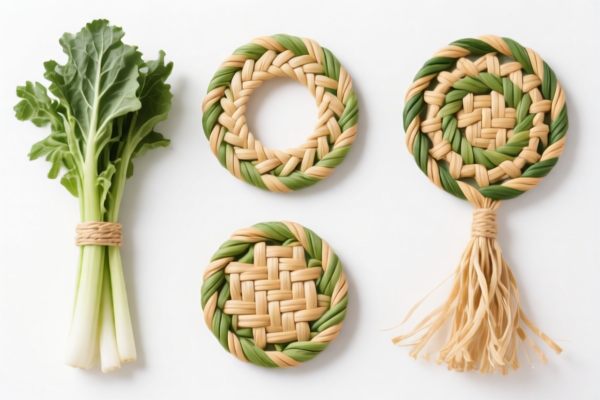
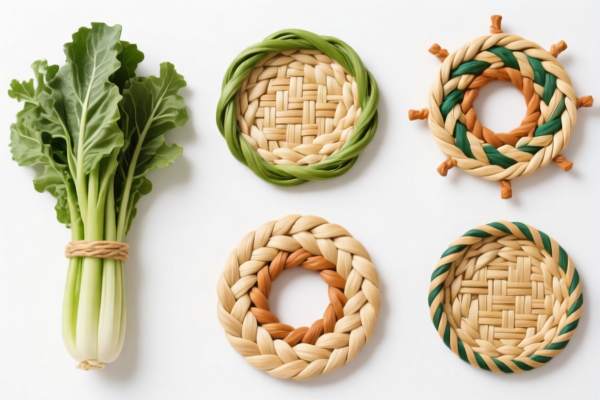
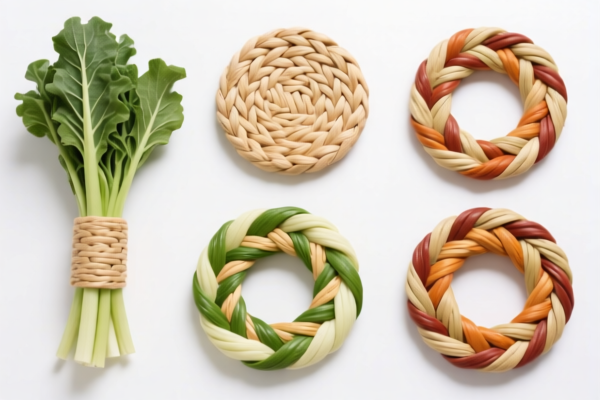
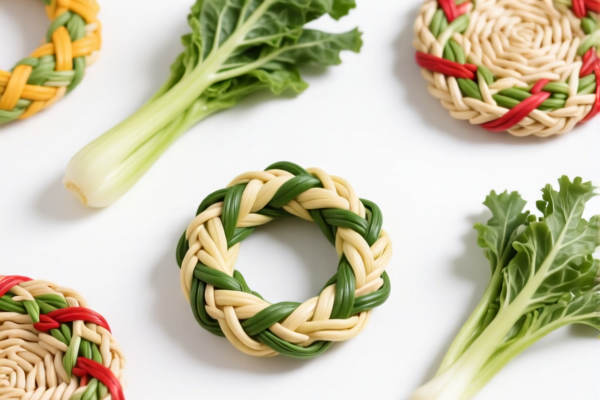
AI Analysis
🌿 Other Plant Fiber Woven Decorations (Decorative Articles of Plaiting Materials)
🌐 HS Code Reference & Clearance Guide | 2026 Latest Tariff Analysis | Professional Entry Strategy for US Imports
📌 I. Product Definition & Classification: What are "Other Plant Fiber Woven Decorations"?
Plant fiber woven decorations refer to decorative articles manufactured from natural vegetable plaiting materials (such as rattan, bamboo, reed, straw, esparto, etc.). In international trade, these items are primarily classified under Chapter 67 ("Prepared Feathers and Down and Articles Made of Feathers or of Other Plumed Parts; Artificial Flowers; Articles of Human Hair") or Chapter 46 ("Basketweaving and Wickerwork Articles"), depending on whether they are viewed as decorative finished goods or crafts/plaiting works.
Key Distinction Points:
- Chapter 67 (6702): Focuses on articles used for decoration (e.g., artificial flowers, wreaths, decorative hangings).
- Chapter 46 (4602): Focuses on woven/braided workmanship (e.g., baskets, mats, mats, ornamental weavings).
- Chapter 63 (6307): Used as a fallback category for other made-up articles not specified elsewhere.
⚠️ Critical Note:
- If the item is primarily decorative and made of plant fibers but not a "basket" or "plaiting article" in the traditional sense, Chapter 67 is often the most logical fit.
- If the item is a woven craft (like a decorative mat or basket), Chapter 46 applies.
- The tariff burden varies significantly based on this classification, with Chapter 46 being particularly expensive due to Section 301 tariffs.
📦 II. HS Code Classification Details (2026 Latest Tariff Authority Comparison)
| HS Code | Product Description | Application Scenario | Material Type |
|---|---|---|---|
6702.90.35.00 |
Other plaiting materials; prepared plaiting materials for making goods; articles of plaiting materials: Other; Other: Other | Decorative items made of plant fibers, falling under "other" categories | ✅ Plant Fiber |
6702.90.65.00 |
Other plaiting materials; prepared plaiting materials for making goods; articles of plaiting materials: Other; Other: Other | Plant fiber decorations not elsewhere specified, inferred as other decorative articles | ✅ Plant Fiber |
4602.19.18.00 |
Basketweaving and wickerwork articles: Baskets and other articles, including those of plaiting materials, made up of plaiting materials or of strips of any material: Other: Other: Other | Decorative woven items (e.g., woven wall hangings, ornamental mats) | ✅ Plant Fiber |
6307.90.98.91 |
Other made up articles: Other: Other: Other | Fallback category for plant fiber decorative finished goods not fitting other specific headings | ✅ Plant Fiber |
4602.19.80.00 |
Basketweaving and wickerwork articles: Other: Other | Other woven articles made of plant fibers, fitting the "other" category for plaiting materials | ✅ Plant Fiber |
🔍 Key Insight:
- 6702 codes are generally better for items explicitly marketed as "decoration" (e.g., artificial floral arrangements using real plant fibers).
- 4602 codes are stricter for woven/crafted structures (e.g., baskets, mats). However, they currently carry the highest tariff burden (37-40%).
- 6307.90.98.91 is a "catch-all" for finished articles that don't fit perfectly into 6702 or 4602, offering a moderate tax rate.
💰 III. 2026 Latest Tariff Rate Breakdown (Including Additional Taxes & Policy Surcharges)
✅ Applicable Country: United States (US)
✅ Origin: China (CN)
✅ Effective Time: 2025/2026 (Current Policy)
🎯 1. 6702.90.35.00 —— Other Plaiting Materials / Decorative Articles (Lowest Tax Option)
| Item | Content |
|---|---|
| Base Tariff | 9.0% (ad valorem) |
| Section 301 Surcharge | 0.0% (No additional Section 301 tariff for this specific subheading) |
| 122 Provisions Tariff | +10% (Under IEEPA, specific provisions for certain categories) |
| Total Tax Rate | 19.0% |
| Tax Calculation | CIF Value × 19.0% |
| De Minimis Eligibility | ❌ Not Eligible (Deny de minimis for Section 301/122 goods) |
| Legal Basis Path | IEEPA:122 → USITC:6702.90.35.00 |
📌 Explanation:
- This is the most cost-effective classification among the options.
- The 0% Section 301 surcharge is crucial. It avoids the 25% penalty applied to many other manufacturing and craft goods.
- Only the 10% 122 Provisions tariff applies, making it significantly cheaper than Chapter 46 items.
🎯 2. 6702.90.65.00 —— Other Plaiting Materials / Decorative Articles (High Tax Option)
| Item | Content |
|---|---|
| Base Tariff | 17.0% |
| Section 301 Surcharge | +7.5% |
| 122 Provisions Tariff | +10% |
| Total Tax Rate | 34.5% |
| Tax Calculation | CIF Value × 34.5% |
| De Minimis Eligibility | ❌ Not Eligible |
| Legal Basis Path | IEEPA:122 → USITC:6702.90.65.00 |
📌 Note:
- Although still in Chapter 67, this subheading carries a higher base rate (17%) and a Section 301 surcharge (7.5%), resulting in a much higher total cost.
- Avoid this code if6702.90.35.00is applicable to your specific product description.
🎯 3. 4602.19.18.00 —— Basketweaving and Wickerwork Articles (Highest Tax Burden)
| Item | Content |
|---|---|
| Base Tariff | 4.5% |
| Section 301 Surcharge | +25.0% |
| 122 Provisions Tariff | +10% |
| Total Tax Rate | 39.5% |
| Tax Calculation | CIF Value × 39.5% |
| De Minimis Eligibility | ❌ Not Eligible |
| Legal Basis Path | IEEPA:9903.88.01 → USITC:4602.19.18.00 |
📌 Warning:
- Despite a low base tariff (4.5%), the 25% Section 301 surcharge drastically increases the cost.
- This code is strictly for woven/plaiting articles. Misclassifying a decorative item as a "basket" or "wickerwork" here will lead to high taxes.
🎯 4. 6307.90.98.91 —— Other Made Up Articles (Moderate Tax Option)
| Item | Content |
|---|---|
| Base Tariff | 7.0% |
| Section 301 Surcharge | +7.5% |
| 122 Provisions Tariff | +10% |
| Total Tax Rate | 24.5% |
| Tax Calculation | CIF Value × 24.5% |
| De Minimis Eligibility | ❌ Not Eligible |
| Legal Basis Path | IEEPA:122 → USITC:6307.90.98.91 |
📌 Explanation:
- This is a fallback category for finished articles.
- It avoids the high 25% Section 301 surcharge but still has a 7.5% surcharge.
- Useful if the product is a complex finished decorative item that doesn't fit cleanly into 6702.
🎯 5. 4602.19.80.00 —— Basketweaving and Wickerwork Articles (Other)
| Item | Content |
|---|---|
| Base Tariff | 2.3% |
| Section 301 Surcharge | +25.0% |
| 122 Provisions Tariff | +10% |
| Total Tax Rate | 37.3% |
| Tax Calculation | CIF Value × 37.3% |
| De Minimis Eligibility | ❌ Not Eligible |
| Legal Basis Path | IEEPA:9903.88.01 → USITC:4602.19.80.00 |
📌 Note:
- Similar to4602.19.18.00, the 25% Section 301 surcharge dominates the cost structure.
- Only choose this if your product is definitively a woven article and no better Chapter 67 code applies.
🛠️ IV. Clearance Practical Advice (Practical Pitfall Avoidance Guide)
✅ 1. Documentation Checklist (Mandatory)
| Document | Required | Description |
|---|---|---|
| ✅ Product Specification Sheet | ✔️ | Must detail material (e.g., "100% Rattan"), dimensions, and use (e.g., "Home Decoration"). |
| ✅ Product Photos (with Label) | ✔️ | Clear images showing the woven structure and any brand/tag. |
| ✅ Commercial Invoice | ✔️ | Must clearly state: "Decorative Articles Made of Plant Fibers" or "Woven Plaiting Articles". |
| ✅ Packing List | ✔️ | Must match invoice exactly. |
| ✅ Country of Origin Certificate (CO) | ✔️ | Proof of Chinese origin to apply correct surcharges. |
✅ 2. Declaration Tips (Key Mnemonics)
🔥 "Decide on Decor vs. Craft, Tariff Gap is Half!"
| Scenario | Correct Declaration | Wrong Practice |
|---|---|---|
| Artificial flowers, wreaths, wall hangings made of plant fibers | 6702.90.35.00 (19%) |
Declaring as "Basket" → 39.5% |
| Woven mats, baskets, decorative trays | 4602.19.18.00 (39.5%) |
Declaring as "Decoration" → Risk of misclassification penalty |
| Complex finished decorative items (not clearly basket or flower) | 6307.90.98.91 (24.5%) |
Using vague terms like "Home Decor" without HS code precision |
✅ 3. Special Case Handling
| Case | Handling Suggestion |
|---|---|
| Mixed Materials (Plant Fiber + Plastic) | If plant fiber is the essential character, classify under Chapter 67/46. If plastic dominates, move to Chapter 39/61. |
| Artificial vs. Natural | Natural plant fibers → Chapter 46/67. Artificial plant fibers (synthetic) → Also Chapter 67, but ensure material description is accurate. |
| Samples vs. Bulk | Samples still subject to de minimis exemptions? NO for Section 301/122 goods. Even small shipments are taxable. |
| OEM Custom Designs | Provide design drawings to prove it's a "decorative article" and not a standard industrial basket. |
🌍 V. Global Market Clearance Comparison (2026 Latest)
| Country/Region | Recommended HS Code | Tariff | Certification Requirement | Remarks |
|---|---|---|---|---|
| 🇺🇸 USA | 6702.90.35.00 |
19% (Best Option) | None | Avoid 4602 unless necessary; high 301 tax |
| 🇨🇳 China | 6702.90.35.00 |
~9% | N/A | Low import duty, no Section 301 |
| 🇪🇺 EU | 6702.90.35.00 |
~0-2% | CE (if applicable) | No major surcharges for plant fibers |
| 🇦🇺 Australia | 6702.90.35.00 |
~5% | None | Preferable over US market due to lower taxes |
| 🇯🇵 Japan | 6702.90.35.00 |
~0% | None | Low tariff environment |
📌 Conclusion:
- USA is the most challenging market due to Section 301 and IEEPA 122 tariffs.
- Choosing the right HS Code is critical:6702.90.35.00saves 20.5% compared to4602.19.18.00.
- For other markets (EU, AU, JP), tariffs are minimal, but US duties must be factored into pricing.
📌 VI. Common Errors & Pitfall Avoidance (Lessons Learned)
❌ Error 1: Classifying all plant fiber items as "Baskets" (4602)
👉 Consequence: Paying 39.5% instead of 19% → Overpayment of 20.5%!
❌ Error 2: Using vague terms like "Home Decor" on the invoice
👉 Consequence: Customs may reclassify to the highest applicable rate or request additional documentation → Delay + Demurrage
❌ Error 3: Ignoring the "122 Provisions" tariff
👉 Consequence: Under-declaring duties → Penalties + Back Taxes upon audit
✅ Correct Practice:
"Decorative Wreath, Made of Natural Rattan, For Home Decoration, HS Code 6702.90.35.00"
🎯 VII. Conclusion: Professional Declaration Saves Money!
🎯 Remember the Mnemonic:
🔹 "Decoration goes to 6702, Craft goes to 4602. 6702 saves you 20%, 4602 breaks the bank!"
🔹 "HS Code decides your profit, 20% difference is huge!"
📌 Tips:
- If your product is primarily decorative (e.g., wall art, flowers, wreaths), strictly use 6702.90.35.00 to minimize costs.
- If you are importing baskets, mats, or woven trays, you must use 4602 codes, but be prepared for 37-40% total tariffs.
- Always consult with a customs broker to confirm the "essential character" of mixed-material items.
📣 Immediate Action:
📞 Contact a licensed customs broker + Provide Product Photos + Apply for Advance Ruling (if volume is high)
🚀 Ensure your Plant Fiber Decorations clear customs smoothly, legally, and cost-effectively!
✨ Professional Clearance Starts with Accurate Classification!
💼 Every Dollar Saved is a Dollar Earned!
Customer Reviews
About HS Code Classification
The Harmonized System (HS) is an internationally standardized nomenclature developed by the World Customs Organization (WCO) to classify traded products. Over 200 countries use the HS system as the basis for customs tariffs, trade statistics, and import/export regulations.
Each HS code follows a hierarchical structure:
- Chapter (2 digits) — Broad category of goods (e.g., Chapter 84: Machinery and Mechanical Appliances)
- Heading (4 digits) — More specific grouping within the chapter
- Subheading (6 digits) — Internationally standardized breakdown, used by all WCO member countries
- National subdivisions (8-10 digits) — Country-specific extensions for further classification, such as US HTSUS 10-digit codes
Correct HS code classification is essential for smooth customs clearance, accurate duty payment, and compliance with trade regulations. Misclassification can lead to customs delays, overpayment of duties, or penalties.
When importing from CN to US, the applicable tariff rates may include:
- Most-Favored-Nation (MFN) rate — The standard duty rate applied to WTO members
- General rate — Applied to countries without trade agreements
- Trade remedy duties — Additional tariffs such as Section 301 (anti-dumping), Section 232 (national security), or countervailing duties
The information provided on this page is for reference purposes only. For official classification, please consult with your local customs authority or a licensed customs broker.