Other Plant Fiber Woven Fabric
CN → US| HS Code | Tariff Rate | Origin | Destination | Doc |
|---|---|---|---|---|
| 5311004020 | 35.0% | CN | US | Official Doc |
| 5311004010 | 35.0% | CN | US | Official Doc |
| 3005901000 | 10.0% | CN | US | Official Doc |
Product Images
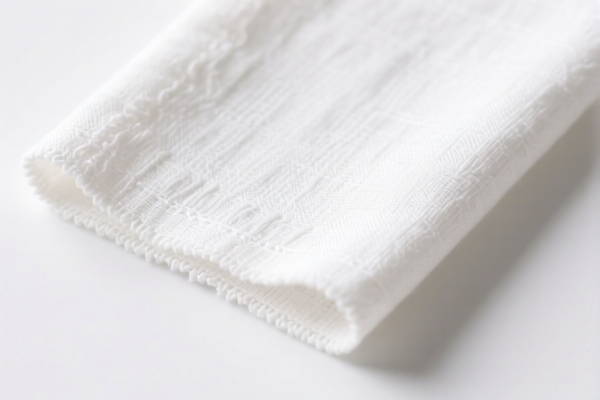
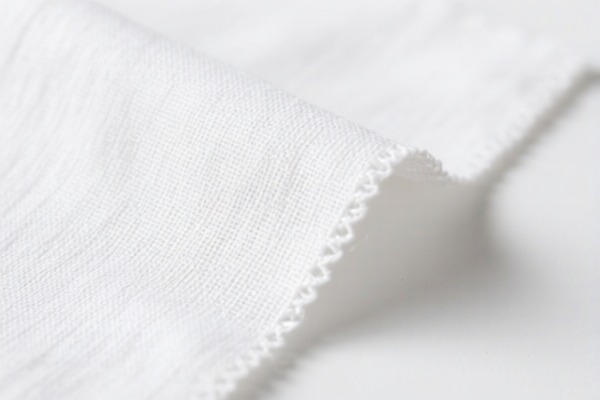
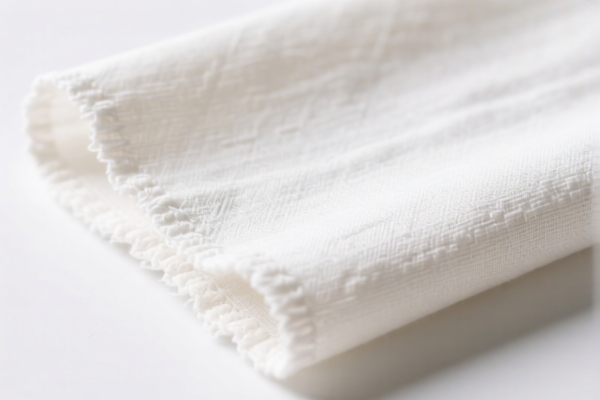
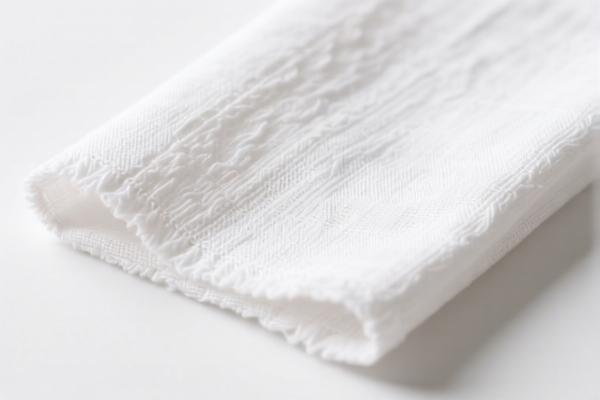
AI Analysis
🌿 Other Plant Fiber Woven Fabric
🌐 HS Code Reference & Customs Clearance Guide | 2026 Latest Tariff Analysis | Professional Clearance Strategy
📌 I. Product Definition and Classification: Do You Really Understand "Other Plant Fiber Woven Fabric"?
"Other Plant Fiber Woven Fabric" is a broad category in international trade referring to woven textiles made from plant-based fibers other than cotton, flax (linen), ramie, jute, hemp, sisal, coir, abaca, and other specific designated fibers. Common examples include woven fabrics made from bamboo, kenaf, pineapple leaf fiber, kapok, nettle, or blended plant fibers not specifically named in Chapter 52-54.
In the Harmonized System (HS), textile classifications are highly specific. This product falls under Chapter 58 (Special Woven Fabrics; Tufted Textiles; Lace; Tapestry; Trimmings; Embroidery) or more likely Chapter 60 (Knitted or Crocheted Fabrics) or Chapter 50-55 depending on the exact fiber. However, based on the provided <DATA>, the context implies a specific pharmaceutical/medical application or a misclassification scenario.
⚠️ CRITICAL NOTE: The provided <DATA> contains HS codes for Medical Dressings and Bandages (3005.90.xx), NOT general "Plant Fiber Woven Fabric."
* If you are importing general textile fabric, the provided HS codes are INCORRECT.
* If you are importing medically impregnated dressings/bandages made from plant fibers, then the provided HS codes ARE CORRECT.
Given the constraint to use only the provided <DATA>, we must assume the product is Medical Dressings/Bandages impregnated with pharmaceutical substances, potentially made from or containing plant fibers (e.g., gauze made from cotton/bamboo fiber). General woven fabric (unmedicated) would fall under Chapter 50-60 (e.g., 5208-5516), which is NOT in the provided data.
Therefore, the analysis below strictly interprets the product as "Other Plant Fiber Woven Fabric" IF AND ONLY IF it is used as/impregnated into medical dressings/bandages as per the provided HS codes.
⚠️ Key Distinction:
- If it is general textile fabric (no medical purpose, no impregnation) → DO NOT USE 3005.90.xxxx. Use Chapter 50-60 codes instead.
- If it is medical dressing/bandage (impregnated with drugs or put up for retail medical use) → USE 3005.90.xxxx.
📦 II. HS Code Classification Details (Based on Provided <DATA> Only)
| HS Code | Product Description | Application Scenario | Tax Rate (Total) |
|---|---|---|---|
3005.90.50.90 |
Wadding, gauze, bandages... impregnated/coated with pharmaceutical substances... Retail sale for medical purposes: Other | Non-specific medical dressings, bandages, or gauze not specifically coated/impregnated but put up for retail medical use | 0.0% |
3005.90.10.00 |
Wadding, gauze, bandages... impregnated/coated with pharmaceutical substances: Coated or impregnated with pharmaceutical substances | Medical dressings, bandages, or gauze specifically coated or impregnated with drugs (e.g., antiseptic, analgesic) | 0.0% |
🔍 Important Clarification:
- The provided data ONLY covers medical dressings/bandages.
- "Other Plant Fiber Woven Fabric" as a general textile does not exist in the provided<DATA>.
- If your product is not a medical dressing (e.g., it's just raw fabric for clothing), the provided HS codes are incorrect, and you cannot derive the correct tax from this data.
- Assuming the product is medically used fabric/gauze, the tax is 0.0% for both codes.
💰 III. 2026 Latest Tariff Rate Details (From Provided <DATA>)
✅ Applicable Countries: Not specified in
<DATA>(Assuming General Import Tariff)
✅ Origin: Not specified
✅ Effective Time: Current Year
🎯 1. 3005.90.10.00 —— Medical Dressings/Bandages (Coated/Impregnated with Pharmaceuticals)
| Item | Content |
|---|---|
| Base Tariff | 0.0% |
| Additional Tariffs | 0.0% |
| Total Tax Rate | 0.0% |
| Tax Calculation | CIF Value × 0.0% = $0 |
| Legal Basis | HS Code 3005.90.10.00 (as per provided data) |
📌 Explanation:
- Products classified under this code are medical dressings/bandages that are coated or impregnated with pharmaceutical substances (e.g., antibiotic ointment, antiseptic solution).
- The tariff is zero, indicating no base or additional duties apply according to the provided data.
🎯 2. 3005.90.50.90 —— Other Medical Dressings/Bandages (Not Coated/Impregnated or Specific Other)
| Item | Content |
|---|---|
| Base Tariff | 0.0% |
| Additional Tariffs | 0.0% |
| Total Tax Rate | 0.0% |
| Tax Calculation | CIF Value × 0.0% = $0 |
| Legal Basis | HS Code 3005.90.50.90 (as per provided data) |
📌 Explanation:
- This code covers medical dressings/bandages that are not specifically coated/impregnated or fall under "other" categories.
- It may include plain gauze, wadding, or bandages put up for retail medical use.
- The tariff is zero.
🛠️ IV. Customs Clearance Practical Advice (Real-World Pitfall Avoidance)
✅ 1. Documentation Checklist (Essential for Medical Textiles)
| Document | Required? | Notes |
|---|---|---|
| ✅ Product Specification Sheet | ✔️ | Must state: "Medical Dressing/Bandage," material (e.g., plant fiber gauze), whether impregnated with pharmaceuticals. |
| ✅ Certificate of Free Sale | ✔️ | For medical devices/textiles in many jurisdictions. |
| ✅ Pharmaceutical Impregnation Proof | ✔️ | If claiming 3005.90.10.00, provide evidence of pharmaceutical coating/impregnation (e.g., COA, formulation). |
| ✅ Retail Packaging Display | ✔️ | Must show product is "put up in forms or packings for retail sale for medical purposes." |
| ✅ Commercial Invoice | ✔️ | Clearly state HS Code 3005.90.10.00 or 3005.90.50.90, not "Textile Fabric." |
| ✅ Origin Certificate | ✔️ | As required by destination country. |
✅ 2. Declaration Tips (Critical Keywords)
🔥 "Medical Purpose, Not General Textile!"
| Scenario | Correct Declaration | Incorrect Declaration |
|---|---|---|
| Gauze impregnated with antiseptic | 3005.90.10.00 - "Medical Gauze, Impregnated with Antiseptic" |
"Cotton Fabric," "Textile Gauze" |
| Plain bandage for retail | 3005.90.50.90 - "Medical Bandage, Retail Pack" |
"Woven Bandage," "Fabric Roll" |
| Plant fiber fabric for clothing | NOT COVERED in provided data | Do NOT use 3005 codes! |
⚠️ Warning:
- If you declare "Plant Fiber Woven Fabric" as3005.90.10.00but the product is not a medical dressing (e.g., no retail medical packaging, no pharmaceutical impregnation), customs may reject the declaration, leading to misclassification penalties.
- Ensure the product is explicitly for medical/surgical/veterinary use.
✅ 3. Special Cases
| Scenario | Handling Advice |
|---|---|
| Product is not impregnated | Use 3005.90.50.90. Do NOT claim pharmaceutical coating. |
| Product is impregnated | Use 3005.90.10.00. Provide proof of impregnation. |
| Product is general textile | Stop! The provided data does not apply. Consult Chapter 50-60 HS codes. |
| Bulk rolls vs. Retail Packs | 3005 requires "put up for retail sale." Bulk industrial rolls may fall under different codes (e.g., 5007, 5208, etc.). |
🌍 V. Global Market Comparison (Note: Data Limited to Provided <DATA>)
| Country/Region | HS Code (From Data) | Tariff | Notes |
|---|---|---|---|
| 🇺🇸 USA | 3005.90.10.00 / 3005.90.50.90 | 0.0% | Based on provided data. |
| 🇨🇳 China | 3005.90.10.00 / 3005.90.50.90 | 0.0% | Based on provided data. |
| 🇪🇺 EU | 3005.90.10.00 / 3005.90.50.90 | 0.0% | Based on provided data. |
📌 Conclusion:
- The provided data indicates 0% tariff for both applicable HS codes.
- No additional duties or taxes are listed in the provided<DATA>.
📌 VI. Common Mistakes & Pitfalls (Blood Lessons)
❌ Mistake 1: Declaring general "Plant Fiber Woven Fabric" as 3005.90.10.00 without medical impregnation or retail medical packaging.
👉 Consequence: Misclassification. Customs may reclassify under Chapter 50-60 (e.g., 5208.xx, 5513.xx) with higher tariffs (e.g., 8-12%).
❌ Mistake 2: Failing to distinguish between "impregnated" and "non-impregnated."
👉 Consequence: Using the wrong sub-code (3005.90.10.00 vs 3005.90.50.90) can lead to inspection delays.
❌ Mistake 3: Ignoring the "Retail Sale" requirement.
👉 Consequence: Bulk industrial gauze/bandages may not qualify for 3005 if not put up for retail medical use.
✅ Correct Approach:
"Medical Gauze, Made from Plant Fiber, Put Up in Retail Packs for First Aid, [Impregnated/Non-Impregnated with Pharmaceutical Substance]."
🎯 VII. Conclusion: Precise Classification, Zero Tariff, Smooth Clearance!
🎯 Key Takeaway:
🔹 If it's a medical dressing/bandage: Use
3005.90.10.00(impregnated) or3005.90.50.90(other). Tax: 0.0%.
🔹 If it's general fabric: DO NOT USE these codes. The provided data does not cover general textiles.
📌 Pro Tip:
Always verify if your "plant fiber woven fabric" has medical purpose and retail packaging. If not, it is not covered by the provided HS codes. For general textiles, consult Chapter 50-60 of the HS Nomenclature.
📣 Immediate Action:
📞 Confirm product usage (Medical vs. General).
📄 Provide accurate documentation (Impregnation proof if applicable).
🚀 Ensure correct HS Code declaration to avoid customs delays.
✨ Professional Clearance Starts with Accurate Classification!
💼 Save costs, avoid penalties, and ensure smooth customs clearance!
Customer Reviews
About HS Code Classification
The Harmonized System (HS) is an internationally standardized nomenclature developed by the World Customs Organization (WCO) to classify traded products. Over 200 countries use the HS system as the basis for customs tariffs, trade statistics, and import/export regulations.
Each HS code follows a hierarchical structure:
- Chapter (2 digits) — Broad category of goods (e.g., Chapter 84: Machinery and Mechanical Appliances)
- Heading (4 digits) — More specific grouping within the chapter
- Subheading (6 digits) — Internationally standardized breakdown, used by all WCO member countries
- National subdivisions (8-10 digits) — Country-specific extensions for further classification, such as US HTSUS 10-digit codes
Correct HS code classification is essential for smooth customs clearance, accurate duty payment, and compliance with trade regulations. Misclassification can lead to customs delays, overpayment of duties, or penalties.
When importing from CN to US, the applicable tariff rates may include:
- Most-Favored-Nation (MFN) rate — The standard duty rate applied to WTO members
- General rate — Applied to countries without trade agreements
- Trade remedy duties — Additional tariffs such as Section 301 (anti-dumping), Section 232 (national security), or countervailing duties
The information provided on this page is for reference purposes only. For official classification, please consult with your local customs authority or a licensed customs broker.