Other Plastic Ceiling Decoration Films
CN → US| HS Code | Tariff Rate | Origin | Destination | Doc |
|---|---|---|---|---|
| 3926909989 | 22.8% | CN | US | Official Doc |
| 3919905060 | 40.8% | CN | US | Official Doc |
| 3919102055 | 40.8% | CN | US | Official Doc |
| 3920992000 | 39.2% | CN | US | Official Doc |
| 3920991000 | 41.0% | CN | US | Official Doc |
Product Images
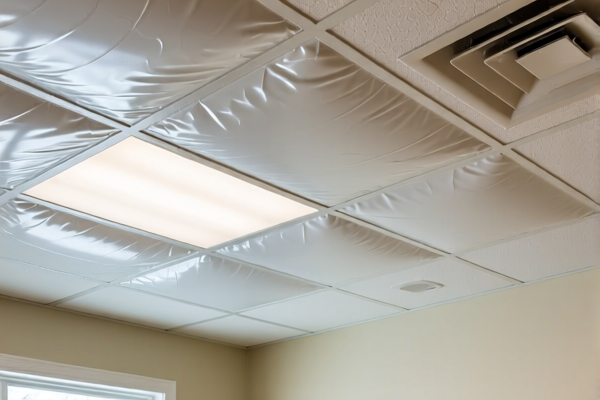
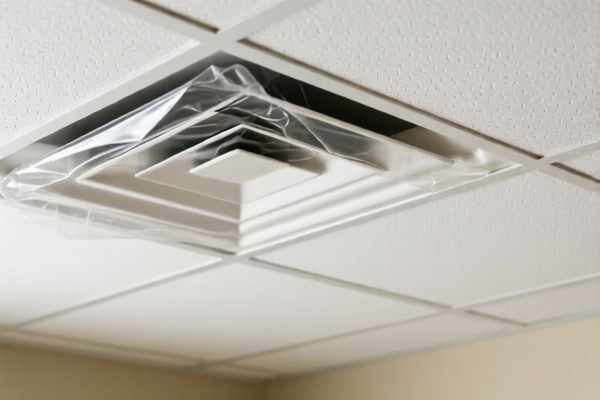
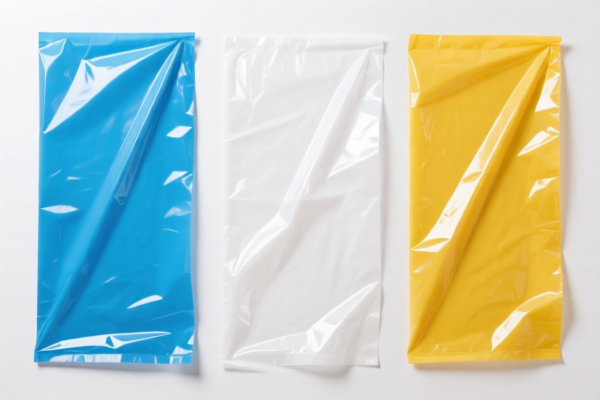
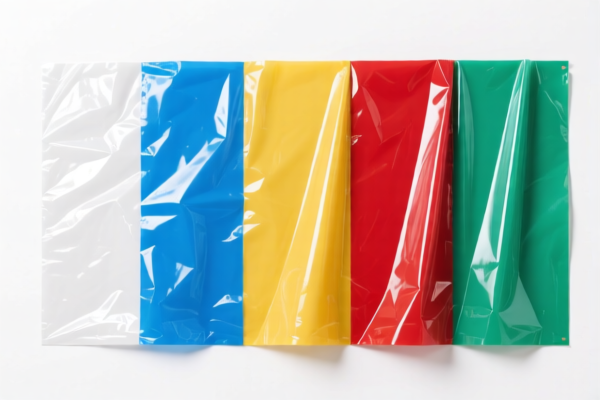
AI Analysis
🏠 Other Plastic Ceiling Decoration Films
🌐 HS Code Reference & Customs Clearance Guide | 2026 Latest Tariff Full Analysis | Professional-Level Clearance Strategy
📌 I. Product Definition and Classification: Do You Really Understand "Plastic Ceiling Films"?
Plastic ceiling decoration films are widely used in interior design, commercial spaces, and residential renovations. They are thin, flexible plastic sheets applied to ceilings for aesthetic or protective purposes. In international trade, these products are classified based on their form (film vs. article), material composition, and specific application.
⚠️ Key Distinction Points:
- If the product is a flexible plastic sheet/film without specific structural shaping beyond being a "flat product," it generally falls under Chapter 39 (Plastics and Articles Thereof), specifically headings 3919 (Self-adhesive plates, sheets, film, foil, tape, strip and other flat shapes) or 3920 (Other plates, sheets, film, foil and strip, of plastics, non-cellular).
- If the product is considered an "article" (e.g., pre-cut, shaped, or finished wall/ceiling decor item) that doesn't fit other specific headings, it may fall under the residual category "Other articles" (Heading 3926).
📦 II. HS Code Classification Details (2026 Latest Tariff Authoritative Comparison)
| HS Code | Product Description | Applicable Scenario | Form/State | Tax Implication |
|---|---|---|---|---|
3926.90.99.89 |
Other plastic wall decoration films (Note: Often used as a residual category for plastic decor items including ceiling films if not strictly "film") | Pre-cut, shaped, or finished decorative plastic items for ceilings/walls | Article/Finished Product | Lowest Total Tax (22.8%) |
3919.90.50.60 |
Other plastic films, flat shapes, not self-adhesive or other | Raw or semi-finished plastic film rolls for ceiling application | Film (Flat Shape) | High Tax (40.8%) |
3919.10.20.55 |
Other plastic films, of heading 3919, self-adhesive or not, classified under other sub-headings | Plastic films fitting the description of 3919.10 | Film | High Tax (40.8%) |
3920.99.20.00 |
Other plastic films, non-cellular, non-reinforced, flexible | Standard plastic decorative films (PVC, PE, PP, etc.) | Film (Flexible) | Medium-High Tax (39.2%) |
3920.99.10.00 |
Other plastic films, residual category, composite or specific thickness | Plastic films with complex composite structures or specific thickness attributes | Film (Composite) | Highest Tax (41.0%) |
🔍 Critical Reminder:
- Form Matters: Customs authorities strictly distinguish between "Films" (Ch 3909-3920) and "Articles" (Ch 3926).
- "Wall/ Ceiling Decoration Films" are often ambiguous. If they are simple rolls, they are films. If they are pre-cut panels or have specific adhesive backing intended for immediate installation as a finished decor item, they might be argued as articles under 3926, but this is risky and subject to interpretation.
- US Trade Policy: All these codes attract significant Section 301 (25%) and Section 122 (10%) additional tariffs due to Chinese origin.
💰 III. 2026 Latest Tariff Rate Details (Including Additional Taxes & Policy Surcharges)
✅ Applicable Country: United States (US)
✅ Origin: China (CN)
✅ Effective Date: 2025/2026 (Current Trade Policy Environment)
🎯 1. 3926.90.99.89 — Other Plastic Articles (Including Decorative Films as Articles)
| Item | Content |
|---|---|
| Basic Tariff | 5.3% (ad valorem) |
| Section 301 Additional Tariff | +7.5% (Specific to this residual sub-category under certain interpretations) |
| Section 122 Tariff | +10% (Bilateral trade measure) |
| Total Tariff Rate | 22.8% |
| Tax Calculation | CIF Value × 22.8% |
| De Minimis Eligibility | ❌ No (Deny de minimis for Chinese goods under current enforcement) |
| Legal Basis Path | USITC:3926.90.99.89 → FOOTNOTE:301.99.89 → IEEPA:122 |
📌 Explanation:
- This is the most cost-effective classification if the product can be justified as an "article" rather than a simple film.
- Risk: Customs may reclassify as a film if the product is sold in rolls without specific finishing.
- Why lower? The "Other Articles" residual category sometimes has lower Section 301 rates depending on the specific HTSUS subheading notes.
🎯 2. 3919.90.50.60 — Other Plastic Films (Flat Shape)
| Item | Content |
|---|---|
| Basic Tariff | 5.8% |
| Section 301 Additional Tariff | +25.0% |
| Section 122 Tariff | +10% |
| Total Tariff Rate | 40.8% |
| Tax Calculation | CIF Value × 40.8% |
| De Minimis Eligibility | ❌ No |
| Legal Basis Path | IEEPA:9903.01.25 → USITC:3919.90.50.60 → FOOTNOTE:301.99.50 |
📌 Note:
- High tax rate applies to most plastic films.
- This applies if the product is clearly a plastic film (Chapter 3909-3920) and falls into the "Other" bucket of heading 3919.
🎯 3. 3919.10.20.55 — Other Plastic Films (Head 3919)
| Item | Content |
|---|---|
| Basic Tariff | 5.8% |
| Section 301 Additional Tariff | +25.0% |
| Section 122 Tariff | +10% |
| Total Tariff Rate | 40.8% |
| Tax Calculation | CIF Value × 40.8% |
| De Minimis Eligibility | ❌ No |
| Legal Basis Path | IEEPA:9903.01.25 → USITC:3919.10.20.55 |
📌 Note:
- Similar to above, this is a standard plastic film classification.
- The "10.20.55" subheading is a very specific residual for plastic films.
🎯 4. 3920.99.20.00 — Other Plastic Films (Non-Cellular, Non-Reinforced)
| Item | Content |
|---|---|
| Basic Tariff | 4.2% |
| Section 301 Additional Tariff | +25.0% |
| Section 122 Tariff | +10% |
| Total Tariff Rate | 39.2% |
| Tax Calculation | CIF Value × 39.2% |
| De Minimis Eligibility | ❌ No |
| Legal Basis Path | IEEPA:9903.01.25 → USITC:3920.99.20.00 |
📌 Note:
- Slightly lower basic rate than 3919, but still subject to high additional tariffs.
- Applies to flexible plastic films used for decoration.
🎯 5. 3920.99.10.00 — Other Plastic Films (Residual/Composite)
| Item | Content |
|---|---|
| Basic Tariff | 6.0% |
| Section 301 Additional Tariff | +25.0% |
| Section 122 Tariff | +10% |
| Total Tariff Rate | 41.0% |
| Tax Calculation | CIF Value × 41.0% |
| De Minimis Eligibility | ❌ No |
| Legal Basis Path | IEEPA:9903.01.25 → USITC:3920.99.10.00 |
📌 Note:
- Highest total tax rate.
- Use only if the film has complex composite structures that don't fit other subheadings.
🛠️ IV. Customs Clearance Practical Advice (Battle-Tested Pitfall Avoidance Guide)
✅ 1. Preparation Checklist (None of the Following Can Be Missing)
| Material | Must Provide | Description |
|---|---|---|
| ✅ Product Specification Sheet | ✔️ | Include dimensions, thickness (mm/mils), material type (PVC, PE, PP), adhesive type (if any). |
| ✅ Product Photos (Realistic) | ✔️ | Show the product in roll form vs. installed state. Crucial for distinguishing "Film" vs. "Article". |
| ✅ Commercial Invoice | ✔️ | Must accurately describe the product as "Plastic Ceiling Decoration Film" or "Plastic Decorative Film". Avoid vague terms. |
| ✅ Packing List | ✔️ | Detail net/gross weight, number of rolls, dimensions per roll. |
| ✅ Material Safety Data Sheet (MSDS) | ✔️ | For customs and fire safety compliance (especially for PVC films). |
| ✅ HTSUS Justification Memo | ✔️ | Briefly explain why you chose a specific HS code (e.g., "Product is a flexible plastic film, not a structural article"). |
✅ 2. Declaration Tips (Key Mnemonics)
🔥 "State clearly: Film or Article? Rolls or Panels? Tax doubles on ambiguity!"
| Scenario | Correct Declaration | Wrong Approach |
|---|---|---|
| Product is a roll of plastic sheeting | HS 3920/3919 (Film) | Declaring as "Article" → Risk of reclassification & penalty |
| Product is pre-cut panels with backing | HS 3926 (Article) | Declaring as "Film" → Under-declaration risk if customs disagrees |
| Product has adhesive backing | HS 3919 (Self-adhesive film) | Declaring as non-adhesive → Misclassification |
| Product is composite (e.g., plastic + foam) | HS 3920/3921 | Declaring as pure plastic → Wrong basic rate |
✅ 3. Special Case Handling
| Situation | Handling Advice |
|---|---|
| OEM Custom Printed Films | Provide print design files and ink composition. Ensure no prohibited substances (lead, phthalates) in inks. |
| Self-Adhesive Films | Clearly state "Self-Adhesive" in description. Misclassification here can lead to significant duty differences. |
| Fire-Retardant Films | Provide UL 94 or NFPA 286 test reports. US customs may request proof of flame retardancy for interior decor. |
| High-Value Luxury Decor Films | Ensure accurate valuation. Customs may scrutinize if declared value is too low for premium materials. |
🌍 V. Global Market Customs Comparison (2026 Latest)
| Country/Region | Recommended HS Code | Tariff | Certification Requirements | Notes |
|---|---|---|---|---|
| 🇺🇸 United States | 3926.90.99.89 (Preferred) |
22.8% | No specific US certification, but fire safety (NFPA) may be required by building codes. | Highest risk of Section 301/122 tariffs. |
| 🇨🇳 China | 3920.99 or 3926.90 |
5-6% | CCC (if applicable for specific plastics) | Low tariff, easy clearance. |
| 🇪🇺 European Union | 3920.49 or 3926.90 |
4-6.5% | CE Marking, REACH Compliance, RoHS | Strict on chemical content (phthalates). |
| 🇬🇧 United Kingdom | 3920.49 or 3926.90 |
4-6.5% | UKCA Marking, REACH | Post-Brexit rules apply. |
| 🇨🇦 Canada | 3920.49 or 3926.90 |
5-6.5% | Health Canada Regulations (if applicable) | No Section 301 equivalent, but general MFN applies. |
📌 Conclusion:
- USA is the most expensive market due to additional trade tariffs (35-41% total).
- EU/UK focus on chemical compliance (REACH/RoHS) rather than high tariffs.
- Classification Strategy: Try to justify HS 3926 (Articles) if the product is finished/decorative, as it has the lowest total tariff (22.8%) in the US. However, this requires strong evidence that the product is an "article" and not a "film."
📌 VI. Common Errors & Pitfall Avoidance (Blood-Tear Lessons)
❌ Error 1: Declaring "Plastic Ceiling Film" as 3926 when it is clearly a roll of film.
👉 Consequence: Customs reclassifies to 3920/3919 → Tariff jumps from 22.8% to ~40% → Back taxes + penalties!
❌ Error 2: Omitting "Self-Adhesive" in the description for adhesive-backed films.
👉 Consequence: Misclassification to non-adhesive films → Potential duty discrepancies.
❌ Error 3: Using generic terms like "Decorative Sheet" without material details.
👉 Consequence: Customs requests additional information → Delays in clearance (5-10 days) → Storage fees.
❌ Error 4: Not providing fire safety test reports for interior decor.
👉 Consequence: US Customs may hold shipment for CBP (Customs and Border Protection) inspection → Port fees + delays.
✅ Correct Practice:
"Plastic Ceiling Decoration Film, PVC Material, Non-Adhesive, Roll Form, 1.0mm Thickness, Printed Design, For Interior Decorative Use"
🎯 VII. Conclusion: Professional Declaration Saves Money!
🎯 Remember the Mnemonic:
🔹 "Film vs. Article, Tax Differs by 18%!
3926 is Cheaper (22.8%), But Must Be Justified!
3920/3919 is Safe (40.8%), But Costs More!
Be Precise, Be Prepared, Be Profitable!"
📌 Pro Tip:
- If the product is pre-cut or shaped for specific ceiling applications, consider arguing for HS 3926.90.99.89 to save ~18% in tariffs.
- If the product is a standard roll, stick to HS 3920/3919 to avoid reclassification risks.
- Always provide detailed product images and specifications to support your classification.
📣 Immediate Action:
📞 Contact a licensed customs broker + Provide product samples/images + Request HTSUS Pre-Ruling from US CBP.
🚀 Let your plastic films clear smoothly, reduce costs, and maximize profits!
✨ Professional Customs Clearance Starts with Accurate Classification!
💼 Every Cent of Tax You Save Is Pure Profit!
Customer Reviews
About HS Code Classification
The Harmonized System (HS) is an internationally standardized nomenclature developed by the World Customs Organization (WCO) to classify traded products. Over 200 countries use the HS system as the basis for customs tariffs, trade statistics, and import/export regulations.
Each HS code follows a hierarchical structure:
- Chapter (2 digits) — Broad category of goods (e.g., Chapter 84: Machinery and Mechanical Appliances)
- Heading (4 digits) — More specific grouping within the chapter
- Subheading (6 digits) — Internationally standardized breakdown, used by all WCO member countries
- National subdivisions (8-10 digits) — Country-specific extensions for further classification, such as US HTSUS 10-digit codes
Correct HS code classification is essential for smooth customs clearance, accurate duty payment, and compliance with trade regulations. Misclassification can lead to customs delays, overpayment of duties, or penalties.
When importing from CN to US, the applicable tariff rates may include:
- Most-Favored-Nation (MFN) rate — The standard duty rate applied to WTO members
- General rate — Applied to countries without trade agreements
- Trade remedy duties — Additional tariffs such as Section 301 (anti-dumping), Section 232 (national security), or countervailing duties
The information provided on this page is for reference purposes only. For official classification, please consult with your local customs authority or a licensed customs broker.