Other Plastic Exterior Decorative Panels
CN → US| HS Code | Tariff Rate | Origin | Destination | Doc |
|---|---|---|---|---|
| 3920200055 | 39.2% | CN | US | Official Doc |
| 3920995000 | 40.8% | CN | US | Official Doc |
| 8708295160 | 0.0% | CN | US | Official Doc |
| 8708998180 | 37.5% | CN | US | Official Doc |
| 3926305000 | 22.8% | CN | US | Official Doc |
Product Images
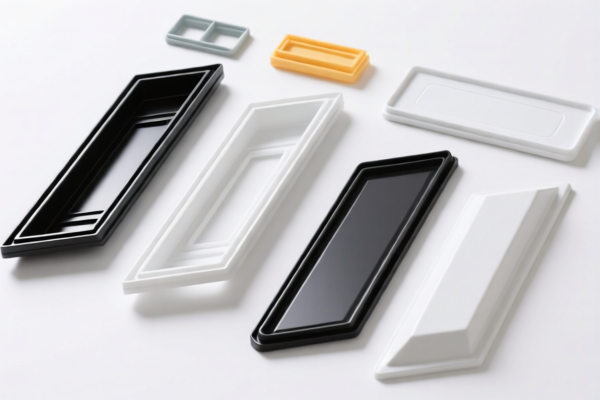
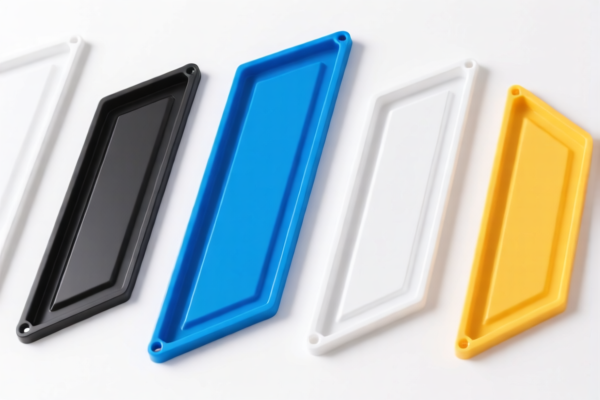
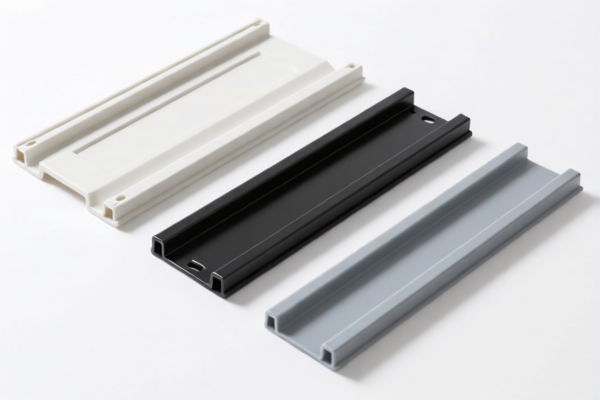
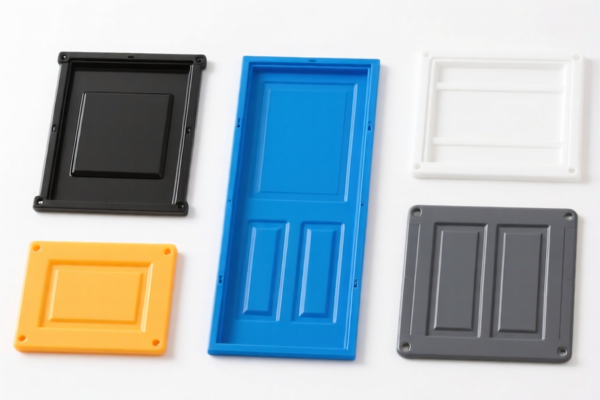
AI Analysis
🚗 Other Plastic Exterior Decorative Panels
🌐 HS Code Reference & Customs Clearance Guide | 2026 Latest Tariff Analysis | Professional Clearance Strategy
📌 I. Product Definition & Classification: Do You Really Understand "Plastic Exterior Decorative Panels"?
"Other Plastic Exterior Decorative Panels" are non-structural components used on the exterior of vehicles for aesthetic enhancement, aerodynamic adjustment, or branding. In international trade, these products are tricky because they can be classified either as Plastic Articles (based on material) or Motor Vehicle Parts (based on use). The distinction depends heavily on whether the item is considered a "general purpose plastic product" or a "specific vehicle part with exclusive use."
⚠️ Key Distinction Point:
- If the panel is a generic plastic sheet/board not specifically designed for a specific vehicle model → Classified under Chapter 39 (Plastics).
- If the panel is a specific exterior trim, bumper, or body part exclusive to automobiles → Classified under Chapter 87 (Motor Vehicles).
- Note: The provided data highlights a conflict between "General Plastic" and "Vehicle Part" classifications, leading to drastically different tax liabilities.
📦 II. HS Code Classification Details (2026 Latest Tariff Authority Comparison)
Based on the provided dataset, here are the five potential classifications and the logic behind them:
| HS Code | Product Description | Classification Logic | Total Tax Rate (Approx.) |
|---|---|---|---|
3920.20.00.55 |
Other plates, sheets, film, foil & strip, of plastics | Matches Material (Plastic) + Form (Plate/Sheet). Uses the "Residual/Catch-all" principle because the name contains "Other" and doesn't specify the exact polymer type. | 39.2% |
3920.99.50.00 |
Other plates, sheets... of plastics (not foam/non-reinforced) | Matches Plastic Material + Board Form. Falls under the "Other" category for non-foamed, non-reinforced plastic boards. | 40.8% |
8708.29.51.60 |
Other parts and accessories for bodies | Matches Plastic Material + Body Part/Accessory Use. Fits the definition of "Other parts and accessories" for vehicle bodies. | 2.5% +85.0% |
8708.99.81.80 |
Other parts and accessories for motor vehicles | Matches Automotive Exterior Trim Use + Plastic Material. Fits the "Other" category in Ch. 87 with no material conflict logic. | 37.5% |
3926.30.50.00 |
Other plastic articles | Matches Plastic Material + Body-mounted Trim/Connection Plate. Reasonable inference for trim parts not covered elsewhere. | 22.8% |
🔍 Critical Observation:
- The tax rate ranges from a low 2.5% (if strictly viewed as a vehicle part) to a high 85% (due to specific steel/aluminum/copper surcharges mentioned in one variant) or 40.8% (if viewed as generic plastic).
- Why the discrepancy? Customs officers may argue that a "decorative panel" is just a piece of plastic (39xx) OR a car part (87xx). The "Body" classification (8708) often attracts specific surcharges listed in the data.
💰 III. 2026 Latest Tariff Rate Breakdown (Including Surcharges & Policy Add-ons)
✅ Applicable Country: United States (US)
✅ Origin: China (CN)
✅ Effective Time: Post-November 2025 (Current Trade Climate)
🎯 1. 3920.20.00.55 & 3920.99.50.00 —— Generic Plastic Plates/Sheets (Material-Based)
These codes treat the product as a raw or semi-finished plastic good, ignoring its automotive function.
| Item | Content |
|---|---|
| Base Tariff | 4.2% (for 3920.20) / 5.8% (for 3920.99) |
| Section 301 Surcharge (Add-on) | +25.0% |
| IEEPA Surcharge (122 Clause) | +10.0% |
| Total Tax Rate | 39.2% - 40.8% |
| Tax Calculation | CIF Value × Total Rate |
| De Minimis Exemption | ❌ Not Eligible (High value/category risks) |
| Legal Basis Path | HTS:3920.xx → USITC Footnote: Sec 301 → IEEPA:122 |
📌 Explanation:
- If customs classifies your decorative panel as just "plastic sheeting," you pay ~40%. This is the "safest" but potentially most expensive route if a lower vehicle part rate is applicable.
- The "122 Clause" refers to specific US Treasury directives on Chinese imports, adding an extra 10% on top of Section 301.
🎯 2. 8708.29.51.60 & 8708.99.81.80 —— Automotive Parts (Use-Based)
These codes treat the product as a part of the motor vehicle, leveraging Chapter 87's general lower base rates for parts.
| HS Code | Base Tariff | Section 301 | IEEPA (122) | Total Effective Rate | Special Notes |
|---|---|---|---|---|---|
8708.29.51.60 |
2.5% | +25.0% | +10.0% | ~37.5% | ⚠️ Warning: Data indicates 2.5% <u></u> +85.0%. This suggests potential Additional 50% Surcharge for Steel/Aluminum/Copper products if the panel contains metal substrates. If pure plastic, it may stick to ~37.5%. |
8708.99.81.80 |
2.5% | +25.0% | +10.0% | 37.5% | Fits "Other parts and accessories." Lower base rate helps, but still hits by 35% total. |
📌 Crucial Warning on
8708.29.51.60:
- The data shows"2.5% <u></u>+85.0%"and mentions"Steel, Aluminum, Copper products surcharge: 50%".
- If your "Plastic Decorative Panel" has a metal backing, metal fasteners, or is part of a composite body panel involving metals, you might be hit with an additional 50% surcharge, making the total rate 85%!
- Pure plastic panels should avoid8708.29if it triggers the metal surcharge;8708.99is cleaner but still 37.5%.
🎯 3. 3926.30.50.00 —— Other Plastic Articles (Trim/Connection)
| Item | Content |
|---|---|
| Base Tariff | 5.3% |
| Section 301 Surcharge | +7.5% (Note: Data shows 7.5% here, possibly a different quota or category) |
| IEEPA (122 Clause) | +10.0% |
| Total Tax Rate | 22.8% |
| Tax Calculation | CIF Value × 22.8% |
| Best Option? | ✅ Yes, potentially the lowest if classified as "Other Plastic Articles" (like furniture fittings or general trim) rather than "Plastic Sheets" or "Vehicle Parts." |
📌 Interpretation:
- Code3926.30is often used for furniture fittings, toilet articles, or other plastic articles not elsewhere specified.
- If customs accepts that these are "decorative accessories" rather than structural "bodies" or "sheets," this code offers the lowest tax burden at 22.8%.
🛠️ IV. Customs Clearance Practical Advice (Real-World Pitfall Avoidance)
✅ 1. Preparation Checklist (Non-negotiable)
| Document | Required? | Purpose |
|---|---|---|
| ✅ Product Specifications | ✔️ | Must detail: Material (e.g., PP, ABS, PC), Dimensions, Mounting Method. |
| ✅ Photos (Clear & Detailed) | ✔️ | Show front, back, mounting holes, and any branding. Prove it's "decorative" not structural. |
| ✅ Bill of Materials (BOM) | ✔️ | Critical: Prove it is 100% Plastic. If it has metal screws, brackets, or foil, the 85% surcharge risk increases. |
| ✅ Commercial Invoice | ✔️ | Description must be precise: "Plastic Decorative Trim Panel, Non-Structural, No Metal Components." |
| ✅ HS Code Pre-Ruling | ✔️ | Strongly Recommended: Apply for an Advance Ruling from US CBP to lock in 3926.30 or 8708.99. |
✅ 2. Declaration Strategy (Key Mantras)
🔥 "Material First, Use Second. Avoid Metal. Keep it Pure."
| Scenario | Correct Declaration | Wrong Practice |
|---|---|---|
| Pure Plastic Trim | Use 3926.30.50.00 (22.8%) or 8708.99 (37.5%). Clearly state "Plastic Only." |
Declare as 3920 (40%) → Overpay. |
| Panel with Metal Backing | Must declare metal content. Risk of 85% under 8708.29 if surcharged. |
Hide metal parts → Customs seizure + Penalties. |
| Generic Plastic Sheet | Declare as 3920 if not shaped for a car. |
Call it "Car Part" when it's just a sheet → Misclassification. |
| Vehicle Specific Part | Use 8708.99.81.80 (37.5%). |
Use 3926 (22.8%) → Risk of audit for using wrong chapter. |
✅ 3. Special Case Handling
| Case | Advice |
|---|---|
| OEM Parts (Toyota, Ford, etc.) | If part of a kit, declare as "Vehicle Part" (8708). |
| Aftermarket Universal Trim | Declare as "General Plastic Article" (3926) to aim for lower 22.8% rate. |
| Composite Panels (Plastic + Metal Mesh) | High risk. Expect 301 + IEEPA + potential Metal Surcharge. Consult a broker. |
| Dropshipping (De Minimis) | ❌ Do Not Use. Value likely exceeds $800, and these goods are on the IEEPA/301 list. No de minimis exemption. |
🌍 V. Global Market Comparison (2026 Update)
| Country/Region | Recommended HS Code | Est. Tariff (China Origin) | Notes |
|---|---|---|---|
| 🇺🇸 USA | 3926.30.50.00 |
22.8% (Best Case) | High risk of 35-85% if misclassified as vehicle part or metal-containing. |
| 🇺🇸 USA | 8708.99.81.80 |
37.5% | Standard vehicle part rate. |
| 🇺🇸 USA | 3920.20.00.55 |
39.2% | Safe but expensive generic plastic rate. |
| 🇨🇳 China | 3926.30.50.00 |
5.3% | Low entry tariff. No 301/IEEPA. |
| 🇪🇺 EU | 3926.90.00 |
4.4% | Standard plastic article rate. |
| 🇦🇺 Australia | 3926.90.00 |
5.0% | No major surcharges. |
📌 Conclusion:
- The US market is the most complex due to Section 301 and IEEPA surcharges.
- Goal: Aim for3926.30.50.00(22.8%) by proving it is a "general plastic article" (trim/decoration) rather than a "vehicle part" or "plastic sheet."
- Avoid:8708.29if metal is involved due to the potential 85% trap.
📌 VI. Common Errors & Pitfalls (Lessons Learned)
❌ Error 1: Calling it "Car Part" when it's just a sticker/trim sheet.
👉 Consequence: Customs may upgrade it to 8708 (37.5%) or 3920 (40%), but if you argue it's a "vehicle part," you might lose the 3926 (22.8%) benefit. Be consistent.
❌ Error 2: Ignoring metal components.
👉 Consequence: If the panel has a metal frame, 8708.29 triggers a 50% surcharge on top of 301/IEEPA → 85% Total Tax!
❌ Error 3: Using "De Minimis" for high-value shipments.
👉 Consequence: US Customs has cracked down on IEEPA/301 goods entering via Parcel Post. Seizure risk is high.
✅ Correct Practice:
"Plastic Decorative Trim Panel, Model XYZ, Material: ABS, No Metal Components, For Aftermarket Use"
🎯 VII. Conclusion: Precision Classification Saves Money
🎯 Key Takeaways:
1. Lowest Tax: 3926.30.50.00 at 22.8% (if accepted as "Other Plastic Articles").
2. Safest Tax: 3920.20.00.55 at 39.2% (if viewed as generic plastic).
3. Highest Risk: 8708.29.51.60 at 85% (if metal is detected or misclassified).
🔹 "Check for Metal, Claim Plastic, Avoid Vehicle Part Label!"
🔹 "3926 is the King of Savings, but only if Customs agrees it's not a 'Part'!"
📌 Pro Tip:
If your product is 100% plastic and not specific to one car model (universal fit), fight for 3926.30. If it's OEM-specific, accept 8708.99 but ensure no metal parts to avoid the 85% trap.
📣 Immediate Action:
📞 Hire a US Customs Broker to review your BOM.
🚀 Apply for an Advance Ruling to lock in the 22.8% rate.
✨ Save 10-60% in taxes with the right HS Code!
Customer Reviews
About HS Code Classification
The Harmonized System (HS) is an internationally standardized nomenclature developed by the World Customs Organization (WCO) to classify traded products. Over 200 countries use the HS system as the basis for customs tariffs, trade statistics, and import/export regulations.
Each HS code follows a hierarchical structure:
- Chapter (2 digits) — Broad category of goods (e.g., Chapter 84: Machinery and Mechanical Appliances)
- Heading (4 digits) — More specific grouping within the chapter
- Subheading (6 digits) — Internationally standardized breakdown, used by all WCO member countries
- National subdivisions (8-10 digits) — Country-specific extensions for further classification, such as US HTSUS 10-digit codes
Correct HS code classification is essential for smooth customs clearance, accurate duty payment, and compliance with trade regulations. Misclassification can lead to customs delays, overpayment of duties, or penalties.
When importing from CN to US, the applicable tariff rates may include:
- Most-Favored-Nation (MFN) rate — The standard duty rate applied to WTO members
- General rate — Applied to countries without trade agreements
- Trade remedy duties — Additional tariffs such as Section 301 (anti-dumping), Section 232 (national security), or countervailing duties
The information provided on this page is for reference purposes only. For official classification, please consult with your local customs authority or a licensed customs broker.