Other Plastic Film Conductive Film
CN → US| HS Code | Tariff Rate | Origin | Destination | Doc |
|---|---|---|---|---|
| 3920995000 | 40.8% | CN | US | Official Doc |
| 3926909989 | 22.8% | CN | US | Official Doc |
| 3921190090 | 41.5% | CN | US | Official Doc |
| 3920991000 | 41.0% | CN | US | Official Doc |
| 3926909987 | 22.8% | CN | US | Official Doc |
Product Images
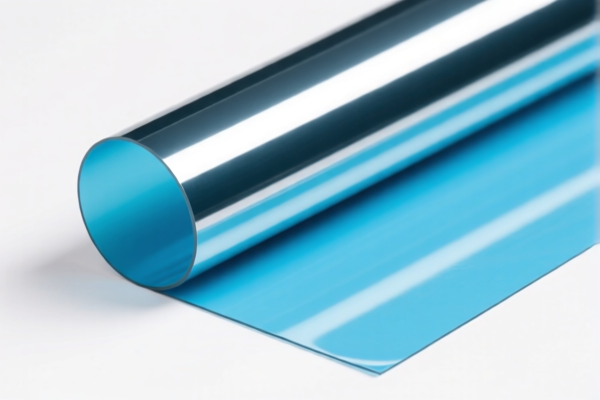
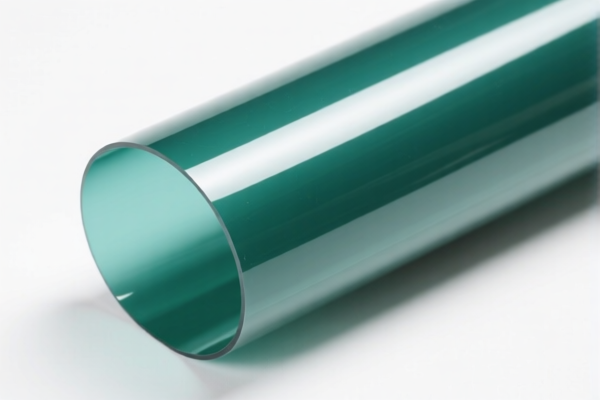

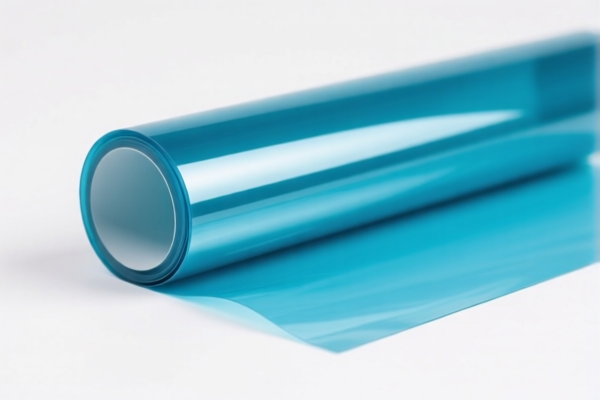
AI Analysis
🎬 Other Plastic Conductive Film (Other Plastic Film)
🌐 HS Code Reference & Customs Clearance Guide | 2026 Latest Tariff Analysis | Professional Clearance Strategy
📌 I. Product Definition & Classification: Do You Truly Understand "Conductive Plastic Film"?
Plastic conductive films are critical components in the electronics, automotive, and packaging industries, serving as EMI shielding, static-dissipative materials, or heating elements. In international trade, the classification of these films is highly sensitive to their composition, form, and specific application. While they are generally "plastic products," their conductive nature and thin sheet-like form place them in specific sub-categories under Chapter 39.
⚠️ Key Distinction Points:
- Base Material: Must be predominantly plastic (polymer). If metal-coated significantly, it may shift to Chapter 85 or 76. - Form Factor: Thin sheets/films vs. rigid plates. - Application: General purpose vs. specialized electrical applications. - HS Code Selection: Varies significantly between3920(Plates, Sheets, Foils),3921(Other Plates/Sheets), and3926(Other Articles).
📦 II. HS Code Classification Details (2026 Latest Tariff Authority Comparison)
The provided data indicates that "Other Plastic Conductive Film" can be classified under 5 different HS Codes, depending on the precise technical specifications and duty structure.
| HS Code | Product Description | Applicable Scenario | Total Tax Rate | Tax Breakdown Detail |
|---|---|---|---|---|
3920.99.50.00 |
Plastic Plates, Sheets, Foils, Film, Strip (Other) Material: Plastic Form: Plate/Sheet Category: Other categories Application: Other plastic conductive plates |
Best for standard conductive plastic sheets/films that do not fall under specific headings like "insulated wire" or "hardenable plastics." | 40.8% | Base Duty: 5.8% Additional Duty: 25.0% (Section 301) Section 122 Duty: 10.0% |
3926.90.99.89 |
Other Plastic Articles (Other) Material: Plastic Form: Plate/Sheet Category: Other plastic articles Application: Other plastic conductive plates |
Suitable if the film is considered a "finished article" or component rather than a raw material/semi-fabricated sheet. Often used for complex shaped conductive plastic parts. | 22.8% | Base Duty: 5.3% Additional Duty: 7.5% (Section 301) Section 122 Duty: 10.0% |
3921.19.00.90 |
Other Plates, Sheets, Film, Foil, Strip (Other Plastic) Material: Plastic Form: Plate/Sheet Category: Other plastic plates/sheets/films Application: Other plastic conductive plates |
Applies if the film is classified under "Other Plates, Sheets, Film..." but not specifically under heading 3920 (e.g., different polymer type or processing method). | 41.5% | Base Duty: 6.5% Additional Duty: 25.0% (Section 301) Section 122 Duty: 10.0% |
3920.99.10.00 |
Plates, Sheets, Foils, Film, Strip, Other Plastic Material: Plastic Form: Plate/Sheet Category: Other plastics Application: Other plastic conductive plates |
Specific sub-category under 3920 for "Other" plastics. Check if the specific plastic resin (e.g., PET, PE, PP) aligns with this sub-heading better than 50.00. | 41.0% | Base Duty: 6.0% Additional Duty: 25.0% (Section 301) Section 122 Duty: 10.0% |
3926.90.99.87 |
Other Plastic Articles: Other Forms/Uses Material: Plastic Form: Conductive Plate Category: Other forms/uses of plastic articles Application: Other plastic conductive plates |
Specifically for conductive plates classified as "Other" under 3926, possibly implying a specialized conductive application distinct from general-purpose articles. | 22.8% | Base Duty: 5.3% Additional Duty: 7.5% (Section 301) Section 122 Duty: 10.0% |
🔍 Key Insight:
- Codes3920.99.50.00,3921.19.00.90,3920.99.10.00are subject to high additional tariffs (25% + 10%), totaling ~41%. - Codes3926.90.99.89and3926.90.99.87are subject to lower additional tariffs (7.5% + 10%), totaling 22.8%. - Strategy: If your product can be legally classified under3926(Other Articles) rather than3920or3921(Raw Sheets/Films), you can save ~18-19% in duties.
💰 III. 2026 Latest Tariff Rate Breakdown (Including Surcharges & Policy Add-ons)
✅ Applicable Country: United States (US)
✅ Origin: China (CN)
✅ Effective Date: 2025/2026 (Current Trade Policy)
🎯 1. High-Tax Category: 3920 & 3921 Codes (~41% Total)
| Item | Content |
|---|---|
| Base Duty | 5.8% – 6.5% (Ad Valorem) |
| Section 301 Surcharge | +25.0% (USITC Footnote for Chinese plastics) |
| Section 122 Surcharge | +10.0% (Specific duty on Chinese plastic products) |
| Total Tax Rate | 40.8% – 41.5% |
| Tax Calculation | CIF Value × Total Rate |
| De Minimis Exemption | ❌ Not Eligible (High value items) |
| Legal Basis Path | HTSUS:3920/3921 → USITC:301 → CBP:Section 122 |
📌 Explanation:
- Section 301 (25%): Targeted at Chinese goods, including many plastic intermediates. - Section 122 (10%): A specific surcharge on certain plastic articles from China, added to mitigate trade deficits. - Result: This is a high-cost category. Importers must carefully justify if a lower-rated3926code is appropriate.
🎯 2. Low-Tax Category: 3926 Codes (22.8% Total)
| Item | Content |
|---|---|
| Base Duty | 5.3% (Ad Valorem) |
| Section 301 Surcharge | +7.5% (Reduced Section 301 rate for certain "Other Articles") |
| Section 122 Surcharge | +10.0% (Still applies to Chinese plastic articles) |
| Total Tax Rate | 22.8% |
| Tax Calculation | CIF Value × 22.8% |
| De Minimis Exemption | ❌ Not Eligible |
| Legal Basis Path | HTSUS:3926.90 → USITC:301 → CBP:Section 122 |
📌 Note:
- Significant Savings: Choosing3926over3920/3921reduces duty by ~18%. - Applicability: This code is for "Other Plastic Articles." If the conductive film is pre-cut, shaped, or integrated into a component, it is more likely to qualify as an "Article" (3926) rather than a "Sheet" (3920). - Warning: Misclassifying a raw sheet as an "article" can lead to audits. Provide clear product descriptions to support "Article" classification.
🛠️ IV. Customs Clearance Practical Advice (Real-World Pitfall Guide)
✅ 1. Preparation Checklist (No Document Missing)
| Document | Required | Description |
|---|---|---|
| ✅ Product Spec Sheet | ✔️ | Must detail: Polymer type (e.g., PET, PP), Conductive additive (carbon, metal), Thickness, Resistivity. |
| ✅ Technical Drawing | ✔️ | Show if the product is a raw roll/sheet (3920/3921) or a cut/part (3926). |
| ✅ Product Photos | ✔️ | Clear images of the film, packaging, and any labels indicating "Conductive." |
| ✅ Composition Analysis | ✔️ | Lab report confirming plastic content >50%. |
| ✅ Commercial Invoice | ✔️ | Clearly state: "Plastic Conductive Film, Model XYZ, Made in China." |
| ✅ Packing List | ✔️ | Weight, dimensions, number of rolls/pieces. |
| ✅ HS Code Pre-Ruling | ✔️ | Highly Recommended to confirm 3926 vs 3920 eligibility. |
✅ 2. Declaration Strategy (Key Mnemonics)
🔥 “Raw Sheet = High Tax, Cut Part = Low Tax, Be Precise!”
| Situation | Correct Declaration | Wrong Practice |
|---|---|---|
| Raw Conductive Film (Rolls/Sheets) | 3920.99.50.00 / 3921.19.00.90 |
Trying to force 3926 without justification → Audit Risk |
| Pre-Cut Conductive Plates/Parts | 3926.90.99.89 / 3926.90.99.87 |
Declaring as "Sheet" → Pay 41% instead of 22.8% |
| Conductive Tape/Film Combo | Check specific heading (may be 3919 or 3926) | Misclassifying as simple plastic film → Underpayment |
| Metal-Coated Conductive Film | Consider Chapter 85/76 (Not in this dataset) | Declaring as "Plastic Only" → Misclassification Penalty |
✅ 3. Special Circumstances Handling
| Situation | Handling Advice |
|---|---|
| OEM Custom Sizes | If cut to specific dimensions for a client, argue for 3926 (Finished Article). |
| Multilayer Films | If layers include conductive metals, consult legal counsel; may not qualify as "Plastic" only. |
| Sample Shipments | Even samples are subject to duties if classified under these HS Codes. Use Section 321 if value <$800 (if eligible). |
| Anti-Dumping | Check if specific plastic polymers (e.g., PET) have anti-dumping duties in addition to Section 301. |
🌍 V. Global Market Clearance Comparison (2026 Latest)
| Country/Region | Recommended HS Code | Tariff | Certification Requirements | Notes |
|---|---|---|---|---|
| 🇺🇸 USA | 3926.90.99.89 |
22.8% | No special certs, but strict origin rules | Use 3920 only if raw sheet. Save 18% with 3926. |
| 🇨🇳 China | 3920.99.50.00 |
5-6% | CE/RoHS (if exported from EU) | Low duty, but high export tax on some plastics? |
| 🇪🇺 EU | 3920.99.00 |
6.5% | REACH, RoHS | No Section 301/122. Lower base duty. |
| 🇬🇧 UK | 3920.99.00 |
6.5% | UKCA | Post-Brexit rules apply. |
| 🇦🇺 Australia | 3920.99.00 |
5% | EESS (if electrical) | Lower duty than US. |
📌 Conclusion:
- USA is the most challenging market due to Section 301 and Section 122. - Maximize Savings: If your conductive film is pre-cut, shaped, or part of a larger assembly, insist on3926.90.99.89or3926.90.99.87to reduce duty from 41% to 22.8%. - Documentation is Key: Provide technical drawings to prove the product is an "Article" (3926) not just a "Sheet" (3920).
📌 VI. Common Mistakes & Pitfall Guide (Blood Lessons)
❌ Mistake 1: Declaring all conductive films as 3920.99.50.00
👉 Consequence: Pay 41% duty when 3926 (22.8%) might be valid for cut parts. Overpay 18.2%!
❌ Mistake 2: Misdeclaring raw sheets as "Finished Articles" without proof
👉 Consequence: Customs audit, back-taxes, penalties for misclassification.
❌ Mistake 3: Ignoring Section 122 Duty (10%)
👉 Consequence: Underpayment by 10% on all Chinese plastic articles. 10% of $100,000 is $10,000 missed!
❌ Mistake 4: Confusing "Conductive" with "Electrical Insulation"
👉 Consequence: Wrong HS Code entirely (e.g., 8544 if insulated wire). Complete re-classification required.
✅ Correct Approach:
“Conductive Plastic Film, PET Base, Carbon Coated, Pre-Cut to 10cm x 10cm Sheets, For EMI Shielding, Model XYZ”
🎯 VII. Conclusion: Precision Classification Saves Big Money!
🎯 Remember the Mnemonic:
🔹 “Sheet = 41%, Cut Part = 23%, Think Before You Ship!”
🔹 “Section 122 Hits All Plastics, 301 Adds Pain, Check 3926!”
📌 Pro Tip:
If your conductive film is used in automotive or aerospace components, it may be considered a "part" rather than a "material." Consult a customs broker to explore
3926classification to save ~18% in duties.
📣 Immediate Action:
📞 Contact a Customs Broker + Provide Technical Specs & Drawings + Request HS Code Pre-Ruling
🚀 Ensure Smooth Clearance, Avoid Audits, Maximize Profit Margins!
✨ Professional Clearance, Starts with Accurate Classification!
💼 Every Percentage Point of Duty Saved is Pure Profit!
Customer Reviews
About HS Code Classification
The Harmonized System (HS) is an internationally standardized nomenclature developed by the World Customs Organization (WCO) to classify traded products. Over 200 countries use the HS system as the basis for customs tariffs, trade statistics, and import/export regulations.
Each HS code follows a hierarchical structure:
- Chapter (2 digits) — Broad category of goods (e.g., Chapter 84: Machinery and Mechanical Appliances)
- Heading (4 digits) — More specific grouping within the chapter
- Subheading (6 digits) — Internationally standardized breakdown, used by all WCO member countries
- National subdivisions (8-10 digits) — Country-specific extensions for further classification, such as US HTSUS 10-digit codes
Correct HS code classification is essential for smooth customs clearance, accurate duty payment, and compliance with trade regulations. Misclassification can lead to customs delays, overpayment of duties, or penalties.
When importing from CN to US, the applicable tariff rates may include:
- Most-Favored-Nation (MFN) rate — The standard duty rate applied to WTO members
- General rate — Applied to countries without trade agreements
- Trade remedy duties — Additional tariffs such as Section 301 (anti-dumping), Section 232 (national security), or countervailing duties
The information provided on this page is for reference purposes only. For official classification, please consult with your local customs authority or a licensed customs broker.