Other Plastic Floor Coverings Rolls Wood Grain Imitation
CN → US| HS Code | Tariff Rate | Origin | Destination | Doc |
|---|---|---|---|---|
| 5904909000 | 35.0% | CN | US | Official Doc |
| 5904901000 | 35.0% | CN | US | Official Doc |
| 3918102000 | 40.3% | CN | US | Official Doc |
| 3921190090 | 41.5% | CN | US | Official Doc |
| 5904901000 | 35.0% | CN | US | Official Doc |
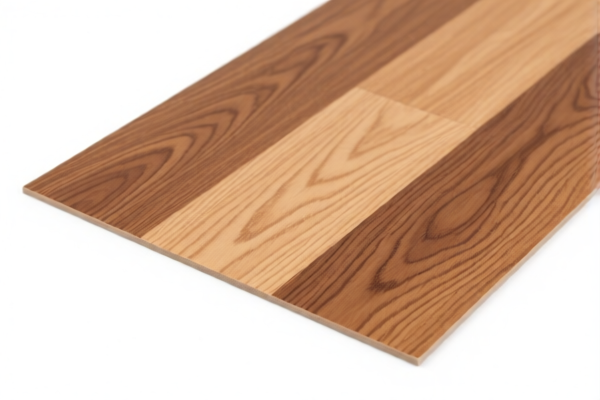
Product Images


AI Analysis
🏠 Plastic Floor Coverings (Rolls, Wood Grain Imitation)
🌐 HS Code Reference & Customs Clearance Guide | 2026 Latest Tariff Analysis | Professional Strategy
📌 1. Product Definition and Classification: What Exactly Are You Importing?
"Other plastic floor coverings, rolls, wood grain imitation" refers to flexible flooring materials made primarily of plastic (PVC, vinyl, etc.), supplied in roll form, with a printed or embossed surface designed to mimic the appearance of wood.
In international trade, the classification depends heavily on the composite structure and specific material composition of the backing layer. While they all look similar visually, their chemical and physical makeup determines whether they fall under Chapter 39 (Plastics) or Chapter 59 (Impregnated/Coated Textiles).
⚠️ Key Distinction Point:
- If the product is a pure plastic sheet with a wood-grain print/embossing and no specific textile backing classification → Likely Chapter 39 (3918.10) or Chapter 59 (5904.90) depending on exact construction.
- If the backing consists of knitted felt or non-woven fabric coated with plastic → It falls under 5904.90.10.00.
- If it is a general "other" plastic floor covering not meeting specific textile criteria → It may fall under 3918.10.20.00 or 5904.90.90.00.
📦 2. HS Code Classification Details (2026 Latest Tariff Reference)
| HS Code | Product Description | Application Scenario | Key Characteristic |
|---|---|---|---|
5904.90.90.00 |
Other plastic floor coverings (rolls), wood grain imitation, plastic material, roll form, non-excluded categories (non-linoleum, non-specific types). | General purpose plastic flooring, generic vinyl rolls without specific textile backing claims. | ✅ Generic Plastic |
5904.90.10.00 |
Other plastic floor coverings (rolls), wood grain imitation, material is plastic, roll form, belongs to "other" category where the base material consists of knitted felt or non-woven fabric. | Flooring with a textile/non-woven backing coated in plastic. | ✅ Textile/Non-woven Base |
3918.10.20.00 |
Other plastic floor coverings (rolls), wood grain imitation, material is plastic, roll form, use as floor covering, wood grain imitation falls under "other" categories. | Pure plastic flooring sheets/rolls, typically homogeneous or multi-layer PVC without specific textile backing definitions. | ✅ Pure Plastic/General |
3921.19.00.90 |
Office-specialized plastic floor roll, material is plastic, roll form, belongs to "other" category under reasonable inference. | Specialized office vinyl rolls, often commercial grade, inferred as "other" plastic plates/sheets if not explicitly floor-specific in subheading. | ✅ Commercial/Office Use |
5904.90.10.00 |
Office-specialized plastic floor roll, roll form, plastic material, as a sub-item of "other" category, no material conflict. | Same as above, emphasizing the office use case within the textile-backed category. | ✅ Office + Textile Base |
🔍 Key Reminder:
- 5904.90.10.00 is distinct because it requires a knitted felt or non-woven backing. If your product is just pure PVC, this code might be challenged.
- 3918.10.20.00 is for "Plastic Floors" generally. If the product is strictly plastic without the textile layer definition, this is the primary candidate, but it attracts higher base tariffs.
- 3921.19.00.90 is a "catch-all" for plastic plates/sheets, often used for specialized office flooring that doesn't fit the standard "floor covering" subheadings precisely.
💰 3. 2026 Latest Tariff Rate Detail (Including Additional Taxes, Policy Add-ons)
✅ Applicable Country: United States (US)
✅ Origin: China (CN)
✅ Effective Time: 2025 November 10 onwards (including subsequent imports)
🎯 1. 5904.90.90.00 —— Other Plastic Floor Coverings (Generic)
| Item | Content |
|---|---|
| Base Tariff | 0% (ad valorem) |
| USITC Additional Tax | +25% (Under USITC Footnote related to Section 301) |
| IEEPA Additional Tax | +10% (Against Chinese/HK products, from Nov 10, 2025) |
| Total Rate | 35.0% |
| Tax Calculation | CIF Value × 35% |
| De Minimis Eligible? | ❌ No (deny_de_minimis) |
| Legal Basis Path | IEEPA:9903.01.25 → USITC:5904.90.90.00 → FOOTNOTE:301 |
📌 Explanation:
- Base duty is 0%, but 25% Section 301 tariff applies.
- 10% IEEPA tariff is added for Chinese origin.
- Total: 35%. This is a significant cost driver.
🎯 2. 5904.90.10.00 —— Plastic Floor Coverings with Knitted/Non-woven Base
| Item | Content |
|---|---|
| Base Tariff | 0% |
| USITC Additional Tax | +25% |
| IEEPA Additional Tax | +10% |
| Total Rate | 35.0% |
| Tax Calculation | CIF × 35% |
| De Minimis Eligible? | ❌ No |
| Legal Basis Path | IEEPA:9901.25 → USITC:5904.90.10.00 → FOOTNOTE:301 |
📌 Note:
- Same rate as above. The distinction is purely technical (backing material).
- Common for "LVT" (Luxury Vinyl Tile/Roll) with fiberglass or non-woven backing.
🎯 3. 3918.10.20.00 —— Other Plastic Floor Coverings (Pure Plastic/General)
| Item | Content |
|---|---|
| Base Tariff | 5.3% |
| USITC Additional Tax | +25% |
| IEEPA Additional Tax | +10% |
| Total Rate | 40.3% |
| Tax Calculation | CIF × 40.3% |
| De Minimis Eligible? | ❌ No |
| Legal Basis Path | IEEPA:9903.01.25 → USITC:3918.10.20.00 → FOOTNOTE:301 |
📌 Critical Warning:
- The base tariff is 5.3%, unlike the 0% for Chapter 59.
- This makes the total rate higher (40.3%).
- Ensure your product does not strictly fit Chapter 59 if you want to avoid this base duty.
🎯 4. 3921.19.00.90 —— Office-Specialized Plastic Floor Roll
| Item | Content |
|---|---|
| Base Tariff | 6.5% |
| USITC Additional Tax | +25% |
| IEEPA Additional Tax | +10% |
| Total Rate | 41.5% |
| Tax Calculation | CIF × 41.5% |
| De Minimis Eligible? | ❌ No |
| Legal Basis Path | IEEPA:9901.25 → USITC:3921.19.00.90 → FOOTNOTE:301 |
📌 Note:
- This is the highest cost option among the listed codes.
- Use only if the product is specifically designed for offices and cannot be classified as a general "floor covering" under 3918 or 5904.
- "Reasonable inference" suggests this is a fallback category, so justify carefully.
🛠️ 4. Customs Clearance Practical Advice (实战避坑指南)
✅ 1. Documentation Checklist (Must-Haves)
| Document | Required | Explanation |
|---|---|---|
| ✅ Product Specification Sheet | ✔️ | Must detail layers: Top wear layer, print layer, core layer, backing material (crucial for 5904 vs 3918). |
| ✅ Material Composition Report | ✔️ | % of PVC, plasticizers, and backing material (e.g., non-woven vs pure plastic). |
| ✅ Product Photos (Unrolled) | ✔️ | Show wood grain pattern, roll structure, and thickness. |
| ✅ Commercial Invoice | ✔️ | Clearly state "Plastic Floor Covering, Rolls, Wood Grain, Plastic Material". |
| ✅ Packing List | ✔️ | Include net/gross weight, number of rolls, diameter. |
✅ 2. Declaration Tips (Key Mnemonic)
🔥 "Check the Backing: Non-woven means 5904, Pure Plastic means 3918/3921. Tax varies 35% to 41.5%!"
| Scenario | Correct HS Code | Wrong Approach |
|---|---|---|
| Floor with non-woven/felt backing | 5904.90.10.00 (35%) |
Classify as 3918.10 → Pay 40.3% |
| Pure PVC sheet/roll | 3918.10.20.00 (40.3%) |
Classify as 5904 → Risk of misclassification penalty |
| Office-specialized roll, hard to define | 3921.19.00.90 (41.5%) |
Use if others don't fit, but expect highest tax |
| Generic plastic floor | 5904.90.90.00 (35%) |
Ensure it's not misidentified as textile-backed |
✅ 3. Special Circumstances
| Situation | Handling Advice |
|---|---|
| Multi-layer LVT | Provide layer-by-layer breakdown. If top layer is plastic and backing is non-woven, 5904.90.10.00 is often preferred due to lower base duty. |
| Solid Vinyl Roll | Must go to 3918.10.20.00. No textile backing = Higher base tax. |
| Samples for Testing | Even samples are subject to de minimis rules being denied. Declare properly. |
| Wood Grain Pattern | Ensure invoice does not say "Wood" or "Timber" to avoid CITES or misclassification as natural wood flooring (which has different rules). |
🌍 5. Global Market Clearance Comparison (2026 Latest)
| Country/Region | Recommended HS Code | Tariff Rate | Certification Required | Notes |
|---|---|---|---|---|
| 🇺🇸 USA | 5904.90.10.00 or 3918.10.20.00 |
35% - 41.5% | None specific | High tariffs due to Section 301 + IEEPA. |
| 🇨🇳 China | 3918.10.20.00 |
~5-10% | RoHS | No additional punitive tariffs. |
| 🇪🇺 EU | 3918.10.00 |
0-5% | REACH, CE | Low base tariffs, no US-style add-ons. |
| 🇦🇺 Australia | 3918.10.00 |
5% | ACCC | Moderate tariffs. |
📌 Conclusion:
- USA is the most expensive market for this product due to combined 35-41.5% tariffs.
- Accurate classification of the backing material is critical to save 0.2% to 6.5% in base duties.
- Always confirm if the backing is truly "knitted felt or non-woven" to qualify for the 35% rate.
📌 6. Common Mistakes & Pitfalls (Lessons Learned)
❌ Mistake 1: Calling it "Wood Flooring"
👉 Consequence: Misclassification as natural wood → Severe penalties or seizure.
✅ Fix: Always use "Plastic Floor Covering" or "Vinyl Flooring".
❌ Mistake 2: Ignoring the Backing Material
👉 Consequence: Declaring 3918.10 (40.3%) when 5904.90.10.00 (35%) is applicable, or vice versa, leading to audits.
✅ Fix: Provide a material composition test report.
❌ Mistake 3: Underestimating IEEPA Tariffs
👉 Consequence: Budgeting only for base tariff + Section 301, forgetting the 10% IEEPA add-on.
✅ Fix: Always calculate Total = Base + 25% + 10%.
🎯 7. Conclusion: Professional Declaration, Cost Efficiency!
🎯 Remember the Mantra:
🔹 "Check the Backing: Non-woven = 35%, Pure Plastic = 40-41.5%."
🔹 "No Wood, Only Plastic! Declare 'Vinyl' or 'PVC', not 'Wood'."
🔹 "Add 35% minimum! Budget for 301 + IEEPA."
📌 Pro Tip:
If your product has a fiberglass or fabric backing, ensure it is documented as "non-woven" or "knitted" to justify 5904.90.10.00.
For pure PVC rolls, accept the higher 3918.10.20.00 rate.
Consider Advance Ruling (Pre-classification) from US Customs to lock in the HS Code and avoid post-clearance audits.
📣 Take Action Now:
📞 Contact your customs broker with layer breakdowns.
🚀 Optimize your supply chain by choosing the correct HS Code to save up to 6.5% on base duties.
✨ Professional clearance starts with precise classification!
💼 Every percentage point counts in the age of trade wars!
Customer Reviews
About HS Code Classification
The Harmonized System (HS) is an internationally standardized nomenclature developed by the World Customs Organization (WCO) to classify traded products. Over 200 countries use the HS system as the basis for customs tariffs, trade statistics, and import/export regulations.
Each HS code follows a hierarchical structure:
- Chapter (2 digits) — Broad category of goods (e.g., Chapter 84: Machinery and Mechanical Appliances)
- Heading (4 digits) — More specific grouping within the chapter
- Subheading (6 digits) — Internationally standardized breakdown, used by all WCO member countries
- National subdivisions (8-10 digits) — Country-specific extensions for further classification, such as US HTSUS 10-digit codes
Correct HS code classification is essential for smooth customs clearance, accurate duty payment, and compliance with trade regulations. Misclassification can lead to customs delays, overpayment of duties, or penalties.
When importing from CN to US, the applicable tariff rates may include:
- Most-Favored-Nation (MFN) rate — The standard duty rate applied to WTO members
- General rate — Applied to countries without trade agreements
- Trade remedy duties — Additional tariffs such as Section 301 (anti-dumping), Section 232 (national security), or countervailing duties
The information provided on this page is for reference purposes only. For official classification, please consult with your local customs authority or a licensed customs broker.