Other Plastic Greenhouse Film
CN → US| HS Code | Tariff Rate | Origin | Destination | Doc |
|---|---|---|---|---|
| 3919905060 | 40.8% | CN | US | Official Doc |
| 3919102055 | 40.8% | CN | US | Official Doc |
| 3920992000 | 39.2% | CN | US | Official Doc |
| 3920991000 | 41.0% | CN | US | Official Doc |
| 3926400090 | 15.3% | CN | US | Official Doc |
Product Images

AI Analysis
🌿 Other Plastic Greenhouse Film (Agricultural Plastic Films)
🌐 HS Code Reference & Customs Clearance Guide | 2026 Latest Tariff Analysis | Professional Clearance Strategy for Agricultural Products
📌 1. Product Definition: What is "Other Plastic Greenhouse Film"?
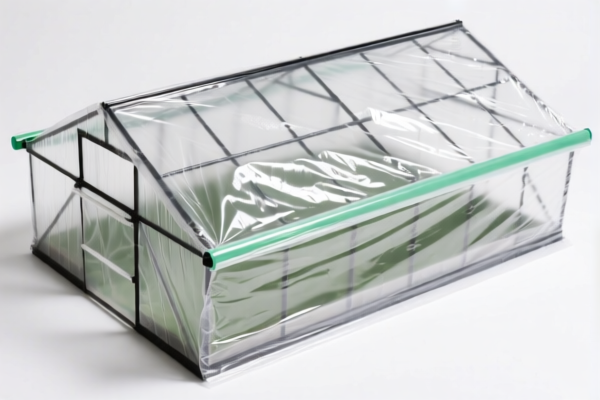
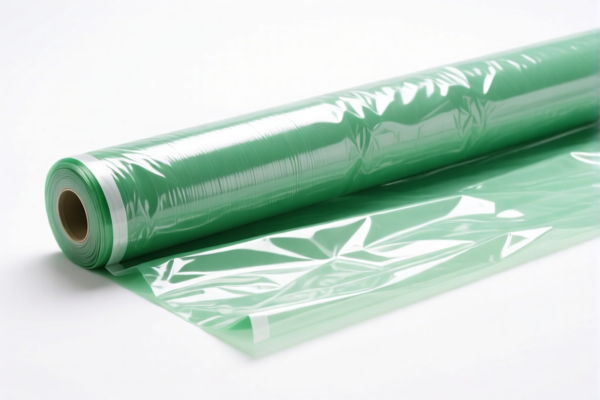
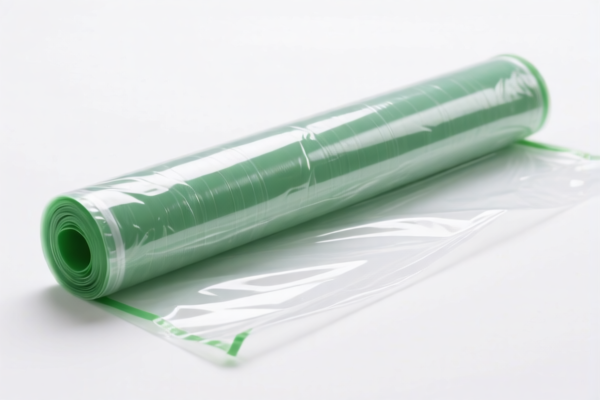
Plastic greenhouse films are specialized polymeric sheets used in agriculture to create controlled environments for crop growth. Unlike standard industrial plastics, they are engineered for specific optical, thermal, and mechanical properties.
In international trade, "Other Plastic Greenhouse Film" typically refers to multi-layer co-extruded films, often containing UV stabilizers, anti-drip agents, or infrared absorbents. They are distinct from simple single-layer packaging films due to their specific agricultural application and enhanced durability.
⚠️ Key Distinction:
- Agricultural vs. General Use: If the film is explicitly designed for greenhouses (e.g., high tensile strength, specific light transmission), it may fall under specific agricultural headings (e.g., Chapter 39, Heading 3901-3920 depending on material).
- "Other" Classification: When the film does not fit neatly into basic polyethylene/polypropylene categories or has complex multi-layer structures, it often falls under "Other" subheadings (e.g., 3920.99 or 3919.90).
📦 2. HS Code Classification Details (2026 Latest Tariff Authority)
Based on the provided data, here are the potential HS Codes for Other Plastic Greenhouse Film, categorized by their physical and chemical characteristics.
| HS Code | Product Description | Application Scenario | Material/Shape Characteristic |
|---|---|---|---|
3919.90.50.60 |
Other plastic wall饰膜 (Decorative Plastic Membranes), Material: Plastic, Shape: Membrane, Unclassified Other Flat Plastic Products | Multi-layer agricultural films that don't fit basic PE/PP definitions; often used for side-wall coverings | ✅ Flat, Membrane-like, General Purpose |
3919.10.20.55 |
Other Plastic Wall饰膜, Material: Plastic, Shape: Membrane, Meets "Film" Characteristics, Other Category | Standard greenhouse films where the primary characteristic is being a "film" rather than a specific polymer type | ✅ Film, Flat, Unclassified |
3920.99.20.00 |
Other Plastic Wall饰膜, Material: Plastic, Shape: Membrane, Non-cellular, Non-reinforced Flexible Film Description | Technical greenhouse films that are non-cellular (solid) and non-reinforced (no glass fiber mesh), fitting the "Other" flexible film category | ✅ Non-cellular, Non-reinforced, Flexible |
3920.99.10.00 |
Other Plastic Wall饰膜, Material: Plastic, Shape: Membrane, Catch-all Category, No Obvious Conflict | Used when the film’s specific polymer composition is not listed elsewhere; a "bottom-line" classification | ✅ General Plastic Film |
3926.40.00.90 |
Other Plastic Wall饰膜, Material: Plastic, Shape: Membrane, Decorative Items / Other Ornaments | Films marketed as "decorative" or "ornamental" greenhouses (e.g., for garden aesthetics rather than pure agriculture) | ✅ Decorative/Ornamental Purpose |
🔍 Classification Key Points:
- 3919 vs. 3920: Heading 3919 covers self-adhesive plates/sheets/film/tape/other flat shapes (though often "other" implies non-adhesive in some contexts, clarify if adhesive). Heading 3920 covers other plates/sheets/film/tape/strip of plastics, not cellular.
- 3926.40: This heading is for "Articles of apparel and clothing accessories, including gloves, of plastic." However, 3926.40.00.90 is described here as "Other decorations." Note: In many jurisdictions, greenhouse film is NOT classified here unless explicitly sold as an ornament. Be cautious with this code as it may trigger higher scrutiny or incorrect classification for functional agricultural goods.
💰 3. 2026 Latest Tariff Rate Breakdown (Including Surtaxes & Policy Add-ons)
✅ Applicable Country: United States (US)
✅ Origin: China (CN)
✅ Effective Date: From November 10, 2025 (including subsequent imports)
🎯 1. Codes: 3919.90.50.60 & 3919.10.20.55 (General Plastic Membranes)
| Item | Details |
|---|---|
| Basic Tariff | 5.8% (ad valorem) |
| Section 301 Surcharge | +25.0% |
| Section 122 Tariff | +10.0% |
| Total Tax Rate | 40.8% |
| Tax Calculation | CIF Value × 40.8% |
| De Minimis Exemption | ❌ Not Eligible (Deny de minimis for Section 301/122 goods) |
| Legal Basis Path | USITC:3919.90.50.60 → FOOTNOTE:301 → IEEPA:122 |
📌 Explanation:
- The 5.8% is the standard MFN rate for other plastic films.
- The 25% is the Section 301 tariff on Chinese plastic products.
- The 10% is the additional tariff under Section 122 (or similar emergency powers) targeting specific Chinese imports.
- Total 40.8% is a significant cost driver. Accurate classification is critical to avoid overpaying or underpaying (which leads to penalties).
🎯 2. Code: 3920.99.20.00 (Non-cellular, Non-reinforced Flexible Film)
| Item | Details |
|---|---|
| Basic Tariff | 4.2% (ad valorem) |
| Section 301 Surcharge | +25.0% |
| Section 122 Tariff | +10.0% |
| Total Tax Rate | 39.2% |
| Tax Calculation | CIF Value × 39.2% |
| De Minimis Exemption | ❌ Not Eligible |
| Legal Basis Path | USITC:3920.99.20.00 → FOOTNOTE:301 → IEEPA:122 |
📌 Note:
- This code offers the lowest total tax rate (39.2%) among the classified options.
- It applies if the greenhouse film is non-cellular (solid foam) and non-reinforced (no fabric mesh).
- Recommendation: If your product fits this description, this is the most cost-effective classification.
🎯 3. Code: 3920.99.10.00 (Catch-all Category)
| Item | Details |
|---|---|
| Basic Tariff | 6.0% (ad valorem) |
| Section 301 Surcharge | +25.0% |
| Section 122 Tariff | +10.0% |
| Total Tax Rate | 41.0% |
| Tax Calculation | CIF Value × 41.0% |
| De Minimis Exemption | ❌ Not Eligible |
| Legal Basis Path | USITC:3920.99.10.00 → FOOTNOTE:301 → IEEPA:122 |
📌 Note:
- This is the "Bottom-line" category. Use only if the product does not fit other specific descriptions.
- It has the highest total tax rate (41.0%) among the standard plastic film options.
🎯 4. Code: 3926.40.00.90 (Decorative/Ornamental Items)
| Item | Details |
|---|---|
| Basic Tariff | 5.3% (ad valorem) |
| Section 301 Surcharge | +0.0% |
| Section 122 Tariff | +10.0% |
| Total Tax Rate | 15.3% |
| Tax Calculation | CIF Value × 15.3% |
| De Minimis Exemption | ❌ Not Eligible (Check specific exemption lists for 3926) |
| Legal Basis Path | USITC:3926.40.00.90 → IEEPA:122 |
📌 Critical Warning:
- This code has the lowest total tax rate (15.3%) due to 0% Section 301 surcharge.
- However, this classification is high-risk. It applies to "Decorative Items" or "Ornaments."
- Customs Risk: If U.S. Customs and Border Protection (CBP) determines the film is primarily for agricultural use (functional) rather than ornamental, they will reclassify it to 3920 or 3919, leading to:
- Back-tariffs: Difference between 15.3% and 39.2%+
- Penalties: For misdeclaration
- Seizure: If intent is deemed fraudulent
- Recommendation: Only use this code if the product is explicitly marketed and sold as a garden ornament (e.g., small, decorative, non-durable, sold in retail hobby shops). For functional agricultural greenhouses, avoid this code.
🛠️ 4. Customs Clearance Practical Advice (Real-World Pitfall Guide)
✅ 1. Document Preparation Checklist (Mandatory)
| Document | Required? | Description |
|---|---|---|
| ✅ Product Specification Sheet | ✔️ | Must detail: Polymer type (e.g., LDPE, LLDPE), layers, additives (UV, anti-drip), thickness, width, length. |
| ✅ Certificate of Origin (CO) | ✔️ | To determine country of origin for Section 301/122 applicability. |
| ✅ Commercial Invoice | ✔️ | Clearly state: "Plastic Greenhouse Film for Agricultural Use" or "Decorative Plastic Film for Garden Ornament." Be precise. |
| ✅ Packing List | ✔️ | Show dimensions, weight, and packaging method (e.g., rolled on cores). |
| ✅ Customs Ruling Letter (Optional) | ✔️ | If available, apply for an Advance Ruling from CBP to confirm the HS Code. |
| ✅ Third-Party Test Report | ✔️ | ISO/ASTM tests for tensile strength, light transmission, and degradation rate. |
✅ 2. Declaration Tips (Key Mnemonics)
🔥 "Functional vs. Ornamental: Choose Wisely, Or Face the Price!"
| Scenario | Correct Declaration | Wrong Approach | Consequence |
|---|---|---|---|
| Agricultural Greenhouse Film | 3920.99.20.00 (if non-cellular) |
Declare as 3926.40.00.90 |
Penalty + Back-tariffs (Reclassified to ~39.2-41%) |
| Decorative Garden Film | 3926.40.00.90 |
Declare as 3920.99.20.00 |
Overpaying (15.3% vs 39.2%) |
| Multi-layer Co-extruded Film | 3919.90.50.60 or 3919.10.20.55 |
Declare as 3920.99.10.00 |
Potential Misclassification (If it fits 3919 better) |
| Reinforced Film (with Mesh) | Not in provided data (likely 3921.90) |
Declare as 3920.99.20.00 |
Incorrect (3920 is non-reinforced) |
✅ 3. Special Case Handling
| Case | Handling Advice |
|---|---|
| Multi-layer Films | If the film has more than one polymer layer, use the heading for the layer with the principal character or the outermost layer. |
| Additives (UV/Anti-drip) | Do not declare as "Plastic Additives." The film itself is the product. Additives are part of the film's composition. |
| Rolls vs. Sheets | If sold in rolls, ensure the declaration specifies "Rolls of Plastic Film." |
| Customs Ruling | If unsure between 3920 and 3926, apply for an Advance Ruling. The risk of misclassification (especially with 3926) is too high. |
🌍 5. Global Market Comparison (2026 Latest)
| Country/Region | Recommended HS Code | Tariff (China Origin) | Certification Requirements | Notes |
|---|---|---|---|---|
| 🇺🇸 USA | 3920.99.20.00 |
39.2% (Total) | None (but must comply with CA Proposition 65 for plastics) | High tariffs due to Section 301/122. |
| 🇨🇳 China | 3920.99.20.00 |
6.0% | None | No Section 301/122 for exports to China. |
| 🇪🇺 EU | 3920.99.00 |
6.5% | REACH, RoHS | No additional surcharges. |
| 🇬🇧 UK | 3920.99.00 |
6.5% | UKCA, REACH | Post-Brexit rules apply. |
| 🇯🇵 Japan | 3920.99.00 |
6.0% | JIS Standards | No additional surcharges. |
📌 Conclusion:
- USA is the most expensive market due to Section 301 and Section 122 tariffs.
- Classification accuracy is critical in the US market to avoid 41% vs 15.3% discrepancies.
- Do not use3926.40.00.90for agricultural films unless you are prepared for potential customs disputes.
📌 6. Common Mistakes & Pitfalls (Lessons Learned)
❌ Mistake 1: Declaring functional greenhouse film as "Decorative" (3926.40.00.90) to save tariffs
👉 Consequence: CBP reclassifies it to 3920 → Back-tariffs of ~24% + Penalties.
Lesson: Intent matters. If it’s used for farming, it’s agricultural.
❌ Mistake 2: Ignoring Section 122 tariffs
👉 Consequence: Underpaying by 10% → Audit & Interest Charges.
Lesson: Always include all applicable surcharges in cost calculations.
❌ Mistake 3: Misclassifying reinforced films as non-reinforced (3920.99.20.00)
👉 Consequence: Incorrect classification → Goods Held for Inspection.
Lesson: If it has mesh/fabric, it’s not "non-reinforced."
❌ Mistake 4: Using generic descriptions ("Plastic Film") on invoices
👉 Consequence: CBP assigns worst-case HS Code → Higher Tariffs.
Lesson: Be specific: "LLDPE Greenhouse Film, 0.1mm, UV-stabilized."
🎯 7. Conclusion: Professional Classification Saves Money!
🎯 Remember the Golden Rule:
🔹 "Agricultural Use = Agricultural Code (3920/3919)"
🔹 "Ornamental Use = Decorative Code (3926)"
🔹 "Never Mix Intent to Avoid Tariffs – CBP Knows!"🔹 Tariff Tip:
- For functional greenhouse films, aim for3920.99.20.00(39.2% total).
- For decorative films,3926.40.00.90(15.3% total) is viable but risky.
- Always verify with CBP if unsure.
📌 Pro Tip:
If you are importing large volumes, consider applying for a Trade Remedy Exclusion (if available) or seeking duty drawback opportunities.
For agricultural products, ensure you have all USDA/EPA compliance documents ready if additives are involved.
📣 Immediate Action:
📞 Consult a licensed customs broker.
📄 Submit product specs to CBP for an Advance Ruling before shipment.
🚀 Accurate classification = Lower costs + Faster clearance.
✨ Professional clearance starts with precise classification!
💼 Every cent counts in global trade!
Customer Reviews
About HS Code Classification
The Harmonized System (HS) is an internationally standardized nomenclature developed by the World Customs Organization (WCO) to classify traded products. Over 200 countries use the HS system as the basis for customs tariffs, trade statistics, and import/export regulations.
Each HS code follows a hierarchical structure:
- Chapter (2 digits) — Broad category of goods (e.g., Chapter 84: Machinery and Mechanical Appliances)
- Heading (4 digits) — More specific grouping within the chapter
- Subheading (6 digits) — Internationally standardized breakdown, used by all WCO member countries
- National subdivisions (8-10 digits) — Country-specific extensions for further classification, such as US HTSUS 10-digit codes
Correct HS code classification is essential for smooth customs clearance, accurate duty payment, and compliance with trade regulations. Misclassification can lead to customs delays, overpayment of duties, or penalties.
When importing from CN to US, the applicable tariff rates may include:
- Most-Favored-Nation (MFN) rate — The standard duty rate applied to WTO members
- General rate — Applied to countries without trade agreements
- Trade remedy duties — Additional tariffs such as Section 301 (anti-dumping), Section 232 (national security), or countervailing duties
The information provided on this page is for reference purposes only. For official classification, please consult with your local customs authority or a licensed customs broker.