Other Plastic Hard Black Tube
CN → US| HS Code | Tariff Rate | Origin | Destination | Doc |
|---|---|---|---|---|
| 3926909910 | 22.8% | CN | US | Official Doc |
| 9027898060 | 35.0% | CN | US | Official Doc |
| 9027898030 | 35.0% | CN | US | Official Doc |
| 3926909989 | 22.8% | CN | US | Official Doc |
| 3917290090 | 38.1% | CN | US | Official Doc |
Product Images


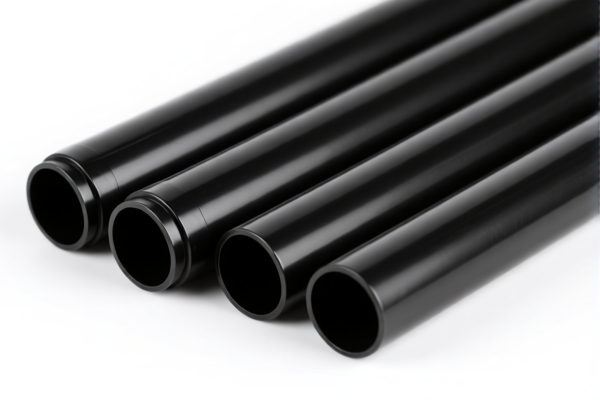
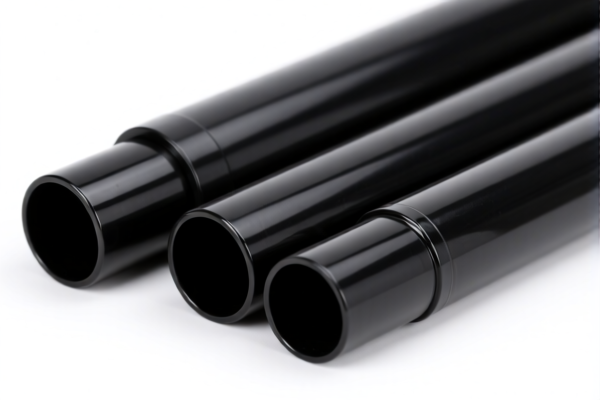
AI Analysis
🖥️ Other Plastic Hard Black Tube (Rigid Pipes & Tubing)
🌐 HS Code Reference & Customs Clearance Guide | 2026 Latest Tariff Analysis | Professional Compliance Strategy
📌 I. Product Definition & Classification: Are You Sure It’s Just a “Tube”?
In international trade, "Other Plastic Hard Black Tube" is not a single classification. It is a broad category that falls under Chapter 39 (Plastics and Articles Thereof). The critical factor for customs valuation is application and material composition.
Key Distinction: * Laboratory/Chemical Use: If the tube is specifically designed for handling reagents, samples, or analysis (e.g., for test tubes or analytical devices), it may fall under Chapter 90 (Optical/Medical/Scientific Instruments). * General Industrial/Garden Use: If the tube is for general conveyance (water, air, chemicals in non-analytical contexts, garden hoses, piping), it falls strictly under Chapter 39 (Plastics).
⚠️ Critical Classification Point:
- If the tube is part of a scientific apparatus (e.g., connected to an analyzer, used in a lab setting for measurement) → HS Code 9027 series.
- If the tube is a standalone plastic pipe/tube (e.g., garden hose, rigid piping, general-purpose tubing) → HS Code 3917 or 3926 series.
- Black color does not change the HS code but may affect the description in the commercial invoice.
📦 II. HS Code Classification Details (2026 Latest Tariff Authority Cross-Reference)
Based on the provided data, here are the possible classifications for "Other Plastic Hard Black Tube" depending on its specific use:
| HS Code | Product Description | Application Scenario | Classification Logic |
|---|---|---|---|
3917.29.00.90 |
Plastic Rigid Pipes & Tubes (Other) | Garden pipes, industrial hard tubing, non-flexible plastic conduits | ✅ Primary Match for standalone rigid plastic tubes |
3926.90.99.10 |
Other Plastic Articles (Laboratory Glassware/Tubes) | Plastic test tubes, lab consumables, specific lab equipment parts | ✅ If used only in laboratory settings |
3926.90.99.89 |
Other Plastic Articles (Garden/General) | Garden hoses, general-purpose plastic pipes, non-specific plastic items | ✅ If used in gardening or general industry |
9027.89.80.60 |
Plastic Parts for Analytical Instruments | Tubes used in laboratory analysis/measuring devices | ❌ Only if part of an analytical device |
9027.89.80.30 |
Plastic Parts for Chemical Analysis | Tubes specifically for chemical analysis apparatus | ❌ Only if part of chemical analysis equipment |
🔍 重点提醒 (Key Reminder):
- Most Common Scenario: If the "black tube" is a rigid plastic pipe for general use (garden, industrial flow),3917.29.00.90is the most accurate fit.
- Lab Use Scenario: If the tube is a test tube or part of a lab analyzer, use3926.90.99.10or9027.89.80.x0.
- Misclassification Risk: Do NOT classify a garden hose as "laboratory equipment" or vice versa. Customs will audit the actual use.
💰 III. 2026 Latest Tariff Rate Breakdown (Including Surtaxes & Policy Add-ons)
✅ Applicable Country: United States (US)
✅ Origin: China (CN)
✅ Effective Date: November 10, 2025 onwards (including subsequent imports)
🎯 1. 3917.29.00.90 —— Plastic Rigid Pipes (Most Likely for "Hard Tube")
| Item | Content |
|---|---|
| Base Duty Rate | 3.1% (ad valorem) |
| Section 301 Surcharge | +25.0% (High tariff on Chinese goods) |
| Section 122 Surcharge | +10.0% (Specific US trade measure) |
| Total Tax Rate | 38.1% |
| Tax Calculation | CIF Value × 38.1% |
| De Minimis Exemption | ❌ Not Applicable (deny_de_minimis) |
| Legal Basis Path | USITC:3917.29.00.90 → Section 301: 25% → Section 122: 10% |
📌 Explanation:
- This is the most common classification for "hard plastic tubes" not specifically for lab use.
- Total 38.1% is a significant cost factor.
- Section 122 adds an extra 10% on top of the standard 301 tariffs for certain Chinese plastic goods.
🎯 2. 3926.90.99.10 & 3926.90.99.89 —— Other Plastic Articles (Lab or Garden Use)
| Item | Content |
|---|---|
| Base Duty Rate | 5.3% (ad valorem) |
| Section 301 Surcharge | +7.5% (Lower 301 rate for some plastic articles) |
| Section 122 Surcharge | +10.0% |
| Total Tax Rate | 22.8% |
| Tax Calculation | CIF Value × 22.8% |
| De Minimis Exemption | ❌ Not Applicable (deny_de_minimis) |
| Legal Basis Path | USITC:3926.90.99.10/89 → Section 301: 7.5% → Section 122: 10% |
📌 Explanation:
- If your "black tube" is classified as a lab accessory (3926.90.99.10) or garden/general plastic item (3926.90.99.89), the tariff is lower (22.8%).
- However, you must prove it is for lab/garden use. If customs determines it is a rigid pipe for industrial use, they will reclassify to3917.29.00.90and charge 38.1% + penalties.
🎯 3. 9027.89.80.60 & 9027.89.80.30 —— Plastic Parts for Analytical/Chemical Devices
| Item | Content |
|---|---|
| Base Duty Rate | 0.0% |
| Section 301 Surcharge | +25.0% (Higher 301 rate for scientific instruments) |
| Section 122 Surcharge | +10.0% |
| Total Tax Rate | 35.0% |
| Tax Calculation | CIF Value × 35.0% |
| De Minimis Exemption | ❌ Not Applicable (deny_de_minimis) |
| Legal Basis Path | USITC:9027.89.80.60/30 → Section 301: 25% → Section 122: 10% |
📌 Explanation:
- If the tube is strictly a part of a scientific instrument (e.g., inside a blood analyzer or chemical reactor), the base duty is 0%.
- However, the 301 surcharge is 25% (higher than lab articles), leading to a 35.0% total.
- Risk: Must provide detailed documentation proving the tube is an integral part of a scientific device, not just a "lab tube" sitting on a bench.
🛠️ IV. Customs Clearance Practical Advice (Real-World Pitfall Avoidance)
✅ 1. Documentation Checklist (Non-negotiable)
| Document | Required | Purpose |
|---|---|---|
| ✅ Product Specification Sheet | ✔️ | Must state: Material (e.g., PVC, PE, PTFE), Diameter, Wall Thickness, Intended Use |
| ✅ Product Photos | ✔️ | Clear images of the tube, including any labels, connectors, or packaging |
| ✅ Commercial Invoice | ✔️ | Description must be specific: e.g., "Rigid Black PVC Pipe, 2-inch Diameter, for Industrial Water Conveyance" |
| ✅ Letter of Use | ✔️ | From the buyer, stating the tube’s actual application (e.g., "For use in garden irrigation," or "For use in chemical analysis device Model XYZ") |
| ✅ Material Safety Data Sheet (MSDS) | ✔️ | If the tube is for chemical handling, to prove compatibility and safety |
| ✅ Packing List | ✔️ | Weight and dimensions of the shipment |
✅ 2. Classification Strategy (Key Mnemonics)
🔥 "Use Determines Code, Code Determines Cost!"
| Scenario | Correct HS Code | Total Tax | Risk Level |
|---|---|---|---|
| Garden Pipe / Industrial Rigid Tube | 3917.29.00.90 |
38.1% | 🟡 Medium (Ensure not classified as lab use) |
| Lab Test Tube / Consumable | 3926.90.99.10 |
22.8% | 🟢 Low (Lower tax, but must prove lab use) |
| Part of Scientific Analyzer | 9027.89.80.60 |
35.0% | 🔴 High (Complex documentation required) |
| General Plastic Fitting | 3926.90.99.89 |
22.8% | 🟢 Low (If clearly general purpose) |
⚠️ Warning:
- Do NOT use "Lab Tube" description for a garden hose. Customs will inspect and reclassify, leading to back taxes + penalties.
- Do NOT use "Industrial Pipe" description for a lab consumable. You will pay 38.1% instead of 22.8%.
✅ 3. Special Cases
| Case | Handling Advice |
|---|---|
| Custom-Made Black Tubes | Provide custom design drawings and buyer’s specification sheet. |
| Tubes with Connectors | If connectors are plastic, still classifies under plastic article. If metal, might require separate classification. |
| Coated Black Tubes | If coated with chemical-resistant material, highlight in description to support lab/chemical use claim. |
| Small Sample Quantities | Still subject to full tariffs; de minimis exemption does NOT apply for China-origin goods under Section 301/122. |
🌍 V. Global Market Customs Comparison (2026 Latest)
| Country/Region | Recommended HS Code | Tariff Rate | Certification | Note |
|---|---|---|---|---|
| 🇺🇸 USA | 3917.29.00.90 |
38.1% | FDA (if food/water contact) | Highest cost due to 301+122 |
| 🇪🇺 EU | 3917.29.00 |
~5-7% | REACH | No Section 301/122 equivalent |
| 🇨🇳 China | 3917.29.00 |
~5-8% | CCC (if electrical) | No additional surcharges |
| 🇬🇧 UK | 3917.29.00 |
~5-7% | UKCA | Post-Brexit rules apply |
| 🇨🇦 Canada | 3917.29.00 |
~5-6% | Health Canada | Similar to US but lower taxes |
📌 Conclusion:
- USA is the most expensive market for plastic tubes due to Section 301 and Section 122.
- Total cost can increase by 38% for standard pipes.
- Consider supply chain diversification if shipping high-volume rigid tubes to the US.
📌 VI. Common Mistakes & Pitfalls (Blood & Tears Lessons)
❌ Mistake 1: Declaring a garden hose as "Laboratory Tube" to get 22.8% instead of 38.1%.
👉 Consequence: Customs audit reveals actual use → Back taxes + 10% penalty + possible seizure.
❌ Mistake 2: Declaring a lab test tube as "Industrial Pipe" (3917.29.00.90).
👉 Consequence: Paying 38.1% instead of 22.8% → Unnecessary profit loss.
❌ Mistake 3: Not providing a Letter of Use or Specification Sheet.
👉 Consequence: Customs cannot determine classification → Hold for inspection → Delayed clearance → Demurrage charges.
❌ Mistake 4: Assuming "Black Color" qualifies for a different HS Code.
👉 Consequence: Color is irrelevant to HS classification → No tariff benefit.
✅ Correct Approach:
"Rigid Black PVC Pipe, 2-inch Diameter, for Industrial Water Conveyance, Made in China"
OR
"Plastic Laboratory Test Tubes, Black, for Chemical Analysis, Made in China"
🎯 VII. Conclusion: Precise Classification Saves Money!
🎯 Remember the Mnemonic:
🔹 "Lab = 22.8%, Pipe = 38.1%, Instrument = 35.0%!"
🔹 "Misclassify = Pay More + Penalty! Correct = Save Profit!"
📌 Pro Tip:
- If your product is borderline (e.g., a tube that could be used in both lab and industry), consult a customs broker for a Pre-Ruling (Advance Ruling) before shipping.
- Document everything: Photos, specs, buyer’s use letter.
- Do not guess the HS Code. Guessing leads to audit risks.
📣 Action Item:
📞 Contact a licensed customs broker + Provide product photos + Define exact use case
🚀 Ensure accurate HS Code, avoid penalties, and maximize profit!
✨ Professional Customs Clearance Starts with Precise Classification!
💼 Every percentage point matters in international trade!
Customer Reviews
About HS Code Classification
The Harmonized System (HS) is an internationally standardized nomenclature developed by the World Customs Organization (WCO) to classify traded products. Over 200 countries use the HS system as the basis for customs tariffs, trade statistics, and import/export regulations.
Each HS code follows a hierarchical structure:
- Chapter (2 digits) — Broad category of goods (e.g., Chapter 84: Machinery and Mechanical Appliances)
- Heading (4 digits) — More specific grouping within the chapter
- Subheading (6 digits) — Internationally standardized breakdown, used by all WCO member countries
- National subdivisions (8-10 digits) — Country-specific extensions for further classification, such as US HTSUS 10-digit codes
Correct HS code classification is essential for smooth customs clearance, accurate duty payment, and compliance with trade regulations. Misclassification can lead to customs delays, overpayment of duties, or penalties.
When importing from CN to US, the applicable tariff rates may include:
- Most-Favored-Nation (MFN) rate — The standard duty rate applied to WTO members
- General rate — Applied to countries without trade agreements
- Trade remedy duties — Additional tariffs such as Section 301 (anti-dumping), Section 232 (national security), or countervailing duties
The information provided on this page is for reference purposes only. For official classification, please consult with your local customs authority or a licensed customs broker.