Other Plastic Hard Laboratory Test Tubes
CN → US| HS Code | Tariff Rate | Origin | Destination | Doc |
|---|---|---|---|---|
| 3926909910 | 22.8% | CN | US | Official Doc |
| 9027898060 | 35.0% | CN | US | Official Doc |
| 9027898030 | 35.0% | CN | US | Official Doc |
Product Images



AI Analysis
🧪 Other Plastic Hard Laboratory Test Tubes
🌐 HS Code Reference & Customs Clearance Guide | 2026 Updated Tariff Analysis | Professional Import Strategy
📌 One, Product Definition & Classification: Do You Really Understand "Plastic Hard Laboratory Test Tubes"?
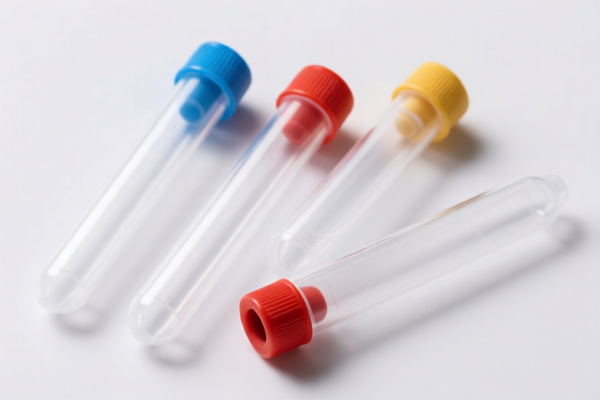
Plastic hard laboratory test tubes are rigid, transparent or translucent cylindrical containers made from durable plastic materials (e.g., polystyrene, polypropylene, or PET), primarily used for holding, mixing, storing, or transporting small quantities of liquid or solid samples in scientific, medical, and industrial laboratories.
They are not flexible or collapsible — their "hard" structure distinguishes them from soft plastic vials or bags.
⚠️ Key Classification Criteria: - Material: 100% plastic (not glass or metal) - Form: Rigid, cylindrical, closed at one end - Function: Laboratory use — sample handling, chemical analysis, storage, measurement - Not for consumer use — strictly for lab environments
🔍 Why This Matters:
Misclassifying these as "general plastic containers" or "household items" can trigger incorrect tariffs, delays, or penalties. Accurate HS code selection is critical for compliance and cost control.
📦 Two, HS Code Classification Details (2026 Updated Tariff Authority)
| HS Code | Product Description | Applicable Use Case | Key Features |
|---|---|---|---|
3926.90.99.10 |
Other plastic articles, not elsewhere specified, for laboratory use (e.g., rigid plastic test tubes) | General lab testing, sample storage, chemical handling | ✅ Plastic material ✅ Rigid structure ✅ Lab-specific function |
9027.89.80.60 |
Instruments and apparatus for analysis or measurement, not elsewhere specified, including plastic labware | Analytical instruments, lab devices, measurement tools | ✅ Plastic material ✅ Part of analytical system ✅ Measuring or testing function |
9027.89.80.30 |
Other laboratory apparatus and devices, including plastic consumables for chemical analysis | Chemical analysis, titration, reaction vessels | ✅ Plastic ✅ Used in chemical processes ✅ Lab consumable/kit component |
📌 Critical Insight:
-3926.90.99.10applies when the test tube is primarily a container with no integrated measurement function. -9027.89.80.60&9027.89.80.30apply when the tube is part of a measurement or analytical system, such as being used in automated lab equipment, sensor integration, or chemical reaction monitoring.
💰 Three, 2026 Updated Tariff Breakdown (With Detailed Duty Clauses)
✅ Target Country: United States (US)
✅ Origin: China (CN)
✅ Effective Date: November 10, 2025 (and onward)
🎯 1. 3926.90.99.10 — Plastic Hard Laboratory Test Tubes (General Lab Use)
| Item | Detail |
|---|---|
| Base Duty Rate | 5.3% (ad valorem) |
| Additional Tariff (Section 301) | +7.5% (from USITC under Section 301 of the Trade Act) |
| Section 122 Tariff (IEEPA) | +10% (under International Emergency Economic Powers Act) |
| Total Effective Duty | 22.8% |
| Tax Calculation | CIF Value × 22.8% |
| De Minimis Threshold | ❌ Not applicable (denied under U.S. de minimis rule) |
| Legal Basis Path | IEEPA:9903.01.25 → Section 301:USITC 9903.88.01 → HS:3926.90.99.10 |
📌 Explanation:
- The 5.3% base tariff is standard for non-essential plastic labware. - The +7.5% Section 301 tariff is imposed due to China’s alleged unfair trade practices (e.g., IP theft, forced tech transfer). - The +10% Section 122 (IEEPA) tariff is triggered by national security concerns — applies to all goods from China, including lab equipment. - Total: 22.8% — moderate but still significant for high-volume shipments.
🎯 2. 9027.89.80.60 — Instruments & Apparatus for Analysis/Measurement (Plastic Lab Devices)
| Item | Detail |
|---|---|
| Base Duty Rate | 0.0% |
| Additional Tariff (Section 301) | +25.0% |
| Section 122 Tariff (IEEPA) | +10% |
| Total Effective Duty | 35.0% |
| Tax Calculation | CIF Value × 35.0% |
| De Minimis Threshold | ❌ Not applicable |
| Legal Basis Path | IEEPA:9903.01.25 → Section 301:USITC 9903.88.01 → HS:9027.89.80.60 |
📌 Why Higher?
- This code applies when the test tube is used as part of an analytical system (e.g., in automated lab robotics, integrated sensors, or real-time monitoring). - Even if the tube itself is simple, its functional role in measurement or data collection triggers the higher tariff. - 35% is considered high-risk — common in AI-driven labs, drug discovery, or high-precision chemistry.
🎯 3. 9027.89.80.30 — Other Laboratory Apparatus for Chemical Analysis (Consumables/Devices)
| Item | Detail |
|---|---|
| Base Duty Rate | 0.0% |
| Additional Tariff (Section 301) | +25.0% |
| Section 122 Tariff (IEEPA) | +10% |
| Total Effective Duty | 35.0% |
| Tax Calculation | CIF Value × 35.0% |
| De Minimis Threshold | ❌ Not applicable |
| Legal Basis Path | IEEPA:9903.01.25 → Section 301:USITC 9903.88.01 → HS:9027.89.80.30 |
📌 When This Applies:
- The test tube is used in chemical analysis (e.g., titration, reaction vessel, sample prep). - It is part of a kit or consumable set used in labs for pharmaceutical, environmental, or clinical testing. - Even if not directly connected to a machine, its purpose in analysis triggers this code.🔥 Key Takeaway:
- Same 35% rate as9027.89.80.60— so function > form in classification. - Do not assume a "simple test tube" = low tariff. If used in analytical workflows, it’s subject to 25% + 10% = 35%.
🛠️ Four, Customs Clearance Best Practices (Pro Tips to Avoid Penalties)
✅ 1. Required Documentation (Must-Have List)
| Document | Required? | Purpose |
|---|---|---|
| ✅ Product Specification Sheet | ✔️ | Detail material, dimensions, wall thickness, capacity |
| ✅ Lab Use Case Description | ✔️ | Prove intended use (e.g., "for chemical titration in clinical labs") |
| ✅ Product Photos (with label & barcode) | ✔️ | Show rigidity, shape, labeling, and brand |
| ✅ Third-Party Test Report | ✔️ | ISO 17025, ASTM, or CLIA compliance (if applicable) |
| ✅ Commercial Invoice | ✔️ | Clearly state: "Plastic Hard Laboratory Test Tubes, for Chemical Analysis" |
| ✅ Certificate of Origin (CO) | ✔️ | Required for tariff eligibility; can be changed to Vietnam/Mexico for lower rates |
| ✅ Packing List | ✔️ | Show quantity, packaging, and whether part of a kit |
✅ 2.申报技巧 (申报口诀)
🔥 "Function Over Form, Use Defines Duty, Label Right, Avoid 35%!"
| Scenario | Correct HS Code | Wrong Practice |
|---|---|---|
| Rigid plastic tube used in general lab storage | 3926.90.99.10 |
Misreported as 9027.89.80.60 → 35% |
| Tube used in automated lab system with sensors | 9027.89.80.60 or 9027.89.80.30 |
Misreported as 3926.90.99.10 → 22.8% instead of 35% |
| Tube sold in bulk as standalone item | 3926.90.99.10 |
Split into “tube + cap + label” → each taxed at 35% |
| Tube used in pharmaceutical R&D | 9027.89.80.30 |
Not declared as “chemical analysis” → risk of audit |
✅ 3. Special Cases & Risk Mitigation
| Situation | Recommended Action |
|---|---|
| OEM Lab Kits | Include full kit description: "Plastic Test Tubes (100 pcs), for use in automated titration systems" |
| Test Tubes with RFID Tags | Must be declared as part of analytical system → 9027.89.80.60 |
| Custom-Printed Lab Tubes | Label must state "For Laboratory Use Only" to avoid consumer classification |
| Shipped to U.S. from Vietnam/Mexico | Apply for Certificate of Origin → may qualify for 0% tariff under USMCA or Vietnam-US TPA |
| High-Value Shipments | Request Advance Ruling (Pre-Clearance) from U.S. Customs to lock in HS code and duty rate |
🌍 Five, Global Customs Comparison (2026 Update)
| Country/Region | Recommended HS Code | Tariff | Certification | Notes |
|---|---|---|---|---|
| 🇺🇸 United States | 3926.90.99.10 (22.8%)9027.89.80.60/30 (35.0%) |
22.8% – 35.0% | FDA, ISO 13485, CLIA | No de minimis |
| 🇨🇳 China | 3926.90.99.10 |
5% | CCC, GB/T | No extra tariffs |
| 🇪🇺 European Union | 3926.90.99.10 |
0% (if CE) | CE, REACH | No 301/IEEPA tariffs |
| 🇦🇺 Australia | 3926.90.99.10 |
5% | RCM | No additional duties |
| 🇯🇵 Japan | 3926.90.99.10 |
0% | PSE | No extra tariffs |
📌 Key Insight:
- The U.S. is the only market with 35% tariffs on lab apparatus with analytical functions. - China-origin goods face the highest burden — consider relocating manufacturing to Vietnam, Mexico, or India to reduce risk.
📌 Six, Common Mistakes & Pitfalls (Learn from Others’ Errors)
❌ Mistake 1: Classifying a sensor-integrated test tube as a "plastic container"
👉 Result: 22.8% instead of 35% → underpaid duty → penalties + interest
❌ Mistake 2: Splitting a test tube kit into "tube + cap + label" for separate shipment
👉 Result: Each part taxed at 35% → total tax over 100%!
❌ Mistake 3: Using generic name like “Plastic Test Tube” without mentioning “laboratory use”
👉 Result: Customs may reclassify as consumer item → higher risk of seizure
❌ Mistake 4: Not declaring the intended use in the invoice
👉 Result: Delayed clearance, request for additional info, or audit
✅ Correct Declaration Example:
"Plastic Hard Laboratory Test Tubes, 15 mL, Polypropylene, for Chemical Analysis, Batch No. XYZ, CE & ISO 13485 Certified, For Use in Automated Titration Systems"
🎯 Seven, Conclusion: Precision in Classification = Profit Protection
🎯 Remember the Golden Rule:
🔹 "If it's used in analysis, it's 35%. If it's just a container, it's 22.8%. If you split it, you pay 35% × 3!"
🔹 "HS Code is not just a number — it’s your profit margin."
📌 Pro Tip:
If your product is originating from Vietnam, Mexico, Thailand, or India, you may qualify for 0% tariffs under trade agreements (e.g., USMCA, Vietnam-US TPA).
✅ Apply for Certificate of Origin and request an Advance Ruling from U.S. Customs before shipment.
📣 Take Action Now:
📞 Contact a licensed customs broker + provide product photos + request HS Code pre-ruling
🚀 Avoid surprise tariffs, delays, and penalties — ship smart, not just fast!
✨ Smart Customs Starts with Smart Classification!
💼 Your lab supply chain deserves precision — not guesswork.
Customer Reviews
About HS Code Classification
The Harmonized System (HS) is an internationally standardized nomenclature developed by the World Customs Organization (WCO) to classify traded products. Over 200 countries use the HS system as the basis for customs tariffs, trade statistics, and import/export regulations.
Each HS code follows a hierarchical structure:
- Chapter (2 digits) — Broad category of goods (e.g., Chapter 84: Machinery and Mechanical Appliances)
- Heading (4 digits) — More specific grouping within the chapter
- Subheading (6 digits) — Internationally standardized breakdown, used by all WCO member countries
- National subdivisions (8-10 digits) — Country-specific extensions for further classification, such as US HTSUS 10-digit codes
Correct HS code classification is essential for smooth customs clearance, accurate duty payment, and compliance with trade regulations. Misclassification can lead to customs delays, overpayment of duties, or penalties.
When importing from CN to US, the applicable tariff rates may include:
- Most-Favored-Nation (MFN) rate — The standard duty rate applied to WTO members
- General rate — Applied to countries without trade agreements
- Trade remedy duties — Additional tariffs such as Section 301 (anti-dumping), Section 232 (national security), or countervailing duties
The information provided on this page is for reference purposes only. For official classification, please consult with your local customs authority or a licensed customs broker.