Other Plastic Hard Transparent Tubes
CN → US| HS Code | Tariff Rate | Origin | Destination | Doc |
|---|---|---|---|---|
| 3926909989 | 22.8% | CN | US | Official Doc |
| 3917290090 | 38.1% | CN | US | Official Doc |
| 3917290050 | 38.1% | CN | US | Official Doc |
| 3926909987 | 22.8% | CN | US | Official Doc |
| 3917290090 | 38.1% | CN | US | Official Doc |
Product Images



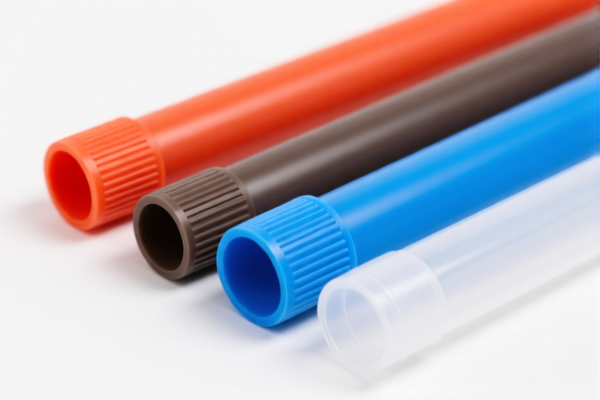
AI Analysis
🏗️ Plastic Hard Transparent Tubes (Other)
🌐 HS Code Reference & Customs Clearance Guide | 2026 Latest Tariff Analysis | Professional Clearance Strategy
📌 I. Product Definition & Classification: What Exactly Are "Hard Transparent Tubes"?
"Other Plastic Hard Transparent Tubes" are industrial or consumer-grade piping systems made from thermoplastics (such as PVC, PE, PP, or Acrylic) that maintain a rigid structure and possess high visual clarity. In international trade, these products are generally classified based on whether they function as fluid conveyance pipes or general plastic articles.
Key Distinction:
Pipes/Conduits (Chapter 3917): If the product is designed specifically for conveying gases, liquids, or slurries, or for protecting cables/wires, it falls under Plastic Pipes and Fittings.
Other Articles (Chapter 3926): If the product is a rigid tube used for structural purposes, decorative gardening hoses, or other non-pipe applications, it falls under Other Plastic Articles.
⚠️ Critical Classification Point:
- If the item is explicitly a "Pipe" (e.g., garden hose, irrigation pipe, plumbing conduit) → Chapter 3917
- If the item is a "Tube" used for general/structural/decorative purposes not primarily for fluid transport under pressure → Chapter 3926
📦 II. HS Code Classification Details (2026 Latest Tariff Authority Comparison)
| HS Code | Product Description | Application Scenario | Tax Rate (US/CN) |
|---|---|---|---|
3926.90.99.89 |
Other plastic articles (incl. hard plastic garden hoses) | Decorative garden tubes, rigid non-pressure tubes, structural plastic tubes | 22.8% |
3917.29.00.90 |
Other plastic hard pipes & conduits (incl. fittings) | Industrial hard pipes, plumbing conduits, cable protection pipes | 38.1% |
3917.29.00.50 |
Other plastic pipes & conduits (hard) | Specific hard plastic pipes fitting the "pipe" definition | 38.1% |
3926.90.99.87 |
Other plastic articles (hard, tubular shape) | Generic hard plastic tubes, non-pipe applications, specialized plastic shapes | 22.8% |
🔍 Key Reminder:
- "Pipe" vs. "Tube": US Customs often distinguishes between a "pipe" (conveys fluid) and a "tube" (structural/other). If it's a hard garden hose or decorative tube, it may fall under 3926 (Lower Tax). If it's a rigid plumbing/conduit pipe, it falls under 3917 (Higher Tax). - Material Match: Both categories require Plastic material. The "Hard" and "Transparent" features are descriptive but do not change the chapter unless the function changes.
💰 III. 2026 Latest Tariff Rate Breakdown (Including Surtaxes & Policy Add-ons)
✅ Applicable Country: United States (US)
✅ Origin: China (CN)
✅ Effective Date: Post-2025 Trade Adjustments (Including Section 301 & IEEPA)
🎯 1. 3926.90.99.89 & 3926.90.99.87 —— Other Plastic Articles (Non-Pipe)
| Item | Content |
|---|---|
| Base Tariff | 5.3% |
| Section 301 Surtax | +7.5% (Trade war surcharge) |
| IEEPA Section 122 | +10% (Additional surcharge for China-origin goods) |
| Total Tax Rate | 22.8% |
| Tax Calculation | CIF Value × 22.8% |
| De Minimis Exemption | ❌ Not Eligible (Section 301 goods are excluded from de minimis relief) |
| Legal Basis Path | IEEPA:9903.01.24 → USITC:3926.90.99.89 → FOOTNOTE:301 |
📌 Explanation:
- These codes belong to "Other Plastic Articles" (Chapter 3926).
- The 22.8% rate is a combination of the standard Most Favored Nation (MFN) rate, the Section 301 surcharge, and the IEEPA 122 clause.
- This is significantly lower than the pipe category.
🎯 2. 3917.29.00.90 & 3917.29.00.50 —— Other Plastic Hard Pipes & Conduits
| Item | Content |
|---|---|
| Base Tariff | 3.1% |
| Section 301 Surtax | +25.0% (Heavy Section 301 surcharge) |
| IEEPA Section 122 | +10% (Additional surcharge for China-origin goods) |
| Total Tax Rate | 38.1% |
| Tax Calculation | CIF Value × 38.1% |
| De Minimis Exemption | ❌ Not Eligible |
| Legal Basis Path | IEEPA:9903.01.24 → USITC:3917.29.00.90 → FOOTNOTE:301 |
📌 Explanation:
- These codes belong to "Plastic Pipes and Conduits" (Chapter 3917).
- Despite a lower base tariff (3.1%), the Section 301 surcharge is 25% (vs. 7.5% for other articles), leading to a higher total rate of 38.1%.
- Why? The US government imposes heavier burdens on "pipe" products to protect domestic manufacturing.
🛠️ IV. Customs Clearance Practical Advice (Battle-Tested Pitfall Guide)
✅ 1. Document Checklist (Non-Negotiable)
| Document | Required? | Description |
|---|---|---|
| ✅ Product Specifications | ✔️ | Must specify: Material (e.g., PVC, PP), Diameter, Wall Thickness, Rigidity |
| ✅ Product Photos | ✔️ | Clear images showing transparency, hardness (bend test if possible), and intended use |
| ✅ Commercial Invoice | ✔️ | Must clearly state: "Other Plastic Hard Transparent Tubes" or "Hard Plastic Pipes" – Do NOT just say "Plastic Tube" |
| ✅ Origin Certificate | ✔️ | Required for preferential claims if not from China |
| ✅ Usage Declaration | ✔️ | Explain if it is for fluid transport (Pipe) or general/structural/decorative use (Article) |
✅ 2. Declaration Strategy (Key Mnemonics)
🔥 "Function Defines Code: Pipe = High Tax, Article = Low Tax!"
| Scenario | Correct HS Code | Wrong Code | Consequence |
|---|---|---|---|
| Garden Hose (Rigid/Decorative) | 3926.90.99.89 |
3917.29.00.90 |
Avoid 38.1% tax; pay 22.8% |
| Plumbing Pipe (Water/Gas) | 3917.29.00.90 |
3926.90.99.89 |
Must pay 38.1%; misclassification leads to penalties |
| Cable Conduit (Hard) | 3917.29.00.90 |
3926.90.99.89 |
Classified as "Conduit" → 38.1% |
| Decorative Tube (No fluid use) | 3926.90.99.87 |
3917.29.00.90 |
Safe at 22.8% |
📌 Critical Tip:
- If the product is marketed as a "Garden Hose" but is HARD and TRANSPARENT, argue for 3926.90.99.89 by emphasizing its non-pressure, decorative, or structural nature.
- If it is used for irrigation or water supply, it will likely be classified as 3917 (Pipe).
✅ 3. Special Circumstances Handling
| Situation | Handling Suggestion |
|---|---|
| OEM Custom Tubes | Provide design drawings to prove it’s not a standard pipe. |
| Transparent vs. Opaque | Transparency does not change the HS Code. Both hard and transparent PVC pipes fall under the same code. |
| Combined Packages | If pipes and fittings are sold together, declare the primary function. If mostly pipes, classify as pipes. |
| Small Quantities (De Minimis) | ❌ Do not attempt de minimis entry for China-origin plastic pipes/articles. The 22.8%-38.1% tax applies regardless of value. |
🌍 V. Global Market Clearance Comparison (2026 Latest)
| Country/Region | Recommended HS Code | Tariff (China Origin) | Certification | Notes |
|---|---|---|---|---|
| 🇺🇸 USA | 3926.90.99.89 / 3917.29.00.90 |
22.8% / 38.1% | None specific | High Surtax due to Section 301 |
| 🇨🇳 China | 3926.90.99.89 / 3917.29.00.90 |
0% - 5% | CCC (if applicable) | Low import duty |
| 🇪🇺 EU | 3917.29.00.00 / 3926.90.99 |
0% - 4.5% | REACH | No Section 301 equivalent |
| 🇬🇧 UK | 3917.29.00.00 / 3926.90.99 |
0% - 4% | UKCA | Post-Brexit standards apply |
| 🇦🇺 Australia | 3917.29.00.00 / 3926.90.99 |
5% - 10% | SAA | Standard MFN rates |
📌 Conclusion:
- The US is the only major market with punitive surtaxes (Section 301 + IEEPA) on these plastic products.
- China-origin plastic pipes/articles are significantly more expensive to clear in the US.
- Strategy: If possible, classify as "Other Articles" (3926) to save 15.3% in tariffs compared to "Pipes" (3917).
📌 VI. Common Errors & Pitfall Guide (Lessons from Blood & Tears)
❌ Error 1: Declaring a Hard Plastic Conduit as "Other Plastic Article" (3926)
👉 Consequence: Customs reclassifies it as a "Conduit" (3917) → Back taxes + 38.1% vs 22.8% difference!
❌ Error 2: Declaring a Decorative Transparent Tube as a "Pipe" (3917)
👉 Consequence: Unnecessarily paying 38.1% tax instead of 22.8% → Loss of profit margin!
❌ Error 3: Using vague terms like "Plastic Tube" without specifying Hardness or Use
👉 Consequence: Customs holds the shipment for clarification → Delay in release + Storage fees.
❌ Error 4: Assuming Transparency changes the Code
👉 Consequence: Transparency is a physical property, not a classification factor. Both clear and opaque hard PVC pipes have the same code.
✅ Correct Practice:
"Hard Transparent PVC Garden Hose, Decorative Use, Non-Pressure, Model XYZ, 10mm Diameter"
🎯 VII. Conclusion: Professional Declaration, Save Time, Reduce Costs!
🎯 Remember the Mnemonic:
🔹 "Pipe = High Tax (38.1%), Article = Lower Tax (22.8%)"
🔹 "Function is King: Fluid Transport = Pipe, Decoration/Structure = Article"
🔹 "De Minimis Does Not Apply: Tax Starts at First Dollar!"
📌 Pro Tip:
If your product is a Garden Hose that is HARD and TRANSPARENT, emphasize its Decorative/Non-Pressure nature in the commercial invoice to argue for 3926.90.99.89.
If it is for Irrigation/Water, accept the 3917.29.00.90 classification but ensure all documentation is perfect to avoid delays.
📣 Immediate Action:
📞 Contact a licensed customs broker + Provide Product Photos + Declare Intended Use clearly
🚀 Ensure your Commercial Invoice matches the HS Code Function
💡 Save 15.3% Tax by correct classification!
✨ Professional Clearance Starts with Accurate Classification!
💼 Every Percentage Point Counts!
Customer Reviews
About HS Code Classification
The Harmonized System (HS) is an internationally standardized nomenclature developed by the World Customs Organization (WCO) to classify traded products. Over 200 countries use the HS system as the basis for customs tariffs, trade statistics, and import/export regulations.
Each HS code follows a hierarchical structure:
- Chapter (2 digits) — Broad category of goods (e.g., Chapter 84: Machinery and Mechanical Appliances)
- Heading (4 digits) — More specific grouping within the chapter
- Subheading (6 digits) — Internationally standardized breakdown, used by all WCO member countries
- National subdivisions (8-10 digits) — Country-specific extensions for further classification, such as US HTSUS 10-digit codes
Correct HS code classification is essential for smooth customs clearance, accurate duty payment, and compliance with trade regulations. Misclassification can lead to customs delays, overpayment of duties, or penalties.
When importing from CN to US, the applicable tariff rates may include:
- Most-Favored-Nation (MFN) rate — The standard duty rate applied to WTO members
- General rate — Applied to countries without trade agreements
- Trade remedy duties — Additional tariffs such as Section 301 (anti-dumping), Section 232 (national security), or countervailing duties
The information provided on this page is for reference purposes only. For official classification, please consult with your local customs authority or a licensed customs broker.