Other Plastic Insulating Boards
CN → US| HS Code | Tariff Rate | Origin | Destination | Doc |
|---|---|---|---|---|
| 3921190090 | 41.5% | CN | US | Official Doc |
| 3921905050 | 39.8% | CN | US | Official Doc |
| 3926909987 | 22.8% | CN | US | Official Doc |
| 3926909989 | 22.8% | CN | US | Official Doc |
| 3920995000 | 40.8% | CN | US | Official Doc |
| 3920992000 | 39.2% | CN | US | Official Doc |
Product Images
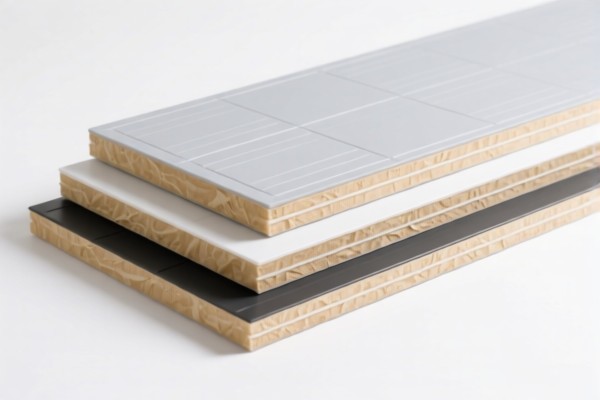


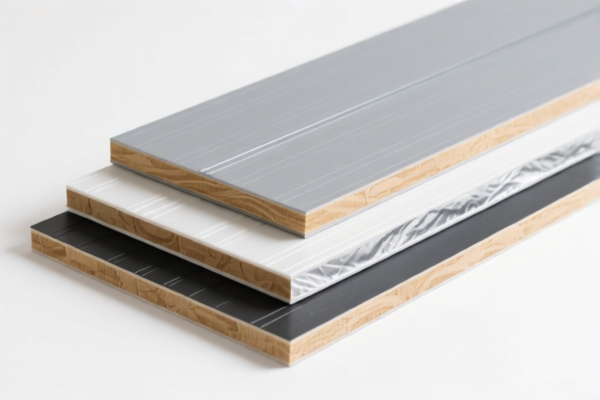
AI Analysis
🏗️ Other Plastic Insulating Boards (Electrical Insulation)
🌐 HS Code Reference & Customs Clearance Guide | 2026 Latest Tariff Analysis | Professional Compliance Strategy
📌 1. Product Definition & Classification: What Exactly Are "Other Plastic Insulating Boards"?
Plastic insulating boards are rigid, semi-rigid, or flexible sheets made from polymers, specifically designed to provide electrical insulation, thermal resistance, or mechanical support. In international trade, they are primarily categorized under Chapter 39 (Plastics and Articles Thereof).
The classification depends heavily on the specific plastic material (e.g., Polyethylene, Polypropylene, PVC, Phenolic) and the processing state (rolled, molded, or simple sheet). Misclassification can lead to significant tariff differences due to US Section 301 and IEEPA duties.
⚠️ Key Distinction Points:
- Are they "Plates, Sheets, Film, Foil, or Strip"? → If yes, look at Chapter 39, Heading 3920 or 3921.
- Are they "Other Articles"? → If the board is a finished component with complex shapes or specific functional assemblies not covered by headings 3920/3921, look at Heading 3926.
- Material Conflict: Ensure the summary matches the actual polymer type. For example, PVC boards differ from Polyethylene boards.
📦 2. HS Code Classification Details (Based on Provided Data)
| HS Code | Product Description | Match Logic (Why it fits) | Total Tax Rate |
|---|---|---|---|
3921.19.00.90 |
Other Plastics: Plates, Sheets, Film, Foil, Strip, Not Cellular | ✅ Material: Plastic. ✅ Form: Board/Sheet. ✅ Logic: Explicitly includes "Plastic" and "Board" shape. No conflict. |
41.5% |
3921.90.50.50 |
Other Plastics: Other Articles of Plastics | ✅ Material: Plastic. ✅ Form: Board. ✅ Logic: Fits "Plastic Board" under "Other" category. |
39.8% |
3926.90.99.87 |
Other Articles of Plastics and Articles of Other Materials of Heading 3901 to 3914: Other | ✅ Material: Plastic attribute confirmed. ✅ Form: Board under "Other". ✅ Logic: Catch-all (n.e.s.) for plastic boards not elsewhere specified. No conflict. |
22.8% |
3926.90.99.89 |
Other Articles of Plastics: Other | ✅ Material: Plastic confirmed. ✅ Form: "Other"制品 (Articles). ✅ Logic: No material or shape conflict. Fits "Other Plastic Articles". |
22.8% |
3920.99.50.00 |
Plates, Sheets, Film, Foil, Strip, Not Cellular: Other | ✅ Material: Plastic. ✅ Form: Board. ✅ Logic: "Other" aligns with the code's "Other" category. No material conflict. |
40.8% |
🔍 Critical Insight:
- Headings 3920/3921 generally cover raw or semi-finished sheets/plates.
- Heading 3926 covers finished articles or items that don't fit the specific "plate/sheet" definitions of 3920/3921.
- Tax Impact: There is a ~19% difference between the 22.8% rate (3926) and the ~40-41% rates (3920/3921). Choosing the wrong code can add significant cost.
💰 3. 2026 Latest Tariff Rate Breakdown (Including Surtaxes)
✅ Applicable Country: United States (US)
✅ Country of Origin: China (CN)
✅ Effective Date: November 10, 2025 onwards (for subsequent imports)
🎯 1. 3921.19.00.90 – Other Plastic Plates/Sheets (Not Cellular)
| Item | Detail |
|---|---|
| Base Tariff | 6.5% |
| Section 301 Surtax | +25.0% |
| IEEPA Surtax | +10.0% (122 Clause) |
| Total Rate | 41.5% |
| Calculation | CIF Value × 41.5% |
| De Minimis Exemption? | ❌ No (deny_de_minimis) |
| Legal Path | Base: 6.5% → 301: 25% → IEEPA: 10% |
📌 Explanation:
- This code attracts the highest surtaxes.
- Total 41.5% makes this the most expensive option.
- Use only if the product strictly fits the "non-cellular plate/sheet" definition under 3921.
🎯 2. 3921.90.50.50 – Other Plastic Articles (3921 Category)
| Item | Detail |
|---|---|
| Base Tariff | 4.8% |
| Section 301 Surtax | +25.0% |
| IEEPA Surtax | +10.0% (122 Clause) |
| Total Rate | 39.8% |
| Calculation | CIF Value × 39.8% |
| De Minimis Exemption? | ❌ No |
| Legal Path | Base: 4.8% → 301: 25% → IEEPA: 10% |
📌 Note:
- Slightly cheaper than3921.19.00.90due to a lower base rate (4.8% vs 6.5%).
- Still subject to the full 35% in surtaxes.
🎯 3. 3920.99.50.00 – Other Plastic Plates/Sheets (3920 Category)
| Item | Detail |
|---|---|
| Base Tariff | 5.8% |
| Section 301 Surtax | +25.0% |
| IEEPA Surtax | +10.0% (122 Clause) |
| Total Rate | 40.8% |
| Calculation | CIF Value × 40.8% |
| De Minimis Exemption? | ❌ No |
| Legal Path | Base: 5.8% → 301: 25% → IEEPA: 10% |
📌 Note:
- Falls under Chapter 39, Heading 3920.
- Tax burden is nearly identical to 3921 variants.
🎯 4. 3926.90.99.87 & 3926.90.99.89 – Other Plastic Articles (Lowest Rate!)
| Item | Detail |
|---|---|
| Base Tariff | 5.3% |
| Section 301 Surtax | +7.5% |
| IEEPA Surtax | +10.0% (122 Clause) |
| Total Rate | 22.8% |
| Calculation | CIF Value × 22.8% |
| De Minimis Exemption? | ❌ No |
| Legal Path | Base: 5.3% → 301: 7.5% → IEEPA: 10% |
📌 CRITICAL ADVANTAGE:
- Significantly Lower Surcharge: Only 7.5% Section 301 tax (vs 25% for 3920/3921).
- Total Tax: 22.8% (Savings of ~17-19% compared to 3920/3921 codes).
- Condition: The product must qualify as an "Other Article" under 3926, not a simple "plate/sheet" under 3920/3921. This often applies to custom-shaped insulators, complex molded parts, or boards with specific functional features that don't fit the generic "sheet" definition.
🛠️ 4. Customs Clearance Practical Advice (Pitfall Avoidance Guide)
✅ 1. Documentation Checklist (Mandatory)
| Document | Required | Explanation |
|---|---|---|
| ✅ Product Specification Sheet | ✔️ | Must specify: Material (e.g., PVC, PE, FR-4), Thickness, Density, Electrical Resistance, Flame Rating (UL94). |
| ✅ Material Safety Data Sheet (MSDS) | ✔️ | Critical for chemical composition verification. |
| ✅ Product Photos | ✔️ | Show form factor (sheet vs. molded part) and any markings/labels. |
| ✅ Commercial Invoice | ✔️ | Clearly state "Plastic Insulating Board" and intended use (e.g., "For electrical insulation in transformers"). |
| ✅ Certificate of Origin (CO) | ✔️ | Proof of Chinese origin to apply surtaxes correctly. |
| ✅ Packing List | ✔️ | Detail dimensions and weight per box. |
✅ 2. Declaration Strategy (Key Rules)
🔥 Mnemonic:
"Simple Sheets go to 3920/21 (High Tax); Complex/Other Shapes go to 3926 (Low Tax). Be Honest!"
| Scenario | Correct HS Code | Risk of Wrong Code |
|---|---|---|
| Plain, flat plastic sheet used for insulation | 3920.99.50.00 or 3921.19.00.90 |
High Tax (40-41%). Correct classification. |
| Molded plastic insulator (non-sheet shape) | 3926.90.99.87/89 |
Low Tax (22.8%). Avoids excessive 301 duties. |
| Laminated board (e.g., FR-4 Fiberglass-Epoxy) | Check Composition: If >50% plastic by weight, may still be 3926. If primarily fiberglass, check Chapter 70. | Misclassification leads to delays. |
| Cellular Plastic Foam (e.g., Styrofoam insulation) | NOT in the provided list. Usually 3921.11 or 3921.12. | Using 3921.19 for foam may cause rejection. |
✅ 3. Special Considerations
| Situation | Advice |
|---|---|
| FR-4 / Fiberglass Reinforced Epoxy | Often classified under 3926 if the plastic resin is the binding agent and it's considered an "article." However, some customs brokers may push for 3920. Verify with a binding ruling. |
| OEM Custom Boards | If the board has holes, cuts, or specific shapes required for a machine, argue for 3926 ("Other Articles") to benefit from the lower 7.5% surtax. |
| Small Samples | If shipped via express courier under $800, De Minimis may apply, but Section 301/IEEPA duties are often STILL collected on Chinese goods. Do not assume tax-free. |
🌍 5. Global Market Comparison (2026)
| Country/Region | Recommended HS Code | Total Tax Rate (China Origin) | Key Certification |
|---|---|---|---|
| 🇺🇸 USA | 3926.90.99.87/89 |
22.8% (Best Option) | UL, ASTM D149 |
| 🇪🇺 EU | 3921.19 or 3926 |
6.5% - 7.5% | REACH, RoHS |
| 🇨🇳 China | 3921.19 or 3926 |
5% - 6.5% | CCC (if applicable) |
| 🇯🇵 Japan | 3921.19 or 3926 |
6% - 8% | JIS, PSE |
📌 Conclusion:
- The US market is significantly more expensive due to Section 301 and IEEPA tariffs.
- Strategic Tip: If your product can be legally classified under 3926 (as an "Other Article") rather than 3920/3921, you save ~18% in duties. Ensure the product description highlights its "article" nature (e.g., "custom-molded insulating component") rather than just "plastic sheet."
📌 6. Common Mistakes & Pitfalls
❌ Mistake 1: Declaring a simple plastic sheet as 3926 to avoid high taxes without justification.
👉 Consequence: Customs may reclassify to 3920/3921, apply the higher tax + penalties.
❌ Mistake 2: Confusing "Cellular" (Foam) with "Non-Cellular" (Solid) plastics.
👉 Consequence: Wrong code leads to immediate detention. Cellular plastics have different subheadings (e.g., 3921.11).
❌ Mistake 3: Ignoring the "122 Clause" IEEPA tariff.
👉 Consequence: Underpayment. The 10% IEEPA tax applies to all HS codes listed above for Chinese goods.
✅ Correct Practice:
"Plastic Insulating Board, [Material Name], [Thickness]mm, Non-Cellular, UL94 V-0 Rated, for Electrical Applications"
If custom-shaped: "Custom-Molded Plastic Insulating Component, [Material Name], [Shape], for Use in [Equipment]"
🎯 7. Conclusion: Precision in Classification Saves Money!
🎯 Remember the Key Rule:
🔹 "Simple Sheet = High Tax (3920/21); Complex Article = Lower Tax (3926)."
🔹 "Check if your board is 'processed' beyond a simple sheet to qualify for 3926."
🔹 "Total Tax = Base + 301 + IEEPA. Do not forget the 10% IEEPA!"
📌 Pro Tip:
If you are importing large volumes, apply for an Advance Ruling from US Customs. This provides legal certainty on whether your specific insulating board qualifies for the lower 22.8% rate under 3926.
📣 Immediate Action:
📞 Consult a licensed customs broker.
📄 Provide product samples and technical specs.
🚀 Optimize your HS Code choice to minimize tariff burden while staying compliant.
✨ Professional Clearance Starts with Accurate Classification!
💼 Every percentage point matters in global trade!
Customer Reviews
About HS Code Classification
The Harmonized System (HS) is an internationally standardized nomenclature developed by the World Customs Organization (WCO) to classify traded products. Over 200 countries use the HS system as the basis for customs tariffs, trade statistics, and import/export regulations.
Each HS code follows a hierarchical structure:
- Chapter (2 digits) — Broad category of goods (e.g., Chapter 84: Machinery and Mechanical Appliances)
- Heading (4 digits) — More specific grouping within the chapter
- Subheading (6 digits) — Internationally standardized breakdown, used by all WCO member countries
- National subdivisions (8-10 digits) — Country-specific extensions for further classification, such as US HTSUS 10-digit codes
Correct HS code classification is essential for smooth customs clearance, accurate duty payment, and compliance with trade regulations. Misclassification can lead to customs delays, overpayment of duties, or penalties.
When importing from CN to US, the applicable tariff rates may include:
- Most-Favored-Nation (MFN) rate — The standard duty rate applied to WTO members
- General rate — Applied to countries without trade agreements
- Trade remedy duties — Additional tariffs such as Section 301 (anti-dumping), Section 232 (national security), or countervailing duties
The information provided on this page is for reference purposes only. For official classification, please consult with your local customs authority or a licensed customs broker.