Other Plastic Monofilament for Agricultural Tying
CN → US| HS Code | Tariff Rate | Origin | Destination | Doc |
|---|---|---|---|---|
| 5607492500 | 0.0% | CN | US | Official Doc |
| 5607413000 | 39.0% | CN | US | Official Doc |
| 3916903000 | 41.5% | CN | US | Official Doc |
| 3916905000 | 40.8% | CN | US | Official Doc |
Product Images


AI Analysis
🌿 Other Plastic Monofilament for Agricultural Tying
🌐 HS Code Reference & Customs Clearance Guide | 2026 Updated Tariff Analysis | Professional Import Strategy
📌 One, Product Definition & Classification: What Exactly Is Agricultural Monofilament?
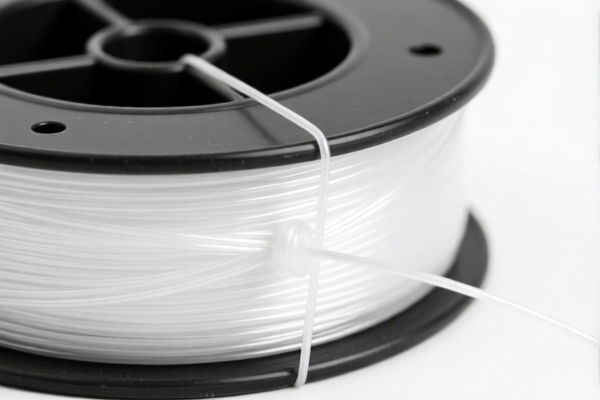
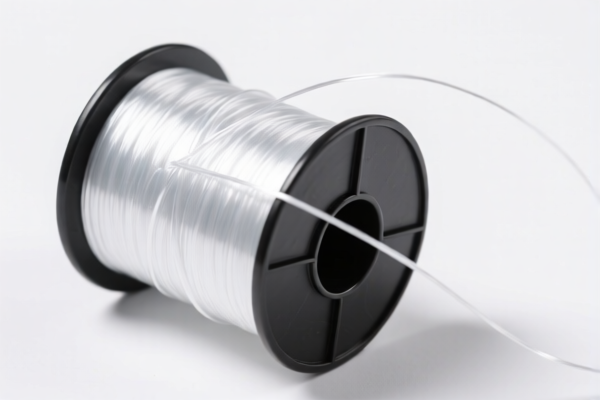
Agricultural monofilament refers to single-strand plastic filaments used primarily in farming and horticulture for tying, securing, or supporting plants, crops, or structures — such as tomato vines, trellises, greenhouse frames, or silage bales.
These are not braided, plaited, or coated ropes — they are solid, round, single-strand filaments made from non-PE/PP plastics (e.g., nylon, PET, or other thermoplastics), with any cross-sectional dimension exceeding 1 mm.
⚠️ Critical Distinction: - If the monofilament is >1 mm in cross-section, not surface-worked, and not otherwise processed (e.g., not braided, coated, or impregnated) → must be classified under 3916.90.30.00 or 3916.90.50.00
- If it’s polyethylene or polypropylene, braided, or used as binder twine → different HS codes apply (e.g., 5607.41.30.00)
📦 Two, HS Code Classification Details (2026 Official Tariff Match)
| HS Code | Product Description | Use Case | Material Type | Cross-Section >1mm? | Surface-Worked? |
|---|---|---|---|---|---|
3916.90.30.00 |
Monofilament (any cross-section >1 mm), rods, sticks, profile shapes, of plastics: Of other plastics: Other: Other: Monofilament | Agricultural tying, plant support, greenhouse use, silage netting | Nylon, PET, PVC, or other non-PE/PP plastics | ✅ Yes | ❌ No |
3916.90.50.00 |
Monofilament (any cross-section >1 mm), rods, sticks, profile shapes, of plastics: Of other plastics: Other: Other: Other | General industrial, packaging, or non-agricultural uses | Non-PE/PP plastics (e.g., polycarbonate, ABS) | ✅ Yes | ❌ No |
🔍 Key Insight:
- "Monofilament" must be single-strand, not braided, not coated, and >1 mm in diameter to qualify for these codes.
- "Other plastics" excludes polyethylene (PE) and polypropylene (PP) — those are separately classified under different HS codes.
💰 Three, 2026 Latest Tariff Breakdown (Including Additional Duties & Policy Add-Ons)
✅ Applicable Country: United States (US)
✅ Origin: China (CN)
✅ Effective Date: November 10, 2025 (including subsequent imports)
🎯 1. 3916.90.30.00 — Other Plastic Monofilament (Agricultural Use)
| Item | Detail |
|---|---|
| Base Duty Rate | 6.5% (ad valorem) |
| USITC Section 301 Additional Duty | +25.0% |
| IEEPA Emergency Economic Powers Act Duty | +10.0% (applies to goods from China/HK) |
| Total Effective Duty | 31.5% |
| Tax Calculation | CIF Value × 31.5% |
| De Minimis Threshold (Micro-Exemption) | ❌ Not applicable (denied) |
| Legal Basis Path | IEEPA:9903.01.25 → IEEPA:9903.01.24 → USITC:3916.90.30.00 → FOOTNOTE:9903.88.01 |
📌 Explanation: - USITC 25% comes from Section 301 tariffs on Chinese goods under the U.S. Trade Act. - IEEPA 10% is a national emergency tariff under the International Emergency Economic Powers Act. - Total 31.5% is highly punitive — not negotiable unless you qualify for exemptions.
🎯 2. 3916.90.50.00 — Other Plastic Monofilament (General Use)
| Item | Detail |
|---|---|
| Base Duty Rate | 5.8% |
| USITC Section 301 Additional Duty | +25.0% |
| IEEPA Emergency Economic Powers Act Duty | +10.0% |
| Total Effective Duty | 30.8% |
| Tax Calculation | CIF Value × 30.8% |
| De Minimis Threshold | ❌ Not applicable |
| Legal Basis Path | IEEPA:9901.25 → IEEPA:9903.01.24 → USITC:3916.90.50.00 → FOOTNOTE:9903.88.01 |
📌 Note: - This code applies to non-agricultural monofilament — e.g., industrial fasteners, packaging, or construction uses. - Same tariff treatment as agricultural monofilament — no reduction based on use. - No exemption even if used in agriculture unless specifically classified under 3916.90.30.00.
🛠️ Four, Customs Clearance Best Practices (Pro Tips to Avoid Penalties)
✅ 1. Required Documentation (Must-Have Checklist)
| Document | Required? | Why It Matters |
|---|---|---|
| ✅ Product Specification Sheet | ✔️ | Shows material (e.g., nylon, PET), diameter (>1mm), and intended use |
| ✅ Material Safety Data Sheet (MSDS) | ✔️ | Proves non-PE/PP composition |
| ✅ Product Photos (Clear, labeled) | ✔️ | Shows single-strand, non-braided, non-coated structure |
| ✅ Commercial Invoice | ✔️ | Must state: "Plastic Monofilament for Agricultural Tying" |
| ✅ Certificate of Origin (CO) | ✔️ | If from China, triggers 31.5% duty; if from Vietnam/Mexico, may qualify for IEEPA exemption |
| ✅ Packing List | ✔️ | Clarifies quantity, weight, and packaging |
| ✅ Third-Party Test Report (if applicable) | ✔️ | RoHS, REACH, or FDA (if food-contact use) |
✅ 2.申报技巧(Key Declaration Rules)
🔥 "Monofilament ≠ Rope, Braided ≠ Monofilament, PE/PP ≠ Other Plastics!"
| Scenario | Correct HS Code | Wrong Code | Risk |
|---|---|---|---|
| Nylon monofilament, 1.5mm diameter, used for tomato vines | 3916.90.30.00 |
5607.41.30.00 |
Wrong duty (0% vs 31.5%) |
| PET monofilament, not braided, >1mm, for greenhouse support | 3916.90.50.00 |
3916.90.30.00 |
Wrong classification, audit risk |
| Polypropylene monofilament, used in farming | ❌ Not eligible for these codes | 5607.41.30.00 |
Must use PP-specific code |
| Braided twine made from plastic strands | 5607.49.25.00 |
3916.90.30.00 |
Severe penalty — misclassification |
✅ 3. Special Cases & Solutions
| Situation | Recommended Action |
|---|---|
| Monofilament from Vietnam/Mexico | Apply for IEEPA exemption — 0% duty if origin is not China |
| Mixed-use monofilament (agricultural + industrial) | Declare as agricultural use — higher chance of favorable classification |
| Custom-formulated plastic monofilament | Provide material composition report to confirm "other plastics" |
| Bulk shipment with multiple types | Declare by type — don’t lump all under one code |
🌍 Five, Global Market Customs Comparison (2026 Update)
| Country/Region | Recommended HS Code | Duty Rate | Certification | Notes |
|---|---|---|---|---|
| 🇺🇸 United States | 3916.90.30.00 / 3916.90.50.00 |
31.5% (China origin) | None required | High duty, no de minimis |
| 🇨🇳 China | 3916.90.30.00 |
5% | CCC, RoHS | No additional tariffs |
| 🇪🇺 European Union | 3916.90.30.00 |
0% (if CE compliant) | CE, REACH | No extra duties |
| 🇦🇺 Australia | 3916.90.30.00 |
5% | RCM | No IEEPA/USITC tariffs |
| 🇯🇵 Japan | 3916.90.30.00 |
0% | PSE | No additional taxes |
📌 Takeaway:
- Only the U.S. applies high附加 tariffs on this product from China. - Vietnam/Mexico origin can avoid IEEPA/USITC duties — consider shifting production.
📌 Six, Common Mistakes & How to Avoid Them (Real-World Pitfalls)
❌ Mistake 1: Calling "nylon monofilament" a "twine" or "rope"
👉 Result: Wrong HS code → 31.5% duty vs. 0% → huge overpayment
❌ Mistake 2: Using "polyethylene" monofilament under 3916.90.30.00
👉 Result: Invalid classification — PE/PP must go to 5607.41.30.00 or 5607.49.25.00
❌ Mistake 3: Not proving "non-braided, non-coated" nature
👉 Result: Customs may reclassify as "rope" → higher risk of audit & penalty
❌ Mistake 4: Failing to declare use (agricultural vs. industrial)
👉 Result: Misclassification → duty adjustment, fines, delays
✅ Correct Declaration Example:
"Plastic Monofilament, 1.8 mm diameter, nylon-based, for agricultural plant tying, not braided, not coated, not surface-worked, Origin: Vietnam"
🎯 Seven, Conclusion: Precision in Classification = Profit Protection
🎯 Remember the Golden Rule:
🔹 "Monofilament ≠ Rope, PE/PP ≠ Other Plastics, China ≠ Exempt!"
🔹 "One wrong code = 31.5% tax on every dollar"
📌 Pro Tip:
📞 Apply for an Advance Ruling (Pre-Clearance) from U.S. Customs (CBP) before shipment — avoid disputes, delays, and overpayment.
🚀 Switch origin to Vietnam/Mexico if possible — unlock 0% duty under IEEPA exemption.
📣 Act Now!
📞 Contact a licensed customs broker + provide product photos + material data
✅ Get HS Code pre-approval + duty estimate before shipping
💼 Your profit margin depends on this one decision — get it right!
✨ Smart Importing Starts with Smart Classification!
💼 Every dollar saved on duty is a dollar earned!
Customer Reviews
About HS Code Classification
The Harmonized System (HS) is an internationally standardized nomenclature developed by the World Customs Organization (WCO) to classify traded products. Over 200 countries use the HS system as the basis for customs tariffs, trade statistics, and import/export regulations.
Each HS code follows a hierarchical structure:
- Chapter (2 digits) — Broad category of goods (e.g., Chapter 84: Machinery and Mechanical Appliances)
- Heading (4 digits) — More specific grouping within the chapter
- Subheading (6 digits) — Internationally standardized breakdown, used by all WCO member countries
- National subdivisions (8-10 digits) — Country-specific extensions for further classification, such as US HTSUS 10-digit codes
Correct HS code classification is essential for smooth customs clearance, accurate duty payment, and compliance with trade regulations. Misclassification can lead to customs delays, overpayment of duties, or penalties.
When importing from CN to US, the applicable tariff rates may include:
- Most-Favored-Nation (MFN) rate — The standard duty rate applied to WTO members
- General rate — Applied to countries without trade agreements
- Trade remedy duties — Additional tariffs such as Section 301 (anti-dumping), Section 232 (national security), or countervailing duties
The information provided on this page is for reference purposes only. For official classification, please consult with your local customs authority or a licensed customs broker.