Other Plastic Multi layer Boards
CN → US| HS Code | Tariff Rate | Origin | Destination | Doc |
|---|---|---|---|---|
| 3921190090 | 41.5% | CN | US | Official Doc |
| 3921905050 | 39.8% | CN | US | Official Doc |
| 3926909987 | 22.8% | CN | US | Official Doc |
| 3926909989 | 22.8% | CN | US | Official Doc |
| 3920995000 | 40.8% | CN | US | Official Doc |
Product Images
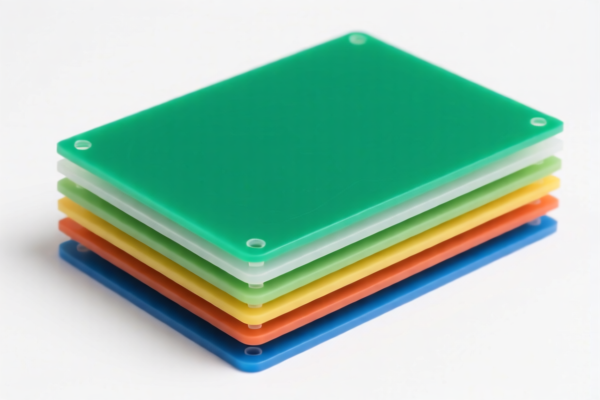

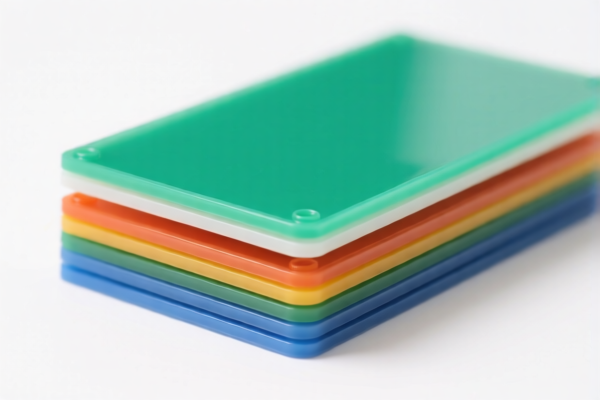
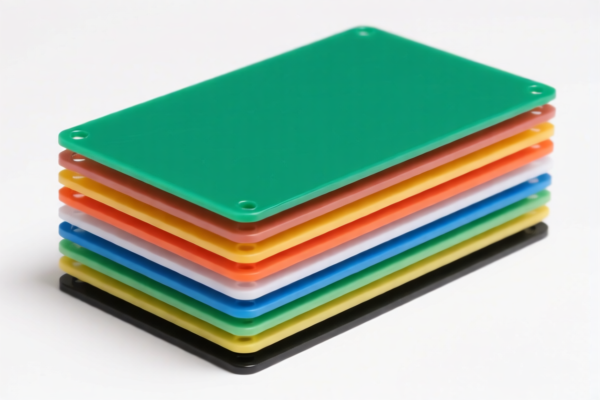
AI Analysis
🎨 Other Plastic Multi-layer Boards (Dual-Color/Dual-Tone Plastic Sheets)
🌐 HS Code Reference & Customs Clearance Guide | 2026 Latest Tariff Analysis | Strategic Compliance Strategy
📌 I. Product Definition & Classification: What Exactly Are "Plastic Multi-layer Boards"?
"Other Plastic Multi-layer Boards" (often referred to in trade as Dual-Color Plastic Sheets, Bi-color Acrylic, or Composite Plastic Sheets) are rigid flat products composed of two or more layers of plastic materials bonded together. They are widely used in signage, interior decoration, architectural cladding, and industrial displays due to their aesthetic appeal and structural integrity.
⚠️ Critical Distinction:
The classification depends heavily on the structural complexity and material composition: - Simple Laminates (Chapters 39.01–39.06): Basic plastic sheets/membranes/foils bonded together. Often attract higher punitive tariffs (Section 301). - Finished Articles (Chapter 39.26): If the board is processed, cut, or considered a "finished article" not primarily defined by its material form, it may fall under "Other Articles of Plastics", potentially benefiting from lower base rates (though still subject to Section 301).
📦 II. HS Code Classification Matrix (2026 Latest Tariff Data)
Based on the provided data, here are the five potential HS Codes for "Other Plastic Dual-Color/Multi-layer Boards":
| HS Code | Product Description | Tariff Profile | Key Characteristics |
|---|---|---|---|
3921.19.00.90 |
Other plastic sheets/boards (Non-cellular, non-reinforced) | Total: 41.5% | Base: 6.5% + Section 301: 25% + Section 122: 10% |
3921.90.50.50 |
Other plastic plates/sheets (Miscellaneous) | Total: 39.8% | Base: 4.8% + Section 301: 25% + Section 122: 10% |
3926.90.99.87 |
Other plastic articles (Finished/Processed) | Total: 22.8% | Base: 5.3% + Section 301: 7.5% + Section 122: 10% |
3926.90.99.89 |
Other plastic articles (Finished/Processed) | Total: 22.8% | Base: 5.3% + Section 301: 7.5% + Section 122: 10% |
3920.99.50.00 |
Other plastic plates/sheets (Miscellaneous) | Total: 40.8% | Base: 5.8% + Section 301: 25% + Section 122: 10% |
🔍 Key Insight:
- Codes starting with 3921 and 3920 are treated as raw plastic materials/semi-finished goods. They face the maximum Section 301 tariff (25%). - Codes starting with 3926 are treated as finished plastic articles. They benefit from a reduced Section 301 tariff (7.5%), resulting in a ~17-18% tax savings compared to material codes.
💰 III. 2026 Latest Tariff Rate Breakdown (Detailed Tax Clauses)
✅ Applicable Country: United States (US)
✅ Origin: China (CN)
✅ Effective Date: Current rates as per 2026 data provided.
🎯 1. Material Classification (High Tariff Risk)
A. 3921.19.00.90 – Other Plastic Sheets/Boards
| Item | Detail |
|---|---|
| Base MFN Rate | 6.5% |
| Section 301 (Trade War) | +25.0% |
| Section 122 | +10.0% |
| Total Effective Rate | 41.5% |
| De Minimis Exemption | ❌ Not Eligible (Deny de minimis) |
B. 3921.90.50.50 – Other Plastic Plates/Sheets
| Item | Detail |
|---|---|
| Base MFN Rate | 4.8% |
| Section 301 (Trade War) | +25.0% |
| Section 122 | +10.0% |
| Total Effective Rate | 39.8% |
| De Minimis Exemption | ❌ Not Eligible |
C. 3920.99.50.00 – Other Plastic Plates/Sheets
| Item | Detail |
|---|---|
| Base MFN Rate | 5.8% |
| Section 301 (Trade War) | +25.0% |
| Section 122 | +10.0% |
| Total Effective Rate | 40.8% |
| De Minimis Exemption | ❌ Not Eligible |
📌 Why is this bad?
These codes classify the product as a bulk plastic material. The US imposes a flat 25% penalty on most plastic sheeting imports from China. Combined with the base rate and Section 122, the landed cost increases drastically.
🎯 2. Finished Article Classification (Optimized Strategy)
D. 3926.90.99.87 – Other Plastic Articles
| Item | Detail |
|---|---|
| Base MFN Rate | 5.3% |
| Section 301 (Trade War) | +7.5% |
| Section 122 | +10.0% |
| Total Effective Rate | 22.8% |
| De Minimis Exemption | ❌ Not Eligible |
E. 3926.90.99.89 – Other Plastic Articles
| Item | Detail |
|---|---|
| Base MFN Rate | 5.3% |
| Section 301 (Trade War) | +7.5% |
| Section 122 | +10.0% |
| Total Effective Rate | 22.8% |
| De Minimis Exemption | ❌ Not Eligible |
📌 Why is this better?
By classifying the product as an "Article" rather than a "Sheet/Material", the Section 301 tariff drops from 25% to 7.5%.
Savings: ~17-18% less tax compared to material classifications.
🛠️ IV. Customs Clearance Practical Advice (Avoiding Pitfalls)
✅ 1. Documentation Checklist (Mandatory)
| Document | Required? | Purpose |
|---|---|---|
| ✅ Product Specification Sheet | ✔️ | Must detail layer composition, bonding method, and dimensions. |
| ✅ Photos of Cross-Section | ✔️ | Proves "multi-layer" structure vs. single solid plastic. |
| ✅ Commercial Invoice | ✔️ | Must clearly state "Multi-layer Plastic Board" or "Dual-Color Plastic Sheet". |
| ✅ Bill of Lading | ✔️ | Consistency with invoice description. |
| ✅ Origin Certificate | ✔️ | To prove China origin (triggers Section 301). |
✅ 2. Strategic Classification Tips
🔥 "Material vs. Article: The Tariff Dividend"
| Scenario | Recommended HS Code | Why? |
|---|---|---|
| Raw Sheets for Further Processing | 3921.19.00.90 / 3920.99.50.00 |
If the buyer will cut, print, or laminate further. But expect 40%+ tax. |
| Finished Decorative Panels/Signage | 3926.90.99.87 / 3926.90.99.89 |
If the product is cut to size, edged, or ready for direct installation. Best for tax optimization. |
| Small Samples/Cut-offs | 3926.90.99.87 |
Even small pieces may be classified as "articles" if they are finished shapes. |
✅ 3. Critical Warning: Section 122 Tariff (10%)
🚨 Note: All provided HS codes include a 10% Section 122 tariff.
- Section 122 applies to certain goods from China deemed to cause "serious injury" to US industries.
- It is non-negotiable for these plastic board codes.
- Impact: Adds 10% to the CIF value, regardless of Section 301 rate.
✅ 4. Avoiding Misclassification Errors
| Mistake | Consequence |
|---|---|
| Under-declaring as "Plastic Film" | If the board is rigid, it cannot be classified as film. Risk of reclassification to higher tariff codes. |
| Over-declaring as "Furniture" | If it's just a sheet/panel, not a finished furniture item, it will be rejected. Must be a "component" or "article". |
| Ignoring Section 301 | Assuming 0% base rate = 0% tax. False! Add 7.5% or 25% immediately. |
🌍 V. Global Market Comparison (2026 Snapshot)
| Market | Recommended HS Code | Est. Total Tax | Notes |
|---|---|---|---|
| 🇺🇸 USA | 3926.90.99.87 |
22.8% | Best option. Uses "Article" classification. |
| 🇺🇸 USA | 3921.19.00.90 |
41.5% | High risk. Avoid if possible. |
| 🇨🇳 China | 3921.19.00.00 |
~6.5% - 13% | Import duties vary. Check local VAT. |
| 🇪🇺 EU | 3920.99.00 |
~6.5% | No Section 301/122 equivalent, but CE/RoHS required. |
| 🇬🇧 UK | 3920.99.00 |
~6.5% | Post-Brexit tariffs similar to EU. |
📌 Conclusion:
The US market is the most challenging due to Section 301 (7.5% or 25%) and Section 122 (10%).
Strategy: Always aim for Chapter 39.26 (Articles) rather than 39.01-39.21 (Materials) to minimize Section 301 liability.
📌 VI. Common Mistakes & Pitfalls (Lessons Learned)
❌ Mistake 1: Classifying finished decorative panels as "Plastic Sheets"
👉 Result: Tax jumps from 22.8% to 41.5%.
💡 Fix: Provide photos showing finished edges, cut sizes, or mounting holes.
❌ Mistake 2: Assuming "Multi-layer" means "Composite" with different materials (e.g., metal/plastic)
👉 Result: May fall under different chapters (e.g., Chapter 76 for aluminum).
💡 Fix: Confirm all layers are plastic. If mixed materials, re-evaluate HS Code.
❌ Mistake 3: Ignoring Section 122
👉 Result: Unexpected 10% tariff bill at customs.
💡 Fix: Budget for +10% on top of base + Section 301 rates.
✅ Best Practice Declaration:
"Dual-Color Multi-Layer Plastic Board, Finished Article, Rigid, For Decorative Use, Model XYZ, China Origin"
🎯 VII. Conclusion: Strategic Sourcing & Clearance
🎯 Key Takeaway:
🔹 "Articles beat Materials" – Always try to classify as
3926(Articles) to save ~17% in Section 301 tariffs.
🔹 "Section 122 is a Fixed Cost" – Expect an additional 10% tax regardless of classification.
🔹 "Document Everything" – Cross-section photos and detailed specs are crucial to defend3926classification.
📌 Pro Tip:
If your supplier is in China, negotiate EXW (Ex Works) terms and handle US duties internally, as the tariff burden is significant. Consider third-party logistics (3PL) in Vietnam or Mexico for re-export if feasible, though Rule of Origin rules must be strictly followed to avoid penalties.
📣 Immediate Action:
📞 Contact a Customs Broker to file a Pre-Ruling for
3926.90.99.87.
📄 Prepare Product Photos showing the "finished" nature of the board.
🚀 Optimize Landed Cost by selecting the correct HS Code from the start.
✨ Precision in Classification = Profit in Your Pocket
💼 Don't let 18% tax difference eat your margin!
Customer Reviews
About HS Code Classification
The Harmonized System (HS) is an internationally standardized nomenclature developed by the World Customs Organization (WCO) to classify traded products. Over 200 countries use the HS system as the basis for customs tariffs, trade statistics, and import/export regulations.
Each HS code follows a hierarchical structure:
- Chapter (2 digits) — Broad category of goods (e.g., Chapter 84: Machinery and Mechanical Appliances)
- Heading (4 digits) — More specific grouping within the chapter
- Subheading (6 digits) — Internationally standardized breakdown, used by all WCO member countries
- National subdivisions (8-10 digits) — Country-specific extensions for further classification, such as US HTSUS 10-digit codes
Correct HS code classification is essential for smooth customs clearance, accurate duty payment, and compliance with trade regulations. Misclassification can lead to customs delays, overpayment of duties, or penalties.
When importing from CN to US, the applicable tariff rates may include:
- Most-Favored-Nation (MFN) rate — The standard duty rate applied to WTO members
- General rate — Applied to countries without trade agreements
- Trade remedy duties — Additional tariffs such as Section 301 (anti-dumping), Section 232 (national security), or countervailing duties
The information provided on this page is for reference purposes only. For official classification, please consult with your local customs authority or a licensed customs broker.