Other Plastic Pharmaceutical Packaging Film
CN → US| HS Code | Tariff Rate | Origin | Destination | Doc |
|---|---|---|---|---|
| 3920992000 | 39.2% | CN | US | Official Doc |
| 3921190090 | 41.5% | CN | US | Official Doc |
| 3921904010 | 39.2% | CN | US | Official Doc |
| 3921905010 | 39.8% | CN | US | Official Doc |
| 8485200000 | 38.1% | CN | US | Official Doc |
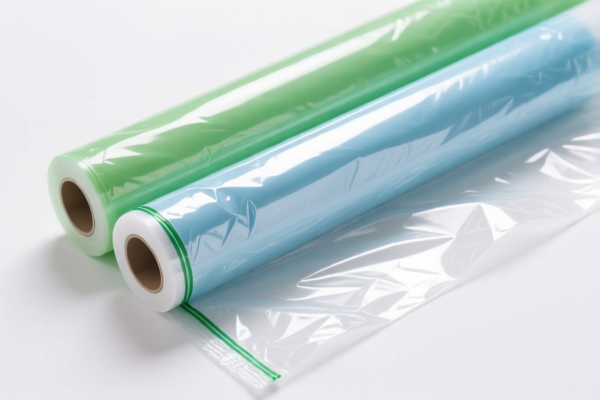
Product Images


AI Analysis
💊 Other Plastic Pharmaceutical Packaging Film
🌐 HS Code Reference & Customs Clearance Guide | 2026 Latest Tariff Analysis | Professional Clearance Strategy
📌 Part I: Product Definition & Classification: Do You Truly Understand "Pharmaceutical Plastic Film"?
Plastic films for pharmaceutical packaging are critical components in the medical supply chain, used for blister packs, pouches, and protective wrapping. In international trade, these are not a single monolithic category but are split based on material composition, structure (laminated vs. single-layer), and specific functional definitions.
Key Distinction Points:
- Non-cellular/Non-reinforced Plastic Film: Simple plastic films that do not involve complex lamination processes or specific "board/sheet" definitions.
- Plastic Boards, Sheets, Films, Foils & Strips (Laminated/Composite): Multi-layer films or those falling under broader "plastic sheeting" definitions.
- Other Category Reasonableness: Films that do not fit neatly into standard laminated categories but are still plastic-based.
⚠️ Critical Classification Note:
- If the film is simple, non-laminated plastic, it often falls under 3920.
- If the film is laminated, composite, or defined as a "sheet/strip", it falls under 3921.
- Misclassification can lead to significant tariff discrepancies due to the Section 301 and Section 122 tariffs.
📦 Part II: HS Code Classification Details (2026 Latest Tariff Authority Comparison)
| HS Code | Product Description | Application Scenario | Structure/Type |
|---|---|---|---|
3920.99.20.00 |
Plastic film, pharmaceutical, plastic material, film form, meeting non-cellular/non-reinforced plastic requirements | Simple single-layer plastic medical packaging | ✅ Single-layer, Non-cellular |
3921.19.00.90 |
Plastic film, pharmaceutical, plastic material, film form, meeting plastic board/sheet/film/foil/strip definition | Laminated or composite films classified as "plastic sheets" | ✅ Laminated/Composite |
3921.90.40.10 |
Other laminated plastic film, plastic material, film form, meeting other plastic board/sheet/film/foil/strip requirements | Specialty laminated medical films | ✅ Laminated |
3921.90.50.10 |
Other laminated plastic film, plastic material, film form, meeting plastic board/sheet/film/foil/strip characteristics | General laminated plastic sheets/films | ✅ Laminated |
8485.20.00.00 |
Other laminated plastic film, plastic material, film form, belonging to other reasonable categories | Edge-case plastic films not fitting standard 3920/3921 definitions | ✅ Other/Unique |
🔍 Key Reminder:
- Pharmaceutical Grade does not automatically lower tariffs; HS Code structure dictates the base rate.
- Laminated films (3921) generally have a higher base tariff (4.2%-6.5%) than simple films (3920, 4.2%).
- All codes are subject to Section 301 (25%) and Section 122 (10%) additional tariffs if originating from China and entering the US.
💰 Part III: 2026 Latest Tariff Rate Breakdown (Including Surcharges & Policy Add-ons)
✅ Applicable Country: USA (US)
✅ Country of Origin: China (CN)
✅ Effective Date: Current rates apply for imports post-2025 policies (Section 301 & 122)
🎯 1. 3920.99.20.00 —— Plastic Film, Non-cellular/Non-reinforced
| Item | Content |
|---|---|
| Base Tariff | 4.2% (ad valorem) |
| Section 301 Surcharge | +25.0% |
| Section 122 Surcharge | +10.0% |
| Total Tax Rate | 39.2% |
| Tax Calculation | CIF Value × 39.2% |
| De Minimis Eligibility | ❌ No (Deny De Minimis) |
| Legal Basis Path | HTSUS:3920.99.20.00 → USITC:301_Track1 → Customs:122_Track |
📌 Explanation:
- This is the lowest total rate among the options provided, but still high due to add-ons.
- Suitable for simple, single-layer plastic films without complex lamination.
🎯 2. 3921.19.00.90 —— Plastic Film, Classified as "Sheet/Strip"
| Item | Content |
|---|---|
| Base Tariff | 6.5% (ad valorem) |
| Section 301 Surcharge | +25.0% |
| Section 122 Surcharge | +10.0% |
| Total Tax Rate | 41.5% |
| Tax Calculation | CIF Value × 41.5% |
| De Minimis Eligibility | ❌ No (Deny De Minimis) |
| Legal Basis Path | HTSUS:3921.19.00.90 → USITC:301_Track1 → Customs:122_Track |
📌 Note:
- Higher base rate (6.5%) compared to 3920.99.20.00.
- Used when the film is technically defined as a "plastic sheet/strip" rather than just a "film."
🎯 3. 3921.90.40.10 —— Other Laminated Plastic Film (Other Plastic Board/Sheet)
| Item | Content |
|---|---|
| Base Tariff | 4.2% (ad valorem) |
| Section 301 Surcharge | +25.0% |
| Section 122 Surcharge | +10.0% |
| Total Tax Rate | 39.2% |
| Tax Calculation | CIF Value × 39.2% |
| De Minimis Eligibility | ❌ No (Deny De Minimis) |
| Legal Basis Path | HTSUS:3921.90.40.10 → USITC:301_Track1 → Customs:122_Track |
📌 Note:
- Despite being in Chapter 3921 (Laminated), the base rate is 4.2%, same as 3920.99.20.00.
- Ideal for specific laminated films that fit the "other plastic board/sheet" definition.
🎯 4. 3921.90.50.10 —— Other Laminated Plastic Film (General)
| Item | Content |
|---|---|
| Base Tariff | 4.8% (ad valorem) |
| Section 301 Surcharge | +25.0% |
| Section 122 Surcharge | +10.0% |
| Total Tax Rate | 39.8% |
| Tax Calculation | CIF Value × 39.8% |
| De Minimis Eligibility | ❌ No (Deny De Minimis) |
| Legal Basis Path | HTSUS:3921.90.50.10 → USITC:301_Track1 → Customs:122_Track |
📌 Note:
- Slightly higher base rate (4.8%) than the other laminated option.
- Use for general laminated films that don’t fit the more specific 3921.90.40.10 description.
🎯 5. 8485.20.00.00 —— Other Laminated Plastic Film (Other Category)
| Item | Content |
|---|---|
| Base Tariff | 3.1% (ad valorem) |
| Section 301 Surcharge | +25.0% |
| Section 122 Surcharge | +10.0% |
| Total Tax Rate | 38.1% |
| Tax Calculation | CIF Value × 38.1% |
| De Minimis Eligibility | ❌ No (Deny De Minimis) |
| Legal Basis Path | HTSUS:8485.20.00.00 → USITC:301_Track1 → Customs:122_Track |
📌 Note:
- Lowest Total Tax Rate (38.1%) among all options.
- ⚠️ Caution: Chapter 8485 is typically for "Parts of machines and mechanical appliances." Using this code for plastic film is high-risk and requires strong justification that the film is a "part" or fits an "other reasonable category" outside standard plastic classifications. Only use if legally defensible.
🛠️ Part IV: Customs Clearance Practical Advice (Real-World Pitfall Avoidance)
✅ 1. Documentation Checklist (Mandatory)
| Document | Required? | Description |
|---|---|---|
| ✅ Product Specification Sheet | ✔️ | Must detail layers, materials (e.g., PE, PP, PET), and thickness. |
| ✅ Commercial Invoice | ✔️ | Clearly state "Plastic Film for Pharmaceutical Packaging." |
| ✅ Packing List | ✔️ | Indicate net/gross weight, dimensions, and number of rolls/sheets. |
| ✅ Certificate of Origin (CO) | ✔️ | Essential for determining origin-based tariffs (China vs. Others). |
| ✅ FDA Compliance Statement | ✔️ | Proof that the plastic meets FDA 21 CFR regulations for food/drug contact. |
| ✅ Material Safety Data Sheet (MSDS) | ✔️ | If chemicals are involved in the manufacturing process. |
✅ 2. Classification Strategy (Key Mantra)
🔥 "Structure Determines Code, Lamination Matters, Origin Dictates Tax!"
| Scenario | Recommended HS Code | Risk Level |
|---|---|---|
| Simple, single-layer plastic film | 3920.99.20.00 |
🟢 Low (if correctly described) |
| Multi-layer laminated film | 3921.90.40.10 or 3921.90.50.10 |
🟡 Medium (verify "laminated" definition) |
| Film classified as "Sheet/Strip" | 3921.19.00.90 |
🟡 Medium (higher base rate) |
| Unique/Non-standard plastic film | 8485.20.00.00 |
🔴 High (Risky, requires legal justification) |
✅ 3. Special Handling Tips
| Situation | Handling Advice |
|---|---|
| High-Value Shipments | Calculate total landed cost (CIF + 38-41% tax) before shipping. Consider duty drawback if re-exported. |
| Origin Marking | Ensure all packaging clearly marks "Made in China" to avoid customs delays. |
| FDA Compliance | Even though FDA doesn’t set tariffs, non-compliance can lead to detention or refusal, doubling costs. |
| Lamination Proof | Provide cross-section images or manufacturer declarations to prove if the film is laminated (3921) or single-layer (3920). |
🌍 Part V: Global Market Comparison (2026 Latest)
| Country/Region | Recommended HS Code | Tariff (China Origin) | Certification Required | Notes |
|---|---|---|---|---|
| 🇺🇸 USA | 3920.99.20.00 / 3921.xxxx |
38.1% - 41.5% | FDA 21 CFR | High additional tariffs (301+122). |
| 🇨🇳 China | 3920.99.20.00 |
~4.2% - 6.5% | None | No additional surcharges. |
| 🇪🇺 EU | 3920.99.20.00 |
~4.2% - 6.5% | REACH, FDA-equivalent | No Section 301/122 tariffs. |
| 🇬🇧 UK | 3920.99.20.00 |
~4.2% - 6.5% | UKCA, REACH | Post-Brexit rules apply. |
| 🇯🇵 Japan | 3920.99.20.00 |
~4.2% - 6.5% | JIS, FDA | No additional surcharges. |
📌 Conclusion:
- The USA is the most expensive market due to Section 301 and 122 tariffs.
- China-origin plastic films face 38-41% effective tariffs in the US.
- EU, UK, Japan, and China have significantly lower total costs.
📌 Part VI: Common Errors & Pitfall Avoidance (Lessons Learned)
❌ Error 1: Classifying laminated film as non-laminated (3920 instead of 3921)
👉 Consequence: Incorrect base rate (4.2% vs 6.5%) → Underpayment → Customs penalty + back taxes.
❌ Error 2: Using 8485.20.00.00 without justification
👉 Consequence: Customs rejection → Delay + Legal fees → Must reclassify to 3921.
❌ Error 3: Ignoring "Pharmaceutical" status in description
👉 Consequence: FDA may flag for inspection → 15-30 day delay.
❌ Error 4: Assuming "Plastic Film" is a single code
👉 Consequence: Misclassification → Higher taxes (e.g., 41.5% vs 38.1%).
✅ Correct Approach:
"Laminated Plastic Film for Pharmaceutical Blister Pack, Material: PET/PE, Thickness: 0.1mm, FDA Compliant, Made in China"
🎯 Part VII: Conclusion: Precise Classification Saves Money!
🎯 Remember the Mantra:
🔹 "Single Layer = 3920 (39.2%),
🔹 "Laminated = 3921 (39.2-41.5%),
🔹 "Risky Code = 8485 (38.1% but high audit risk)!
🔹 "Total Tax = Base + 25% + 10%!"
📌 Pro Tip:
If your plastic film is originating from Vietnam, Mexico, or Thailand, you may avoid Section 301 and 122 tariffs, reducing the total rate to 4.2% - 6.5%.
✅ Recommendation:
📞 Consult a Customs Broker + Provide Material Spec + Apply for Advance Ruling if unsure.
🚀 Optimize Supply Chain to reduce tariff burden!
✨ Professional Clearance Starts with Accurate Classification!
💼 Every Percent of Tax Matters in Pharmaceutical Packaging!
Customer Reviews
About HS Code Classification
The Harmonized System (HS) is an internationally standardized nomenclature developed by the World Customs Organization (WCO) to classify traded products. Over 200 countries use the HS system as the basis for customs tariffs, trade statistics, and import/export regulations.
Each HS code follows a hierarchical structure:
- Chapter (2 digits) — Broad category of goods (e.g., Chapter 84: Machinery and Mechanical Appliances)
- Heading (4 digits) — More specific grouping within the chapter
- Subheading (6 digits) — Internationally standardized breakdown, used by all WCO member countries
- National subdivisions (8-10 digits) — Country-specific extensions for further classification, such as US HTSUS 10-digit codes
Correct HS code classification is essential for smooth customs clearance, accurate duty payment, and compliance with trade regulations. Misclassification can lead to customs delays, overpayment of duties, or penalties.
When importing from CN to US, the applicable tariff rates may include:
- Most-Favored-Nation (MFN) rate — The standard duty rate applied to WTO members
- General rate — Applied to countries without trade agreements
- Trade remedy duties — Additional tariffs such as Section 301 (anti-dumping), Section 232 (national security), or countervailing duties
The information provided on this page is for reference purposes only. For official classification, please consult with your local customs authority or a licensed customs broker.