Other Plastic Rigid Accessories
CN → US| HS Code | Tariff Rate | Origin | Destination | Doc |
|---|---|---|---|---|
| 3920995000 | 40.8% | CN | US | Official Doc |
| 8708295160 | 0.0% | CN | US | Official Doc |
| 8708998180 | 37.5% | CN | US | Official Doc |
| 3926305000 | 22.8% | CN | US | Official Doc |
| 3926909989 | 22.8% | CN | US | Official Doc |
Product Images

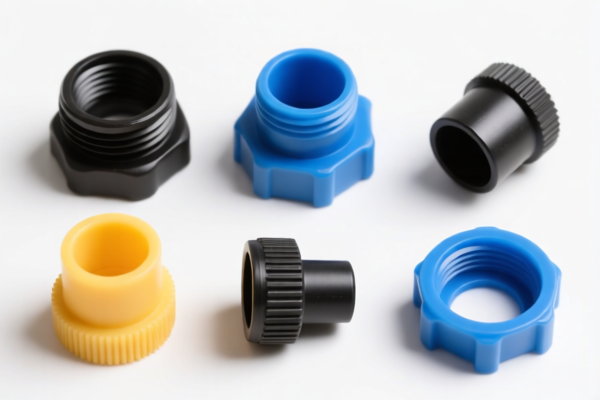

AI Analysis
🚗 Other Plastic Rigid Accessories (Automotive Exterior Trim)
🌐 HS Code Reference & Clearance Guide | 2026 Latest Tariff Analysis | Professional Customs Strategy
📌 Part 1: Product Definition & Classification: Do You Really Understand "Plastic Exterior Trim"?
"Other Plastic Rigid Accessories" typically refers to automotive exterior trim parts made of non-foamed, non-reinforced plastic materials. Common examples include: * Bumper Fascias & Covers: Outer plastic shells protecting the vehicle's frame. * Side Moldings & Scuff Plates: Protective strips along the doors and sills. * Grille Frames & Badges: Plastic components for the front or rear of the vehicle. * Mirror Housings: Plastic casings for side-view mirrors.
In international trade, classification depends on two critical factors: 1. Material vs. Use: Is it primarily defined by its material (Chapter 39) or its specific function as an auto part (Chapter 87)? 2. Foamed vs. Non-Foamed: The data specifies "non-foamed" (rigid), which excludes certain foam-based insulation or cushioning parts.
⚠️ Key Distinction Point:
- If the item is a generic plastic sheet, film, or board not specifically identifiable as an auto part → Classified under Chapter 39 (Plastics).
- If the item is specifically designed and identifiable for use in vehicles (e.g., shaped to fit a specific car model) → Classified under Chapter 87 (Vehicles).
- "Rigid/Non-Foamed" excludes flexible films or foam padding, steering the classification toward structural trim panels.
📦 Part 2: HS Code Classification Details (2026 Latest Tariff Authority Comparison)
| HS Code | Product Description | Application Scenario | Material/Form Characteristic |
|---|---|---|---|
3920.99.50.00 |
Other plates, sheets, film, foil and strip, of plastics, non-cellular and not reinforced | Generic plastic exterior boards; unshaped rigid plastic panels | ✅ Rigid, Non-foamed, Non-reinforced |
8708.29.51.60 |
Other parts and accessories for bodies (including cabs), n.e.s. | Plastic exterior trim panels specifically identifiable for car bodies | ✅ Specific Auto Part Use |
8708.99.81.80 |
Other parts and accessories for motor vehicles, n.e.s. | General automotive exterior plastic trim (fallback auto category) | ✅ General Auto Part |
3926.30.50.00 |
Other plastic articles for furniture, kitchen, toilet fittings, office equipment | Plastic trim identified as "body fittings" or decorative connectors | ✅ Body/Office Fittings |
3926.90.99.89 |
Other articles of plastics and articles of other materials of headings 3901-3914 | Catch-all category for plastic trim not fitting other specific plastic or auto codes | ✅ Catch-all Plastic |
🔍 Critical Reminder:
- Specificity Wins: If the plastic part is clearly identifiable for use in a vehicle (e.g., molded to fit a BMW bumper), customs often prefer HS 8708 over generic plastic codes.
- Generic Risk: If the part is a flat sheet or generic connector without clear vehicle-specific identification, it may be classified under HS 3920 or HS 3926, which have different tax structures.
- "Non-Foamed": This is crucial. Foam parts might fall under different subheadings. Ensure the product is rigid.
💰 Part 3: 2026 Latest Tariff Rate Breakdown (Including Surtaxes & Policy Add-ons)
✅ Applicable Country: United States (US)
✅ Origin: China (CN)
✅ Effective Date: From November 10, 2025 (and subsequent imports)
🎯 1. 3920.99.50.00 — Other Plastic Sheets/Plates (Non-Foamed)
| Item | Content |
|---|---|
| Basic Tariff | 5.8% (ad valorem) |
| Section 301 Surtax | +25.0% |
| 122 Clause Tariff | +10.0% |
| Total Rate | 40.8% |
| Calculation | CIF Value × 40.8% |
| De Minimis Exemption | ❌ Not Eligible (deny_de_minimis) |
| Legal Basis Path | USITC:3920.99.50.00 → 301:25% → 122:10% |
📌 Explanation:
- This code is often used for generic plastic trim boards that are not yet shaped into specific car parts.
- The 40.8% total tariff is significant. It includes the base duty, the Section 301 tariff (25%), and the specific "122 Clause" tariff (10%) targeting certain Chinese plastic products.
- High Risk: If this is actually a finished auto part, using this code may trigger a customs audit for misclassification.
🎯 2. 8708.29.51.60 — Other Body Parts & Accessories (Plastic Trim)
| Item | Content |
|---|---|
| Basic Tariff | 2.5% (ad valorem) |
| Section 301 Surtax | +25.0% |
| 122 Clause Tariff | +10.0% |
| Steel/Aluminum/Copper Surtax | +50.0% (Note: This does NOT apply to pure plastic parts) |
| Total Rate | 37.5% |
| Calculation | CIF Value × 37.5% |
| De Minimis Exemption | ❌ Not Eligible |
| Legal Basis Path | USITC:8708.29.51.60 → 301:25% → 122:10% |
📌 Critical Note:
- The 2.5% base duty is much lower than the 5.8% for generic plastics.
- Do NOT pay the 50% steel/aluminum surtax! This code includes a note for steel/aluminum/copper, but since our product is plastic, this 50% is excluded.
- Total Effective Rate: 2.5% + 25% + 10% = 37.5%.
- Advantage: This is 3.3% cheaper than the generic plastic code (3920.99.50.00).
- Requirement: You must prove the part is specifically for automotive bodies (e.g., provide fitment diagrams, vehicle application lists).
🎯 3. 8708.99.81.80 — Other Auto Parts & Accessories (General)
| Item | Content |
|---|---|
| Basic Tariff | 2.5% (ad valorem) |
| Section 301 Surtax | +25.0% |
| 122 Clause Tariff | +10.0% |
| Total Rate | 37.5% |
| Calculation | CIF Value × 37.5% |
| De Minimis Exemption | ❌ Not Eligible |
| Legal Basis Path | USITC:8708.99.81.80 → 301:25% → 122:10% |
📌 Explanation:
- This is the fallback category for auto parts not specifically listed under "Body Parts" (8708.29).
- If your trim is considered an "accessory" rather than a "body part," this code applies.
- Same Total Rate (37.5%) as8708.29.51.60.
- Differentiation:8708.29is for body structures/shells;8708.99is for other parts/accessories (like mirrors, grilles, bumpers not directly part of the body shell). Choose based on the exact part definition.
🎯 4. 3926.30.50.00 & 3926.90.99.89 — Other Plastic Articles
| Item | Content |
|---|---|
| Basic Tariff | 5.3% (ad valorem) |
| Section 301 Surtax | +7.5% (Note: Reduced from 25% in some contexts, check latest ruling) |
| 122 Clause Tariff | +10.0% |
| Total Rate | 22.8% |
| Calculation | CIF Value × 22.8% |
| De Minimis Exemption | ❌ Not Eligible |
| Legal Basis Path | USITC:3926.30.50.00 → 301:7.5% → 122:10% |
📌 Explanation:
- Lowest Tariff Option (22.8%)!
- This code applies if the product is classified as "Other Plastic Articles" for furniture/office equipment (3926.30) or Catch-all (3926.90).
- Risk: Customs may reject this if they determine the item is clearly an auto part. Misclassification here can lead to penalties or forced reclassification to the 37.5%-40.8% range.
- Strategy: Use only if the part is generic (e.g., flat plastic strips for decoration) and not vehicle-specific.
🛠️ Part 4: Customs Clearance Practical Advice (Real-World Pitfall Avoidance)
✅ 1. Document Checklist (All Mandatory)
| Document | Required? | Description |
|---|---|---|
| ✅ Product Specification Sheet | ✔️ | Must specify material (e.g., "PP Plastic"), form (e.g., "Rigid, Non-Foamed"), and use (e.g., "Automotive Exterior Trim"). |
| ✅ Product Photos | ✔️ | Clear images showing the part's shape, mounting holes, and any vehicle-specific branding. |
| ✅ Fitment/Compatibility List | ✔️ | List of compatible vehicles (e.g., "Fits 2020-2023 Toyota Camry"). Critical for HS 8708 classification. |
| ✅ Commercial Invoice | ✔️ | Describe item as "Plastic Automotive Exterior Trim Panel" or "PP Bumper Cover," NOT just "Plastic Accessory." |
| ✅ Packing List | ✔️ | Detail quantities and weights. |
| ✅ Certification | ✔️ | If applicable, any ISO or automotive quality certifications. |
✅ 2. Declaration Tips (Key Mantras)
🔥 “Be Specific, Be Auto-Specific, Or Pay More!”
| Scenario | Correct Declaration | Wrong Practice |
|---|---|---|
| Shaped Bumper Cover | 8708.29.51.60 (Auto Body Part) |
Generic "Plastic Sheet" → 40.8% |
| Generic Plastic Strip | 3926.90.99.89 (Other Plastic) |
Auto Part code → Risk of Misclassification |
| Mirror Housing | 8708.99.81.80 (Other Auto Part) |
Generic "Plastic Article" → 22.8% (But High Risk if Auto-Specific) |
| Flat Plastic Sheet | 3920.99.50.00 (Plastic Sheet) |
Auto Part code → Misclassification |
📌 Key Rule:
- If the part is molded for a specific car, use HS 8708.
- If the part is flat/generic, use HS 3920/3926.
- Never use "Plastic Accessory" as a standalone description. Be precise: "PP Plastic Automotive Grille Frame."
✅ 3. Special Cases
| Case | Handling Advice |
|---|---|
| OEM Parts (Direct from Car Maker) | Provide the car manufacturer’s part number and fitment guide. This strongly supports HS 8708 classification. |
| Aftermarket Parts | Provide a compatibility chart. If it fits multiple models, still HS 8708 if it’s clearly an auto part. |
| Mixed Shipments (Plastic + Metal) | If the part contains metal fasteners or supports, the primary character still dictates classification. If plastic >50% and auto-specific, HS 8708 is still preferred. |
| Plastic with Rubber Seals | Ensure the rubber is not the primary value driver. If plastic is dominant, HS 8708 or HS 3926. |
🌍 Part 5: Global Market Comparison (2026 Latest)
| Country/Region | Recommended HS Code | Tariff (China Origin) | Notes |
|---|---|---|---|
| 🇺🇸 USA | 8708.29.51.60 / 8708.99.81.80 |
37.5% | Includes 301 + 122 Clause. Avoid 3920 if possible. |
| 🇨🇳 China | 8708.29.51.60 / 8708.99.81.80 |
2.5% | Low base duty. No additional surtaxes. |
| 🇪🇺 EU | 8708.29.90 / 8708.99.90 |
4.5% | Standard auto part duty. No major surtaxes. |
| 🇬🇧 UK | 8708.29.90 / 8708.99.90 |
4.5% | Post-Brexit rates similar to EU. |
| 🇦🇺 Australia | 8708.29.90 / 8708.99.90 |
5.0% | No major surtaxes. |
📌 Conclusion:
- The US is the most expensive market due to Section 301 + 122 Clause tariffs.
- HS 8708 (37.5%) is better than HS 3920 (40.8%) for auto parts.
- HS 3926 (22.8%) is the cheapest but carries high classification risk for auto parts.
📌 Part 6: Common Errors & Pitfall Guide (Blood & Tears Lessons)
❌ Error 1: Declaring automotive trim as "Plastic Sheet" (3920)
👉 Consequence: You might pay 40.8% instead of 37.5%, or worse, be audited for misdeclaration if customs determine it’s an auto part.
❌ Error 2: Declaring auto trim as "Other Plastic Article" (3926) to get 22.8%
👉 Consequence: High risk of customs audit. If they prove it’s an auto part, you’ll owe the difference (14.7% + penalties) + back taxes.
❌ Error 3: Ignoring the "122 Clause" (10%)
👉 Consequence: Underpayment. This clause specifically targets certain Chinese plastic/auto components. It is not optional.
❌ Error 4: Not providing Fitment Lists
👉 Consequence: Customs may default to the generic plastic code (3920) because they can’t verify it’s an auto part, leading to higher duties or delays.
✅ Correct Practice:
"PP Plastic Automotive Exterior Bumper Cover, Model XYZ, Fits 2020-2023 Ford F-150, Non-Foamed, Rigid, HS Code 8708.29.51.60"
🎯 Part 7: Conclusion: Professional Declaration, Save Money, Stay Compliant!
🎯 Remember the Mantra:
🔹 “Auto-Specific? Use 8708. Generic? Use 3926. Never Guess!”
🔹 “37.5% for Auto, 40.8% for Generic, 22.8% for Catch-all (But Risky!)”
🔹 “Provide Fitment Lists to Justify HS 8708!”
📌 Pro Tip:
If your plastic trim is exported from China to the US, the total tariff burden is high (37.5%-40.8%).
- Recommendation:
1. Apply for an Advance Ruling (H99) from US CBP if you are unsure about the classification.
2. Ensure your commercial invoice clearly states the automotive application.
3. If you can use HS 8708, it is cheaper and more accurate than generic plastic codes.
📣 Immediate Action:
📞 Contact a licensed customs broker + Provide Fitment Charts + Product Photos
🚀 Clearance Smoothly, Tariffs Optimized, Profits Protected!
✨ Professional Clearance Starts with Accurate Classification!
💼 Every Percent of Tariff Counts!
Customer Reviews
About HS Code Classification
The Harmonized System (HS) is an internationally standardized nomenclature developed by the World Customs Organization (WCO) to classify traded products. Over 200 countries use the HS system as the basis for customs tariffs, trade statistics, and import/export regulations.
Each HS code follows a hierarchical structure:
- Chapter (2 digits) — Broad category of goods (e.g., Chapter 84: Machinery and Mechanical Appliances)
- Heading (4 digits) — More specific grouping within the chapter
- Subheading (6 digits) — Internationally standardized breakdown, used by all WCO member countries
- National subdivisions (8-10 digits) — Country-specific extensions for further classification, such as US HTSUS 10-digit codes
Correct HS code classification is essential for smooth customs clearance, accurate duty payment, and compliance with trade regulations. Misclassification can lead to customs delays, overpayment of duties, or penalties.
When importing from CN to US, the applicable tariff rates may include:
- Most-Favored-Nation (MFN) rate — The standard duty rate applied to WTO members
- General rate — Applied to countries without trade agreements
- Trade remedy duties — Additional tariffs such as Section 301 (anti-dumping), Section 232 (national security), or countervailing duties
The information provided on this page is for reference purposes only. For official classification, please consult with your local customs authority or a licensed customs broker.