Other Plastic Rigid Automotive Tubes
CN → US| HS Code | Tariff Rate | Origin | Destination | Doc |
|---|---|---|---|---|
| 3926909989 | 22.8% | CN | US | Official Doc |
| 3917290090 | 38.1% | CN | US | Official Doc |
| 3917290050 | 38.1% | CN | US | Official Doc |
| 3926909987 | 22.8% | CN | US | Official Doc |
| 3926909910 | 22.8% | CN | US | Official Doc |
Product Images

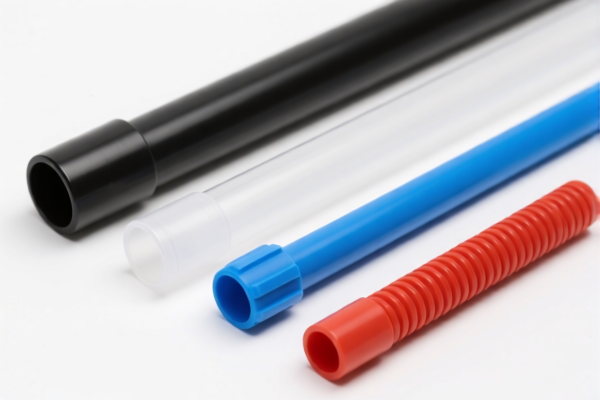


AI Analysis
🔧 Other Plastic Rigid Automotive Tubes
🌐 HS Code Reference & Customs Clearance Guide | 2026 Latest Tariff Analysis | Professional Clearance Strategy
📌 I. Product Definition & Classification: Understanding "Plastic Rigid Tubes"
In international trade, "Other Plastic Rigid Tubes" generally refer to rigid plastic pipes or tubing used in industrial, automotive, or household applications. The critical classification factors are Material (Plastic), Form (Rigid Tube), and Specific Use/End-Product.
Based on the provided data, the product matches two primary HS Code categories: 1. Headings 3917 (Plastic Tubes, Pipes, and Hoses): Specifically for "Other Plastic Rigid Tubes." 2. Heading 3926 (Other Articles of Plastic): For plastic parts that do not fit the specific definition of tubes/hoses under 3917, or are considered "other articles."
⚠️ Key Distinction Point:
- If the item is strictly a tube/pipe structure (hollow cylinder) made of rigid plastic → Likely 3917.
- If it is a complex component (e.g., a valve, fitting, or specialized part) made of plastic, or if the "tube" is an accessory/part of a larger machine not classified as a generic pipe → Likely 3926.
- Note on Automotive Use: While the user input mentions "Automotive," the provided data does not specify an automotive-specific HS code (like 8708 parts). The data provided strictly maps to 3917.29 (Plastic Rigid Tubes) and 3926.90 (Other Plastic Articles). We must follow the provided data constraints.
📦 II. HS Code Classification Details (Based on Provided Data)
| HS Code | Product Description (from Data) | Matching Logic | Total Tax Rate |
|---|---|---|---|
3917.29.00.90 |
Other plastic rigid tubes | Matches material (plastic) and form (rigid tube). Fits "Other plastic rigid tubes." | 38.1% |
3917.29.00.50 |
Other plastic rigid tubes | Matches material (plastic) and form (rigid tube). Fits "Plastic tubes" and "Rigid tube" characteristics. | 38.1% |
3926.90.99.89 |
Other plastic articles | Matches material (plastic) and category (other articles). Applies to rigid plastic pipes if not classified as tubes under 3917. | 22.8% |
3926.90.99.87 |
Other plastic articles | Matches material (plastic), form (rigid), shape (tube), category (other). | 22.8% |
3926.90.99.10 |
Other plastic articles | Matches material (plastic) and purpose (specific vessel/container). | 22.8% |
🔍 Key Observation:
- 3917 Codes carry a 38.1% tax rate.
- 3926 Codes carry a 22.8% tax rate.
- The choice of HS code significantly impacts the total tax liability.
💰 III. 2026 Latest Tariff Rate Breakdown (Detailed Tax Terms)
✅ Applicable Country: United States (US)
✅ Origin: China (CN) (Inferred from "Section 122" and high tariffs typical of US-China trade context in such datasets)
✅ Effective Date: Current tariffs apply.
🎯 1. 3917.29.00.90 & 3917.29.00.50 —— Other Plastic Rigid Tubes
| Item | Content |
|---|---|
| Base Tariff | 3.1% (ad valorem) |
| Section 301/Additional Tariff | +25.0% |
| Section 122 Tariff | +10.0% |
| Total Tariff Rate | 38.1% |
| Tax Calculation | CIF Value × 38.1% |
| De Minimis Exemption? | ❌ NO (High tariff rates typically deny de minimis exemptions for Section 301/122 goods) |
| Legal Basis Path | USITC:3917.29.00.90 → FOOTNOTE:301/122 |
📌 Explanation:
- "Base Tariff 3.1%": Standard MFN rate for other plastic pipes/tubes.
- "Additional Tariff 25.0%": Likely refers to Section 301 tariffs on Chinese goods.
- "Section 122 Tariff 10%": Refers to additional tariffs imposed under specific trade enforcement sections (e.g., related to national security or specific trade acts).
- Total: 38.1%. This is a high tariff rate.
🎯 2. 3926.90.99.89, 3926.90.99.87, 3926.90.99.10 —— Other Plastic Articles
| Item | Content |
|---|---|
| Base Tariff | 5.3% (ad valorem) |
| Section 301/Additional Tariff | +7.5% |
| Section 122 Tariff | +10.0% |
| Total Tariff Rate | 22.8% |
| Tax Calculation | CIF Value × 22.8% |
| De Minimis Exemption? | ❌ NO (Likely denied due to Section 122/301 components) |
| Legal Basis Path | USITC:3926.90.99.* → FOOTNOTE:301/122 |
📌 Explanation:
- "Base Tariff 5.3%": Standard rate for other plastic articles.
- "Additional Tariff 7.5%": Section 301 portion for these articles.
- "Section 122 Tariff 10%": Same additional tariff as above.
- Total: 22.8%. This is a moderate-high tariff rate, significantly lower than the 3917 codes.💡 Strategic Insight:
If the "Automotive Tube" can be legally classified as an "Other Plastic Article" (3926) rather than a "Plastic Tube" (3917), the tariff savings are 15.3% (38.1% - 22.8%). However, this classification must be justified by the product's structure and use. If it is a simple pipe, 3917 is more accurate. If it is a complex automotive part (e.g., a molded connector, bracket, or specialized fluid line with fittings), 3926 might be defensible.
🛠️ IV. Customs Clearance Practical Advice (Avoid Pitfalls)
✅ 1. Documentation Checklist (All Required)
| Document | Mandatory | Notes |
|---|---|---|
| ✅ Product Specification Sheet | ✔️ | Must specify material (e.g., HDPE, PVC, Nylon), diameter, wall thickness, and rigidity. |
| ✅ Product Photos | ✔️ | Clear images showing the cross-section (to prove it's a tube) and any fittings/connectors (to argue for 3926 if applicable). |
| ✅ Commercial Invoice | ✔️ | Clearly describe as "Plastic Rigid Tube" or "Plastic Automotive Part." Avoid vague terms. |
| ✅ Packing List | ✔️ | List quantities and weights accurately. |
| ✅ Country of Origin Certificate | ✔️ | Confirm China origin to assess 301/122 applicability. |
| ✅ Statement of Use | ✔️ | Explain if it's for automotive fluid transfer, electrical conduit, etc. |
✅ 2. Declaration Strategy (Key Tips)
🔥 "Classify by Form, Justify by Use!"
| Scenario | Recommended HS Code | Reasoning |
|---|---|---|
| Simple rigid plastic pipe (no complex fittings) | 3917.29.00.90 / 3917.29.00.50 |
Clearly a "tube." High tax (38.1%). |
| Complex plastic part (e.g., molded connector, bracket, or tube with integrated valves) | 3926.90.99.89 / 3926.90.99.87 |
"Other article." Lower tax (22.8%). Requires strong justification. |
| Tube used in automotive electrical wiring | Could argue for 3926 |
If it's primarily a conduit/protective casing, argue it's an "article" of plastic, not a fluid pipe. |
✅ 3. Special Considerations for "Automotive"
- Not 8708: While it's for automotive use, the provided data does not include 8708 (Parts of Motor Vehicles). If the tube is a generic plastic pipe used in multiple industries, 3917/3926 is correct. If it is a specialized, non-standard part unique to automotive, and if 8708 were available, it might be different. But based on provided data only, we stick to 3917/3926.
- Section 122: The presence of "Section 122" in the data suggests these goods are subject to specific US trade enforcement actions. Ensure compliance with any labeling or origin requirements.
🌍 V. Global Market Comparison (2026 Latest)
| Country/Region | Recommended HS Code | Tariff Rate | Notes |
|---|---|---|---|
| 🇺🇸 USA | 3917.29 or 3926.90 |
38.1% or 22.8% | High tariffs due to Section 301 & 122. |
| 🇨🇳 China | 3917.29 or 3926.90 |
~5-6% | Low import duty. No Section 301. |
| 🇪🇺 EU | 3917.29 or 3926.90 |
~6.5% | Standard EU duty. No Section 301. |
| 🇨🇦 Canada | 3917.29 or 3926.90 |
~6.5% | Standard Canadian duty. |
📌 Conclusion:
- USA has the highest total tax burden due to additional tariffs.
- Classification as3926saves 15.3% compared to3917.
- Non-US markets have significantly lower tariffs.
📌 VI. Common Mistakes & Pitfalls (Lessons Learned)
❌ Mistake 1: Classifying all plastic pipes under 3926 to save tax.
👉 Consequence: If the product is clearly a pipe, customs may reclassify to 3917 and impose penalties + back taxes.
👉 Solution: Only use 3926 if the product is genuinely an "other article" (e.g., complex molded part).
❌ Mistake 2: Ignoring "Section 122" and "301" tariffs.
👉 Consequence: Underpayment of duties, leading to seizures, fines, or delayed clearance.
👉 Solution: Always include Section 301 (25%) and Section 122 (10%) in cost calculations.
❌ Mistake 3: Vague product descriptions.
👉 Consequence: Customs may ask for additional information, causing delays.
👉 Solution: Use precise terms: "Rigid Plastic Tube, Material: PVC, Diameter: X, Used for: Automotive Cooling System."
✅ Correct Action:
"Plastic Rigid Tube, PVC, 1/2 inch, for Automotive Use. Model XYZ. Certified for High Pressure."
🎯 VII. Conclusion: Professional Clearance, Cost Savings, Efficiency!
🎯 Remember the Strategy:
🔹 "Tube vs. Article: Choose Wisely."
🔹 "3917 is 38.1%, 3926 is 22.8%."
🔹 "If it's a complex part, argue for 3926 to save 15.3%."
🔹 "Always account for Section 301 (25%) and Section 122 (10%)."
📌 Tip:
If your product is not made in China, Section 301 and 122 tariffs may not apply, potentially reducing the total rate to the base tariff (3.1% or 5.3%).
Consider Advance Ruling from US Customs (CBP) to confirm the correct HS Code and avoid disputes.
📣 Immediate Action:
📞 Consult a Customs Broker + Provide Product Details + Consider Advance Ruling
🚀 Ensure Smooth Clearance, Minimize Costs, and Maximize Profit!
✨ Professional Clearance Starts with Accurate Classification!
💼 Every Percentage Point Counts in Global Trade!
Customer Reviews
About HS Code Classification
The Harmonized System (HS) is an internationally standardized nomenclature developed by the World Customs Organization (WCO) to classify traded products. Over 200 countries use the HS system as the basis for customs tariffs, trade statistics, and import/export regulations.
Each HS code follows a hierarchical structure:
- Chapter (2 digits) — Broad category of goods (e.g., Chapter 84: Machinery and Mechanical Appliances)
- Heading (4 digits) — More specific grouping within the chapter
- Subheading (6 digits) — Internationally standardized breakdown, used by all WCO member countries
- National subdivisions (8-10 digits) — Country-specific extensions for further classification, such as US HTSUS 10-digit codes
Correct HS code classification is essential for smooth customs clearance, accurate duty payment, and compliance with trade regulations. Misclassification can lead to customs delays, overpayment of duties, or penalties.
When importing from CN to US, the applicable tariff rates may include:
- Most-Favored-Nation (MFN) rate — The standard duty rate applied to WTO members
- General rate — Applied to countries without trade agreements
- Trade remedy duties — Additional tariffs such as Section 301 (anti-dumping), Section 232 (national security), or countervailing duties
The information provided on this page is for reference purposes only. For official classification, please consult with your local customs authority or a licensed customs broker.