Other Plastic Rigid Flame Retardant Pipes
CN → US| HS Code | Tariff Rate | Origin | Destination | Doc |
|---|---|---|---|---|
| 3917290090 | 38.1% | CN | US | Official Doc |
| 3917290050 | 38.1% | CN | US | Official Doc |
Product Images
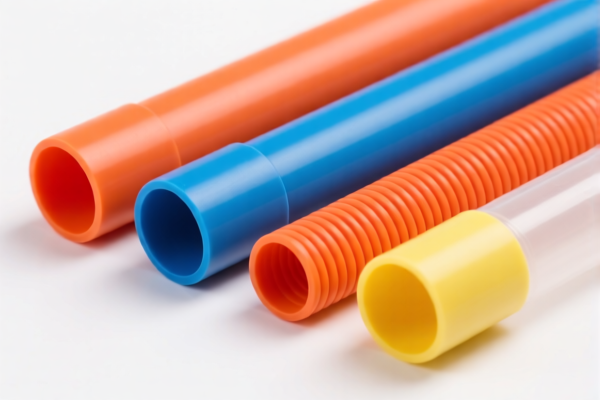
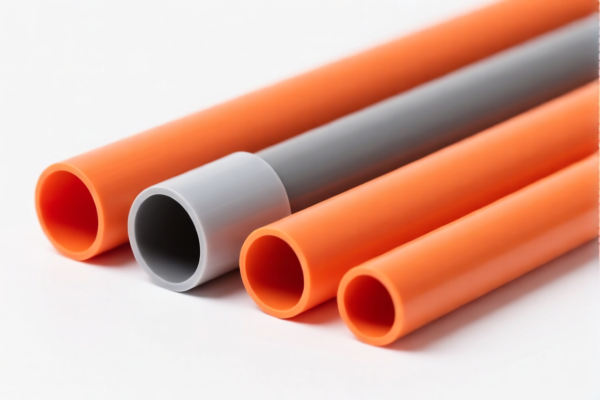
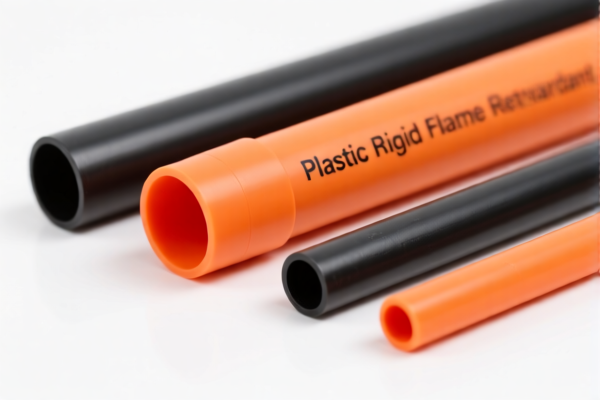

AI Analysis
🏗️ Other Plastic Rigid Flame Retardant Pipes
🌐 HS Code Reference & Customs Clearance Guide | 2026 Latest Tariff Analysis | Professional-Level Clearance Strategy
📌 I. Product Definition and Classification: Do You Really Understand "Plastic Pipes"?
Rigid plastic pipes, especially those with flame-retardant properties, are essential components in construction, industrial fluid transport, and electrical wiring protection. In international trade, they are classified based on their material composition, physical state (rigid vs. flexible), and dimensions.
Rigid Plastic Pipes (Rigid): Pipes that do not deform significantly under normal operating pressure and temperature; typically made from PVC, PP, PE, or other engineering plastics.
Flame Retardant Feature: A chemical additive or inherent material property that reduces flammability. Note: The HS Code system generally classifies by material and form, not by functional additives like "flame retardant," unless specified otherwise in national subheadings.
⚠️ Key Distinction Point:
- If the pipe is rigid and made of plastics not primarily classified under other specific subheadings (e.g., not polyethylene or polypropylene explicitly listed elsewhere), it falls under "Other Plastics".
- Length Matters: For HS Code 3917.29, pipes less than 200 mm in length are treated differently from standard-length pipes (typically ≥200 mm).
📦 II. HS Code Classification Details (2026 Latest Tariff Authority Comparison)
| HS Code | Product Description | Applicable Scenario | Length Criterion | Flame Retardant Note |
|---|---|---|---|---|
3917.29.00.90 |
Tubes, pipes and hoses, rigid: Of other plastics, Other | Standard rigid plastic pipes (PVC, PP, ABS, etc.) not covered under other specific subheadings; flame-retardant variants if material is "other plastic" | Typically ≥200 mm | Flame retardancy is a product feature, not a classification driver; classified under "Other Plastics" |
3917.29.00.50 |
Tubes, pipes and hoses, rigid: Of other plastics, Less than 200 mm in length | Short rigid plastic pipes, connectors, or cut pieces under 200 mm | <200 mm | Same as above; material determines "other plastics"; length determines subheading |
🔍 Important Reminder:
- "Flame Retardant" is NOT a separate HS Code category. It is a performance characteristic. The HS Code is determined by material type and physical dimensions.
- If the pipe is made of PVC, it may fall under 3917.21 (of PVC) if specifically listed, but if it falls under "Other Plastics" (e.g., ABS, CPVC, PP not separately listed), it goes to 3917.29.
- Length is critical: Pipes <200 mm go to.50; pipes ≥200 mm go to.90.
💰 III. 2026 Latest Tariff Rate Details (Including Additional Taxes, Policy Additions)
✅ Applicable Country: United States (US)
✅ Country of Origin: China (CN)
✅ Effective Date: November 10, 2025 onwards (for subsequent imports)
🎯 1. 3917.29.00.90 —— Rigid Plastic Pipes, "Other Plastics", Standard Length (≥200 mm)
| Item | Content |
|---|---|
| Base Tariff Rate | 0.0% (ad valorem) |
| USITC Additional Tax | 0.0% |
| IEEPA Additional Tax | 0.0% |
| Total Tariff Rate | 0.0% |
| Tax Calculation | CIF Value × 0.0% = $0 |
| De Minimis Eligibility | ❌ Not Applicable (Tariff is 0%, so de minimis rules don't apply in the same way; however, entry must still be formal) |
| Legal Basis Path | HTSUS:3917.29.00.90 → USITC Footnote: N/A |
📌 Explanation:
- These rigid plastic pipes are exempt from base tariffs.
- No Section 301 (USITC) or IEEPA additional tariffs apply to this specific HS Code.
- This is a low-risk, low-cost category for importers, but ensure accurate material declaration to avoid misclassification.
🎯 2. 3917.29.00.50 —— Rigid Plastic Pipes, "Other Plastics", Less than 200 mm in Length
| Item | Content |
|---|---|
| Base Tariff Rate | 0.0% (ad valorem) |
| USITC Additional Tax | 0.0% |
| IEEPA Additional Tax | 0.0% |
| Total Tariff Rate | 0.0% |
| Tax Calculation | CIF Value × 0.0% = $0 |
| De Minimis Eligibility | ❌ Not Applicable |
| Legal Basis Path | HTSUS:3917.29.00.50 → USITC Footnote: N/A |
📌 Note:
- Same tariff treatment as.90.
- Critical: If pipes are cut to <200 mm, they must be declared under.50. Misdeclaring short pipes as.90is low risk (same tax), but misdeclaring long pipes as.50could trigger scrutiny for "split shipments" to avoid classification rules.
🛠️ IV. Customs Clearance Practical Advice (Practical Pitfall Avoidance Guide)
✅ 1. Preparation Checklist (All Documents Required)
| Document | Required | Description |
|---|---|---|
| ✅ Product Specification Sheet | ✔️ | Must specify material (e.g., "ABS", "CPVC", "Other Plastic"), inner/outer diameter, wall thickness, pressure rating, flame retardant standard (e.g., UL94 V-0) |
| ✅ Material Declaration | ✔️ | Explicitly state "Other Plastic" if not PVC, PE, PP, or PS. Provide Material Safety Data Sheet (MSDS) if flame retardants are added chemicals. |
| ✅ Product Photos | ✔️ | Clear images showing pipe, labels, length measurement (to prove ≥200 mm or <200 mm), and any certification marks |
| ✅ Commercial Invoice | ✔️ | Must accurately describe as "Rigid Plastic Pipes, Flame Retardant, [Material Name]" and specify length range |
| ✅ Packing List | ✔️ | Detail number of pieces per carton, total length, and weight |
| ✅ Certificate of Origin (CO) | ✔️ | If claiming preferential treatment under FTAs (though 0% already applies, CO may be needed for other regulatory purposes) |
✅ 2. Declaration Tips (Key Mantra)
🔥 "Material Defines, Length Divides, Flame Retardant is Feature, Not Code!"
| Scenario | Correct Declaration | Wrong Practice |
|---|---|---|
| Standard rigid pipes (≥200 mm), made of ABS or other plastic | 3917.29.00.90 |
Misclassify as PVC (3917.21) → Incorrect material |
| Short pipes (<200 mm), any "other plastic" | 3917.29.00.50 |
Declare as .90 → Risk of scrutiny for split shipments |
| Pipes with flame retardant additive | Declare as 3917.29.00.90 or .50 + note "Flame Retardant" |
Create a new HS Code → Not allowed |
| Flexible pipes | ❌ Do NOT use 3917.29 | Use 3917.30 series instead |
✅ 3. Special Situation Handling
| Situation | Handling Advice |
|---|---|
| Flame Retardant Certification | Provide UL94, VDE, or other test reports to prove flame retardancy. This is for regulatory compliance (e.g., NEC electrical codes), not customs classification. |
| Mixed Lengths in One Shipment | If a shipment contains both ≥200 mm and <200 mm pipes, separate them in the declaration. Use .90 for long, .50 for short. Mixing can cause delays. |
| Other Plastic Material | If unsure if material is "PVC" or "Other," default to "Other Plastics" and provide material test results. PVC is explicitly listed under 3917.21, so if it’s not PVC, PE, or PP (if listed), it’s "Other." |
| Import for Construction vs. Electrical Use | Classification is the same, but regulatory requirements differ. Electrical conduit may require UL listing for flame retardancy. |
🌍 V. Global Main Market Customs Clearance Comparison (2026 Latest)
| Country/Region | Recommended HS Code | Tariff | Certification Requirements | Notes |
|---|---|---|---|---|
| 🇺🇸 United States | 3917.29.00.90 / .50 |
0.0% | UL94 (if electrical), ASTM standards | No additional tariffs |
| 🇨🇳 China | 3917.29.00.90 |
5% | CCC (if applicable), GB standards | Base tax applies |
| 🇪🇺 European Union | 3917.29.00.90 |
0% | CE, RoHS, REACH | No tariffs, but strict chemical compliance |
| 🇦🇺 Australia | 3917.29.00.90 |
5% | AS/NZS standards | No additional tariffs |
| 🇯🇵 Japan | 3917.29.00.90 |
0% | JIS standards | No additional tariffs |
📌 Conclusion:
- US import of these plastic pipes is tariff-free (0% total).
- China, Australia have base tariffs (5%).
- EU, Japan are also tariff-free but have strict chemical and environmental regulations (REACH, RoHS).
- Flame retardant additives must comply with local chemical regulations, even if tariffs are 0%.
📌 VI. Common Mistakes & Pitfall Guide (Lessons from Blood and Tears)
❌ Mistake 1: Classifying flame-retardant pipes under a different HS Code because of the additive
👉 Consequence: Incorrect classification → Potential audit, back taxes, penalties.
👉 Fix: Flame retardancy is a feature, not a material change. Stick to 3917.29.
❌ Mistake 2: Not specifying length in commercial invoice
👉 Consequence: Customs may assume standard length (≥200 mm) and assign .90. If pipes are <200 mm, no tax difference, but if declared wrong, could lead to misdeclaration flags.
👉 Fix: Always specify length range in invoice and description.
❌ Mistake 3: Assuming "Other Plastic" means generic
👉 Consequence: Customs may request material test reports to verify it’s not PVC or PE.
👉 Fix: Provide MSDS or material composition certificate stating "Other Plastic (e.g., ABS, CPVC, PP Blend)."
❌ Mistake 4: Ignoring regulatory requirements for flame retardancy
👉 Consequence: Goods detained at port if not compliant with local building/electrical codes (e.g., NEC in US, IEC in EU).
👉 Fix: Obtain third-party testing reports (UL, VDE, Intertek) for flame retardancy.
✅ Correct Practice:
"Rigid Plastic Pipes, Flame Retardant, ABS Material, Outer Diameter 25mm, Length 300mm, UL94 V-0 Certified, HS 3917.29.00.90"
🎯 VII. Conclusion: Professional Declaration, Save Time, Reduce Costs!
🎯 Remember the Mantra:
🔹 "Material First, Length Second, Flame Retardant is Feature, Not Code!"
🔹 "0% Tariff for US, But 100% Compliance for Safety!"
🔹 "Declare Length Clearly, Avoid Split-shipment Scrutiny!"
📌 Pro Tip:
- If you are importing PVC pipes, check 3917.21 first. Only use 3917.29 if the material is not PVC, PE, PP, or PS.
- For flame-retardant pipes, ensure you have test reports for customs and end-user compliance.
- Consider applying for a Pre-Ruling from CBP if you are unsure about material classification or length criteria.
📣 Act Now:
📞 Consult with a professional customs broker + Provide product specs + Obtain test reports
🚀 Ensure smooth customs clearance, comply with safety standards, and maximize profit margins!
✨ Professional Customs Clearance Starts with Accurate Classification!
💼 Every detail counts in international trade!
Customer Reviews
About HS Code Classification
The Harmonized System (HS) is an internationally standardized nomenclature developed by the World Customs Organization (WCO) to classify traded products. Over 200 countries use the HS system as the basis for customs tariffs, trade statistics, and import/export regulations.
Each HS code follows a hierarchical structure:
- Chapter (2 digits) — Broad category of goods (e.g., Chapter 84: Machinery and Mechanical Appliances)
- Heading (4 digits) — More specific grouping within the chapter
- Subheading (6 digits) — Internationally standardized breakdown, used by all WCO member countries
- National subdivisions (8-10 digits) — Country-specific extensions for further classification, such as US HTSUS 10-digit codes
Correct HS code classification is essential for smooth customs clearance, accurate duty payment, and compliance with trade regulations. Misclassification can lead to customs delays, overpayment of duties, or penalties.
When importing from CN to US, the applicable tariff rates may include:
- Most-Favored-Nation (MFN) rate — The standard duty rate applied to WTO members
- General rate — Applied to countries without trade agreements
- Trade remedy duties — Additional tariffs such as Section 301 (anti-dumping), Section 232 (national security), or countervailing duties
The information provided on this page is for reference purposes only. For official classification, please consult with your local customs authority or a licensed customs broker.