Other Plastic Rigid Gardening Tubes
CN → US| HS Code | Tariff Rate | Origin | Destination | Doc |
|---|---|---|---|---|
| 3926909989 | 22.8% | CN | US | Official Doc |
| 3917290090 | 38.1% | CN | US | Official Doc |
| 3917290050 | 38.1% | CN | US | Official Doc |
| 3926909987 | 22.8% | CN | US | Official Doc |
| 3926909910 | 22.8% | CN | US | Official Doc |
Product Images
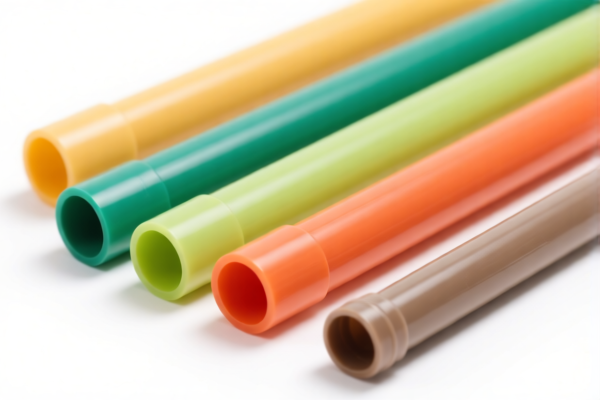


AI Analysis
🌱 Other Plastic Rigid Gardening Tubes (Garden Hoses & Irrigation Pipes)
🌐 HS Code Reference & Customs Clearance Guide | 2026 Latest Tariff Analysis | Professional Compliance Strategy
📌 I. Product Definition & Classification: What Exactly Are We Dealing With?
"Other Plastic Rigid Gardening Tubes" typically refer to rigid or semi-rigid plastic pipes used for outdoor irrigation, lawn watering, or garden structural supports. In international trade, the key distinction lies in whether they are classified as "Articles of Plastics" (Chapter 39, Heading 3917 or 3926) based on their form (pipe/tube) or as "Other Plastic Articles" (Chapter 39, Heading 3926) if they don't fit the specific definitions of pipes/tubes in 3917.
Key Classification Nuance: * 3917 (Plastics Pipes/Tubes): Applies if the item is strictly defined as a "tube" or "pipe" with specific dimensions and rigidity. * 3926 (Other Plastic Articles): Acts as a "catch-all" category if the item is considered a "rigid object" rather than a standard "pipe/tube" in the customs context, or if it doesn't fit the precise sub-headings of 3917.
⚠️ Critical Distinction:
- If the product is a standard rigid pipe used for fluid conveyance in gardens → Likely 3917
- If the product is a rigid tube-like object that doesn't meet the specific "pipe" definition or is considered a generic plastic artifact → Likely 3926
📦 II. HS Code Classification Details (2026 Latest Tariff Reference)
Based on the provided data, here are the two main classification routes and their implications:
| HS Code | Product Description | Summary & Rationale | Total Tax Rate |
|---|---|---|---|
3926.90.99.89 |
Other Plastic Articles | "Rigid garden tube" is considered a specific use item but doesn't fit more specific sub-categories, thus falling under the "Other Plastic Articles" residual definition. | 22.8% |
3917.29.00.90 |
Other Plastic Rigid Pipes/Tubes | Direct match: Material is plastic, form is rigid pipe. Fits the definition of "Other plastic rigid pipes." | 38.1% |
3917.29.00.50 |
Other Plastic Rigid Pipes/Tubes | Material is "plastic," form is "rigid pipe." Based on the "Other" residual logic for pipes, no material or form conflict exists. | 38.1% |
3926.90.99.87 |
Other Plastic Articles | Material "plastic," form "rigid," shape "tube," use "garden." Classified under "Other" as a reasonable inference for garden-use plastic artifacts. | 22.8% |
3926.90.99.10 |
Other Plastic Articles (Lab Ware) | ⚠️ MISMATCH ALERT: Summary mentions "Laboratory Test Tubes." This is likely an incorrect classification for gardening tubes. | 22.8% |
🔍 Key Insight:
- 3917 Codes (...00.90&...00.50) are for pipes/tubes and carry a higher tax rate (38.1%).
- 3926 Codes (...99.89&...99.87) are for other plastic articles and carry a lower tax rate (22.8%).
- 3926.90.99.10 is likely incorrect for gardening tubes unless they are specifically lab-grade test tubes, which contradicts the "garden" use case.
💰 III. 2026 Latest Tariff Rate Breakdown (Including Additional Duties)
✅ Applicable Country: United States (US)
✅ Origin: China (CN)
✅ Effective Date: Post-November 2025 (Current regime)
🎯 1. Route A: 3926.90.99.89 / 3926.90.99.87 (Other Plastic Articles)
Total Tax Rate: 22.8%**
| Component | Rate | Description |
|---|---|---|
| Base Duty | 5.3% | Standard Most-Favored-Nation (MFN) rate for other plastic articles. |
| Section 301 Duty | 7.5% | Additional tariff under US Trade Act Section 301. |
| Section 122 Duty | 10.0% | Additional duty under Section 122 of the Trade Act (often applied to specific categories). |
| TOTAL | 22.8% | Sum of Base + 301 + 122 |
📌 Explanation:
- This route is tax-efficient compared to the pipe classification.
- It relies on the argument that "garden tubes" are not standard industrial "pipes" but rather "other articles" due to their specific end-use (gardening) or form factor.
🎯 2. Route B: 3917.29.00.90 / 3917.29.00.50 (Plastic Rigid Pipes)
Total Tax Rate: 38.1%**
| Component | Rate | Description |
|---|---|---|
| Base Duty | 3.1% | Standard MFN rate for plastic pipes and tubes. |
| Section 301 Duty | 25.0% | Higher additional tariff under US Trade Act Section 301 for pipes/tubes. |
| Section 122 Duty | 10.0% | Additional duty under Section 122 of the Trade Act. |
| TOTAL | 38.1% | Sum of Base + 301 + 122 |
📌 Explanation:
- This route is significantly more expensive (15.3% higher total duty).
- Customs authorities may view any rigid plastic tube as a "pipe" if it has a circular cross-section and is used for conveying fluids, leading to this higher classification.
🛠️ IV. Customs Clearance Practical Advice (Pitfall Avoidance Guide)
✅ 1. Preparation Checklist (Essential Documents)
| Document | Required | Notes |
|---|---|---|
| Product Specifications | ✅ | Include material type (e.g., PVC, PE, ABS), diameter, wall thickness, and rigidity level. |
| Product Photos | ✅ | Clear images showing the entire product, fittings, and any labels/markings. |
| Commercial Invoice | ✅ | Clearly describe the item. Avoid generic terms like "Plastic Tube" if possible; use "Rigid Garden Support Pole" or "Irrigation Pipe" strategically. |
| Bill of Lading / Air Waybill | ✅ | Ensure HS Code matches the invoice. |
| Origin Certificate | ✅ | To prove origin is China (subject to tariffs). |
✅ 2. Declaration Strategy (Key Tactics)
🔥 "Form vs. Function: Choose Your Battle!"
| Scenario | Recommended HS Code | Reasoning |
|---|---|---|
| Highly Rigid, Structural Use | 3926.90.99.89 |
Argue it's a "structural article" not a "fluid transport pipe." Lower tax rate. |
| Standard Irrigation Pipe | 3917.29.00.90 |
If it clearly functions as a pipe for water/gases, customs may insist on 3917. Accept 38.1%. |
| Flexible Garden Hose | Not Listed | Flexible hoses are typically 3917.39 (not in this data set). Do not declare rigid tubes as flexible hoses. |
| Lab Test Tubes | 3926.90.99.10 |
❌ Avoid unless actually lab ware. Misdeclaration leads to penalties. |
📌 Pro Tip:
- If your "garden tube" is used for supporting plants (e.g., rigid stakes) rather than conveying water, emphasize the structural/support function in your declaration to argue for 3926.
- If it is used for water irrigation, be prepared for classification under 3917 and the higher 38.1% rate.
✅ 3. Special Considerations
| Situation | Recommendation |
|---|---|
| Product Contains Fittings | Declare the tube separately from metal/plastic fittings if possible, or ensure the primary component defines the HS Code. |
| Mixed Packaging | If pipes and accessories are packed together, the entire package is usually classified under the primary item's HS Code. |
| Dispute with Customs | If assessed at 38.1% but you believe it's 22.8%, provide technical data showing the product's rigidity and non-pipe use (e.g., gardening trellis) to appeal for reclassification under 3926. |
🌍 V. Global Market Comparison (2026 Latest)
| Market | Recommended HS Code | Estimated Duty | Notes |
|---|---|---|---|
| 🇺🇸 USA | 3926.90.99.89 |
22.8% | Best option for "other plastic articles". |
| 🇺🇸 USA | 3917.29.00.90 |
38.1% | Higher risk, higher cost. |
| 🇨🇳 China | 3926.90.99 |
~5-10% | Lower base rates, no Section 301/122. |
| 🇪🇺 EU | 3917.29 |
~2.5-4% | No US-style additional duties. |
📌 Conclusion:
- For US imports, the 3926 classification (22.8%) offers significant savings over 3917 (38.1%).
- The key is to justify why the product is not a standard "pipe" but an "other plastic article."
📌 VI. Common Errors & Pitfalls (Lessons Learned)
❌ Error 1: Declaring a rigid irrigation pipe as 3926.90.99.10 (Lab Ware)
👉 Consequence: High penalty for misclassification and potential seizure.
✅ Fix: Only use lab-related codes for actual laboratory equipment.
❌ Error 2: Assuming all plastic tubes are 3917
👉 Consequence: Paying 38.1% duty when 22.8% might be applicable.
✅ Fix: Provide evidence of non-pipe use (e.g., structural support) to argue for 3926.
❌ Error 3: Ignoring Section 122 Duty
👉 Consequence: Underestimating total landed cost by 10%.
✅ Fix: Always factor in the 10% Section 122 duty in your cost model.
🎯 VII. Conclusion: Strategic Classification for Cost Optimization
🎯 Key Takeaway:
🔹 "Is it a Pipe or an Article? Classify wisely to save 15.3%!"
🔹 3926 (22.8%) vs. 3917 (38.1%): The 15.3% difference is significant.
🔹 Do NOT use Lab Codes for Garden Products!
📌 Action Plan:
1. Assess Use: Is it for fluid transport (Pipe/3917) or support/structure (Article/3926)?
2. Prepare Evidence: Gather photos and specs highlighting the non-pipe characteristics.
3. Consult Customs Broker: Consider filing an Advance Ruling if the product is borderline to avoid future disputes.
4. Calculate Landed Cost: Use 22.8% as the target, but be prepared for 38.1% if challenged.
📣 Immediate Action:
📞 Engage a licensed customs broker to review your product's technical details.
📄 Submit detailed product descriptions that emphasize "garden structure" or "support" over "fluid conveyance" to support the 3926 classification.
🚀 Optimize your supply chain by factoring in the correct tariff rate from day one.
✨ Professional Customs Compliance Starts with Accurate Classification!
💼 Every percentage point saved is profit earned!
Customer Reviews
About HS Code Classification
The Harmonized System (HS) is an internationally standardized nomenclature developed by the World Customs Organization (WCO) to classify traded products. Over 200 countries use the HS system as the basis for customs tariffs, trade statistics, and import/export regulations.
Each HS code follows a hierarchical structure:
- Chapter (2 digits) — Broad category of goods (e.g., Chapter 84: Machinery and Mechanical Appliances)
- Heading (4 digits) — More specific grouping within the chapter
- Subheading (6 digits) — Internationally standardized breakdown, used by all WCO member countries
- National subdivisions (8-10 digits) — Country-specific extensions for further classification, such as US HTSUS 10-digit codes
Correct HS code classification is essential for smooth customs clearance, accurate duty payment, and compliance with trade regulations. Misclassification can lead to customs delays, overpayment of duties, or penalties.
When importing from CN to US, the applicable tariff rates may include:
- Most-Favored-Nation (MFN) rate — The standard duty rate applied to WTO members
- General rate — Applied to countries without trade agreements
- Trade remedy duties — Additional tariffs such as Section 301 (anti-dumping), Section 232 (national security), or countervailing duties
The information provided on this page is for reference purposes only. For official classification, please consult with your local customs authority or a licensed customs broker.