Other Plastic Rigid High Temperature Resistant Pipes
CN → US| HS Code | Tariff Rate | Origin | Destination | Doc |
|---|---|---|---|---|
| 3917290090 | 38.1% | CN | US | Official Doc |
| 3917290050 | 38.1% | CN | US | Official Doc |
| 3926909987 | 22.8% | CN | US | Official Doc |
| 3926909910 | 22.8% | CN | US | Official Doc |
| 9018390040 | 10.0% | CN | US | Official Doc |
Product Images
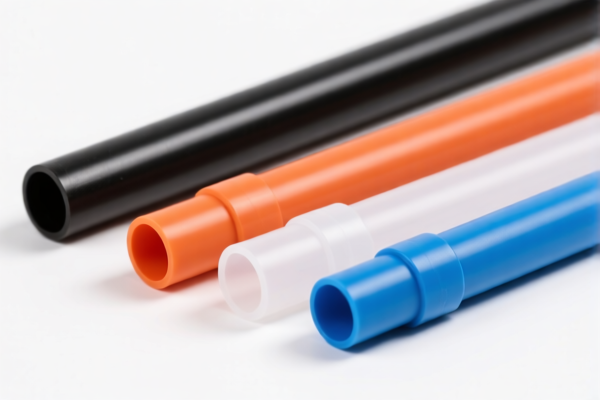



AI Analysis
🔥 Other Plastic Rigid High Temperature Resistant Pipes
🌐 HS Code Reference & Customs Clearance Guide | 2026 Latest Tariff Analysis | Professional-Level Strategy for High-Temp Plastics
📌 I. Product Definition & Classification: What Are "High-Temperature Resistant Pipes"?
"Other Plastic Rigid Pipes" refer to rigid conduits made from synthetic polymers that are not classified as standard plumbing pipes under Heading 3917.10 or 3917.21-23. When specified as "High Temperature Resistant", these pipes are typically made from specialized engineering plastics such as PTFE (Teflon), PFA, PEEK, PVDF, or Cross-linked Polyethylene (PEX).
In international trade, the classification hinges on two critical factors: 1. Material Composition: Is it a general-purpose plastic (like standard PVC/PP) or an engineered high-performance polymer? 2. End-Use: Is it for general industrial/construction use, or is it dedicated to medical/laboratory applications?
⚠️ Key Distinction Point:
- If the pipe is used for general industrial, chemical, or construction purposes (non-medical), it falls under "Other Pipes" (Heading 3917.29).
- If the pipe is specifically designed for medical instrumentation (e.g., catheter guides, breathing circuits) or laboratory fluid handling, it may be reclassified under "Other Articles of Plastic" (Heading 3926) or Medical Instruments (Heading 9018).
📦 II. HS Code Classification Details (2026 Latest Tariff Authority Match)
Based on your product description ("Other Plastic Rigid..."), here are the precise classifications from the provided data set:
| HS Code | Product Summary | Key Characteristics | Application Scenario |
|---|---|---|---|
| 3917.29.00.90 | Plastic Rigid Pipes, conforming to "Other" category descriptions. | General rigid plastic pipes, not specifically for plumbing or electrical conduit. | Industrial chemical transport, HVAC, general structural piping. |
| 3917.29.00.50 | Other Plastic Rigid Pipes, belonging to the "Other Plastics" category. | Similar to above, often used for specialized non-standard rigid tubes. | Specialty manufacturing, custom industrial tubing. |
| 3926.90.99.87 | Plastic Pipes, used for Medical purposes, falling under plastic articles. | Rigid/flexible tubes specifically for medical devices. | Medical equipment components, non-invasive monitoring lines. |
| 3926.90.99.10 | Plastic Pipes, common plastic articles in Laboratory or Medical Vessels. | Lab-grade tubing, rigid connectors for lab apparatus. | Chemical analysis, research laboratory fluid control. |
| 9018.39.00.40 | Plastic Catheters/Conduits, used for Medical purposes, conforming to medical instrument use. | High-precision medical conduits/catheters. | Invasive medical procedures, surgical instruments, patient monitoring. |
🔍 Critical Note:
- Non-Medical Industrial Pipes: Must use 3917.29.00.90 or 3917.29.00.50.
- Medical/Lab Pipes: If the product is clearly marked for hospital/lab use, use 3926.90.99.87, 3926.90.99.10, or 9018.39.00.40. Misclassification here can lead to severe penalties or detention.
💰 III. 2026 Latest Tariff Rate Breakdown (Including Surcharges & Policy Add-ons)
✅ Applicable Country: United States (US)
✅ Origin: China (CN)
✅ Effective Date: 2025/2026 (Current Trade Policy)
🎯 1. Industrial/General Use Pipes
(HS Codes: 3917.29.00.90 & 3917.29.00.50)
| Item | Detail |
|---|---|
| Base Tariff Rate | 3.1% (Ad Valorem) |
| Section 301 Surcharge | +25.0% (USITC Footnote for Chinese Goods) |
| Section 122 Surcharge | +10.0% (Specific policy add-on for certain plastic goods) |
| Total Tax Rate | 38.1% |
| Tax Calculation | CIF Value × 38.1% |
| De Minimis Exemption? | ❌ No (Denied) |
| Legal Basis Path | USITC:3917.29.00.90 → SECTION_301:25.0% → SECTION_122:10.0% |
📌 Explanation:
- These pipes are considered standard plastic products.
- They are subject to all three tariffs: Base (3.1%) + Section 301 (25%) + Section 122 (10%).
- Total landed cost impact is nearly 38%. Price quoting must reflect this high burden.
🎯 2. Medical/Laboratory Use Pipes
(HS Codes: 3926.90.99.87 & 3926.90.99.10)
| Item | Detail |
|---|---|
| Base Tariff Rate | 5.3% (Ad Valorem) |
| Section 301 Surcharge | +7.5% (Reduced rate for certain medical-adjacent plastics) |
| Section 122 Surcharge | +10.0% |
| Total Tax Rate | 22.8% |
| Tax Calculation | CIF Value × 22.8% |
| De Minimis Exemption? | ❌ No (Denied) |
| Legal Basis Path | USITC:3926.90.99.87 → SECTION_301:7.5% → SECTION_122:10.0% |
📌 Explanation:
- Significant Savings: By correctly classifying as "Medical/Laboratory Plastic Articles," the Section 301 rate drops from 25% to 7.5%.
- Total Rate: 22.8% (vs. 38.1% for industrial use).
- Requirement: Must provide documentation proving medical/lab use (e.g., FDA registration, lab equipment specs).
🎯 3. High-Precision Medical Instruments/Catheters
(HS Code: 9018.39.00.40)
| Item | Detail |
|---|---|
| Base Tariff Rate | 0.0% (Free) |
| Section 301 Surcharge | 0.0% |
| Section 122 Surcharge | +10.0% |
| Total Tax Rate | 10.0% |
| Tax Calculation | CIF Value × 10.0% |
| De Minimis Exemption? | ❌ No (Denied) |
| Legal Basis Path | USITC:9018.39.00.40 → SECTION_122:10.0% |
📌 Explanation:
- Lowest Tax Burden: If the pipe is a catheter or part of a medical instrument, it qualifies for 0% base and 0% Section 301.
- Only Section 122 (10%) applies.
- Strict Definition: Must be a "catheter" or direct component of a medical instrument (Heading 9018), not just generic plastic tubing.
🛠️ IV. Customs Clearance Practical Advice (Pitfall Avoidance Guide)
✅ 1. Documentation Checklist (Non-Negotiable)
| Document | Required? | Purpose |
|---|---|---|
| ✅ Product Specification Sheet | ✔️ | Must specify Material (e.g., PTFE, PEEK), Temperature Resistance (e.g., "Up to 260°C"), and Rigidity. |
| ✅ End-Use Declaration | ✔️ | Crucial for distinguishing between 3917 (Industrial) and 3926/9018 (Medical). Write: "Used in chemical processing" OR "Used in surgical instruments". |
| ✅ Material Safety Data Sheet (MSDS) | ✔️ | Proves chemical resistance and high-temp properties. |
| ✅ Commercial Invoice | ✔️ | Must match HS Code exactly. Avoid vague terms like "Plastic Tube". Use "Rigid High-Temp PTFE Pipe". |
| ✅ Certificates of Compliance | ✔️ | For medical goods: FDA 510(k) listing, ISO 13485. For industrial: ASTM standards. |
✅ 2. Classification Strategy (Key Mantra)
🔥 "Define Use, Pick Code: Industrial Pays High, Medical Pays Low!"
| Scenario | Recommended HS Code | Tax Rate | Why? |
|---|---|---|---|
| Chemical Plant Piping | 3917.29.00.90 |
38.1% | General plastic article, high surcharges. |
| Laboratory Fluid Lines | 3926.90.99.10 |
22.8% | "Other plastic articles" for labs, lower 301 rate. |
| Surgical Catheter/Tube | 9018.39.00.40 |
10.0% | "Medical Instrument", exempt from 301. |
| General Plumbing Pipe | Not in Data | Likely Higher | Standard PVC pipes may have different classifications not in this specific dataset. |
✅ 3. Special Handling Tips
| Situation | Advice |
|---|---|
| Mixed Shipments (Industrial + Medical) | Separate them! Declare medical items under 3926/9018 and industrial under 3917. Do not mix on one invoice to avoid blanket high-tax assessment. |
| "High Temperature" Marketing | Highlighting "High Temp" in marketing doesn't change HS code unless it proves medical instrument status. Use technical specs (e.g., "PTFE, 260°C") to justify engineering plastic classification. |
| Customs Audit Risk | If using 9018.39.00.40, be prepared to prove the item is a catheter or medical device component. Generic "tubing" will be downgraded to 3926 or 3917, triggering back taxes + penalties. |
🌍 V. Global Market Comparison (2026 Snapshot)
| Market | Recommended HS Code | Est. Tax Rate (China Origin) | Key Requirement |
|---|---|---|---|
| 🇺🇸 USA | 3917.29.00.90 (Ind.) / 9018.39.00.40 (Med.) |
38.1% (Ind.) / 10.0% (Med.) | FDA Registration (if Med.), Clear End-Use Declaration. |
| 🇪🇺 EU | 3917.29 / 9018.90 | 0-4% (Standard) + VAT | CE Marking (if Med.), REACH Compliance. |
| 🇨🇳 China | 3917.29 / 9018.39 | 5-10% | CCC (if applicable), Standard GB certifications. |
📌 Conclusion for US Importers:
- Optimize Classification: If your "High Temp Pipe" can be legally classified as a medical component (9018.39.00.40), you save 28.1% in tariffs compared to general industrial pipes.
- Documentation is Key: The difference between 38.1% and 10% lies entirely in proving medical/intended use.
📌 VI. Common Errors & Pitfalls (Blood & Tears Lessons)
❌ Error 1: Labeling Medical Tubes as "General Plastic Pipe"
👉 Result: You pay 38.1% instead of 10%.
👉 Fix: Use precise descriptions: "Plastic Catheter, Sterile, for Surgical Use" → 9018.39.00.40.
❌ Error 2: Claiming "High Temp" to Avoid Section 301
👉 Result: Customs rejects the claim. "High Temp" is not an exemption criteria for Section 301.
👉 Fix: Rely on Heading Change (Industrial → Medical) to reduce the 301 rate.
❌ Error 3: Vague Invoice Descriptions ("Plastic Pipes")
👉 Result: Customs assigns default HS Code (likely 3917.29.00.90) → 38.1% Tax.
👉 Fix: Detail the material (PTFE/PEEK) and specific use.
✅ Correct Practice:
"Rigid PTFE Conduit, High-Temp Resistant (up to 260°C), For Use in Surgical Instrument Assembly, Model XYZ, FDA 510(k) Cleared"
🎯 VII. Conclusion: Precision Saves Money
🎯 Remember the Golden Rule:
🔹 "Industrial Pipes Pay High (38.1%), Medical Pipes Pay Low (10%-22.8%). Prove the Use, Save the Cash!"
🔹 "Don't let 'Plastic Pipe' label cost you 28% in taxes. Specify 'Medical' or 'Lab' if applicable."
📌 Pro Tip:
If your pipes are exclusively for laboratory analysis (not invasive medical procedures), try to classify under 3926.90.99.10 (22.8% rate) as a middle ground if 9018 is rejected. However, 9018.39.00.40 (10%) is the gold standard for cost savings if the product qualifies as a medical instrument component.
📣 Immediate Action:
📞 Consult a Customs Broker: Submit product samples and technical specs for Pre-Ruling before shipping.
🚀 Optimize Your Invoice: Ensure the description matches the lowest-tariff HS Code supported by your product's actual use.
✨ Smart Classification, Lower Landed Cost!
💼 Your Profit Margin Depends on Accurate Tariff Engineering!
Customer Reviews
About HS Code Classification
The Harmonized System (HS) is an internationally standardized nomenclature developed by the World Customs Organization (WCO) to classify traded products. Over 200 countries use the HS system as the basis for customs tariffs, trade statistics, and import/export regulations.
Each HS code follows a hierarchical structure:
- Chapter (2 digits) — Broad category of goods (e.g., Chapter 84: Machinery and Mechanical Appliances)
- Heading (4 digits) — More specific grouping within the chapter
- Subheading (6 digits) — Internationally standardized breakdown, used by all WCO member countries
- National subdivisions (8-10 digits) — Country-specific extensions for further classification, such as US HTSUS 10-digit codes
Correct HS code classification is essential for smooth customs clearance, accurate duty payment, and compliance with trade regulations. Misclassification can lead to customs delays, overpayment of duties, or penalties.
When importing from CN to US, the applicable tariff rates may include:
- Most-Favored-Nation (MFN) rate — The standard duty rate applied to WTO members
- General rate — Applied to countries without trade agreements
- Trade remedy duties — Additional tariffs such as Section 301 (anti-dumping), Section 232 (national security), or countervailing duties
The information provided on this page is for reference purposes only. For official classification, please consult with your local customs authority or a licensed customs broker.