Other Plastic Rigid Insulation Pipes
CN → US| HS Code | Tariff Rate | Origin | Destination | Doc |
|---|---|---|---|---|
| 3926909989 | 22.8% | CN | US | Official Doc |
| 3917290090 | 38.1% | CN | US | Official Doc |
| 3917290050 | 38.1% | CN | US | Official Doc |
| 3926909987 | 22.8% | CN | US | Official Doc |
| 3926909910 | 22.8% | CN | US | Official Doc |
Product Images



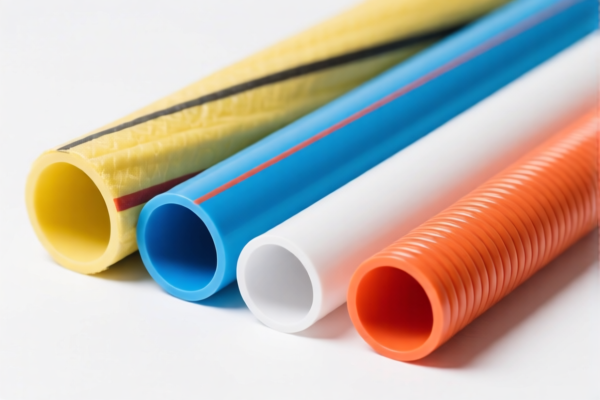
AI Analysis
🔌 Other Plastic Rigid Insulation Pipes (Thermal/Utility)
🌐 HS Code Reference & Customs Clearance Guide | 2024/2026 Updated Tariff Analysis | Professional Entry Strategy
📌 I. Product Definition & Classification: Decoding "Plastic Rigid Pipes"
Plastic rigid insulation pipes (often used for thermal insulation, HVAC, or fluid transport) fall under Chapter 39 (Plastics and Articles Thereof). The critical distinction in classification lies between:
1. Piping Systems (Chapter 39, Heading 3917): Pipes, tubes, and hoses, whether or not reinforced or otherwise combined with other materials, and fittings therefor, of plastics.
2. General Plastic Articles (Chapter 39, Heading 3926): Other articles of plastics and articles of other materials of headings 3901 to 3914.
⚠️ Key Classification Logic:
- If the product is a pipe, tube, or hose (hollow, cylindrical, used for conveying or insulating lines) → Heading 3917.
- If the product is a structural component, fitting, or generic shaped part that does not fit the specific definition of "pipe" in 3917, or if it is a complex assembly not primarily defined as a pipe → Heading 3926.
- Rigid status eliminates flexible hose codes, focusing on rigid PVC, HDPE, PP, etc.
📦 II. HS Code Classification Details (Based on Provided Data)
The following HS Codes are derived from your input data. They are split into two categories: Piping (3917) and General Plastic Articles (3926).
| HS Code | Product Description | Classification Logic | Total Tax Rate (Approx.) |
|---|---|---|---|
3917.29.00.90 |
Other plastic rigid pipes/tubes | Matches "Plastic Material" + "Rigid Pipe" form. Classified under "Other plastic rigid pipes." | 38.1% |
3917.29.00.50 |
Other plastic rigid pipes (Fallback) | Matches "Plastic Material" + "Rigid Pipe" form. Uses "Other" category fallback logic. | 38.1% |
3926.90.99.89 |
Other plastic articles (General) | Matches "Plastic Material" + "Other Articles" category. Suitable for rigid plastic pipes not classified as pipes in 3917, or complex fittings. | 22.8% |
3926.90.99.87 |
Other plastic articles (Inference) | Matches material, form, and shape requirements. Reasonable inference under the "Other" category. | 22.8% |
3926.90.99.10 |
Specific use rigid plastic articles | Matches "Plastic Material" + "Specific Use" rigid plastic products. | 22.8% |
🔍 Critical Distinction:
- 3917 Codes (38.1% Tax): Applied if customs views the item strictly as a pipe/tube (Hollow, cylindrical, for flow/insulation).
- 3926 Codes (22.8% Tax): Applied if the item is considered a general plastic article (e.g., rigid casing, non-standard shape, or complex assembly not fitting the strict "pipe" definition).
- Note: The tax difference is 15.3% (38.1% - 22.8%). Correct classification is vital for cost optimization.
💰 III. 2024/2026 Latest Tariff Rate Details (USA Import)
✅ Applicable Country: United States (US)
✅ Origin: China (CN)
✅ Effective Date: Ongoing (Subject to Section 301 & IEEPA)
🎯 1. 3917.29.00.90 & 3917.29.00.50 – Other Plastic Rigid Pipes
| Item | Details |
|---|---|
| Base Duty | 3.1% (Ad Valorem) |
| Section 301 Additional Duty | 25.0% |
| Section 122 Duties | 10.0% |
| Total Effective Rate | 38.1% |
| Tax Calculation | CIF Value × 38.1% |
| De Minimis Exemption | ❌ Not Applicable (Deny de minimis for Section 301 goods) |
| Legal Basis | USITC:3917.29.00.90 → Section301:Footnote3917.29.00.90 → IEEPA/Section122 |
📌 Explanation:
- These pipes are considered finished goods under Heading 3917.
- The 25% Section 301 tariff applies to most plastic pipes from China.
- The 10% Section 122 tariff (if active/applicable) further increases the cost.
- Total: 38.1%. This is a high-duty category.
🎯 2. 3926.90.99.89, 3926.90.99.87, 3926.90.99.10 – Other Plastic Articles
| Item | Details |
|---|---|
| Base Duty | 5.3% (Ad Valorem) |
| Section 301 Additional Duty | 7.5% |
| Section 122 Duties | 10.0% |
| Total Effective Rate | 22.8% |
| Tax Calculation | CIF Value × 22.8% |
| De Minimis Exemption | ❌ Not Applicable (Deny de minimis for Section 301 goods) |
| Legal Basis | USITC:3926.90.99.xx → Section301:Footnote3926.90.99.xx → IEEPA/Section122 |
📌 Explanation:
- These codes fall under "Other Articles of Plastics."
- The Section 301 rate is lower (7.5%) for general plastic articles compared to pipes (25%).
- Total: 22.8%. This is a moderate-duty category.
- Savings: Choosing the correct code under 3926 can save 15.3% in duties.
🛠️ IV. Customs Clearance Practical Advice (Avoid Pitfalls)
✅ 1. Document Preparation Checklist (Mandatory)
| Document | Required? | Purpose |
|---|---|---|
| Product Specification Sheet | ✔️ | Define material (e.g., PVC, HDPE), wall thickness, diameter, rigidity, and intended use (insulation, fluid, etc.). |
| Technical Diagrams | ✔️ | Show cross-section to prove "Rigid" structure vs. flexible. |
| Photos (Labeled) | ✔️ | Clear images of ends, joints, and any labeling. |
| Commercial Invoice | ✔️ | Must describe item as "Plastic Rigid Pipe" OR "Plastic Insulation Casing" depending on classification. |
| Packing List | ✔️ | Weight, dimensions, number of units. |
| Origin Certificate (if applicable) | ✔️ | To confirm Country of Origin (China). |
✅ 2. Declaration Strategy (Key Tips)
🔥 “Shape Defines Code: Pipe = 3917 (38.1%), Article = 3926 (22.8%)!”
| Scenario | Correct HS Code | Risk of Misclassification |
|---|---|---|
| Standard Hollow Rigid Pipe (for water/air/insulation) | 3917.29.00.90 or .50 |
Low risk, but 38.1% duty. |
| Non-Hollow Rigid Plastic Casing or Complex Insulation Sleeve (not a simple pipe) | 3926.90.99.89/.87/.10 |
If misclassified as pipe, penalty + back taxes. If misclassified as article when it’s a pipe, penalty. |
| Plastic Pipe Fittings (Elbows, Tees) | Often 3917.29 or 3926.90 |
Depends on specific design. Check customs rulings. |
| Insulation Foam Pipe (with plastic jacket) | 3926 or 3917 |
If foam is core and plastic is jacket, classification is complex. May require professional ruling. |
✅ 3. Special Considerations
| Situation | Recommendation |
|---|---|
| Dual-Use (Insulation + Pipe) | If the product is primarily an insulation sleeve (hollow, flexible/rigid) for pipes, it might be classified as 3926. If it is a structural pipe itself, it is 3917. Provide proof of primary function. |
| Material Composition | If the pipe is reinforced with metal or fiberglass, it may still be 3917, but declare material composition clearly. |
| Pre-Ruling | Strongly Recommended. Apply for a Binding Ruling from CBP if the product is borderline between "Pipe" and "Article." This locks in the duty rate. |
🌍 V. Global Market Comparison (2024/2026)
| Market | Recommended HS Code | Est. Duty (China Origin) | Notes |
|---|---|---|---|
| 🇺🇸 USA | 3917.29.00 or 3926.90.99 |
38.1% (3917) or 22.8% (3926) | High Section 301 tariffs. Section 122 may apply. |
| 🇨🇳 China | 3917.29 or 3926.90 |
~3.1% - 6.0% | Low base duty. No major retaliatory tariffs. |
| 🇪🇺 EU | 3917.29 or 3926.90 |
~0% - 5.5% | No general Section 301 equivalent. Check for anti-dumping on specific plastic types. |
| 🇬🇧 UK | 3917.29 or 3926.90 |
~0% - 5.5% | Post-Brexit tariffs similar to EU for many goods. |
📌 Conclusion:
- USA is the most expensive market due to Section 301 and Section 122 tariffs.
- Classification as 3926 (22.8%) vs. 3917 (38.1%) can save significant money.
- Product Design & Documentation must support the lower-duty classification if applicable.
📌 VI. Common Errors & Pitfalls (Lessons Learned)
❌ Error 1: Declaring all plastic pipes as 3917 without checking if they are "Articles"
👉 Consequence: Paying 38.1% instead of 22.8%. Loss of 15.3% profit margin.
❌ Error 2: Declaring complex insulation casings as 3926 when they are clearly "Pipes"
👉 Consequence: Customs audit, penalty, and back taxes. Risk of shipment hold.
❌ Error 3: Ignoring "Rigid" status
👉 Consequence: Misclassification as flexible hose (different duty rate). Incorrect duty calculation.
❌ Error 4: Not providing material composition
👉 Consequence: Customs cannot determine base duty. Delay in clearance.
✅ Correct Approach:
“Rigid PVC Insulation Pipe, Outer Diameter 50mm, Wall Thickness 2mm, For Thermal Insulation, Made of PVC, Country of Origin: China”
🎯 VII. Conclusion: Precise Classification, Maximized Profit!
🎯 Remember the Rule:
🔹 “Pipe = 3917 (38.1%), Article = 3926 (22.8%)”
🔹 “If it’s hollow and cylindrical, it’s likely a pipe. If it’s a casing or fitting, argue for Article.”
🔹 “Documentation is Key: Prove primary function!”
📌 Pro Tip:
If your product is a composite insulation pipe (e.g., foam core + plastic jacket), consult a customs broker to determine if it qualifies as a "Plastic Article" (3926) rather than a "Plastic Pipe" (3917). This can save 15.3% in duties.
📣 Next Steps:
📞 Contact a Customs Broker to review your product specs.
📝 Request a Binding Ruling from CBP if unsure.
🚀 Optimize Your Supply Chain by selecting the correct HS Code from day one.
✨ Professional Customs Clearance Starts with Accurate Classification!
💼 Every 1% of duty saved is pure profit!
Customer Reviews
About HS Code Classification
The Harmonized System (HS) is an internationally standardized nomenclature developed by the World Customs Organization (WCO) to classify traded products. Over 200 countries use the HS system as the basis for customs tariffs, trade statistics, and import/export regulations.
Each HS code follows a hierarchical structure:
- Chapter (2 digits) — Broad category of goods (e.g., Chapter 84: Machinery and Mechanical Appliances)
- Heading (4 digits) — More specific grouping within the chapter
- Subheading (6 digits) — Internationally standardized breakdown, used by all WCO member countries
- National subdivisions (8-10 digits) — Country-specific extensions for further classification, such as US HTSUS 10-digit codes
Correct HS code classification is essential for smooth customs clearance, accurate duty payment, and compliance with trade regulations. Misclassification can lead to customs delays, overpayment of duties, or penalties.
When importing from CN to US, the applicable tariff rates may include:
- Most-Favored-Nation (MFN) rate — The standard duty rate applied to WTO members
- General rate — Applied to countries without trade agreements
- Trade remedy duties — Additional tariffs such as Section 301 (anti-dumping), Section 232 (national security), or countervailing duties
The information provided on this page is for reference purposes only. For official classification, please consult with your local customs authority or a licensed customs broker.