Other Plastic Rigid Ship Pipes
CN → US| HS Code | Tariff Rate | Origin | Destination | Doc |
|---|---|---|---|---|
| 3926909989 | 22.8% | CN | US | Official Doc |
| 3917290090 | 38.1% | CN | US | Official Doc |
| 3917290050 | 38.1% | CN | US | Official Doc |
| 3926909987 | 22.8% | CN | US | Official Doc |
| 3926909910 | 22.8% | CN | US | Official Doc |
Product Images



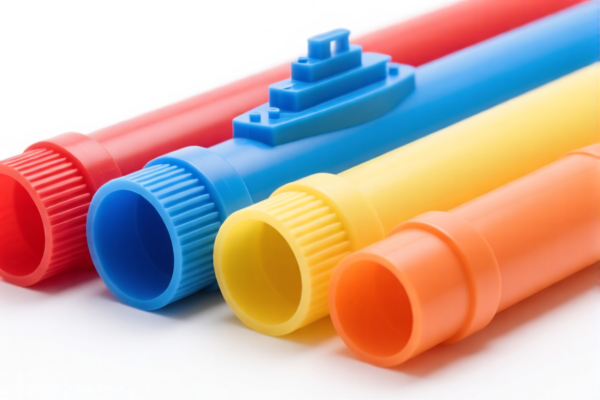
AI Analysis
🚢 Hard Plastic Ship Pipes (Other Plastic Rigid Pipes)
🌐 HS Code Reference & Customs Clearance Guide | 2026 Latest Tariff Analysis | Specialized Clearance Strategy
📌 One, Product Definition & Classification: Do You Really Understand "Plastic Ship Pipes"?
Hard plastic pipes for ships are critical components in marine engineering, used for fluid transport, ventilation, and drainage. In international trade, the classification heavily depends on whether the product is categorized as a "Pipe/Tube" (Chapter 39.17) or a "General Plastic Article" (Chapter 39.26). The key distinction lies in the specific shape and manufacturing standard.
🔹 "Plastic Pipes" (Chapter 39.17):
Strictly defined as products with a hollow cylindrical shape, uniform internal/external cross-section, and used for conveying fluids or gases. "Rigid" implies they do not flex significantly under standard pressure.
🔹 "Other Plastic Articles" (Chapter 39.26):
Products made of plastic that do not fit the strict definition of pipes/tubes (e.g., complex fittings, non-standard shapes, or accessories that are not purely tubular).
⚠️ Critical Distinction Point:
- If the product is a straight, hollow tube for fluid/gas transport → Classify under 3917.29.00.90 / 3917.29.00.50
- If the product is a general plastic component (e.g., brackets, non-tubular casings) → Classify under 3926.90.99.89 / 3926.90.99.87 / 3926.90.99.10
📦 Two, HS Code Classification Details (2026 Latest Tariff Authority Comparison)
| HS Code | Product Description | Application Scenario | Key Classification Basis |
|---|---|---|---|
3917.29.00.90 |
Other plastic tubes, pipes & hoses, rigid | Rigid plastic marine pipes, non-reinforced, for general ship use | ✅ Perfect Match: Material=Plastic, Form=Rigid Tube, Function=Transport |
3917.29.00.50 |
Other plastic tubes, pipes & hoses, rigid | Specific rigid plastic piping systems, detailed match | ✅ Match: Based on "Plastic" + "Rigid" + "Tube" features |
3926.90.99.89 |
Other articles of plastic, n.e.c. | General plastic fittings or non-standard rigid components | ✅ Match: Material=Plastic, Category="Other Articles" |
3926.90.99.87 |
Other articles of plastic, n.e.c. | Plastic rigid pipes classified under "Other" if not strictly tubular | ✅ Match: Name="Plastic", Form="Rigid", Shape="Tube", Category="Other" |
3926.90.99.10 |
Other articles of plastic, n.e.c. | Specific plastic vessels/articles | ✅ Match: Material="Plastic", Use="Specific Vessel" |
🔍 Key Reminder:
- Pure Tubular Products: Must be classified under 3917. Misclassifying a standard pipe as "Other Article" (3926) is a common error that leads to disputes. - Fittings/Accessories: If the item is a joint, flange, or bracket made of plastic, it may fall under 3926. - Packaging: If pipes and fittings are packed together, the principal function determines the classification. If pipes are the main component, 3917 is preferred.
💰 Three, 2026 Latest Tariff Rate Detail (Including Surtaxes & Policy Additions)
✅ Applicable Country: United States (US)
✅ Origin: China (CN)
✅ Effective Date: From November 10, 2025 (including subsequent imports)
🎯 1. 3917.29.00.90 & 3917.29.00.50 —— Other Plastic Rigid Pipes
These two codes share the same tariff structure as they fall under the same sub-heading for "Other plastic tubes, pipes & hoses, rigid."
| Item | Content |
|---|---|
| Basic Duty | 3.1% (ad valorem) |
| Section 301 Surtax | +25.0% (From USITC Footnote for Chinese products) |
| Section 122 Surtax | +10.0% (Targeted China Surtax) |
| Total Tariff Rate | 38.1% |
| Tax Calculation | CIF Value × 38.1% |
| De Minimis Exemption | ❌ Not Available (deny_de_minimis) |
| Legal Basis Path | IEEPA:9903.01.25 → IEEPA:9903.01.24 → USITC:3917.29.00.90 → FOOTNOTE:301 |
📌 Explanation:
- "Section 301 Surtax 25%": Imposed under the US Trade Act Section 301, targeting specific Chinese imports. - "Section 122 Surtax 10%": Additional tariff under Section 122 of the Trade Expansion Act. - Total 38.1%: This is a high tariff rate. Importers must calculate the landed cost accurately.
🎯 2. 3926.90.99.89, 3926.90.99.87, 3926.90.99.10 —— Other Plastic Articles
These codes belong to the general category of "Other plastic articles" and share the same tariff structure.
| Item | Content |
|---|---|
| Basic Duty | 5.3% (ad valorem) |
| Section 301 Surtax | +7.5% (From USITC Footnote for Chinese products) |
| Section 122 Surtax | +10.0% (Targeted China Surtax) |
| Total Tariff Rate | 22.8% |
| Tax Calculation | CIF Value × 22.8% |
| De Minimis Exemption | ❌ Not Available (deny_de_minimis) |
| Legal Basis Path | IEEPA:9903.01.25 → IEEPA:9903.01.24 → USITC:3926.90.99.89 → FOOTNOTE:301 |
📌 Note:
- Although the basic duty (5.3%) is higher than pipes (3.1%), the Section 301 surtax is lower (7.5% vs 25.0%). - Total 22.8% is significantly lower than the 38.1% for rigid pipes. - Strategic Implication: If the product can be legitimately classified as a "general plastic article" rather than a "pipe," it may save 15.3% in tariffs. However, this must be justified by product form and function to avoid customs penalties.
🛠️ Four, Customs Clearance Practical Advice (Combat Pitfall Guide)
✅ 1. Preparation Checklist (No Missing Items)
| Material | Required | Description |
|---|---|---|
| ✅ Product Specification Sheet | ✔️ | Include material type (PVC, PP, PE, etc.), diameter, wall thickness, pressure rating |
| ✅ Product Photos | ✔️ | Clear images showing the hollow interior, ends, and any markings |
| ✅ Commercial Invoice | ✔️ | Must clearly state "Plastic Pipe" or "Plastic Article" consistently with HS Code |
| ✅ Packing List | ✔️ | Detail the quantity, gross weight, and net weight |
| ✅ Declaration Form | ✔️ | Accurate description matching the chosen HS Code |
| ✅ Origin Certificate | ✔️ | If non-Chinese origin, may qualify for preferential rates |
✅ 2. Declaration Tips (Key Mnemonics)
🔥 "Pipe vs. Article: Shape Defines Rate!"
| Scenario | Correct Declaration | Wrong Practice |
|---|---|---|
| Straight, hollow, rigid tube | 3917.29.00.90 (38.1%) |
Misreport as "Plastic Fitting" → 22.8% (Risk of Penalty) |
| Complex plastic bracket/holder | 3926.90.99.89 (22.8%) |
Misreport as "Pipe" → 38.1% (Overpayment) |
| Pipe with attached flanges | Pipe Classification | Splitting parts → Higher total tax |
| Plastic Hose (Flexible) | 3917.21 (Different Rate) |
Misreport as "Rigid Pipe" → 38.1% |
✅ 3. Special Cases Handling
| Scenario | Handling Advice |
|---|---|
| Marine Grade Plastic | Specify "Fire-Retardant" or "Marine-Grade" in description, but HS Code remains based on form |
| Plastic Pipe Fittings | If sold separately, classify under 3926 (22.8%). If sold with pipes, consider if they are "parts" of the pipe system |
| Custom Dimensions | Provide drawings to prove "Rigid" and "Tubular" nature |
| Reinforced Pipes | If reinforced with metal, may change chapter entirely (e.g., Chapter 73 or 76) |
🌍 Five, Global Main Market Clearance Comparison (2026 Latest)
| Country/Region | Recommended HS Code | Tariff | Certification Requirement | Remarks |
|---|---|---|---|---|
| 🇺🇸 USA | 3917.29.00.90 |
38.1% (CN Origin) | FCC (if electronic), RoHS | High tariff due to 301+122 |
| 🇨🇳 China | 3917.29.00.90 |
5% | CCC (if applicable) | No additional surtax |
| 🇪🇺 EU | 3917.29.00 |
6.5% | CE, REACH | No additional surtax |
| 🇬🇧 UK | 3917.29.00 |
6.5% | UKCA, UK REACH | Post-Brexit rules apply |
| 🇦🇺 Australia | 3917.29.00 |
5% | RCM, AS/NZS Standards | No additional surtax |
📌 Conclusion:
- USA imposes the highest costs on Chinese plastic pipes (38.1%).
- Other markets (EU, UK, AU) have significantly lower tariffs (5-6.5%).
- Strategic Suggestion: For US-bound goods, consider third-party countries (e.g., Vietnam, Malaysia) for assembly to potentially reduce tariff exposure, ensuring substantial transformation occurs.
📌 Six, Common Errors & Pitfall Guide (Lessons Learned)
❌ Error 1: Misclassifying rigid plastic pipes as "Other Plastic Articles" (3926) to save 15.3% tariff.
👉 Consequence: Customs audits reveal "Pipe" characteristics → Back taxes + Fines.
❌ Error 2: Declaring "Plastic Pipe" without specifying "Rigid" or "Flexible".
👉 Consequence: Customs delays for classification review → Shipment hold.
❌ Error 3: Ignoring "Section 122" and "Section 301" in cost calculations.
👉 Consequence: Unexpected 35%+ landed cost → Profit margin erosion.
❌ Error 4: Mixing flexible hoses and rigid pipes in one HS Code declaration.
👉 Consequence: Incorrect classification → Partial rejection or penalty.
✅ Correct Approach:
"Rigid PVC Pipe, Marine Grade, 2-inch Diameter, For Fluid Transport, Model XYZ, Certified for Ship Use"
🎯 Seven, Conclusion: Precise Classification Saves Money!
🎯 Remember Mnemonic:
🔹 "Pipe is 38, Article is 22, but Misclassify leads to Penalties!"
🔹 "HS Code determines Tariff, 15% difference is huge, Declaration must be precise!"
📌 Tips:
- If your plastic pipes are originating from Vietnam, Mexico, Thailand, or Malaysia, you may qualify for lower or zero Section 301/122 tariffs.
- Recommend applying for Advance Ruling to confirm the correct HS Code (3917 vs 3926) before shipment.
📣 Immediate Action:
📞 Contact professional customs broker + Provide product photos + Apply for HS Code Advance Ruling
🚀 Let your plastic pipes clear customs smoothly, reduce costs, and boost profits!
✨ Professional Clearance Starts with Accurate Classification!
💼 Every cent of your cost deserves precise calculation!
Customer Reviews
About HS Code Classification
The Harmonized System (HS) is an internationally standardized nomenclature developed by the World Customs Organization (WCO) to classify traded products. Over 200 countries use the HS system as the basis for customs tariffs, trade statistics, and import/export regulations.
Each HS code follows a hierarchical structure:
- Chapter (2 digits) — Broad category of goods (e.g., Chapter 84: Machinery and Mechanical Appliances)
- Heading (4 digits) — More specific grouping within the chapter
- Subheading (6 digits) — Internationally standardized breakdown, used by all WCO member countries
- National subdivisions (8-10 digits) — Country-specific extensions for further classification, such as US HTSUS 10-digit codes
Correct HS code classification is essential for smooth customs clearance, accurate duty payment, and compliance with trade regulations. Misclassification can lead to customs delays, overpayment of duties, or penalties.
When importing from CN to US, the applicable tariff rates may include:
- Most-Favored-Nation (MFN) rate — The standard duty rate applied to WTO members
- General rate — Applied to countries without trade agreements
- Trade remedy duties — Additional tariffs such as Section 301 (anti-dumping), Section 232 (national security), or countervailing duties
The information provided on this page is for reference purposes only. For official classification, please consult with your local customs authority or a licensed customs broker.