Other Plastic Rigid Wear Resistant Pipes
CN → US| HS Code | Tariff Rate | Origin | Destination | Doc |
|---|---|---|---|---|
| 3926909989 | 22.8% | CN | US | Official Doc |
| 3917290090 | 38.1% | CN | US | Official Doc |
| 3917290050 | 38.1% | CN | US | Official Doc |
| 3926909910 | 22.8% | CN | US | Official Doc |
| 9027898060 | 35.0% | CN | US | Official Doc |
Product Images


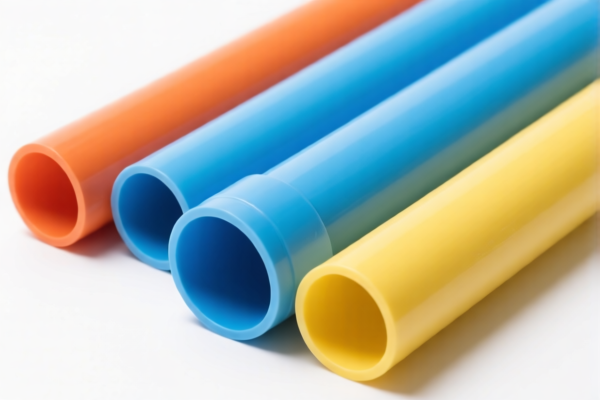

AI Analysis
🏗️ Rigid Wear-Resistant Plastic Pipes (Hard Plastic Tubing)
🌐 HS Code Reference & Clearance Guide | 2026 Latest Tariff Analysis | Professional Clearance Strategy
📌 I. Product Definition & Classification: Do You Truly Understand "Rigid Wear-Resistant Plastic Pipes"?
"Other Plastic Rigid Wear Resistant Pipes" refer to plastic tubes that are rigid (maintain shape without collapse under pressure) and often used in industrial, garden, or hydraulic applications where durability against abrasion is key. In international trade, the classification depends heavily on structure, application, and material composition.
The data provided reveals a critical divergence in classification logic: 1. General Purpose/Accessories: If viewed as general plastic articles (e.g., garden hose components, non-specialized hard tubing). 2. Specific "Hard Pipe" Category: If strictly defined as "Plastic Pipes" (Hard) under Heading 3917. 3. Laboratory/Analytical Use: If the pipe is specifically designed for lab apparatus (connecting tubes, etc.).
⚠️ Key Distinction Point:
- If the pipe is a general hard plastic tube (e.g., for garden irrigation, industrial fluid transfer) → Look at 3917.29 or 3926.90.
- If the pipe is part of a laboratory analytical device → Look at 3926.90.99.10 or 9027.89.80.60.
- "Wear-Resistant" alone does not create a new HS Code; it must fit into "Hard Pipes" (3917) or "Other Plastic Articles" (3926).
📦 II. HS Code Classification Details (2026 Latest Tariff Authority Mapping)
| HS Code | Product Description | Application Scenario | Tax Rate (Total) |
|---|---|---|---|
3926.90.99.89 |
Other plastic articles (not elsewhere specified), including hard garden tubes | General rigid plastic pipes, garden hose connectors, non-specified hard tubes | 22.8% |
3917.29.00.90 |
Other plastic pipes and hoses (hard), fitting the definition of "other plastic hard pipes" | Industrial hard plastic pipes, rigid tubing for non-electrical applications | 38.1% |
3917.29.00.50 |
Plastic pipes, specifically "hard pipes" (other), based on the "other" category logic | General rigid plastic piping systems, structural plastic tubes | 38.1% |
3926.90.99.10 |
Plastic laboratory articles (laboratory ware) | Tubes used in labs for chemical/biological analysis, lab bench fittings | 22.8% |
9027.89.80.60 |
Instruments/apparatus for physical/chemical analysis (plastic parts/accessories) | Plastic components integrated into analytical instruments (e.g., chromatography tubing) | 35.0% |
🔍 Critical Reminder:
- Heading 3917 is specifically for "Plastic Pipes, Hoses, Tubes, and Accessories." If your "wear-resistant pipe" is a structural pipe, it likely falls here (3917.29).
- Heading 3926 is for "Other Articles of Plastic." If it's a garden hose accessory or general plastic article, it falls here (3926.90).
- Heading 9027 is for Analytical Instruments. If the pipe is just a component inside a larger machine, the machine might be classified differently, but if declared as a "plastic part for analysis," this code applies.
💰 III. 2026 Latest Tariff Rate Breakdown (Including Surcharges & Policy Add-ons)
✅ Applicable Country: USA (US)
✅ Origin: China (CN)
✅ Effective Date: Post-November 10, 2025 (Current Policy Context)
🎯 1. 3926.90.99.89 & 3926.90.99.10 —— General Plastic Articles / Lab Ware
| Item | Content |
|---|---|
| Base Tariff | 5.3% (Ad Valorem) |
| Section 301 Surcharge | +7.5% |
| Section 122 Tariff | +10% (Specific 122 Clause) |
| Total Rate | 22.8% |
| Tax Calculation | CIF Value × 22.8% |
| De Minimis Exemption | ❌ Not Eligible |
| Legal Basis Path | IEEPA:9903.01.24 → USITC:3926.90.99 → FOOTNOTE:122 Clause |
📌 Explanation:
- These codes are classified under "Other Plastic Articles."
- The 7.5% is the standard Section 301 surcharge for many plastic articles.
- The 10% is a specific "122 Clause" tariff, often applied to specific plastic imports.
- Total 22.8% is moderate compared to the 3917 category.
🎯 2. 3917.29.00.90 & 3917.29.00.50 —— Plastic Hard Pipes (The "Pipe" Category)
| Item | Content |
|---|---|
| Base Tariff | 3.1% (Ad Valorem) |
| Section 301 Surcharge | +25.0% |
| Section 122 Tariff | +10% (Specific 122 Clause) |
| Total Rate | 38.1% |
| Tax Calculation | CIF Value × 38.1% |
| De Minimis Exemption | ❌ Not Eligible |
| Legal Basis Path | IEEPA:9903.01.25 → USITC:3917.29.00 → FOOTNOTE:9903.88.01 |
📌 Explanation:
- High Risk Category: Classification as "Plastic Pipes" triggers a 25% Section 301 surcharge (higher than the 7.5% for general plastic articles).
- This is a significant cost driver. A pipe declared as "Hard Plastic Pipe" (3917) pays 38.1%, while a similar plastic tube declared as "Other Plastic Article" (3926) pays 22.8%.
- Why the difference? 3917 is considered more "industrial/structural," attracting higher scrutiny and rates.
🎯 3. 9027.89.80.60 —— Parts for Analytical Instruments
| Item | Content |
|---|---|
| Base Tariff | 0.0% (Ad Valorem) |
| Section 301 Surcharge | +25.0% |
| Section 122 Tariff | +10% (Specific 122 Clause) |
| Total Rate | 35.0% |
| Tax Calculation | CIF Value × 35.0% |
| De Minimis Exemption | ❌ Not Eligible |
| Legal Basis Path | IEEPA:9903.01.25 → USITC:9027.89.80 → FOOTNOTE:9903.88.01 |
📌 Explanation:
- Although the Base Tariff is 0%, the 25% Surcharge still applies.
- This code is only valid if the plastic pipe is clearly identified as a component for laboratory analysis instruments.
- Risk: If declared as "Lab Pipe" but customs determines it's a general garden/industrial pipe, you will face re-classification penalties and back taxes.
🛠️ IV. Clearance Practical Advice (Battle-Tested Pitfall Avoidance)
✅ 1. Documentation Checklist (Non-Negotiable)
| Document | Required | Notes |
|---|---|---|
| ✅ Product Spec Sheet | ✔️ | Must specify: Material (e.g., PVC, PE, PTFE), Diameter, Wall Thickness, Temperature Resistance, Wear-Resistance Properties. |
| ✅ Technical Drawing | ✔️ | Show cross-section. Is it a simple tube? Or a complex fitting? |
| ✅ Product Photos | ✔️ | Clear images of the pipe, labeling, and packaging. |
| ✅ Intended Use Statement | ✔️ | Critical: Define use. Is it for "Garden Irrigation"? "Lab Fluid Transfer"? "Industrial Hydraulic"? This determines 3926 vs 3917. |
| ✅ Commercial Invoice | ✔️ | Accurate description. Avoid vague terms like "Plastic Tube." Use "Rigid Plastic Hard Pipe for [Specific Use]." |
| ✅ Bill of Lading | ✔️ | Consistent with invoice. |
✅ 2. Classification Strategy & Tips (Key Mantra)
🔥 “Use Defines Code, Pipe vs Article, 38% vs 23%, Think Twice Before Shipping!”
| Scenario | Recommended HS Code | Risk Level | Why? |
|---|---|---|---|
| Garden Hose / General Hard Tube | 3926.90.99.89 |
🟢 Low | Classified as "Other Plastic Article." Lower surcharge (7.5%). |
| Industrial Hard Plastic Pipe | 3917.29.00.90 |
🔴 High | Classified as "Plastic Pipe." Higher surcharge (25%). |
| Lab Instrument Tubing | 3926.90.99.10 |
🟡 Medium | Must prove it's for lab use. If misused, re-classified to 3926.90.99.89 or 3917. |
| Component in Analyzer | 9027.89.80.60 |
🔴 High | Only if part of a 9027 instrument. If standalone, reject. |
⚠️ Strategic Insight:
- If your product is a general rigid plastic pipe (e.g., for water, air, garden), try to argue for 3926.90.99.89 ("Other Plastic Articles") rather than 3917 ("Plastic Pipes").
- Why? The tax rate is 15.3% lower (22.8% vs 38.1%).
- How? Emphasize "accessory" or "general article" status in the invoice. Provide specs showing it's not a standard "pipe" for structural plumbing but a "wear-resistant plastic tube" for general use.
- Caution: If it looks exactly like a standard plumbing pipe (PVC/CPVC for water), customs will likely force 3917.
✅ 3. Special Handling Scenarios
| Scenario | Handling Advice |
|---|---|
| "Wear-Resistant" Claim | Provide Abrasion Resistance Test Reports (e.g., Taber Abraser results). This supports the "specialty article" argument for 3926. |
| Mixed Shipment | Do not mix "Lab Tubes" and "Garden Pipes" in one container without clear segregation. Different codes = different duties. |
| OEM Custom Pipes | Provide customer PO and design specs. If the customer is a lab equipment manufacturer, push for 3926.90.99.10 or 9027.89.80.60. |
| Hardness Specification | Highlight "Rigid" in specs. Soft hoses are 3917.29.20. Rigid pipes are 3917.29.00. This distinction is key. |
🌍 V. Global Market Clearance Comparison (2026 Update)
| Country/Region | Recommended HS Code | Tariff (China Origin) | Key Certification | Notes |
|---|---|---|---|---|
| 🇺🇸 USA | 3926.90.99.89 or 3917.29.00.90 |
22.8% or 38.1% | FDA (if food contact), NSF (if potable) | High Surcharge on 3917. |
| 🇨🇳 China | 3917.29.00.90 |
3.1% - 5.5% | CCC (if applicable) | No Section 301. |
| 🇪🇺 EU | 3917.29.00.90 |
6.5% | REACH, RoHS | No 122 Clause equivalent. |
| 🇬🇧 UK | 3917.29.00.90 |
6.5% | UKCA | Post-Brexit rules. |
| 🇯🇵 Japan | 3917.29.00.90 |
0% - 3.8% | PSE (if electrical) | Low tariff, high inspection. |
📌 Conclusion:
- The USA is the most costly market due to Section 301 and 122 Clause tariffs.
- Differentiation is Key: Getting the right HS Code (3926 vs 3917) can save 15.3% of the CIF value.
📌 VI. Common Mistakes & Pitfalls (Lessons from Experience)
❌ Mistake 1: Declaring a standard PVC water pipe as "Plastic Garden Accessory" to get 22.8%
👉 Result: Customs inspection reveals it's a standard pipe → Re-classified to 3917 → Back taxes + Penalties.
❌ Mistake 2: Using "Lab Pipe" for a generic plastic tube
👉 Result: Lack of proof it's for analytical instruments → Rejected as 9027 → Forced to 3926 or 3917 → Delay & Demurrage.
❌ Mistake 3: Ignoring "Rigid" vs "Flexible"
👉 Result: Confusion between 3917.29 (Hard) and 3917.39 (Soft). Wrong code → Valuation disputes.
❌ Mistake 4: Not specifying Material
👉 Result: Plastic types (PVC, PE, PP) can affect base rates. Vague description → Customs Detention.
✅ Correct Approach:
"Rigid Plastic Wear-Resistant Tube, PVC Material, ID 10mm, OD 14mm, Used for General Industrial Fluid Transfer, Not for Potable Water"
🎯 VII. Conclusion: Precise Classification Saves 15%+
🎯 Remember the Mantra:
🔹 "Pipe is 38%, Article is 23%, Argue 'Article' if Possible!"
🔹 "Wear-Resistant is a Feature, Not a Code, Define Use First!"
🔹 "3917 is Hard, 3926 is Other, Choose Wisely or Pay More!"
📌 Pro Tip:
If your pipe is wear-resistant PTFE or PVDF, it might qualify for different subheadings. Consult a customs broker to see if specialty plastic codes offer better rates or if the 301 surcharge can be mitigated by country of origin (e.g., Vietnam, Mexico).
📣 Immediate Action:
📞 Contact your customs broker with the Technical Spec Sheet.
📝 Draft your Invoice Description carefully: Avoid "Pipe" if you can use "Tube" or "Article" AND support it with specs.
🚀 Get an Advance Ruling from US Customs if the shipment value is high. Save yourself the headache!
✨ Professional Clearance Starts with Accurate Classification!
💼 Every Percent of Tariff Saved is Pure Profit!
Customer Reviews
About HS Code Classification
The Harmonized System (HS) is an internationally standardized nomenclature developed by the World Customs Organization (WCO) to classify traded products. Over 200 countries use the HS system as the basis for customs tariffs, trade statistics, and import/export regulations.
Each HS code follows a hierarchical structure:
- Chapter (2 digits) — Broad category of goods (e.g., Chapter 84: Machinery and Mechanical Appliances)
- Heading (4 digits) — More specific grouping within the chapter
- Subheading (6 digits) — Internationally standardized breakdown, used by all WCO member countries
- National subdivisions (8-10 digits) — Country-specific extensions for further classification, such as US HTSUS 10-digit codes
Correct HS code classification is essential for smooth customs clearance, accurate duty payment, and compliance with trade regulations. Misclassification can lead to customs delays, overpayment of duties, or penalties.
When importing from CN to US, the applicable tariff rates may include:
- Most-Favored-Nation (MFN) rate — The standard duty rate applied to WTO members
- General rate — Applied to countries without trade agreements
- Trade remedy duties — Additional tariffs such as Section 301 (anti-dumping), Section 232 (national security), or countervailing duties
The information provided on this page is for reference purposes only. For official classification, please consult with your local customs authority or a licensed customs broker.