Other Plastic Rods for Construction
CN → US| HS Code | Tariff Rate | Origin | Destination | Doc |
|---|---|---|---|---|
| 3917290090 | 38.1% | CN | US | Official Doc |
| 3917290050 | 38.1% | CN | US | Official Doc |
| 3916905000 | 40.8% | CN | US | Official Doc |
| 3916200091 | 40.8% | CN | US | Official Doc |
| 3925900000 | 40.3% | CN | US | Official Doc |
Product Images



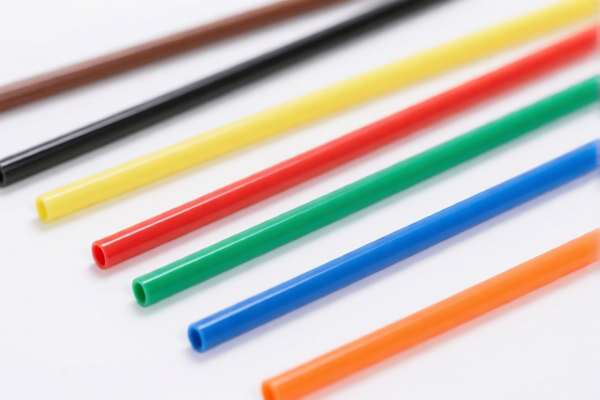
AI Analysis
🏗️ Other Plastic Rods for Construction
🌐 HS Code Reference & Customs Clearance Guide | 2026 Latest Tariff Analysis | Professional Clearance Strategy
📌 1. Product Definition & Classification: Do You Really Understand "Plastic Rods"?
Other Plastic Rods for Construction are rigid or semi-rigid plastic components shaped into rods, bars, or tubes, specifically designed for building infrastructure, reinforcement, waterproofing, or aesthetic finishing. In international trade, they are often categorized under Chapter 39 (Plastics and Articles Thereof).
Because "Construction" is a broad end-use, customs authorities scrutinize these goods based on: * Material Composition (PVC, PE, PP, ABS, etc.) * Physical Form (Solid rod, hollow tube, flexible pipe, rigid profile) * Specific Function (Structural reinforcement vs. decorative trim)
⚠️ Key Distinction Point:
- If the product is a hollow tube/pipe primarily for fluid conveyance or structural plumbing → It may fall under 3917 (Tubes, Pipes, and Hoses).
- If the product is a solid rod/bar used for reinforcement or general construction → It often falls under 3916 (Profiles/Sections).
- If the product is a general building component not fitting specific pipe/rod definitions → It may fall under 3925 (Building Goods).
📦 2. HS Code Classification Details (2026 Latest Tariff Authority Match)
Based on the provided data, here is the precise breakdown for "Other Plastic Rods for Construction":
| HS Code | Product Description | Applicability & Logic | Total Tax Rate |
|---|---|---|---|
| 3917.29.00.90 | Other plastic rods for construction, material: plastic, form: rod, extended category of hard pipes/pipelines. | Classified as an extension of the "hard pipe/pipeline" category under Chapter 3917. Suitable when the rod has hollow sections or behaves like rigid conduit. | 38.1% |
| 3917.29.00.50 | Other plastic rods for construction, material: plastic, form: rod, under "Other" category for construction, matching other plastic material/form characteristics. | Matches the "Other plastic articles" descriptor in 3917.29. Used when no more specific sub-heading applies but it fits the general plastic rod profile. | 38.1% |
| 3916.90.50.00 | Other plastic rods for construction, form: rod, material: plastic, used as a catch-all category when there is no material conflict and inference is made by name. | Catch-all/Subsidiary Category: Used when the specific plastic type (e.g., PVC, PE) doesn't have its own specific 10-digit code, or when the rod is made of mixed/other plastics. | 40.8% |
| 3916.20.00.91 | Other plastic rods for construction, form: rod, material: plastic, belongs to "Other" category, matching material and form features. | Specifically targets rods made of specific common plastics (often PVC or PE depending on national sub-divisions) under 3916.20. Requires precise material identification. | 40.8% |
| 3925.90.00.00 | Other plastic rods for construction, material: plastic, form: rod, use: construction, fits the definition of "Other building goods." | Classified under 3925 (Builders' ware of plastics). Used when the item is clearly a building component (e.g., decorative trim, support rod) but doesn't fit pipe/rod definitions strictly. | 40.3% |
🔍 Critical Note:
- 3917 vs. 3916: 3917 is for tubes/pipes/hoses (often hollow). 3916 is for solid profiles/rods. If your "rod" is solid, 3916 is more likely. If it's hollow/conduit-like, 3917 is appropriate.
- 3925: This is the "Building Goods" bucket. If the rod is for structural reinforcement or specific construction assembly that doesn't fit pipes/profiles, this is the safest fallback.
- Tax Variance: The total tax rates range from 38.1% to 40.8%, driven by differences in Base Duty (3.1% – 5.8%) plus mandatory surcharges.
💰 3. 2026 Latest Tariff Rate Breakdown (Including Surcharges & Policy Add-ons)
✅ Applicable Country: United States (US)
✅ Origin: China (CN)
✅ Effective Date: November 10, 2025 (and subsequent imports)
✅ Target Product: Other Plastic Rods for Construction
🎯 1. 3917.29.00.90 & 3917.29.00.50 —— Plastic Rods/Pipes (Extended)
| Item | Content |
|---|---|
| Base Duty Rate | 3.1% (ad valorem) |
| Section 301 Additional Duty | +25.0% (USITC Footnote: China-origin goods under Section 301) |
| Section 122 Duty (IEEPA) | +10.0% (Targeted China goods, effective Nov 2025) |
| Total Effective Rate | 38.1% |
| Tax Calculation | CIF Value × 38.1% |
| De Minimis Eligibility | ❌ Not Eligible (Denied for Section 301 & 122 goods) |
| Legal Path | Base: 3917.29.00.90 → USITC: 301 List 4B → IEEPA: Section 122 |
📌 Explanation:
- The 3.1% is the standard MFN base duty for plastic articles.
- The 25% is the longstanding Section 301 tariff on Chinese plastics.
- The 10% is the new Section 122 tariff (under IEEPA) targeting specific Chinese industrial goods, including certain plastic construction materials.
- Total: 38.1%. This is a high-cost item for importers.
🎯 2. 3916.90.50.00 & 3916.20.00.91 —— Plastic Profiles/Rods (Catch-all/Specific Plastic)
| Item | Content |
|---|---|
| Base Duty Rate | 5.8% (ad valorem) |
| Section 301 Additional Duty | +25.0% |
| Section 122 Duty (IEEPA) | +10.0% |
| Total Effective Rate | 40.8% |
| Tax Calculation | CIF Value × 40.8% |
| De Minimis Eligibility | ❌ Not Eligible |
| Legal Path | Base: 3916.90.50.00 → USITC: 301 List 4B → IEEPA: Section 122 |
📌 Note:
- The base duty is slightly higher (5.8% vs 3.1%) for these general profile categories.
- With the same 35% in surcharges, the total reaches 40.8%, the highest tier in this dataset.
- Even if made of specific plastics (like PVC/PE under 3916.20), the 35% surcharge remains unchanged for China-origin goods.
🎯 3. 3925.90.00.00 —— Other Plastic Building Goods
| Item | Content |
|---|---|
| Base Duty Rate | 5.3% (ad valorem) |
| Section 301 Additional Duty | +25.0% |
| Section 122 Duty (IEEPA) | +10.0% |
| Total Effective Rate | 40.3% |
| Tax Calculation | CIF Value × 40.3% |
| De Minimis Eligibility | ❌ Not Eligible |
| Legal Path | Base: 3925.90.00.00 → USITC: 301 List 4B → IEEPA: Section 122 |
📌 Explanation:
- 3925 is for "Builders' ware." The base duty is 5.3%.
- Total tax is 40.3%, slightly lower than the 3916/3917 catch-alls but still very high.
- This code is often used when the product is clearly a building component (e.g., plastic rebar, decorative molding) but not a pipe or standard rod.
🛠️ 4. Customs Clearance Practical Advice (Avoid Pitfalls)
✅ 1. Documentation Checklist (Mandatory)
| Document | Required? | Description |
|---|---|---|
| ✅ Product Specification Sheet | ✔️ | Must specify: Material (e.g., PVC, PP, ABS), Dimensions (Diameter/Length), Form (Solid/Hollow), and Construction Use. |
| ✅ Technical Drawings | ✔️ | Show cross-sections to prove if it's a "rod" (solid) or "pipe" (hollow). Critical for 3916 vs. 3917 distinction. |
| ✅ Photos (Labeled) | ✔️ | Clear images of the product, including any markings, branding, and scale references. |
| ✅ Commercial Invoice | ✔️ | Must clearly state: "Plastic Rods for Construction, Material: [Type], HS Code: [XXX]". Avoid vague terms like "Plastic Parts." |
| ✅ Bill of Lading/Air Waybill | ✔️ | Consistency in description with the invoice. |
| ✅ Certificate of Origin | ✔️ | Essential for verifying China origin to apply the correct Section 301/122 tariffs. |
✅ 2. Declaration Strategy (Key Tips)
🔥 "Solid is 3916, Hollow is 3917, Building Component is 3925!"
| Scenario | Correct HS Code | Wrong Approach | Consequence |
|---|---|---|---|
| Solid Plastic Rod (e.g., PVC rod for cutting) | 3916.90.50.00 or 3916.20.00.91 |
Declare as "Pipe" | Misclassification → Audit risk |
| Hollow Plastic Tube/Rod (e.g., conduit) | 3917.29.00.90 or 3917.29.00.50 |
Declare as "Solid Rod" | Base duty difference (3.1% vs 5.8%) → Potential underpayment penalty |
| Decorative Plastic Molding/Trim | 3925.90.00.00 |
Declare as "Pipe" | Incorrect use-case → Delayed clearance |
| Mixed Plastic Rods (Unknown material) | 3916.90.50.00 (Catch-all) |
Declare as "Metal Rod" | Severe misdeclaration → Confiscation/Fine |
✅ 3. Special Cases
| Case | Handling Advice |
|---|---|
| Plastic Rebar (Fiber Reinforced Plastic) | Declare under 3925.90.00.00 (Building Goods) if used for concrete reinforcement. Do NOT declare as general rods. |
| Prefabricated Plastic Structural Elements | May fall under 3925.90.00.00. Provide architectural specifications. |
| Rod with Metal Core | If metal is essential for function, it may be reclassified under Chapter 73 or 76. Declare accurately to avoid Chapter 39 rejection. |
| Small Samples (De Minimis) | ❌ Do NOT rely on De Minimis for Section 301/122 goods. All plastic rods from China are subject to the full 35%+ surcharge regardless of value. |
🌍 5. Global Market Comparison (2026 Latest)
| Country/Region | Recommended HS Code | Base Duty | Surcharge (China) | Total Effective Rate | Notes |
|---|---|---|---|---|---|
| 🇺🇸 USA | 3917.29.00.90 / 3916.90.50.00 |
3.1% – 5.8% | +35% (301 + 122) | 38.1% – 40.8% | Highest Barrier. Plan cost accordingly. |
| 🇨🇳 China | 3917.29.00.90 / 3916.90.50.00 |
3.1% – 5.8% | 0% | 3.1% – 5.8% | No Section 301/122 applies domestically. |
| 🇪🇺 EU | 3917.29.00.90 / 3916.90.50.00 |
3.0% – 6.0% | 0% (Most Favored Nation) | ~3% – 6% | No major surcharges for China. |
| 🇬🇧 UK | 3917.29.00.90 / 3916.90.50.00 |
3.0% – 6.0% | 0% | ~3% – 6% | Post-Brexit, standard MFN rates apply. |
| 🇦🇺 Australia | 3917.29.00.90 / 3916.90.50.00 |
3.0% – 5.0% | 0% | ~3% – 5% | No significant tariffs. |
📌 Conclusion:
- USA is the only major market with punitive tariffs on these goods.
- Total cost impact in the US is extremely high (38-41%).
- For other markets, the duty is negligible, making construction plastic rods highly competitive.
📌 6. Common Errors & Pitfalls (Lessons Learned)
❌ Error 1: Declaring hollow pipes as solid rods to avoid "Pipe" classification.
👉 Result: Customs detects hollow structure via X-ray or physical inspection → Penalty + Back Taxes.
❌ Error 2: Using generic terms like "Plastic Parts" without specifying "Construction Use."
👉 Result: Customs may assign a higher default duty code or request additional documentation → Delays.
❌ Error 3: Ignoring the Section 122 (10%) surcharge.
👉 Result: Underpayment of duty → Seizure of Goods at US border.
❌ Error 4: Claiming "De Minimis" for low-value shipments.
👉 Result: Shipment seized. Section 301 and 122 goods are exempt from de minimis clearance.
✅ Correct Declaration Example:
"Plastic PVC Rods for Construction Use, Solid Cross-Section, Diameter 20mm, Length 3m, HS Code: 3916.90.50.00, Origin: China"
🎯 7. Conclusion: Professional Declaration, Cost Control
🎯 Remember the Key Rules:
🔹 "Hollow = 3917, Solid = 3916, Building Specific = 3925"
🔹 "China Origin = 35% Surcharge (301 + 122) Applies to ALL Codes"
🔹 "No De Minimis for Section 301/122 Goods"
🔹 "Total Tax: 38.1% – 40.8% for US Imports"
📌 Pro Tip:
If you are importing into the USA, consider:
1. Advance Ruling: Apply for a Binding Ruling from CBP to confirm the correct HS Code.
2. Supply Chain Diversification: Source from Vietnam, Mexico, or Malaysia to avoid Section 301/122 tariffs (if rules of origin are met).
3. Cost Bidding: Include the ~40% tax in your bid calculations. Do not underestimate this cost.
📣 Immediate Action:
📞 Consult a Licensed Customs Broker + Provide Product Photos + Verify Section 122 Applicability
🚀 Ensure Smooth Clearance, Avoid Seizures, and Protect Margins!
✨ Professional Customs Clearance Starts with Accurate Classification!
💼 Every Percent Matters in High-Tariff Markets!
Customer Reviews
About HS Code Classification
The Harmonized System (HS) is an internationally standardized nomenclature developed by the World Customs Organization (WCO) to classify traded products. Over 200 countries use the HS system as the basis for customs tariffs, trade statistics, and import/export regulations.
Each HS code follows a hierarchical structure:
- Chapter (2 digits) — Broad category of goods (e.g., Chapter 84: Machinery and Mechanical Appliances)
- Heading (4 digits) — More specific grouping within the chapter
- Subheading (6 digits) — Internationally standardized breakdown, used by all WCO member countries
- National subdivisions (8-10 digits) — Country-specific extensions for further classification, such as US HTSUS 10-digit codes
Correct HS code classification is essential for smooth customs clearance, accurate duty payment, and compliance with trade regulations. Misclassification can lead to customs delays, overpayment of duties, or penalties.
When importing from CN to US, the applicable tariff rates may include:
- Most-Favored-Nation (MFN) rate — The standard duty rate applied to WTO members
- General rate — Applied to countries without trade agreements
- Trade remedy duties — Additional tariffs such as Section 301 (anti-dumping), Section 232 (national security), or countervailing duties
The information provided on this page is for reference purposes only. For official classification, please consult with your local customs authority or a licensed customs broker.