Other Plastic Self Adhesive Automotive Tape
CN → US| HS Code | Tariff Rate | Origin | Destination | Doc |
|---|---|---|---|---|
| 3926909905 | 22.8% | CN | US | Official Doc |
| 3919102055 | 40.8% | CN | US | Official Doc |
| 3926909989 | 22.8% | CN | US | Official Doc |
| 4811594040 | 35.0% | CN | US | Official Doc |
| 3919905060 | 40.8% | CN | US | Official Doc |
Product Images

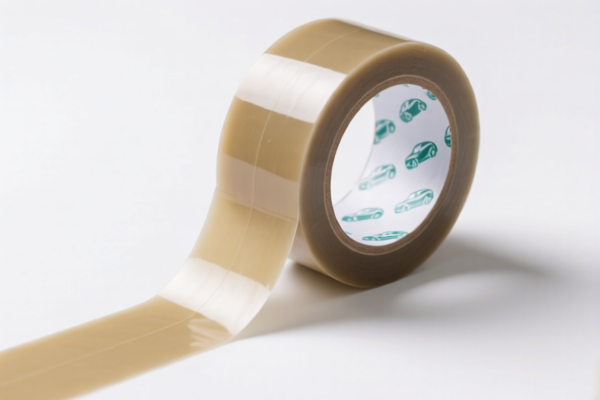


AI Analysis
🚗 Other Plastic Self-Adhesive Automotive Tape (Plastic Self-Adhesive Strips)
🌐 HS Code Reference & Customs Clearance Guide | 2026 Latest Tariff Analysis | Professional Strategy for Plastic Adhesives
📌 I. Product Definition & Classification: What Exactly Is "Plastic Self-Adhesive Tape"?
"Other Plastic Self-Adhesive Automotive Tape" generally refers to adhesive strips made primarily of plastic materials (PE, PVC, PP, etc.), used for automotive trim, sealing, decoration, or functional bonding. In international trade (specifically US Customs), these products fall into two main categories based on their form and specific use:
-
Self-Adhesive Plastic Strips/Films (Chapter 39.19):
- Defined as rolled goods (strips, bands, tapes) that are self-adhesive on one side.
- Key characteristic: The primary identity is the plastic film/strip itself, coated with adhesive.
- Often classified under 3919.10 (Self-adhesive plates, sheets, film, foil, tape, strip, and other flat shapes).
-
Other Plastic Articles (Chapter 39.26):
- If the product is considered a finished article (e.g., a specific trim piece, a non-standard strip not fitting the "flat shape" definition) or if it is not primarily a "self-adhesive plastic sheet."
- Often classified under 3926.90 (Other articles of plastics and articles of other materials of headings 3901 to 3914).
⚠️ Key Distinction Point:
- If it is a roll of plastic strip with adhesive → Likely 3919.10.
- If it is a pre-cut trim piece or a specialized plastic part → Likely 3926.90.
- If it is a paper-based tape covered with plastic → Likely 4811.59.
📦 II. HS Code Classification Details (Based on Provided Data)
| HS Code | Product Description | Applicability & Logic | Tax Rate |
|---|---|---|---|
3919.10.20.55 |
Other plastic self-adhesive strips, material: plastic, form: strip/band, use: self-adhesive. Belongs to "Other" category. | Primary Choice for Rolls. If the product is a standard self-adhesive plastic tape/strip in roll form. | 40.8% |
3926.90.99.05 |
Other plastic self-adhesive strips, material: plastic, form: self-adhesive strip. Fits the "Catch-all" category. | Alternative for Non-Standard Strips. Used if it doesn't fit 3919 precisely or is considered a general plastic article. | 22.8% |
3926.90.99.89 |
Other plastic self-adhesive strips, material: plastic. Classified as "Other plastic articles not elsewhere specified." | Broader Catch-All. For plastic automotive trims/adhesives not specifically listed elsewhere in 3926. | 22.8% |
3919.90.50.60 |
Automotive exterior plastic self-adhesive tape, material: plastic, form: self-adhesive tape, use: automotive exterior. | Specific Automotive Use. If the product is explicitly marketed and used for automotive exterior applications. | 40.8% |
4811.59.40.40 |
Other plastic self-adhesive strips, form: strip, covered with plastic material. Belongs to "Other" category. | Paper/Substrate Hybrid. If the base material is paper or paperboard but covered/laminated with plastic. | 35.0% |
🔍 Important Note:
- The tax rates vary significantly (22.8% to 40.8%).
- 3919 codes (tapes/strips) generally face higher additional tariffs than 3926 codes (other articles) in this specific dataset.
- 4811 applies only if the backing is paper-based, not pure plastic.
💰 III. 2026 Latest Tariff Rate Breakdown (Including Additional Duties)
✅ Applicable Country: United States (US)
✅ Origin: China (CN)
✅ Effective Time: Current rates include Section 301 and IEEPA adjustments.
🎯 1. 3919.10.20.55 & 3919.90.50.60 —— Self-Adhesive Plastic Strips/Tapes
(Tax Rate: 40.8%)
| Item | Content |
|---|---|
| Base Tariff | 5.8% (ad valorem) |
| Section 301 Additional Tariff | +25.0% |
| Section 122 Tariff (IEEPA) | +10.0% |
| Total Tax Rate | 40.8% |
| Tax Calculation | CIF Value × 40.8% |
| De Minimis Exemption | ❌ Not Available (Deny De Minimis) |
| Legal Basis Path | USITC:3919.10.20.55 → Footnote: 301 Additional Tariff → IEEPA: 122 Clause |
📌 Explanation:
- Base Rate (5.8%): Standard MFN rate for self-adhesive plastics.
- Section 301 (+25%): Major tariff hike on Chinese goods under Trade Act of 1974 Section 301.
- Section 122 (+10%): Specific additional tariff applied to certain Chinese imports (often related to national security or specific trade remedies).
- Total 40.8% is very high. This erodes profit margins significantly.
🎯 2. 3926.90.99.05 & 3926.90.99.89 —— Other Plastic Articles
(Tax Rate: 22.8%)
| Item | Content |
|---|---|
| Base Tariff | 5.3% (ad valorem) |
| Section 301 Additional Tariff | +7.5% |
| Section 122 Tariff (IEEPA) | +10.0% |
| Total Tax Rate | 22.8% |
| Tax Calculation | CIF Value × 22.8% |
| De Minimis Exemption | ❌ Not Available |
| Legal Basis Path | USITC:3926.90.99.05 → Footnote: 301 Additional Tariff → IEEPA: 122 Clause |
📌 Explanation:
- Base Rate (5.3%): Lower base rate for "other plastic articles."
- Section 301 (+7.5%): Lower additional tariff tier compared to 3919.
- Section 122 (+10%): Same additional tariff as above.
- Total 22.8% is moderate but still significant.
- Strategy: If the product can be legitimately classified under 3926 instead of 3919, savings of ~18% can be achieved.
🎯 3. 4811.59.40.40 —— Paper-Based Tape with Plastic Coating
(Tax Rate: 35.0%)
| Item | Content |
|---|---|
| Base Tariff | 0.0% (ad valorem) |
| Section 301 Additional Tariff | +25.0% |
| Section 122 Tariff (IEEPA) | +10.0% |
| Total Tax Rate | 35.0% |
| Tax Calculation | CIF Value × 35.0% |
| De Minimis Exemption | ❌ Not Available |
| Legal Basis Path | USITC:4811.59.40.40 → Footnote: 301 Additional Tariff → IEEPA: 122 Clause |
📌 Explanation:
- Base Rate (0%): Paper products often have lower base rates.
- Section 301 (+25%): High additional tariff.
- Total 35.0%: Falls in the middle. Only applicable if the backing is paper. If it’s pure plastic, this code is incorrect.
🛠️ IV. Customs Clearance Practical Advice (Battle-Tested Pitfall Avoidance)
✅ 1. Required Documentation Checklist (Non-Negotiable)
| Document | Mandatory | Notes |
|---|---|---|
| ✅ Product Specification Sheet | ✔️ | Must specify material composition (e.g., "100% PE," "PVC with adhesive backing"). |
| ✅ Product Photos | ✔️ | Show the roll, the cross-section (to prove plastic vs. paper backing), and adhesive side. |
| ✅ Commercial Invoice | ✔️ | Must clearly describe product as "Plastic Self-Adhesive Tape/Strip" or "Plastic Trim." Avoid vague terms like "Tape" alone. |
| ✅ Material Safety Data Sheet (MSDS) | ✔️ | Required for hazardous materials or adhesive components. |
| ✅ Certificate of Origin (CO) | ✔️ | Proves Chinese origin (triggering tariffs). |
| ✅ Usage Statement | ✔️ | Explicitly state if it is for "Automotive Exterior Trim," "General Industrial," or "Sealing." |
✅ 2. Declaration Tips (Key Mantras)
🔥 "Material Defines Code, Form Defines Chapter!"
| Scenario | Correct Declaration | Wrong Practice | Consequence |
|---|---|---|---|
| Roll of plastic strip | "Plastic Self-Adhesive Strip, 3919.10.20.55" | Declare as "Other Plastic Article" | Under/Over-valuation risk; misclassification penalty. |
| Pre-cut automotive trim | "Plastic Automotive Trim, 3926.90.99.05" | Declare as "Self-Adhesive Tape" | May be audited for not being a "flat shape." |
| Paper tape with plastic layer | "Paper Tape with Plastic Coating, 4811.59.40.40" | Declare as "Plastic Tape" | If audited, customs may reclassify to 4811 and assess penalties. |
| Automotive Specific Use | "Automotive Exterior Self-Adhesive Tape, 3919.90.50.60" | No usage specified | May default to general 3919.10 (same rate, but specificity helps). |
✅ 3. Special Case Handling
| Scenario | Recommendation |
|---|---|
| Ambiguous Material | If it’s a composite (e.g., fabric+plastic), provide detailed layer-by-layer breakdown. Customs may classify based on the essential character. |
| Low-Value Shipments | ❌ Do Not Rely on De Minimis. Rates are too high, and enforcement is strict. Always pay duties. |
| Pre-Cut vs. Roll | Pre-cut pieces are more likely to be 3926 (other articles), while rolls are 3919 (self-adhesive strips). Choose the code that matches the form at import. |
| Paper Backing | If the backing is paper, use 4811. Do not use 3919/3926 unless the plastic layer is dominant and considered the essential material. |
🌍 V. Global Market Clearance Comparison (2026 Latest)
| Country/Region | Recommended HS Code | Tariff Rate | Certification | Notes |
|---|---|---|---|---|
| 🇺🇸 USA | 3919.10.20.55 / 3926.90.99.05 |
22.8% – 40.8% | N/A | High tariffs due to Section 301 & 122. |
| 🇨🇳 China | 3919.10.20.55 |
~5% | CCC (if applicable) | Low duty, but export taxes may apply. |
| 🇪🇺 EU | 3919.10.00.00 |
~5-7% | REACH, RoHS | No Section 301 equivalent. |
| 🇯🇵 Japan | 3919.90.00.00 |
~5-8% | JIS | Moderate duty. |
| 🇨🇦 Canada | 3919.10.00.00 |
~5% | N/A | Moderate duty. |
📌 Conclusion:
- USA is the most expensive market for these products due to Section 301 and 122 tariffs.
- EU/Japan/Canada are significantly cheaper.
- Strategy: If exporting to the US, consider shifting production to Vietnam, Mexico, or Thailand to avoid Chinese-origin tariffs (if applicable).
📌 VI. Common Mistakes & Pitfalls (Blood Lessons)
❌ Mistake 1: Declaring "Plastic Tape" without specifying if it’s a roll or pre-cut.
👉 Result: Customs may choose the highest tax code (3919) or audit for misclassification.
❌ Mistake 2: Using 3926 for rolls of adhesive tape.
👉 Result: Customs will reclassify to 3919, assessing additional duties + penalties.
❌ Mistake 3: Ignoring the backing material (Paper vs. Plastic).
👉 Result: If it’s paper-based, using 3919 is wrong. Use 4811 to potentially save on base rate (though total tax is still high).
❌ Mistake 4: Assuming "Automotive Use" lowers tariff.
👉 Result: No tariff reduction for automotive use in HS classification. It may just specify the subheading (e.g., 3919.90).
✅ Correct Practice:
"Plastic Self-Adhesive Strip, 3mm x 10m Roll, PE Material, Backing: Adhesive, Use: Automotive Interior Trim"
(With supporting photos and specs)
🎯 VII. Conclusion: Precise Classification Saves Money!
🎯 Remember Mantras:
🔹 "Rolls are 3919, Articles are 3926!"
🔹 "Paper backing means 4811, Plastic means 39XX!"
🔹 "Section 301 and 122 add up to 35-40%!"
🔹 "Pre-cut may be 3926, rolls are 3919!"
📌 Tips:
- Apply for Advance Rulings from US Customs (CBP) if you are unsure about the classification.
- Keep Samples for inspection.
- Consider Supply Chain Diversification if exporting to the US, as tariffs are prohibitive.
📣 Immediate Action:
📞 Contact your freight forwarder + Provide product specs + Verify material composition
🚀 Ensure smooth customs clearance, minimize duty costs, and maximize profit!
✨ Professional Clearance Starts with Accurate Classification!
💼 Every cent saved is a cent earned!
Customer Reviews
About HS Code Classification
The Harmonized System (HS) is an internationally standardized nomenclature developed by the World Customs Organization (WCO) to classify traded products. Over 200 countries use the HS system as the basis for customs tariffs, trade statistics, and import/export regulations.
Each HS code follows a hierarchical structure:
- Chapter (2 digits) — Broad category of goods (e.g., Chapter 84: Machinery and Mechanical Appliances)
- Heading (4 digits) — More specific grouping within the chapter
- Subheading (6 digits) — Internationally standardized breakdown, used by all WCO member countries
- National subdivisions (8-10 digits) — Country-specific extensions for further classification, such as US HTSUS 10-digit codes
Correct HS code classification is essential for smooth customs clearance, accurate duty payment, and compliance with trade regulations. Misclassification can lead to customs delays, overpayment of duties, or penalties.
When importing from CN to US, the applicable tariff rates may include:
- Most-Favored-Nation (MFN) rate — The standard duty rate applied to WTO members
- General rate — Applied to countries without trade agreements
- Trade remedy duties — Additional tariffs such as Section 301 (anti-dumping), Section 232 (national security), or countervailing duties
The information provided on this page is for reference purposes only. For official classification, please consult with your local customs authority or a licensed customs broker.