Other Plastic Self Adhesive Film
CN → US| HS Code | Tariff Rate | Origin | Destination | Doc |
|---|---|---|---|---|
| 4811594040 | 35.0% | CN | US | Official Doc |
| 3919102055 | 40.8% | CN | US | Official Doc |
| 3926909989 | 22.8% | CN | US | Official Doc |
| 3926909905 | 22.8% | CN | US | Official Doc |
| 3919905010 | 40.8% | CN | US | Official Doc |
Product Images
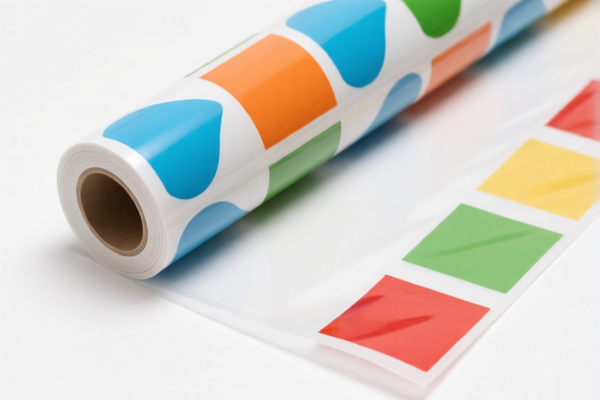

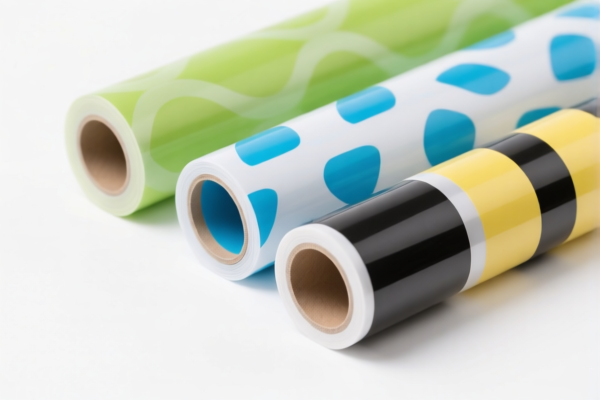

AI Analysis
🧪 Self-Adhesive Plastic Film (Other Plastic Self Adhesive Film)
🌐 HS Code Reference & Customs Clearance Guide | 2026 Latest Tariff Analysis | Professional Clearance Strategy
📌 Part 1: Product Definition & Classification: Do You Really Understand "Self-Adhesive Plastic Film"?
Self-adhesive plastic film is a ubiquitous material used in packaging, labeling, decoration, and industrial applications. In international trade, classification depends heavily on the material base (Plastic vs. Paper with Plastic Coating) and form (Sheet vs. Roll/Strip).
⚠ Key Distinction Points:
- If the backing material is PLASTIC (e.g., PE, PP, PVC, PET) → Belongs to Chapter 39 (Plastics).
- If the backing material is PAPER coated with Plastic → Belongs to Chapter 48 (Papier).
- "Self-Adhesive" implies it has a pressure-sensitive adhesive layer, which often pushes classification towards heading 3919 (Plastics, self-adhesive) rather than general film 3920/3921.
📦 Part 2: Detailed HSC Code Breakdown (Based on Provided Data)
| HSC Code | Product Description | Reasoning / Match Summary | Total Tax Rate |
|---|---|---|---|
| 4811.59.40.40 | Paper products, coated/covered with plastic | Match Basis: The term "strip" (条) aligns with the shape requirement; "Other" matches "Other class"; common sense infers it is a paper product coated with plastic. No material conflict. | 35.0% |
| 3919.10.20.55 | Self-adhesive plastic strips/rolls | Match Success: "Plastic" confirms material; "Self-adhesive strip" (自粘条) fits the form (strip/roll) and use (self-adhesive); falls under "Other" category. | 40.8% |
| 3926.90.99.89 | Other plastic articles | Match Basis: "Plastic" confirms material; "Self-adhesive strip" is an article not specifically listed elsewhere, fitting the "Other" catch-all definition. | 22.8% |
| 3926.90.99.05 | Other plastic articles (specific sub-category) | Match Success: "Plastic" material matches; "Self-adhesive strip" is a specific use under plastic articles; no conflict with specific excluded uses (like labware). Fits the catch-all logic. | 22.8% |
| 3919.90.50.10 | Other plastic plates, sheets, film, etc. | Match Success: "Plastic" matches material; "Self-adhesive" and "Strip" (as flat shape) match form; "Other" category has no obvious conflict with basic characteristics (plastic, flat shape). | 40.8% |
🔍 Critical Insight:
- Codes 3919.10.20.55 and 3919.90.50.10 carry a 40.8% total tax rate. This is due to the "Self-Adhesive" nature being classified under Heading 3919, which often attracts higher duties in specific trade contexts.
- Codes 3926.90.99.89 and 3926.90.99.05 offer a lower 22.8% rate. This suggests that if the product can be classified as a generic "Other Plastic Article" rather than a "Self-Adhesive Plastic Sheet/Film," it may benefit from lower duties.
- Code 4811.59.40.40 at 35.0% applies only if the base material is PAPER, not plastic. If the product is fully plastic, this code is incorrect.
💰 Part 3: 2026 Latest Tariff Rate Detail (Including Surcharges)
✅ Applicable Country: USA (US)
✅ Origin: China (CN)
✅ Effective Date: Post-2025 Import Rules (Based on Data Provided)
🎯 1. High Tax Bracket: 40.8%
Applicable HSCs: 3919.10.20.55, 3919.90.50.10
| Item | Detail |
|---|---|
| Basic Tariff | 5.8% |
| Section 301 Surcharge | +25.0% |
| Section 122 Tariff | +10.0% |
| Total Effective Rate | 40.8% |
| Calculation Basis | CIF Value × 40.8% |
| De Minimis Exemptions | ❌ Not Applicable (High risk of denial) |
| Legal Basis | USITC General Rate + Section 301 (Footnote) + Section 122 (If applicable) |
📌 Explanation:
- The 25% Section 301 tariff is the primary driver for Chinese-origin plastics.
- The 10% Section 122 tariff may apply depending on current administrative rules for specific plastic goods.
- Total 40.8% is a high barrier to entry. Cost calculation must account for this fully.
🎯 2. Medium Tax Bracket: 35.0%
Applicable HSC: 4811.59.40.40
| Item | Detail |
|---|---|
| Basic Tariff | 0.0% |
| Section 301 Surcharge | +25.0% |
| Section 122 Tariff | +10.0% |
| Total Effective Rate | 35.0% |
| Calculation Basis | CIF Value × 35.0% |
📌 Explanation:
- This code is for PAPER products coated with plastic.
- If your product is 100% Plastic, this classification is risky and may be rejected by customs, leading to reclassification to a higher-taxed code or penalty.
- Only use if the backing is indeed paper/cardboard.
🎯 3. Low Tax Bracket: 22.8%
Applicable HSCs: 3926.90.99.89, 3926.90.99.05
| Item | Detail |
|---|---|
| Basic Tariff | 5.3% |
| Section 301 Surcharge | +7.5% |
| Section 122 Tariff | +10.0% |
| Total Effective Rate | 22.8% |
| Calculation Basis | CIF Value × 22.8% |
| Strategic Value | ✅ Best Cost Option (If eligible) |
📌 Explanation:
- This is the most cost-effective option for plastic films.
- It classifies the item as "Other Plastic Articles" (Chapter 39, Heading 3926).
- Risk: Customs may argue that "Self-Adhesive Film" specifically belongs under Heading 3919 (which has higher rates).
- Defense: You must prove it is not "readily identifiable" as a standard self-adhesive sheet/film under 3919, or that it has a specific industrial use not covered by 3919.
🛠 Part 4: Customs Clearance Practical Advice (Pitfall Avoidance)
✅ 1. Document Checklist (Non-Negotiable)
| Document | Required? | Note |
|---|---|---|
| ✅ Product Specification Sheet | ✔ | Must specify: Material (100% Plastic vs. Paper+Plastic), Adhesive Type, Thickness, Width, Roll/Sheet form. |
| ✅ Material Composition Statement | ✔ | Crucial for distinguishing between Ch. 39 (Plastic) and Ch. 48 (Papier). |
| ✅ Product Photos | ✔ | Show cross-section if possible to prove no paper backing. |
| ✅ Commercial Invoice | ✔ | Clear description: "Plastic Self-Adhesive Film, 100% PE, No Paper Base". |
| ✅ Packing List | ✔ | Weight and dimensions for CIF calculation. |
✅ 2. Declaration Strategy (Key Tactics)
🔥 "Material First, Form Second, Adhesive Third!"
| Scenario | Recommended HSC | Reasoning |
|---|---|---|
| 100% Plastic Film, Self-Adhesive | Try 3926.90.99.89 (22.8%) first. If challenged, accept 3919.10.20.55 (40.8%). |
Argue it's a "specialty plastic article" rather than standard adhesive film. |
| 100% Plastic Film, Self-Adhesive (Standard Form) | 3919.10.20.55 or 3919.90.50.10 (40.8%) |
If it clearly looks like tape or standard adhesive sheet, customs will likely force this code. |
| Plastic-Coated Paper Strip | 4811.59.40.40 (35.0%) |
Only if paper base is dominant and clear. |
| Mixed Material (e.g., Plastic + Aluminum + Adhesive) | Complex, likely 3920 or 3921 + Section 301 |
Consult a customs broker for specific composition analysis. |
✅ 3. Special Considerations
| Situation | Advice |
|---|---|
| "Other" in Name | Using "Other" in description doesn't guarantee classification under 3926. It must not fit better in 3919. |
| Section 122 Tariff | Verify if the 10% surcharge is currently active for your specific plastic sub-category in 2026. |
| Pre-Ruling | Highly Recommended. Request an Advance Ruling from CBP for HSC 3926.90.99.89 to lock in the 22.8% rate. |
| Origin Labeling | Ensure "Made in China" is clearly marked. US origin plastics may have different rates (but data assumes CN origin). |
🌍 Part 5: Global Market Comparison (2026 Outlook)
| Market | Typical HSC for Plastic Adhesive Film | Est. Duty (China Origin) | Notes |
|---|---|---|---|
| 🇺🇸 USA | 3919 or 3926 |
22.8% – 40.8% | Highly sensitive to Section 301 & 122. |
| 🇪🇺 EU | 3919 |
~0-4% + VAT | Generally lower tariffs, but strict REACH/RoHS. |
| 🇨🇳 China | 3919 |
0-5% | Export market, no anti-dumping usually. |
| 🇯🇵 Japan | 3919 |
0-6% | FTAs may reduce rates if eligible. |
📌 Conclusion:
- USA is the most expensive market for self-adhesive plastic films due to layered surcharges.
- Optimization Strategy: If possible, structure the product to fit 3926 (Other Plastic Articles) to save ~18% in duty vs. 3919.
📌 Part 6: Common Mistakes & Pitfall Guide
❌ Mistake 1: Assuming "Self-Adhesive" always means 3919.
👉 Reality: It can be 3926 if it’s a specialized article not listed in 3919.
👉 Risk: Underpaying duty if 3919 is forced, leading to back-taxes.
❌ Mistake 2: Classifying Plastic-Coated Paper as 3919.
👉 Reality: If base is paper, it’s 4811.
👉 Risk: Overpaying if 4811 (35%) is correct, or penalty if misclassified as Plastic (40.8%).
❌ Mistake 3: Using "Plastic Strip" for a Roll.
👉 Reality: Form matters. "Strip" may trigger specific subheadings in 3919.
👉 Risk: Incorrect subheading selection leading to audit flags.
✅ Best Practice:
"100% Polyethylene Self-Adhesive Film, Industrial Use, Non-Standard Form, Uncoated"
(Supports 3926 classification)
🎯 Part 7: Final Summary & Action Plan
🎯 Key Takeaway:
🔹 Cheapest Route: Try to classify under 3926.90.99.89/05 for 22.8% tax.
🔹 Safest Route: If it’s standard adhesive film, accept 3919 for 40.8% tax.
🔹 Wrong Route: Do not use 4811 if the product is 100% plastic.
📌 Immediate Actions:
1. Confirm Material: Is it 100% Plastic or Paper-based?
2. Define Form: Is it a standard roll/sheet or a specialized "other" article?
3. Apply for Pre-Ruling: For 3926 classification to mitigate risk.
4. Calculate Landed Cost: Include CIF + 22.8%~40.8% in your pricing model.
✨ Professional Clearance Starts with Accurate Classification!
💼 Every 1% of duty saved is pure profit gained!
Customer Reviews
About HS Code Classification
The Harmonized System (HS) is an internationally standardized nomenclature developed by the World Customs Organization (WCO) to classify traded products. Over 200 countries use the HS system as the basis for customs tariffs, trade statistics, and import/export regulations.
Each HS code follows a hierarchical structure:
- Chapter (2 digits) — Broad category of goods (e.g., Chapter 84: Machinery and Mechanical Appliances)
- Heading (4 digits) — More specific grouping within the chapter
- Subheading (6 digits) — Internationally standardized breakdown, used by all WCO member countries
- National subdivisions (8-10 digits) — Country-specific extensions for further classification, such as US HTSUS 10-digit codes
Correct HS code classification is essential for smooth customs clearance, accurate duty payment, and compliance with trade regulations. Misclassification can lead to customs delays, overpayment of duties, or penalties.
When importing from CN to US, the applicable tariff rates may include:
- Most-Favored-Nation (MFN) rate — The standard duty rate applied to WTO members
- General rate — Applied to countries without trade agreements
- Trade remedy duties — Additional tariffs such as Section 301 (anti-dumping), Section 232 (national security), or countervailing duties
The information provided on this page is for reference purposes only. For official classification, please consult with your local customs authority or a licensed customs broker.