Other Plastic Self Adhesive Medical Tape
CN → US| HS Code | Tariff Rate | Origin | Destination | Doc |
|---|---|---|---|---|
| 3926909905 | 22.8% | CN | US | Official Doc |
| 3919102055 | 40.8% | CN | US | Official Doc |
| 3926909989 | 22.8% | CN | US | Official Doc |
| 4811594040 | 35.0% | CN | US | Official Doc |
| 3919905060 | 40.8% | CN | US | Official Doc |
Product Images
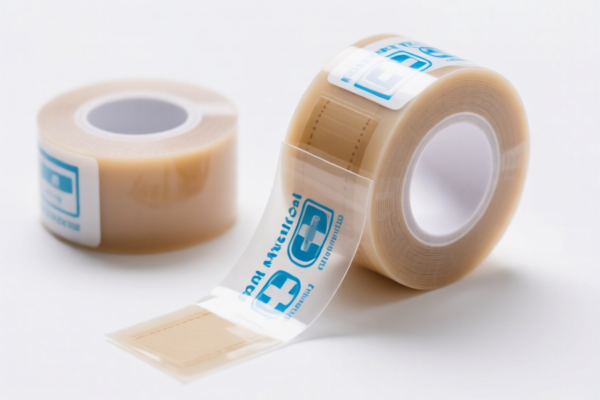


AI Analysis
🏥 Plastic Self-Adhesive Medical Tape (Medical Adhesive Strips/Strips)
🌐 HS Code Reference & Customs Clearance Guide | 2026 Latest Tariff Analysis | Professional通关 Strategy
📌 I. Product Definition & Classification: What Exactly is "Plastic Self-Adhesive Tape"?
Plastic self-adhesive medical tape is a broad category of adhesive products used in healthcare for securing dressings, devices, or bandages. In international trade, it is rarely classified as a single HS Code because material composition, physical form (strip vs. roll/film), and substrate (pure plastic vs. coated paper) dictate the tariff rate.
Two Main Categories: 1. Pure Plastic Adhesive Tape: Made entirely of synthetic polymers (PVC, PE, PU). Classified under Chapter 39 (Plastics). 2. Paper/Plastic Composite Tape: Often looks like plastic but has a paper base coated with plastic. Classified under Chapter 48 (Paper).
⚠️ Critical Distinction:
- If it is 100% plastic and in strip form → Likely 3926.90.99
- If it is 100% plastic and in roll/film form for self-adhesion → Likely 3919.10.20
- If it is paper coated with plastic → Likely 4811.59.40
📦 II. HS Code Classification Details (2026 Latest Tariff Matrix)
| HS Code | Product Description | Application Scenario | Material/Form Key |
|---|---|---|---|
3926.90.99.05 |
Other plastic articles: Plastic self-adhesive strips, other | General medical tape, purely plastic strips | ✅ Pure Plastic, Strip Form |
3919.10.20.55 |
Self-adhesive plates, sheets, film, tape, strip and other forms of plastic | Plastic adhesive strips/rolls for medical use | ✅ Pure Plastic, Strip/Roll Form |
3926.90.99.89 |
Other plastic articles: Other plastic self-adhesive articles (catch-all) | Unclassified plastic adhesive items | ✅ Pure Plastic, Generic |
4811.59.40.40 |
Paper/paperboard articles: Paper coated with plastic, self-adhesive | Paper-based medical tape with plastic backing/coating | ⚠️ Paper Base + Plastic Coating |
3919.90.50.60 |
Other self-adhesive plastic plates, sheets, film, tape: Colored | Colored plastic medical strips | ✅ Pure Plastic, Colored |
🔍 Key Reminder:
- Medical Function ≠ Exemption: Being "medical" does not automatically change the HS code. It is still governed by material (Chapter 39/48). - "Strip" vs. "Other": If the product is physically a narrow strip,3926or3919are preferred. If it's a wide sheet,3919is more common. - Paper vs. Plastic: If the backing is paper (even if coated), it falls under 4811, not 39. This is a common customs audit trap.
💰 III. 2026 Latest Tariff Rate Breakdown (Including Additional Duties)
✅ Applicable Country: United States (US)
✅ Country of Origin: China (CN)
✅ Effective Date: Post-2025 Tariff Regime (Including Section 301 & 122)
🎯 1. 3926.90.99.05 & 3926.90.99.89 —— Pure Plastic Self-Adhesive Strips (Catch-All)
These codes fall under "Other Articles of Plastics." They are subject to standard MFN rates plus significant retaliatory tariffs.
| Item | Content |
|---|---|
| Base Tariff | 5.3% (ad valorem) |
| Retaliatory Tariff (Section 301) | +7.5% |
| Section 122 Tariff | +10.0% (Targeting Chinese imports under specific emergency powers) |
| Total Effective Rate | 22.8% |
| Tax Calculation | CIF Value × 22.8% |
| De Minimis Exemption | ❌ Not Eligible (Most plastic adhesives are excluded from $800 de minimis) |
| Legal Authority Path | USITC:3926.90.99.05 → USITC:3926.90.99.89 → Section 301 Footnote → Section 122 Authority |
📌 Explanation:
- The 22.8% rate is a weighted average of base + 301 + 122 duties.
- This category is for "Other" plastic articles that don't fit neatly into specific sub-headings like tapes (3919).
🎯 2. 3919.10.20.55 & 3919.90.50.60 —— Self-Adhesive Plastic Tape (Rolls/Films)
These codes are for self-adhesive plastic products in strips, rolls, or films. They face the highest level of protectionism.
| Item | Content |
|---|---|
| Base Tariff | 5.8% (ad valorem) |
| Retaliatory Tariff (Section 301) | +25.0% |
| Section 122 Tariff | +10.0% |
| Total Effective Rate | 40.8% |
| Tax Calculation | CIF Value × 40.8% |
| De Minimis Exemption | ❌ Not Eligible |
| Legal Authority Path | USITC:3919.10.20.55 → Section 301 Footnote 9903.88.01 → Section 122 Authority |
📌 Warning:
- 40.8% is a very high tariff.
- This applies if your "tape" is classified as a roll or sheet of plastic adhesive, even if cut into strips later.
- Colored strips (3919.90.50.60) also fall into this high-tariff bucket.
🎯 3. 4811.59.40.40 —— Paper Coated with Plastic (Self-Adhesive)
This is for paper-based medical tapes with a plastic coating. Note the significantly lower base tariff.
| Item | Content |
|---|---|
| Base Tariff | 0.0% |
| Retaliatory Tariff (Section 301) | +25.0% |
| Section 122 Tariff | +10.0% |
| Total Effective Rate | 35.0% |
| Tax Calculation | CIF Value × 35.0% |
| De Minimis Exemption | ❌ Not Eligible |
| Legal Authority Path | USITC:4811.59.40.40 → Section 301 → Section 122 |
📌 Analysis:
- Even though the base is 0%, the 35% total is still steep due to 301/122 duties.
- Crucial: Do not misclassify paper-backed tape as pure plastic (3919) to avoid penalties. Customs will test the backing material.
🛠️ IV. Customs Clearance Practical Advice (Pitfall Avoidance)
✅ 1. Documentation Checklist (Mandatory)
| Document | Must Provide | Purpose |
|---|---|---|
| ✅ Material Composition Report | ✔️ | Must specify % of Plastic vs. Paper. Critical for Chapter 39 vs. 48. |
| ✅ Product Photos | ✔️ | Show cross-section of the tape (adhesive side, backing, coating). |
| ✅ Medical Device Status | ✔️ | FDA Registration Number (if Class II/III). Helps clarify "medical" use. |
| ✅ Commercial Invoice | ✔️ | Clearly state "Plastic Self-Adhesive Tape" or "Paper-Coated Adhesive Tape." |
| ✅ Bill of Lading / Packing List | ✔️ | Ensure weight matches declaration. |
| ✅ Certificate of Origin | ✔️ | To verify Chinese origin for 301/122 duty assessment. |
✅ 2. Declaration Tips (Key Strategy)
🔥 "Material First, Form Second, Medical Context Third!"
| Situation | Correct Declaration | Wrong Practice |
|---|---|---|
| 100% PVC Tape | 3919.10.20.55 (if roll/strip) or 3926.90.99.05 (if other) |
Calling it "Adhesive Bandage" (may imply fabric/paper) |
| Paper Tape with Plastic Coating | 4811.59.40.40 |
Calling it "Plastic Tape" → False Declaration Risk |
| Cut Strips from a Roll | 3919.10.20.55 (Self-adhesive plastic) |
Declaring as "Cut Pieces" → May still be 3919 |
| Colored Strips | 3919.90.50.60 |
Generic "Plastic Tape" → May trigger higher scrutiny |
📌 Note:
- If the tape is pre-cut into strips (not on a roll),3926.90.99is often safer than3919, which implies "rolls/sheets."
- However, if it is manufactured as a strip for medical use, customs may still accept3919. Best Practice: Provide a cut diagram.
✅ 3. Special Circumstances
| Scenario | Handling Advice |
|---|---|
| OEM Medical Brand | Include FDA UDI (Unique Device Identifier) if required. Does not change HS, but proves medical use. |
| Hybrid Material (Fabric + Plastic) | If >50% plastic by weight, Chapter 39. If >50% fabric, Chapter 63. Audit Risk High! |
| Sterilized Tape | Declaration must state "Sterile." This does not change HS but requires additional health certs. |
| Low-Value Shipments | ❌ No De Minimis: Plastic adhesives are not eligible for $800 de minimis exemption under current rules. Pay duties upfront. |
🌍 V. Global Market Comparison (2026)
| Market | Recommended HS Code | Tariff Rate (China Origin) | Key Requirement | Note |
|---|---|---|---|---|
| 🇺🇸 USA | 3919.10.20.55 or 3926.90.99.05 |
22.8% – 40.8% | FDA + Section 301/122 | Highest Tariff. Plan margins accordingly. |
| 🇨🇳 China | 3919.10 or 3926.90 |
5-6% | CCC (if applicable) | No additional duties. Standard import. |
| 🇪🇺 EU | 3919.10 |
6.5% | CE + REACH | No Section 301. Lower cost than US. |
| 🇬🇧 UK | 3919.10 |
6.5% | UKCA | Post-Brexit rules apply. |
| 🇦🇺 Australia | 3919.10 |
5% | TGA (if medical device) | Free Trade Agreement may apply with China. |
📌 Conclusion:
- USA is the most expensive market for plastic medical tape due to Section 301 (25%) and Section 122 (10%).
- EU and Australia offer significantly lower duty burdens. Consider supply chain diversification (e.g., ship from Vietnam/Malaysia if possible, though origin rules apply) to mitigate US tariffs.
📌 VI. Common Errors & Pitfalls (Lessons Learned)
❌ Error 1: Classifying paper-backed tape as plastic.
👉 Consequence: Customs tests the product, finds paper, reclassifies to 4811, assesses 35% instead of estimated lower rate, plus penalties.
❌ Error 2: Declaring "Adhesive Bandages" without specifying material.
👉 Consequence: Ambiguity leads to delays. Customs may classify as "Textile" (Chapter 63) or "Plastic" (Chapter 39) based on discretion, often resulting in higher duties or inspection.
❌ Error 3: Ignoring Section 122 Tariff.
👉 Consequence: Underpaying duties by 10%. The USCBP aggressively audits plastic imports from China for Section 122 compliance.
❌ Error 4: Assuming De Minimis applies.
👉 Consequence: Package held at border, duties + storage fees charged. Plastic adhesives are excluded from the $800 exemption for Chinese goods.
✅ Correct Declaration Example:
"Plastic Self-Adhesive Medical Tape, 100% PVC, Clear, 25mm Width, Roll, Non-Sterile, Model X123"
HS Code:3919.10.20.55
Rate: 40.8%
🎯 VII. Conclusion: Professional Declaration Saves Money
🎯 Remember the Golden Rules:
🔹 "Paper vs. Plastic: Check the Backing!"
🔹 "Roll vs. Strip: 3919 vs. 3926?"
🔹 "US Market: Prepare for 40% Tax!"
🔹 "No De Minimis for Plastic Tape from China!"
📌 Pro Tip:
If your product is high-value or high-volume, consider applying for an Advance Ruling from USCBP to lock in the HS Code and duty rate before shipment. This provides legal certainty and avoids post-clearance audits.
📣 Immediate Action:
📞 Contact Customs Broker: Verify material composition (PVC vs. Paper).
📄 Prepare FDA Docs: Ensure medical device status is clear.
🚀 Plan for Tariffs: Factor 22.8%–40.8% into your US pricing strategy.
✨ Precise Classification is the Key to Smooth Customs Clearance!
💼 Don't Let Tariffs Eat Your Margins!
Customer Reviews
About HS Code Classification
The Harmonized System (HS) is an internationally standardized nomenclature developed by the World Customs Organization (WCO) to classify traded products. Over 200 countries use the HS system as the basis for customs tariffs, trade statistics, and import/export regulations.
Each HS code follows a hierarchical structure:
- Chapter (2 digits) — Broad category of goods (e.g., Chapter 84: Machinery and Mechanical Appliances)
- Heading (4 digits) — More specific grouping within the chapter
- Subheading (6 digits) — Internationally standardized breakdown, used by all WCO member countries
- National subdivisions (8-10 digits) — Country-specific extensions for further classification, such as US HTSUS 10-digit codes
Correct HS code classification is essential for smooth customs clearance, accurate duty payment, and compliance with trade regulations. Misclassification can lead to customs delays, overpayment of duties, or penalties.
When importing from CN to US, the applicable tariff rates may include:
- Most-Favored-Nation (MFN) rate — The standard duty rate applied to WTO members
- General rate — Applied to countries without trade agreements
- Trade remedy duties — Additional tariffs such as Section 301 (anti-dumping), Section 232 (national security), or countervailing duties
The information provided on this page is for reference purposes only. For official classification, please consult with your local customs authority or a licensed customs broker.