Other Plastic Self Adhesive Reflective Film
CN → US| HS Code | Tariff Rate | Origin | Destination | Doc |
|---|---|---|---|---|
| 3919102055 | 40.8% | CN | US | Official Doc |
| 3919905060 | 40.8% | CN | US | Official Doc |
| 3926909905 | 22.8% | CN | US | Official Doc |
| 3926909989 | 22.8% | CN | US | Official Doc |
| 4811594040 | 35.0% | CN | US | Official Doc |
Product Images

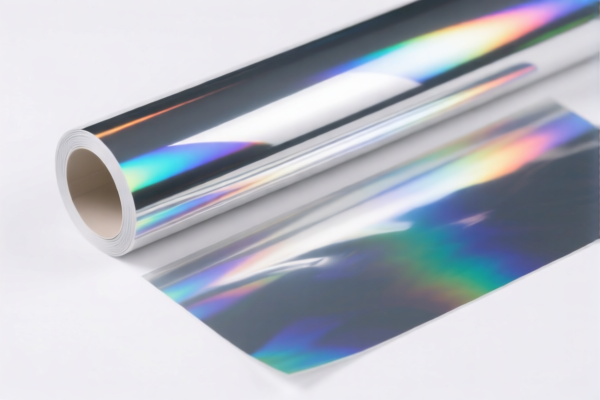
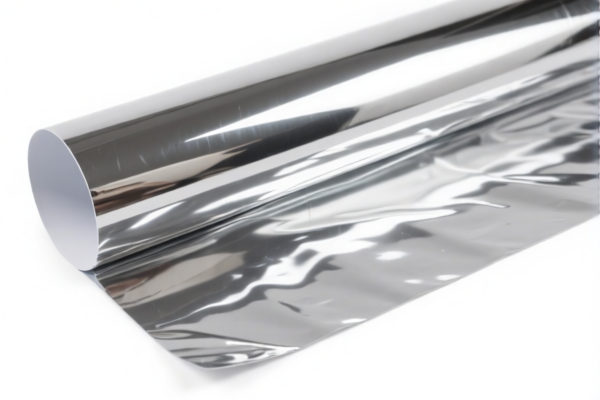
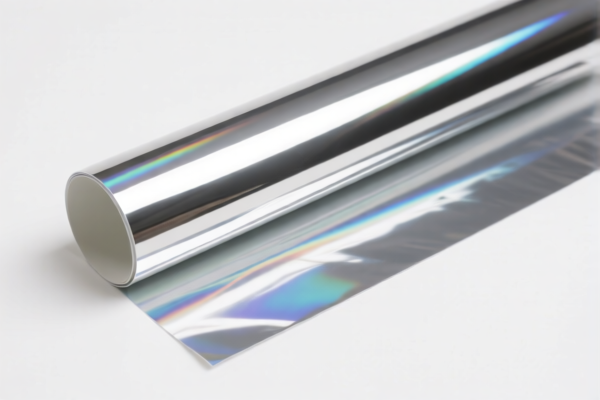
AI Analysis
🪞 Other Plastic Self-Adhesive Reflective Film (Reflective Tape/Film)
🌐 HS Code Reference & Customs Clearance Guide | 2026 Latest Tariff Analysis | Professional-Level Strategy for "Other Plastic Self-Adhesive Products"
📌 I. Product Definition & Classification: Do You Really Understand "Reflective Film"?
"Other plastic self-adhesive reflective film" is a specialized adhesive product composed of a plastic base (typically PET or PVC) coated with retro-reflective material (glass beads or micro-prisms) and an adhesive backing. In international trade, its classification depends heavily on whether it is defined as a "plastic self-adhesive product" or a "paper-based product with plastic coating", and its specific shape/usage.
Key Distinction Points: * Pure Plastic Base: If the backing is entirely plastic (PET/PVC), it falls under Chapter 39 (Plastics). * Paper-Based with Plastic Coating: If the core is paper with a plastic top layer, it might fall under Chapter 48 (Paper), specifically heading 4811 (Coated paper). * Shape & Form: Is it a continuous roll (film/tape) or a cut sheet? Most self-adhesive reflective products are supplied in rolls, favoring HS codes for "plastic self-adhesive products" or "other plastic articles."
⚠️ Critical Classification Insight:
- The phrase "Other plastic self-adhesive..." in the provided data suggests a focus on Chapter 39 items where the specific subheading isn't listed elsewhere.
- "Reflective" does not automatically create a new HS code; it is often considered a functional characteristic of the plastic base or coating.
- Misclassification Risk: Declaring as "Paper" (4811) when it is primarily plastic (39) can lead to duty discrepancies and customs holds.
📦 II. HS Code Classification Details (Based on Provided Data)
The provided data offers five potential HS Codes. Here is the breakdown of why each applies and the associated tax implications.
| HS Code | Product Description | Key Matching Criteria | Total Tax Rate* | Tax Breakdown (US/China Origin Context) |
|---|---|---|---|---|
| 3926.90.99.05 | Other Plastic Self-Adhesive Strip/Film Matches plastic material & self-adhesive form. Fits "Catch-All" Category. |
• Base: Plastic • Form: Strip/Film • Usage: General purpose, not specifically listed elsewhere. |
22.8% | • Base Duty: 5.3% • Add'l Duty: 7.5% • Section 301/122: 10% This is the most common "fallback" code for unlisted plastic adhesives. |
| 3919.10.20.55 | Other Plastic Self-Adhesive Strip/Film Matches plastic material & self-adhesive form. Fits "Other Category". |
• Base: Plastic • Form: Wide strips/sheets • Usage: Broad "other" plastic self-adhesive category. |
40.8% | • Base Duty: 5.8% • Add'l Duty: 25.0% • Section 301/122: 10% Higher duty due to specific subheading classification for broader plastic strips. |
| 3926.90.99.89 | Other Plastic Self-Adhesive Strip/Film Matches plastic material & unlisted article. Fits "Other" Category. |
• Base: Plastic • Form: Other unlisted plastic articles • Usage: Similar to 3926.90.99.05 but different 8-digit subcode. |
22.8% | • Base Duty: 5.3% • Add'l Duty: 7.5% • Section 301/122: 10% Same tax rate as 05, but different regulatory tracking code. |
| 4811.59.40.40 | Other Plastic Self-Adhesive Strip/Film Matches strip form & paper product with plastic coverage. |
• Base: Paper (with plastic top layer) • Form: Strip/Film • Usage: Self-adhesive paper products coated with plastic. |
35.0% | • Base Duty: 0.0% • Add'l Duty: 25.0% • Section 301/122: 10% Only applicable if the substrate is primarily paper, not plastic. |
| 3919.90.50.60 | Other Plastic Wall Decor Film Matches plastic material & film form. Fits "Other plastic flat-shaped products". |
• Base: Plastic • Form: Film (flat) • Usage: Specifically identified as "Wall Decor" or similar flat plastic sheets. |
40.8% | • Base Duty: 5.8% • Add'l Duty: 25.0% • Section 301/122: 10% If marketed as decorative wall film, this code may apply. High duty rate. |
📌 Note on Tax Rates:
- The "Total Tax" includes Base Duty, Additional Duties (likely Section 301 or similar trade remedy measures), and "122 Clause" duties (often referring to specific US trade enforcement actions against China).
- 22.8% is the most favorable rate among the options provided.
- 40.8% is the highest, indicating stricter categorization or higher penalty rates.
- 35.0% applies only if the product is classified as paper-based.
💰 III. Detailed Tariff Rate Explanation (Customs & Compliance)
✅ Applicable Context: Based on the data structure, this appears to reference US Import Duties on Goods from China (indicated by "122 Clause" and high "Add'l Duty" percentages typical of Section 301 tariffs).
✅ Origin: Likely China (CN) due to the "122 Clause" reference.
✅ Effective Date: Current trade policies (post-2025 adjustments).
🎯 1. 3926.90.99.05 & 3926.90.99.89 —— The "Safe Harbor" Option
| Item | Content |
|---|---|
| Base Duty | 5.3% (Ad Valorem) |
| Additional Duty | +7.5% (Likely specific trade measure or partial Section 301) |
| 122 Clause Duty | +10% (Targeted enforcement duty) |
| Total Rate | 22.8% |
| Calculation | CIF Value × 22.8% |
| De Minimis Exemption | ❌ Not Eligible (Values over $800 are subject to full duty) |
| Legal Basis | USITC:3926.90.99 → Footnote: 122 Clause |
📌 Interpretation:
- These two codes have identical tax rates but different 8-digit identifiers for statistical/regulatory tracking.
- Why 22.8%? It represents a middle-ground classification. It is not the most basic plastic item (which might be 0-5% base), but it avoids the highest penalty brackets.
- Recommendation: If your product is a standard self-adhesive reflective tape/film made of PET/PVC, this is likely the most cost-effective and defensible classification.
🎯 2. 3919.10.20.55 & 3919.90.50.60 —— The "High Penalty" Option
| Item | Content |
|---|---|
| Base Duty | 5.8% (Ad Valorem) |
| Additional Duty | +25.0% (Full Section 301 Tariff) |
| 122 Clause Duty | +10% |
| Total Rate | 40.8% |
| Calculation | CIF Value × 40.8% |
| De Minimis Exemption | ❌ Not Eligible |
| Legal Basis | USITC:3919.10 / 3919.90 → Footnote: 301 |
📌 Interpretation:
- Why 40.8%? These codes likely fall under "Other self-adhesive plates, sheets, film, tape, tape, rolls and strips" (3919) which are subject to the full 25% Section 301 tariff.
- Risk: If you classify your product here, you pay nearly double the duty compared to the 3926 codes.
- When to use: Only if the product is specifically excluded from 3926 or if customs authorities insist on 3919 due to its self-adhesive nature being "more fundamental" than "other plastic articles."
🎯 3. 4811.59.40.40 —— The "Paper-Based" Alternative
| Item | Content |
|---|---|
| Base Duty | 0.0% |
| Additional Duty | +25.0% (Full Section 301 Tariff) |
| 122 Clause Duty | +10% |
| Total Rate | 35.0% |
| Calculation | CIF Value × 35.0% |
| De Minimis Exemption | ❌ Not Eligible |
| Legal Basis | USITC:4811.59 → Footnote: 301 |
📌 Interpretation:
- Why 35.0%? The base duty is 0%, which is great, but the 25% Section 301 duty kills the savings.
- When to use: Only if your product has a paper backing (e.g., paper-backed reflective tape) rather than plastic. If it's plastic-backed, this classification is incorrect and may lead to penalties for misdeclaration.
🛠️ IV. Customs Clearance Practical Advice (Real-World Pitfall Guide)
✅ 1. Documentation Checklist (Non-Negotiable)
| Document | Must Provide? | Purpose |
|---|---|---|
| ✅ Product Specification Sheet | ✔️ | Detail the base material (PET vs. PVC vs. Paper), adhesive type, and reflective layer (beads vs. prisms). |
| ✅ Material Composition Statement | ✔️ | Explicitly state: "Base: 100% PET Plastic." This is crucial to avoid 4811 (Paper) classification. |
| ✅ Product Photos (Roll & Cut) | ✔️ | Show the adhesive side, the reflective side, and the roll structure. |
| ✅ Commercial Invoice | ✔️ | Must clearly describe as: "Plastic Self-Adhesive Reflective Film/Tape, For [Usage], HS Code 3926.90.99.05." |
| ✅ Packing List | ✔️ | Net weight, gross weight, number of rolls. |
| ✅ Certificate of Origin | ✔️ | Required for proving origin (China) and applying correct 122 Clause duties. |
✅ 2. Declaration Tips (Key Mnemonic)
🔥 "Plastic Base, Self-Adhesive, Reflective Film = 3926.90.99.05 (22.8%)"
❌ Avoid: "Self-Adhesive Tape" (Too vague, may lead to 3919 at 40.8%).
❌ Avoid: "Reflective Sign" (If not a finished sign, may be rejected).
| Scenario | Correct HS Code | Incorrect HS Code | Consequence of Error |
|---|---|---|---|
| Plastic (PET) Reflective Tape | 3926.90.99.05 (22.8%) |
3919.10.20.55 (40.8%) |
Overpaying ~18% in duties. |
| Paper-Backed Reflective Tape | 4811.59.40.40 (35.0%) |
3926.90.99.05 (22.8%) |
Underpayment risk (if misdeclared as plastic). |
| Wall Decor Plastic Film | 3919.90.50.60 (40.8%) |
3926.90.99.05 (22.8%) |
Underpayment risk (if specifically marketed as wall decor). |
✅ 3. Special Cases & Handling
| Situation | Handling Advice |
|---|---|
| Composite Product | If the reflective layer is glass beads (glass) on plastic, still classify as plastic (3926) unless the glass is the primary value driver (rare for thin films). |
| Sample vs. Bulk | Samples under $800 may qualify for De Minimis (Section 321), avoiding duties entirely. Declare as "Sample" clearly. |
| OEM Customization | Provide client design specs. If the design includes a specific "sign" shape, it might be classified as a "sign" (different HS), but "film/strip" is safer for bulk rolls. |
| US-Made vs. Chinese-Made | This analysis assumes Chinese Origin. If made in Vietnam/Mexico, IEEPA/Section 301 duties may be reduced or waived. Always check origin rules. |
🌍 V. Global Market Comparison (2026 Update)
| Market | Recommended HS Code | Est. Total Duty | Notes |
|---|---|---|---|
| 🇺🇸 USA | 3926.90.99.05 |
22.8% | Best balance of accuracy and cost. Avoid 3919 (40.8%) unless necessary. |
| 🇨🇳 China | 3926.90.99.90 |
~5-10% | Low entry barrier. Focus on quality compliance (RoHS/REACH if exporting to EU). |
| 🇪🇺 EU | 3919.90.90 |
0-6.5% | No Section 301 tariffs. Standard EU duty applies. Check for CE marking if applicable. |
| 🇯🇵 Japan | 3919.90.90 |
3-5% | Low duties. Focus on product safety standards. |
📌 Conclusion:
- USA is the most challenging market due to the "122 Clause" and high add'l duties.
- Choosing the right HS Code (3926 vs. 3919) can save you 18% in duties.
- Paper-based products (4811) are not necessarily cheaper due to the 25% Section 301 duty.
📌 VI. Common Errors & Pitfalls (Lessons Learned)
❌ Error 1: Declaring "Reflective Tape" without specifying "Plastic"
👉 Consequence: Customs may default to the highest duty rate (3919 at 40.8%) due to ambiguity.
👉 Fix: Always specify "Plastic Self-Adhesive Reflective Film."
❌ Error 2: Using 3919 for a product that fits 3926
👉 Consequence: Overpayment of ~18% in duties.
👉 Fix: Review the "Catch-All" nature of 3926.90.99.05. It is designed for items not elsewhere specified.
❌ Error 3: Misidentifying Paper vs. Plastic
👉 Consequence: If it's plastic but declared as paper (4811), you face underpayment penalties and potential audits.
👉 Fix: Conduct a material analysis. If the backing tears like plastic, it's plastic.
✅ Correct Declaration Example:
"Plastic Self-Adhesive Reflective Film, PET Base, Silver Reflective Coating, Roll Form, For Safety Marking, HS Code 3926.90.99.05, Origin: China"
🎯 VII. Conclusion: Precision in Classification, Profit in Compliance
🎯 Remember the Mnemonic:
🔹 "Plastic + Self-Adhesive + Unlisted = 3926.90.99.05 (22.8%)"
🔹 "Self-Adhesive Strip (Broad) = 3919 (40.8%) - Avoid if possible!"
🔹 "Paper + Plastic = 4811 (35.0%) - Only if truly paper-backed."
📌 Pro Tip:
If your volume is high, consider applying for a Binding Ruling (IBR) from US Customs and Border Protection (CBP) to lock in the 22.8% rate for your specific product. This provides legal certainty and protects against future audits.
📣 Immediate Action:
📞 Verify Material Composition (Plastic vs. Paper).
📄 Use HS Code 3926.90.99.05 for standard plastic reflective films.
📉 Save ~18% in duties by avoiding the 3919 classification.
✨ Smart Customs, Smarter Profits!
💼 Every decimal point in HS Code matters!
Customer Reviews
About HS Code Classification
The Harmonized System (HS) is an internationally standardized nomenclature developed by the World Customs Organization (WCO) to classify traded products. Over 200 countries use the HS system as the basis for customs tariffs, trade statistics, and import/export regulations.
Each HS code follows a hierarchical structure:
- Chapter (2 digits) — Broad category of goods (e.g., Chapter 84: Machinery and Mechanical Appliances)
- Heading (4 digits) — More specific grouping within the chapter
- Subheading (6 digits) — Internationally standardized breakdown, used by all WCO member countries
- National subdivisions (8-10 digits) — Country-specific extensions for further classification, such as US HTSUS 10-digit codes
Correct HS code classification is essential for smooth customs clearance, accurate duty payment, and compliance with trade regulations. Misclassification can lead to customs delays, overpayment of duties, or penalties.
When importing from CN to US, the applicable tariff rates may include:
- Most-Favored-Nation (MFN) rate — The standard duty rate applied to WTO members
- General rate — Applied to countries without trade agreements
- Trade remedy duties — Additional tariffs such as Section 301 (anti-dumping), Section 232 (national security), or countervailing duties
The information provided on this page is for reference purposes only. For official classification, please consult with your local customs authority or a licensed customs broker.