Other Plastic Sheets for Medical Use
CN → US| HS Code | Tariff Rate | Origin | Destination | Doc |
|---|---|---|---|---|
| 3926909950 | 22.8% | CN | US | Official Doc |
| 3926909989 | 22.8% | CN | US | Official Doc |
| 9022904000 | 35.9% | CN | US | Official Doc |
| 9018902000 | 35.0% | CN | US | Official Doc |
| 3926909989 | 22.8% | CN | US | Official Doc |
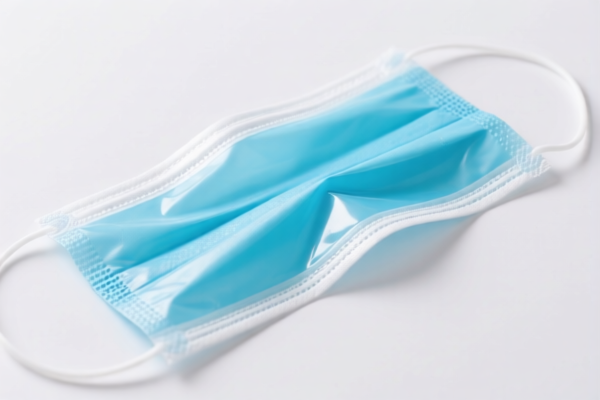
Product Images



AI Analysis
🏥 Other Plastic Sheets for Medical Use
🌐 HS Code Reference & Customs Clearance Guide | 2026 Latest Tariff Analysis | Professional Clearance Strategy
📌 I. Product Definition & Classification: What Exactly Are "Medical Plastic Sheets"?
In international trade, "Other Plastic Sheets for Medical Use" is a broad category. These are plastic components (usually in sheet, film, or roll form) made primarily of plastic, intended for medical applications but not strictly defined as finished medical devices or optical instrument parts in specific exclusions. They fall into two main classification logic paths:
1. General Plastic Products (The "Bottom-Line" Category):
If the plastic sheet is used for medical packaging, general protection, or non-specific medical accessories, and does not meet the strict definition of a medical device or optical instrument part, it is classified under the "Other Plastic Articles" residual clause.
2. Medical/Optical Instrument Parts (The "Specific Use" Category):
If the plastic sheet is a critical component of a medical device or optical instrument (e.g., part of a diagnostic unit), it may be classified under medical apparatus or optical instrument parts.
⚠️ Key Distinction Point:
- If it is a general plastic sheet/film (even if used in medical settings) without being a specific regulated device part → Chapter 39 (Other Plastic Articles)
- If it is a structural/part component of a medical machine or optical device → Chapter 90 (Optical/Medical Instruments)
📦 II. HS Code Classification Details (2026 Latest Tariff Authority Comparison)
| HS Code | Product Description | Applicable Scenario | Tax Rate | Tax Breakdown |
|---|---|---|---|---|
3926.90.99.50 |
Other Plastic Articles: Material: Plastic, Form: Sheet, Use: Medical. Classified under the residual clause for other plastic articles. | General medical plastic sheets, protective covers, non-specific medical plastic components. | 22.8% | Base: 5.3%, Additional: 7.5%, Section 122: 10% |
3926.90.99.89 (Case 1) |
Other Plastic Articles: Material: Plastic, Form: Sheet, Use: Medical. Not in specific exclusions, thus falls under other plastic articles. | Similar to above; emphasizes that even if used for medical purposes, it remains in Chapter 39 if not a specific device part. | 22.8% | Base: 5.3%, Additional: 7.5%, Section 122: 10% |
3926.90.99.89 (Case 2) |
Other Plastic Articles: Material: Plastic, Form: Sheet/Roll, Use: Medical. Classified under other plastic articles. | Plastic sheets in roll form used for medical applications. | 22.8% | Base: 5.3%, Additional: 7.5%, Section 122: 10% |
9022.90.40.00 |
Other Medical Apparatus: Material: Plastic, Form: Sheet, Use: Medical. Inferentially classified under the residual clause for other medical apparatus. | Plastic sheets that are deemed integral parts of medical apparatus (e.g., housing, internal structural sheets for machines). | 35.9% | Base: 0.9%, Additional: 25.0%, Section 122: 10% |
9018.90.20.00 |
Other Optical Instruments: Use: Medical, Material: Plastic, Form: Sheet. Classified as parts/accessories of optical instruments. | Plastic sheets used as parts of optical instruments (e.g., lenses, prisms, or housing for diagnostic optical devices). | 35.0% | Base: 0.0%, Additional: 25.0%, Section 122: 10% |
🔍 Key Reminder:
- The majority of general plastic sheets, even if "medical grade," fall under 3926.90.99.89/50 with a total tax of 22.8%.
- If the product is specifically a part of an optical instrument or medical apparatus, the tax jumps to 35.0% - 35.9% due to higher additional tariffs on these chapters.
- Do not misclassify general plastic rolls as optical parts unless there is clear evidence of integration into an optical device.
💰 III. 2026 Latest Tariff Rate Breakdown (Including Add-ons & Policy Surcharges)
✅ Applicable Country: United States (US)
✅ Origin: China (CN)
✅ Effective Time: Current rates apply to imports post-2025 policies
🎯 1. 3926.90.99.50 / 3926.90.99.89 —— General Plastic Sheets (Medical Use)
| Item | Content |
|---|---|
| Base Tariff | 5.3% (ad valorem) |
| Additional Tariff (Section 301/Other) | +7.5% |
| Section 122 Tariff | +10% |
| Total Tariff | 22.8% |
| Tax Calculation | CIF Value × 22.8% |
| De Minimis Eligibility | ❌ No (Subject to high tariffs) |
| Legal Path | USITC:3926.90.99.50 → Footnote: Additional Tariffs → Section 122: 10% |
📌 Explanation:
- The Base 5.3% is the standard Most Favored Nation (MFN) rate for other plastic articles.
- The +7.5% is an additional surcharge applied to Chinese-origin plastic articles.
- The +10% is the Section 122 tariff, specifically targeting steel, aluminum, and plastic products in certain contexts, or potentially a specific trade action.
- Total Cost: 22.8% is moderate compared to Chapter 90, but still significant for low-margin plastic goods.
🎯 2. 9022.90.40.00 —— Medical Apparatus Parts
| Item | Content |
|---|---|
| Base Tariff | 0.9% |
| Additional Tariff | +25.0% |
| Section 122 Tariff | +10% |
| Total Tariff | 35.9% |
| Tax Calculation | CIF Value × 35.9% |
| De Minimis Eligibility | ❌ No |
| Legal Path | USITC:9022.90.40.00 → Additional Tariff: 25% → Section 122: 10% |
📌 Note:
- The Base 0.9% is very low, but the +25% additional tariff drastically increases the cost.
- This classification is riskier for customs audits if the product is not clearly a medical device part.
🎯 3. 9018.90.20.00 —— Optical Instrument Parts
| Item | Content |
|---|---|
| Base Tariff | 0.0% |
| Additional Tariff | +25.0% |
| Section 122 Tariff | +10% |
| Total Tariff | 35.0% |
| Tax Calculation | CIF Value × 35.0% |
| De Minimis Eligibility | ❌ No |
| Legal Path | USITC:9018.90.20.00 → Additional Tariff: 25% → Section 122: 10% |
📌 Note:
- Even though the base is 0%, the 25% surcharge makes it more expensive than general plastic sheets.
- Only use this if the plastic sheet is a part of an optical instrument (e.g., a lens holder, optical filter housing).
🛠️ IV. Customs Clearance Practical Advice (Real-World Pitfall Guide)
✅ 1. Required Documents Checklist (All Mandatory)
| Document | Must Provide | Description |
|---|---|---|
| ✅ Product Specification Sheet | ✔️ | Detailed material composition (plastic type), dimensions, thickness, form (sheet/roll). |
| ✅ Product Photos | ✔️ | Clear images showing the item, packaging, and any labels. Distinguish if it’s a roll or flat sheet. |
| ✅ Usage Statement | ✔️ | Explain how it is used in medical contexts. Is it packaging? A device part? Protective cover? |
| ✅ Commercial Invoice | ✔️ | Clearly state "Plastic Sheet for Medical Use" and correct HS Code. |
| ✅ Packing List | ✔️ | Indicate if items are in rolls or sheets to match HS code descriptions. |
| ✅ Certificate of Origin | ✔️ | Proves Chinese origin for tariff calculation. |
✅ 2. Declaration Tips (Key Mantras)
🔥 "Form Matters: Sheet vs. Roll, Medical vs. General!"
| Scenario | Correct Declaration | Wrong Practice |
|---|---|---|
| Flat Plastic Sheet (General Medical) | 3926.90.99.89 (22.8%) |
Misdeclare as Optical Part → 35% |
| Plastic Sheet Roll (Medical) | 3926.90.99.89 (22.8%) |
Misdeclare as Sheet → Risk of discrepancy |
| Part of Medical Machine | 9022.90.40.00 (35.9%) |
Misdeclare as General Plastic → Low tax but high audit risk |
| Part of Optical Device | 9018.90.20.00 (35.0%) |
Misdeclare as General Plastic → Undervaluation risk |
✅ 3. Special Situation Handling
| Situation | Handling Advice |
|---|---|
| OEM Plastic Sheets | Provide customer order and design specs to prove specific medical use if claiming Chapter 90. |
| Mixed Packaging | If sheets and rolls are packed together, declare separately or choose the dominant form. |
| Medical Grade Certification | If claiming Chapter 90 (Medical/Optical), provide FDA or CE certification for the device, not just the material. |
| Section 122 Impact | All listed HS codes include the 10% Section 122 tariff. Ensure this is included in your cost calculations. |
🌍 V. Global Market Comparison (2026 Latest)
| Country/Region | Recommended HS Code | Total Tariff | Certification | Note |
|---|---|---|---|---|
| 🇺🇸 USA | 3926.90.99.89 |
22.8% | FDA (if device) | High additional tariffs on plastic |
| 🇨🇳 China | 3926.90.99.89 |
~5-10% | N/A | Lower import duties |
| 🇪🇺 EU | 3926.90.99 |
~0-4% | CE/MDR | No Section 122 equivalent |
| 🇬🇧 UK | 3926.90.99 |
~0-4% | UKCA | Post-Brexit rules apply |
📌 Conclusion:
- USA imposes the highest effective tariff on these products due to Section 122 and Additional Surcharges.
- Chapter 39 (Plastic) is the safest and most common classification for general medical plastic sheets.
- Chapter 90 (Medical/Optical) should only be used if the product is a clearly defined part of a device.
📌 VI. Common Errors & Pitfall Guide (Lessons Learned)
❌ Error 1: Declaring a plastic roll as a flat sheet
👉 Consequence: Customs may reject the description, leading to delays or reclassification.
Fix: Always specify "Sheet" or "Roll" in the declaration.
❌ Error 2: Misclassifying general plastic sheets as medical devices to avoid higher taxes
👉 Consequence: If audited, you may face penalties for incorrect classification.
Fix: Use 3926.90.99.89 (22.8%) for general sheets. It’s cheaper than Chapter 90.
❌ Error 3: Ignoring Section 122 in cost calculations
👉 Consequence: Underestimating landed cost by 10%.
Fix: Always include the 10% Section 122 tariff in your profit margin analysis.
❌ Error 4: Claiming 0% base tariff without justification for Chapter 90
👉 Consequence: High additional tariffs (25%) apply, making it more expensive than Chapter 39.
Fix: Verify if the product truly qualifies as an optical/medical instrument part.
✅ Correct Declaration Example:
"Plastic Sheets for Medical Packaging, Material: PVC, Form: Flat Sheets, Non-Sterile, HS Code: 3926.90.99.89"
🎯 VII. Conclusion: Professional Declaration Saves Money!
🎯 Remember the Mantra:
🔹 "General Plastic? Use 3926 (22.8%). Device Part? Use 9022/9018 (35%+)."
🔹 "Don't Over-Classify! Chapter 39 is cheaper for most medical plastic sheets."
📌 Pro Tip:
If your plastic sheets are not made in China, check for IEEPA exemptions or FTA benefits. For Chinese origin, the 22.8% (Plastic) vs. 35%+ (Medical/Optical) difference is critical.
Recommend applying for a Pre-Ruling (Advance Ruling) from US Customs if the product’s status is ambiguous.
📣 Immediate Action:
📞 Consult a licensed customs broker + Provide product photos + Request HS Code Pre-Ruling
🚀 Ensure smooth clearance, avoid penalties, and optimize your landed cost!
✨ Professional Clearance Starts with Accurate Classification!
💼 Every percent of tariff matters!
Customer Reviews
About HS Code Classification
The Harmonized System (HS) is an internationally standardized nomenclature developed by the World Customs Organization (WCO) to classify traded products. Over 200 countries use the HS system as the basis for customs tariffs, trade statistics, and import/export regulations.
Each HS code follows a hierarchical structure:
- Chapter (2 digits) — Broad category of goods (e.g., Chapter 84: Machinery and Mechanical Appliances)
- Heading (4 digits) — More specific grouping within the chapter
- Subheading (6 digits) — Internationally standardized breakdown, used by all WCO member countries
- National subdivisions (8-10 digits) — Country-specific extensions for further classification, such as US HTSUS 10-digit codes
Correct HS code classification is essential for smooth customs clearance, accurate duty payment, and compliance with trade regulations. Misclassification can lead to customs delays, overpayment of duties, or penalties.
When importing from CN to US, the applicable tariff rates may include:
- Most-Favored-Nation (MFN) rate — The standard duty rate applied to WTO members
- General rate — Applied to countries without trade agreements
- Trade remedy duties — Additional tariffs such as Section 301 (anti-dumping), Section 232 (national security), or countervailing duties
The information provided on this page is for reference purposes only. For official classification, please consult with your local customs authority or a licensed customs broker.