Other Plastic Signs
CN → US| HS Code | Tariff Rate | Origin | Destination | Doc |
|---|---|---|---|---|
| 3926909989 | 22.8% | CN | US | Official Doc |
| 3920991000 | 41.0% | CN | US | Official Doc |
| 3920995000 | 40.8% | CN | US | Official Doc |
| 3926400090 | 15.3% | CN | US | Official Doc |
| 3926909989 | 22.8% | CN | US | Official Doc |
Product Images
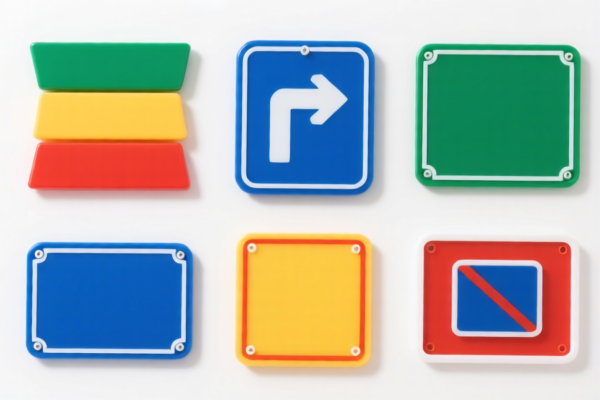
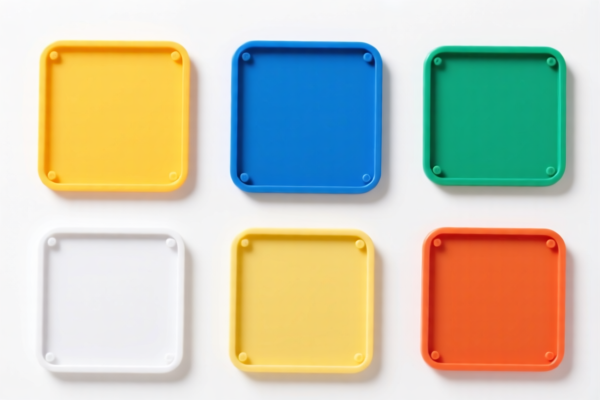

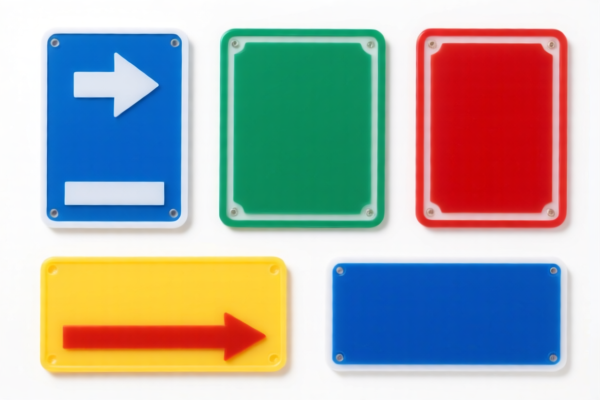
AI Analysis
🏷️ Other Plastic Signs (Plastic Signage)
🌐 HS Code Reference & Customs Clearance Guide | 2026 Latest Tariff Analysis | Professional Clearance Strategy
📌 Part I: Product Definition & Classification: Do You Really Understand "Plastic Signs"?
Plastic signs are ubiquitous in commercial, industrial, and public spaces, serving as key tools for branding, guidance, and information display. In international trade, they are primarily classified under Chapter 39 (Plastics and Articles Thereof). The critical distinction lies in their material structure and form factor, which determines whether they are treated as generic "articles" or specific "plates/sheets."
1. Generic Plastic Articles (Chapter 39.26):
Signs that are molded, cut, or assembled into specific shapes (e.g., 3D letters, framed signs, decorative plaques) that do not fit the definition of simple sheets.
2. Plastic Plates/Sheets/Foils (Chapter 39.20):
Signs manufactured from flat sheets of plastic (acrylic, PVC, polycarbonate) that are simply cut or printed, retaining the characteristics of "plates or sheets."
⚠️ Key Distinction Point:
- If the sign is a finished 3D object, decorated item, or complex assembly without a primary sheet-like structure → Classify under 3926.90.99.89 / 3926.40.00.90
- If the sign is essentially a flat sheet, film, or foil (even if printed/cut) → Classify under 3920.99.10.00 / 3920.99.50.00
📦 Part II: HS Code Classification Details (2026 Latest Tariff Authority Comparison)
| HS Code | Product Description | Application Scenario | Structural Characteristic |
|---|---|---|---|
3926.90.99.89 |
Other plastic articles (generic) | Standard plastic signs, nameplates, industrial labels not elsewhere specified | ✅ 3D/Molded/Assembled |
3926.40.00.90 |
Other articles of apparel and clothing accessories; other decorated articles | Decorative plastic signs, ornamental plaques, festive banners | ✅ Decorative/Ornamental |
3920.99.10.00 |
Other plates, sheets, film, foil and strip, of plastics | Flat plastic signboards, acrylic display panels, PVC cut-outs | ✅ Flat/Sheet-like |
3920.99.50.00 |
Other plates, sheets, film, foil and strip, of plastics | Two-tone plastic sheets (for engraving signs), layered plastic panels | ✅ Flat/Sheet-like (Special Material) |
🔍 Important Reminder:
- "Signs" made from carved or two-tone acrylic sheets are often scrutinized. If the value lies in the material form (the sheet itself), use 3920. If the value lies in the finished article (the sign shape/decoration), use 3926. - Decorative items (e.g., Halloween plastic signs, wedding decorations) have a favorable tax rate if classified as "Other decorated articles."
💰 Part III: 2026 Latest Tariff Rate Breakdown (Including Surtaxes & Policy Add-ons)
✅ Applicable Country: United States (US)
✅ Origin: China (CN)
✅ Effective Date: November 10, 2025 (and subsequent imports)
🎯 1. 3926.90.99.89 —— Other Plastic Articles (Generic Signs)
| Item | Content |
|---|---|
| Base Tariff | 5.3% (ad valorem) |
| Section 301 Surcharge | +7.5% |
| Section 122 Tariff | +10% (Under IEEPA) |
| Total Effective Rate | 22.8% |
| Tax Calculation | CIF Value × 22.8% |
| De Minimis Eligibility | ❌ Not Eligible (High value items usually exceed $800, but even if under, surtaxes often apply depending on enforcement) |
| Legal Basis Path | USITC:3926.90.99.89 → FOOTNOTE:301_LIST3 → IEEPA:Section122 |
📌 Explanation:
- This is the "catch-all" category for plastic signs that don't fit other specific niches. - 22.8% is a moderate-high rate. It is significantly lower than the "sheet" category because it is not subject to the steeper Section 301 rate (25%).
🎯 2. 3926.40.00.90 —— Other Decorated Articles (Decorative Signs)
| Item | Content |
|---|---|
| Base Tariff | 5.3% (ad valorem) |
| Section 301 Surcharge | 0.0% |
| Section 122 Tariff | +10% (Under IEEPA) |
| Total Effective Rate | 15.3% |
| Tax Calculation | CIF Value × 15.3% |
| De Minimis Eligibility | ❌ Not Eligible (Check individual case value) |
| Legal Basis Path | USITC:3926.40.00.90 → IEEPA:Section122 |
📌 Crucial Advantage:
- Lowest Tax Rate in the list! - If your plastic signs are decorative (e.g., ornamental wall hangings, festive decor, branded promotional gifts with aesthetic value), classify here to save 7.5% compared to the generic code. - Note: Must prove "decorative" nature. Simple functional signage (e.g., "Exit" sign) may not qualify.
🎯 3. 3920.99.10.00 & 3920.99.50.00 —— Other Plates, Sheets, Film, Foil (Flat Signs)
| Item | Content |
|---|---|
| Base Tariff | 6.0% (3920.99.10.00) / 5.8% (3920.99.50.00) |
| Section 301 Surcharge | +25% (Highest tier) |
| Section 122 Tariff | +10% (Under IEEPA) |
| Total Effective Rate | 41.0% (3920.99.10.00) / 40.8% (3920.99.50.00) |
| Tax Calculation | CIF Value × ~41% |
| De Minimis Eligibility | ❌ Not Eligible |
| Legal Basis Path | USITC:3920.99.10.00 → FOOTNOTE:301_LIST1 → IEEPA:Section122 |
📌 Warning:
- Highest Tax Rate! - If your sign is made from a single flat sheet of acrylic or PVC, it falls here. - Strategy: If possible, add mounting frames, 3D elements, or classify as "decorated articles" to drop from ~41% to 15-22%. -3920.99.50.00is for two-tone plastic sheets (often used for engraving signs). If you are importing raw two-tone sheets for further processing, this is the code. If you are importing the finished engraved sign, consider3926.90.99.89.
🛠️ Part IV: Customs Clearance Practical Advice (Real-World Pitfall Avoidance)
✅ 1. Documentation Checklist (Non-Negotiable)
| Document | Must Provide | Explanation |
|---|---|---|
| ✅ Product Photos | ✔️ | Clear shots of the sign (front, back, mounting hardware). Must show if it's 3D or flat. |
| ✅ Composition Analysis | ✔️ | % of plastic material, type (Acrylic, PVC, PE, etc.). |
| ✅ Function Description | ✔️ | Is it "decorative," "informational," or "industrial"? Crucial for 3926.40 vs 3926.90. |
| ✅ Commercial Invoice | ✔️ | Must match HS Code description exactly. Avoid vague terms like "Plastic Thing." |
| ✅ Packing List | ✔️ | Weight and dimensions are critical for freight and de minimis checks. |
✅ 2. Classification Strategy (Key Mantra)
🔥 "Flat Sheets = High Tax; 3D/Decorative = Lower Tax!"
| Scenario | Recommended HS Code | Estimated Tax | Why? |
|---|---|---|---|
| Flat Acrylic Sign (Simply cut/printed) | 3920.99.10.00 |
~41.0% | Treated as a "Plate/Sheet" under Sec 301. |
| Two-Tone Engraved Sign (Finished) | 3926.90.99.89 |
22.8% | Treated as an "Article," not just a sheet. |
| Wedding/Festive Plastic Decor | 3926.40.00.90 |
15.3% | Classified as "Decorated Article," exempt from Sec 301. |
| Generic Office Sign ("Exit", "Restroom") | 3926.90.99.89 |
22.8% | Standard plastic article. |
✅ 3. Special Considerations
| Scenario | Handling Advice |
|---|---|
| Importing Raw Two-Tone Sheets | Use 3920.99.50.00. If you import the finished sign, try 3926.90.99.89 to avoid the 25% surcharge on the material. |
| OEM Custom Signs | Provide design files. If the design adds significant value beyond the material, argue for 3926 classification. |
| De Minimis (Section 321) | While many goods under $800 enter duty-free, Section 301 and 122 tariffs often still apply to Chinese goods. Do not assume 0% tax. |
| Material Substitution | If switching from Acrylic (Sheet) to ABS Molded (Article), you can shift from 41% to 22.8%. |
🌍 Part V: Global Market Clearance Comparison (2026 Latest)
| Country/Region | Recommended HS Code | Tariff (China Origin) | Certification | Notes |
|---|---|---|---|---|
| 🇺🇸 USA | 3926.90.99.89 |
22.8% | None | Avoid 3920 if possible due to 41% rate. |
| 🇨🇳 China | 3926.90.99.89 |
5.3% | None | Low base rate. |
| 🇪🇺 EU | 3926.90.99 |
0% - 5% | CE (if electrical) | No major surtaxes like US. |
| 🇬🇧 UK | 3926.90.99 |
0% - 5% | UKCA | Post-Brexit tariffs often favorable. |
| 🇦🇺 Australia | 3926.90.99 |
5% | C-Tick | Standard MFN rate. |
📌 Conclusion:
- The US market is unique due to the aggressive Section 301 and Section 122 tariffs. - Classification optimization is critical. A slight change in product description (e.g., from "Plastic Plate" to "Decorative Sign") can save ~25% in duties.
📌 Part VI: Common Mistakes & Pitfall Guide (Lessons Learned)
❌ Mistake 1: Classifying a flat acrylic sign as 3926.90.99.89
👉 Risk: Customs may reclassify to 3920.99.10.00, applying 41% tax instead of 22.8%.
👉 Result: Back taxes + penalties.
❌ Mistake 2: Calling all signs "Decorative" to get 15.3% rate
👉 Risk: If the sign is purely functional (e.g., "Warning: High Voltage"), customs will reject 3926.40.00.90.
👉 Result: Forced reclassification to 3926.90.99.89 (22.8%) or worse.
❌ Mistake 3: Ignoring Section 122 (10%)
👉 Risk: Even if Section 301 (25%) is avoided, the 10% IEEPA surcharge still applies to almost all Chinese plastic goods.
👉 Result: Underestimating total landed cost.
✅ Correct Approach:
"Importing a 3D Acrylic Nameplate with mounting brackets?" →
3926.90.99.89(22.8%)
"Importing a Wedding Backdrop made of plastic?" →3926.40.00.90(15.3%)
"Importing Blank Acrylic Sheets for engraving?" →3920.99.50.00(40.8%)
🎯 Part VII: Conclusion: Precision in Classification Saves Money!
🎯 Remember the Mantra:
🔹 "Flat Sheets = 41%, 3D Articles = 22.8%, Decorative = 15.3%"
🔹 "Don't pay for 'Sheets' if you are importing 'Signs'!"
🔹 "Section 122 is the 10% Silent Killer!"
📌 Pro Tip:
If you are unsure whether your product is a "Sheet" or an "Article," provide technical drawings and photos to your customs broker to request a Pre-Ruling. This protects you from post-audit penalties.
📣 Take Action Now:
📞 Consult a Customs Specialist + Provide Product Photos + Choose the Right HS Code
🚀 Reduce Your Tax Burden, Clear Customs Faster, Maximize Your Profit!
✨ Professional Clearance Starts with Accurate Classification!
💼 Every Percent Saved is Pure Profit!
Customer Reviews
About HS Code Classification
The Harmonized System (HS) is an internationally standardized nomenclature developed by the World Customs Organization (WCO) to classify traded products. Over 200 countries use the HS system as the basis for customs tariffs, trade statistics, and import/export regulations.
Each HS code follows a hierarchical structure:
- Chapter (2 digits) — Broad category of goods (e.g., Chapter 84: Machinery and Mechanical Appliances)
- Heading (4 digits) — More specific grouping within the chapter
- Subheading (6 digits) — Internationally standardized breakdown, used by all WCO member countries
- National subdivisions (8-10 digits) — Country-specific extensions for further classification, such as US HTSUS 10-digit codes
Correct HS code classification is essential for smooth customs clearance, accurate duty payment, and compliance with trade regulations. Misclassification can lead to customs delays, overpayment of duties, or penalties.
When importing from CN to US, the applicable tariff rates may include:
- Most-Favored-Nation (MFN) rate — The standard duty rate applied to WTO members
- General rate — Applied to countries without trade agreements
- Trade remedy duties — Additional tariffs such as Section 301 (anti-dumping), Section 232 (national security), or countervailing duties
The information provided on this page is for reference purposes only. For official classification, please consult with your local customs authority or a licensed customs broker.