Other Plastic Strips for Construction
CN → US| HS Code | Tariff Rate | Origin | Destination | Doc |
|---|---|---|---|---|
| 3917290090 | 38.1% | CN | US | Official Doc |
| 3917290050 | 38.1% | CN | US | Official Doc |
| 3916905000 | 40.8% | CN | US | Official Doc |
| 3916200091 | 40.8% | CN | US | Official Doc |
| 3925900000 | 40.3% | CN | US | Official Doc |
| 3919102055 | 40.8% | CN | US | Official Doc |
Product Images

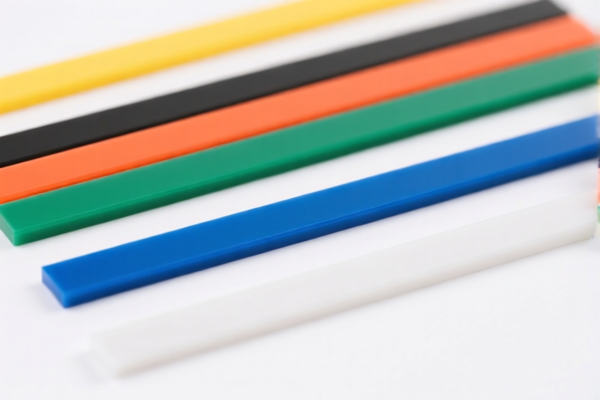
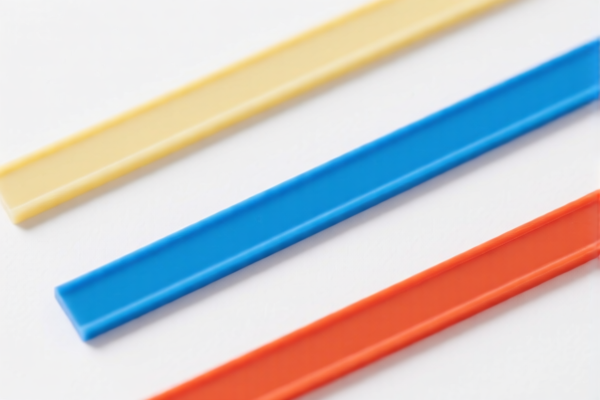

AI Analysis
🏗️ Other Plastic Strips for Construction (建筑用其他塑料棒/条)
🌐 HS Code Reference & Clearance Guide | 2026 Latest Tariff Analysis | Professional Customs Strategy
📌 1. Product Definition & Classification: What Exactly Are "Plastic Strips"?
In international trade, "Other Plastic Strips for Construction" is a broad category often referring to rigid or semi-rigid plastic profiles, rods, bars, or strips used in building materials, piping systems, and structural supports. The classification depends heavily on the physical shape (rod vs. strip/tape) and specific application (piping vs. general construction).
⚠️ Key Distinction Points:
- If the item is a long, cylindrical rod/bar used for structural support or as a core for pipes → It likely falls under Chapter 3916 (Plastics in Primary Forms) or 3917 (Plastic Tubes/Hoses).
- If the item is a flat strip, tape, or self-adhesive strip → It falls under Chapter 3919 (Self-Adhesive Plates).
- If it is a pipe fitting or conduit component → It falls under Chapter 3917.
📦 2. HS Code Classification Details (2026 Latest Tariff Concordance)
| HS Code | Product Description | Application Scenario | Key Feature |
|---|---|---|---|
3917.29.00.90 |
Other plastic rods, bars & profiles, for construction | Plumbing conduits, structural plastic bars | Hard tube/pipeline category extension |
3917.29.00.50 |
Other plastic rods, bars & profiles, for construction | General building use, non-specific piping | General construction category |
3916.90.50.00 |
Other plastic rods, bars & profiles (Residual/Catch-all) | Generic plastic rods where specific type isn't defined | Catch-all category |
3916.20.00.91 |
Other plastic rods, bars & profiles (Specific Plastic Type) | Specific plastic material (e.g., PVC/PE rods) | Specific material classification |
3925.90.00.00 |
Other building articles, of plastics | General construction accessories, non-pipe/non-rod specific | General building article |
3919.10.20.55 |
Other self-adhesive plastic strips/tapes | Self-adhesive seals, bonding strips | Self-adhesive feature |
🔍 Key Reminder:
- Shape is King: If it’s a long, solid cylinder (rod), look at 3916 or 3917. If it’s a flat, flexible strip, look at 3919.
- Construction Use: All these codes assume the item is used in construction/building contexts. If used for electronics or packaging, different codes apply.
- Catch-All:3916.90.50.00is a residual category; use only if the specific plastic type or application doesn’t fit more precise codes.
💰 3. 2026 Latest Tariff Rate Breakdown (Including Additional Duties & Policy Surcharges)
✅ Applicable Country: United States (US)
✅ Origin: China (CN)
✅ Effective Date: November 10, 2025 (and onwards)
🎯 1. 3917.29.00.90 & 3917.29.00.50 – Plastic Rods for Construction (Piping/Conduit Related)
| Item | Details |
|---|---|
| Base Duty Rate | 3.1% (ad valorem) |
| Section 301 Additional Duty | +25.0% (USITC Footnote 9903.88.01) |
| IEEPA Additional Duty | +10.0% (Targeting China/HK products, effective Nov 10, 2025) |
| Total Effective Rate | 38.1% |
| Tax Calculation | CIF Value × 38.1% |
| De Minimis Eligibility | ❌ No (deny_de_minimis) |
| Legal Basis Path | IEEPA:9903.01.25 → USITC:3917.29.00.90 → FOOTNOTE:9903.88.01 |
📌 Explanation:
- Base 3.1%: Standard Most Favored Nation (MFN) rate for plastic pipes/rods.
- 25% Section 301: Tariffs on Chinese plastics imports.
- 10% IEEPA: Additional punitive tariff on Chinese goods.
- Total 38.1%: High duty burden. Accurate classification as "piping-related" vs. "general construction" is critical.
🎯 2. 3916.90.50.00 & 3916.20.00.91 – General Plastic Rods/Profiles (Catch-All or Specific Material)
| Item | Details |
|---|---|
| Base Duty Rate | 5.8% (ad valorem) |
| Section 301 Additional Duty | +25.0% |
| IEEPA Additional Duty | +10.0% |
| Total Effective Rate | 40.8% |
| Tax Calculation | CIF Value × 40.8% |
| De Minimis Eligibility | ❌ No |
| Legal Basis Path | IEEPA:9903.01.24 → USITC:3916.xxxxxx → FOOTNOTE:9903.88.01 |
📌 Explanation:
- Base 5.8%: Higher base rate than piping-related rods (3917), but same surcharges apply.
- Total 40.8%: Highest effective rate among construction plastic strips. Use only if the product definitively does NOT fit the piping/structural categories.
🎯 3. 3925.90.00.00 – Other Building Articles of Plastic
| Item | Details |
|---|---|
| Base Duty Rate | 5.3% (ad valorem) |
| Section 301 Additional Duty | +25.0% |
| IEEPA Additional Duty | +10.0% |
| Total Effective Rate | 40.3% |
| Tax Calculation | CIF Value × 40.3% |
| De Minimis Eligibility | ❌ No |
| Legal Basis Path | IEEPA:9903.01.24 → USITC:3925.90.00.00 → FOOTNOTE:9903.88.01 |
📌 Explanation:
- Base 5.3%: Slightly lower base rate than general rods.
- Total 40.3%: Suitable for general construction accessories that don’t fit into rods/tubes.
🎯 4. 3919.10.20.55 – Self-Adhesive Plastic Strips
| Item | Details |
|---|---|
| Base Duty Rate | 5.8% (ad valorem) |
| Section 301 Additional Duty | +25.0% |
| IEEPA Additional Duty | +10.0% |
| Total Effective Rate | 40.8% |
| Tax Calculation | CIF Value × 40.8% |
| De Minimis Eligibility | ❌ No |
| Legal Basis Path | IEEPA:9903.01.24 → USITC:3919.10.20.55 → FOOTNOTE:9903.88.01 |
📌 Explanation:
- Base 5.8%: Standard for self-adhesive plastic products.
- Total 40.8%: Only applies if the product has self-adhesive backing. If it’s just a rigid rod, this code is incorrect.
🛠️ 4. Customs Clearance Practical Advice (Avoid Pitfalls)
✅ 1. Required Documentation Checklist (Mandatory)
| Document | Required | Notes |
|---|---|---|
| ✅ Product Specification Sheet | ✔️ | Must include material type (PVC, PE, ABS, etc.), dimensions, and shape. |
| ✅ Product Photos (Clear) | ✔️ | Show cross-section (round, square, flat) and any adhesive backing. |
| ✅ Commercial Invoice | ✔️ | Describe as "Plastic Construction Rod/Strip" + HS Code. |
| ✅ Certificate of Origin (CO) | ✔️ | Mandatory for claiming any potential exemptions (though limited here). |
| ✅ Packing List | ✔️ | Detail contents to avoid misdeclaration. |
| ✅ Third-Party Test Report | ✔️ | RoHS/REACH compliance if applicable. |
✅ 2. Declaration Tips (Critical Keywords)
🔥 "Shape Defines Code, Adhesion Matters, Construction Use Must Be Stated!"
| Scenario | Correct Declaration | Wrong Declaration |
|---|---|---|
| Round/Square Plastic Rods for Piping | 3917.29.00.90 – "Plastic Rod for Conduit" |
"Plastic Rod" (Vague) |
| Flat Self-Adhesive Strips for Sealing | 3919.10.20.55 – "Self-Adhesive Plastic Strip" |
"Plastic Strip" (Misses adhesive feature) |
| General Plastic Bars for Building Support | 3916.90.50.00 – "Plastic Profile for Construction" |
"Plastic Part" (Too generic) |
| Mixed Lot (Rods + Adhesive Strips) | Split Declaration | Mixed Declaration (High risk of rejection) |
✅ 3. Special Handling
| Situation | Advice |
|---|---|
| OEM Custom Profiles | Provide CAD drawings to prove shape and material. |
| Plastic Pipes vs. Rods | If it’s a hollow tube, it’s 3917. If solid, it’s 3916 or 3917.29. |
| Adhesive vs. Non-Adhesive | If it has glue, it’s 3919. If not, it’s 3916/3917. |
| High Duty Cost (38-40.8%) | Consider Advance Ruling or Supply Chain Optimization (e.g., transshipment if eligible, though risky). |
🌍 5. Global Market Comparison (2026)
| Country/Region | Recommended HS Code | Duty Rate (China Origin) | Certification | Notes |
|---|---|---|---|---|
| 🇺🇸 USA | 3917.29.00.90 |
38.1% (Rods) | No specific | High tariffs; careful classification needed. |
| 🇨🇳 China | 3917.29.00.90 |
3.1% | No | Low base duty; no extra surcharges. |
| 🇪🇺 EU | 3917.29.00 |
6.5% | CE | Moderate duty; no US-style surcharges. |
| 🇦🇺 Australia | 3917.29.00 |
5% | RCM | Competitive rate. |
📌 Conclusion:
- USA imposes the highest total duty (38.1%-40.8%) due to 301 and IEEPA tariffs.
- Classification accuracy is vital to avoid misdeclaration penalties.
- Consider HS Code optimization if product features allow (e.g., if it’s a self-adhesive strip, use3919instead of general rods if applicable, though rates are similar).
📌 6. Common Errors & Pitfalls (Lessons Learned)
❌ Error 1: Declaring "Plastic Rod" without specifying material or use.
👉 Result: Customs may assign a residual code with higher duties or request additional info.
❌ Error 2: Confusing "Plastic Pipe" (3917) with "Plastic Rod" (3916).
👉 Result: Misdeclaration leads to delays and potential penalties.
👉 Fix: Hollow = Pipe; Solid = Rod/Profile.
❌ Error 3: Ignoring the "Self-Adhesive" feature.
👉 Result: Missing out on the correct 3919 classification.
👉 Fix: If it has glue, declare it as such.
❌ Error 4: Assuming "Construction Use" exempts duties.
👉 Result: No exemption applies to Chinese-origin plastics in the US.
👉 Fix: Plan for 38-40% duty cost.
✅ Correct Practice:
"Solid PVC Plastic Rod, 20mm Diameter, for Construction Conduit Support, No Adhesive, Model XYZ"
🎯 7. Conclusion: Precise Classification Saves Money!
🎯 Remember the Motto:
🔹 "Shape Defines Code, Adhesion Matters, 38-40% Duty is Real!"
🔹 "Hollow = Pipe, Solid = Rod, Glue = Tape, Classify Right or Pay the Price!"
📌 Pro Tip:
If your plastic strips are not for construction (e.g., for packaging or electronics), different HS codes and potentially lower duties may apply. Always verify the primary use.
📣 Immediate Action:
📞 Consult a licensed customs broker + Provide product specs + Apply for Advance Ruling if unsure.
🚀 Ensure smooth clearance, avoid delays, and manage costs effectively!
✨ Professional clearance starts with accurate classification!
💼 Every dollar saved on duty counts!
Customer Reviews
About HS Code Classification
The Harmonized System (HS) is an internationally standardized nomenclature developed by the World Customs Organization (WCO) to classify traded products. Over 200 countries use the HS system as the basis for customs tariffs, trade statistics, and import/export regulations.
Each HS code follows a hierarchical structure:
- Chapter (2 digits) — Broad category of goods (e.g., Chapter 84: Machinery and Mechanical Appliances)
- Heading (4 digits) — More specific grouping within the chapter
- Subheading (6 digits) — Internationally standardized breakdown, used by all WCO member countries
- National subdivisions (8-10 digits) — Country-specific extensions for further classification, such as US HTSUS 10-digit codes
Correct HS code classification is essential for smooth customs clearance, accurate duty payment, and compliance with trade regulations. Misclassification can lead to customs delays, overpayment of duties, or penalties.
When importing from CN to US, the applicable tariff rates may include:
- Most-Favored-Nation (MFN) rate — The standard duty rate applied to WTO members
- General rate — Applied to countries without trade agreements
- Trade remedy duties — Additional tariffs such as Section 301 (anti-dumping), Section 232 (national security), or countervailing duties
The information provided on this page is for reference purposes only. For official classification, please consult with your local customs authority or a licensed customs broker.