Other Plastic Strips for Electronics Industry
CN → US| HS Code | Tariff Rate | Origin | Destination | Doc |
|---|---|---|---|---|
| 3921905050 | 39.8% | CN | US | Official Doc |
| 3919905030 | 40.8% | CN | US | Official Doc |
| 3919102020 | 40.8% | CN | US | Official Doc |
| 3921190090 | 41.5% | CN | US | Official Doc |
| 3919905060 | 40.8% | CN | US | Official Doc |
Product Images
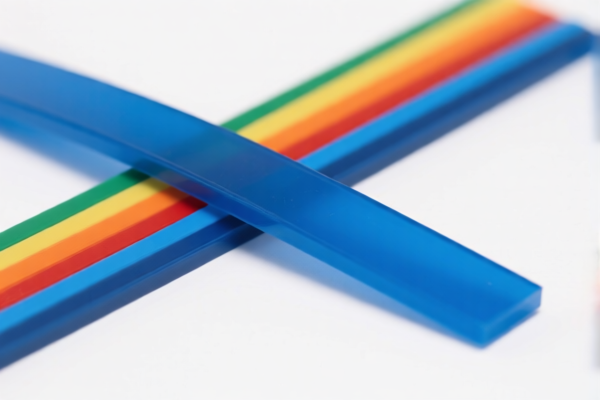
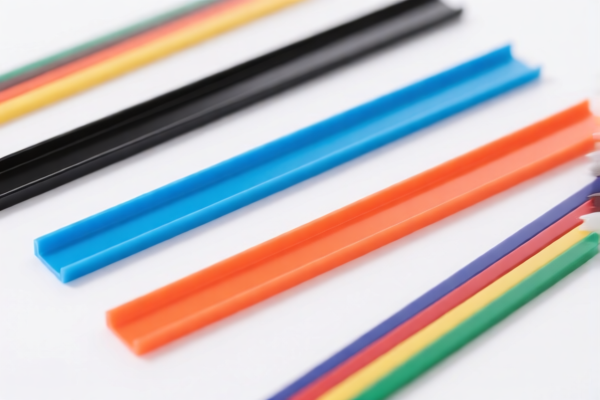
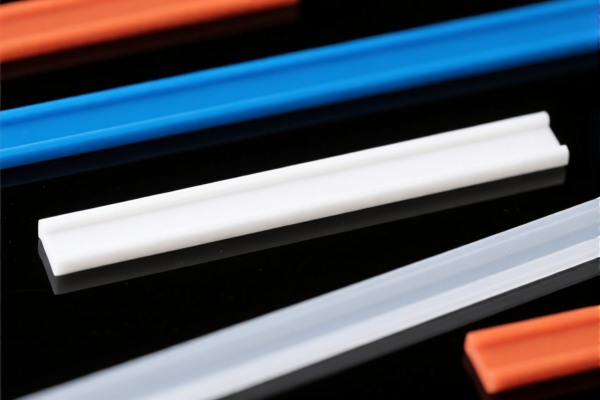
AI Analysis
🏭 Other Plastic Strips for Electronics Industry
🌐 HS Code Reference & Customs Clearance Guide | 2026 Latest Tariff Analysis | Professional Entry Strategy
📌 I. Product Definition & Classification: Understanding "Other Plastic Strips"
"Other Plastic Strips for the Electronics Industry" typically refers to various plastic components (strips, tapes, films, sheets) used for insulation, protection, spacing, or structural support in electronic manufacturing. Unlike standard electrical tapes (often classified under HS 3919.10), these are often specialized forms, tapes, or rigid strips that fall under broader "other" categories.
The classification depends heavily on the form (tape vs. strip/sheet) and the specific function (electrical insulation vs. general mechanical support).
⚠️ Key Classification Distinction:
- Rolls/Tapes with adhesive properties: Often fall under 3919 (Self-adhesive plates, sheets, film, foil, tape, strip and other flat shapes).
- Non-adhesive strips/bands: May fall under 3921 (Other plates, sheets, film, foil, strip and blocks).
- Purpose: Must demonstrate utility in the electronics industry (insulation, spacing, heat resistance, etc.).
📦 II. HS Code Classification Details (2026 Latest Tariff Authority Comparison)
Based on the provided data, here are the specific HS Codes and their corresponding tax rates for "Other Plastic Strips for Electronics Industry."
| HS Code | Product Description | Summary | Total Tax Rate | Tax Breakdown |
|---|---|---|---|---|
| 3921.90.50.50 | Plastic strips for electronic industry | Classified as "Other plastic plates, sheets, film, foil and strip and bands" | 39.8% | Basic: 4.8% Additional: 25.0% Section 301 (122): 10% |
| 3919.90.50.30 | Plastic strips for electronics | Other types of electrical insulation use | 40.8% | Basic: 5.8% Additional: 25.0% Section 301 (122): 10% |
| 3919.10.20.20 | Plastic strips for electronics | Meets electrical tape functional requirements | 40.8% | Basic: 5.8% Additional: 25.0% Section 301 (122): 10% |
| 3921.19.00.90 | Plastic strips | Other category under "Other plastic plates, sheets, film, foil and strip and bands" | 41.5% | Basic: 6.5% Additional: 25.0% Section 301 (122): 10% |
| 3919.90.50.60 | Plastic sheet-like strips for electronics | Catch-all attribute for other categories | 40.8% | Basic: 5.8% Additional: 25.0% Section 301 (122): 10% |
🔍 Key Insight:
- The tax rates range from 39.8% to 41.5%, driven by high Additional Tariffs (25%) and Section 301 Tariffs (10%).
- Basic Tariffs vary slightly (4.8% – 6.5%) based on whether the item is classified as a self-adhesive tape (3919) or a non-adhesive strip/sheet (3921).
- Section 301 (122) applies uniformly at 10% for all listed codes, indicating these are likely imported from China to the US.
💰 III. 2026 Tariff Rate Detailed Explanation (Including Additional Taxes)
✅ Applicable Country: United States (US)
✅ Country of Origin: China (CN)
✅ Effective Time: Current rates as of 2026
🎯 1. 3921.90.50.50 – Plastic Strips (Non-Self-Adhesive Focus)
| Item | Detail |
|---|---|
| Basic Duty | 4.8% |
| Additional Duty (Section 301) | +25.0% |
| Section 301 Tariff (122) | +10.0% |
| Total Effective Rate | 39.8% |
| Calculation Basis | CIF Value × 39.8% |
| De Minimis Exemption | ❌ Not Applicable (High duty rate triggers de minimis restrictions for Section 301 goods) |
| Legal Basis Path | HTSUS:3921.90.50.50 → USITC:Section 301 → IEEPA:122 |
📌 Explanation:
- This code is for non-adhesive plastic strips or bands.
- The 25% additional tariff is the standard Section 301 duty on Chinese goods.
- The 10% Section 122 tariff is an additional surcharge on specific Chinese imports.
- Total 39.8% is significant; consider cost impact on bulk orders.
🎯 2. 3919.90.50.30 – Plastic Strips (Electrical Insulation Use)
| Item | Detail |
|---|---|
| Basic Duty | 5.8% |
| Additional Duty (Section 301) | +25.0% |
| Section 301 Tariff (122) | +10.0% |
| Total Effective Rate | 40.8% |
| Calculation Basis | CIF Value × 40.8% |
| De Minimis Exemption | ❌ Not Applicable |
| Legal Basis Path | HTSUS:3919.90.50.30 → USITC:Section 301 → IEEPA:122 |
📌 Explanation:
- This code covers self-adhesive plastic strips used for electrical insulation but not specifically "electrical tape" (which has its own sub-heading).
- Slightly higher basic duty (5.8%) than 3921, leading to a 40.8% total rate.
🎯 3. 3919.10.20.20 – Plastic Strips (Electrical Tape Function)
| Item | Detail |
|---|---|
| Basic Duty | 5.8% |
| Additional Duty (Section 301) | +25.0% |
| Section 301 Tariff (122) | +10.0% |
| Total Effective Rate | 40.8% |
| Calculation Basis | CIF Value × 40.8% |
| De Minimis Exemption | ❌ Not Applicable |
| Legal Basis Path | HTSUS:3919.10.20.20 → USITC:Section 301 → IEEPA:122 |
📌 Explanation:
- This is the most direct code for electrical tapes (adhesive-backed).
- If your product is self-adhesive and used for insulation, this is likely the correct code.
- Same tax rate (40.8%) as 3919.90.50.30, so classification accuracy is more about compliance than cost saving here.
🎯 4. 3921.19.00.90 – Other Plastic Strips (Catch-All)
| Item | Detail |
|---|---|
| Basic Duty | 6.5% |
| Additional Duty (Section 301) | +25.0% |
| Section 301 Tariff (122) | +10.0% |
| Total Effective Rate | 41.5% |
| Calculation Basis | CIF Value × 41.5% |
| De Minimis Exemption | ❌ Not Applicable |
| Legal Basis Path | HTSUS:3921.19.00.90 → USITC:Section 301 → IEEPA:122 |
📌 Explanation:
- This is a residual category for plastic strips that don't fit other specific descriptions.
- Has the highest total rate (41.5%) due to the highest basic duty (6.5%).
- Use only if no more specific code (like 3919.10 for tapes) applies.
🎯 5. 3919.90.50.60 – Plastic Sheet-Like Strips (Catch-All)
| Item | Detail |
|---|---|
| Basic Duty | 5.8% |
| Additional Duty (Section 301) | +25.0% |
| Section 301 Tariff (122) | +10.0% |
| Total Effective Rate | 40.8% |
| Calculation Basis | CIF Value × 40.8% |
| De Minimis Exemption | ❌ Not Applicable |
| Legal Basis Path | HTSUS:3919.90.50.60 → USITC:Section 301 → IEEPA:122 |
📌 Explanation:
- Another catch-all for self-adhesive products.
- Same tax rate (40.8%) as other 3919 codes.
- Use when the specific application (insulation vs. general) doesn't clearly fit other sub-headings.
🛠️ IV. Customs Clearance Practical Advice (Avoid Pitfalls)
✅ 1. Documentation Checklist (Essential)
| Document | Required? | Notes |
|---|---|---|
| ✅ Product Specification | ✔️ | Must detail material (e.g., PET, PVC, Polyimide), thickness, width, adhesive type (if any). |
| ✅ Technical Data Sheet | ✔️ | Highlight electronic industry application (e.g., heat resistance, dielectric strength). |
| ✅ Product Photos | ✔️ | Show roll format, core, labeling, and any adhesive backing. |
| ✅ Commercial Invoice | ✔️ | Clearly state "Plastic Strip for Electronics Use." Avoid vague terms like "plastic wrap." |
| ✅ Certificate of Origin | ✔️ | Required to confirm origin as China for Section 301 assessment. |
| ✅ Packing List | ✔️ | Detail weight, dimensions, and quantity. |
✅ 2. Classification Strategy (Key Tips)
🔥 “Adhesive = 3919; Non-Adhesive = 3921; Electrical = 3919.10”
| Scenario | Recommended HS Code | Reason |
|---|---|---|
| Self-adhesive electrical tape | 3919.10.20.20 |
Specific for electrical tape function. |
| Self-adhesive plastic strips (non-electrical) | 3919.90.50.30 or 3919.90.50.60 |
Catch-all for other self-adhesive strips. |
| Non-adhesive plastic strips/bands | 3921.90.50.50 |
Non-adhesive strips for electronics. |
| Other plastic strips (no adhesive, no specific use) | 3921.19.00.90 |
Residual category. |
⚠️ Critical Note:
- Misclassifying adhesive products as non-adhesive (3921) can lead to penalties for incorrect declaration.
- Conversely, classifying non-adhesive strips as adhesive (3919) may also be rejected if adhesive is not present.
✅ 3. Special Handling for Section 301 & 122 Tariffs
| Issue | Solution |
|---|---|
| High Duty (40%+) | Consider supply chain diversification (e.g., production in Vietnam/Thailand) to avoid Section 301 tariffs. |
| De Minimis Exemption | Since total duty > 10%, de minimis (Section 321) exemption does NOT apply. All shipments are subject to duty payment. |
| Exclusions | Check if your specific product was excluded from Section 301 tariffs (unlikely for plastic strips in 2026, but verify current lists). |
🌍 V. Global Market Comparison (2026)
| Country/Region | Recommended HS Code | Tariff (China Origin) | Notes |
|---|---|---|---|
| 🇺🇸 USA | 3919.10.20.20 or 3921.90.50.50 |
39.8% - 41.5% | High tariffs due to Section 301 + 122. |
| 🇨🇳 China | 3919.10.20.20 or 3921.90.50.50 |
~5-6% | Low import duty, no Section 301. |
| 🇪🇺 EU | 3919.10.20.20 or 3921.90.50.50 |
~6-10% | No Section 301; standard EU duty applies. |
| 🇦🇺 Australia | 3919.10.20.20 or 3921.90.50.50 |
~5-10% | No Section 301; standard duty applies. |
| 🇯🇵 Japan | 3919.10.20.20 or 3921.90.50.50 |
~5-10% | No Section 301; standard duty applies. |
📌 Conclusion:
- USA is the only major market with Section 301 and 122 tariffs applied, resulting in ~40%+ duty.
- For other markets, the duty is significantly lower (~5-10%).
- Cost Optimization: If targeting the US market, consider manufacturing in a third country (e.g., Vietnam, Mexico) to avoid Section 301 tariffs, ensuring compliance with Rules of Origin.
📌 VI. Common Errors & Pitfalls (Lessons Learned)
❌ Error 1: Classifying adhesive electrical tape as non-adhesive plastic strip (3921)
👉 Consequence: Customs may reject the classification, leading to delay, additional duties, or penalties.
❌ Error 2: Using generic description "Plastic Strip" without specifying electronic industry use
👉 Consequence: Customs may classify under a higher-duty general category, or request additional documentation, causing clearance delays.
❌ Error 3: Assuming de minimis exemption applies for small shipments
👉 Consequence: Incorrect. Section 301 goods are exempt from de minimis if duty exceeds 10%. All shipments are taxed.
❌ Error 4: Ignoring Section 122 Tariff
👉 Consequence: Underpayment of duties. Section 122 adds an extra 10% on top of Section 301 for specific Chinese goods.
✅ Correct Approach:
"Specify 'Plastic Strip for Electronics Use,' indicate adhesive/non-adhesive status, and apply correct HS Code (3919 vs. 3921). Always account for 40%+ duty for US imports from China."
🎯 VII. Conclusion: Professional Classification, Cost Control, Compliance
🎯 Key Takeaway:
🔹 "Adhesive = 3919; Non-Adhesive = 3921; US Market = 40%+ Duty"
🔹 "Section 301 + 122 = 35% Additional Tariff on top of Basic Duty"
🔹 "De Minimis Exemption Does NOT Apply"
📌 Pro Tip:
If your products are essential for electronic manufacturing, consider applying for an Exclusion from Section 301 tariffs (if available) or explore supply chain relocation to non-China origins for US-bound shipments.
📣 Immediate Action:
📞 Consult with a licensed customs broker to confirm HS Code based on your product’s specific characteristics (adhesive, thickness, material).
🚀 Plan for 40%+ duty costs in your pricing strategy for US imports.
✨ Professional classification starts with accurate product description!
💼 Every dollar saved on duty counts!
Customer Reviews
About HS Code Classification
The Harmonized System (HS) is an internationally standardized nomenclature developed by the World Customs Organization (WCO) to classify traded products. Over 200 countries use the HS system as the basis for customs tariffs, trade statistics, and import/export regulations.
Each HS code follows a hierarchical structure:
- Chapter (2 digits) — Broad category of goods (e.g., Chapter 84: Machinery and Mechanical Appliances)
- Heading (4 digits) — More specific grouping within the chapter
- Subheading (6 digits) — Internationally standardized breakdown, used by all WCO member countries
- National subdivisions (8-10 digits) — Country-specific extensions for further classification, such as US HTSUS 10-digit codes
Correct HS code classification is essential for smooth customs clearance, accurate duty payment, and compliance with trade regulations. Misclassification can lead to customs delays, overpayment of duties, or penalties.
When importing from CN to US, the applicable tariff rates may include:
- Most-Favored-Nation (MFN) rate — The standard duty rate applied to WTO members
- General rate — Applied to countries without trade agreements
- Trade remedy duties — Additional tariffs such as Section 301 (anti-dumping), Section 232 (national security), or countervailing duties
The information provided on this page is for reference purposes only. For official classification, please consult with your local customs authority or a licensed customs broker.