Other Plastic Textured Boards
CN → US| HS Code | Tariff Rate | Origin | Destination | Doc |
|---|---|---|---|---|
| 3921190090 | 41.5% | CN | US | Official Doc |
| 3921905050 | 39.8% | CN | US | Official Doc |
| 3926909987 | 22.8% | CN | US | Official Doc |
| 3926909989 | 22.8% | CN | US | Official Doc |
| 3920995000 | 40.8% | CN | US | Official Doc |
Product Images
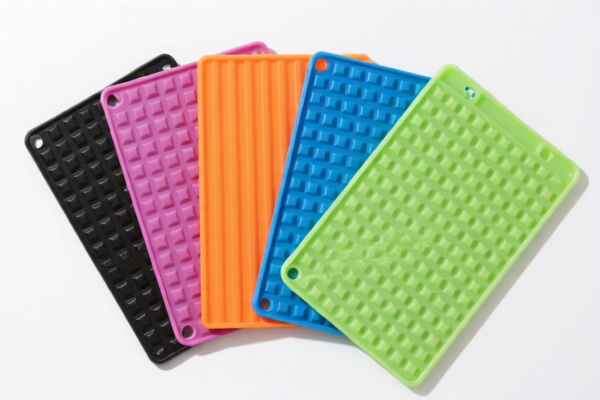
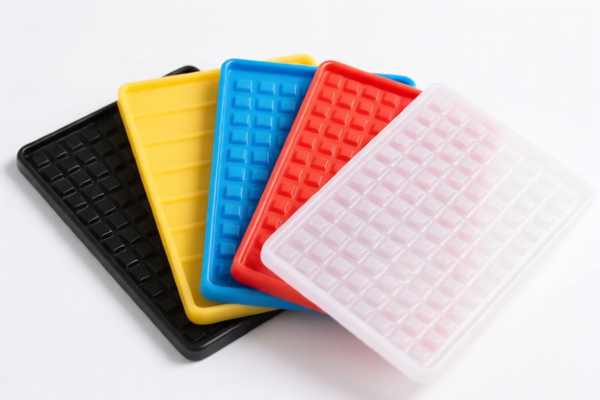
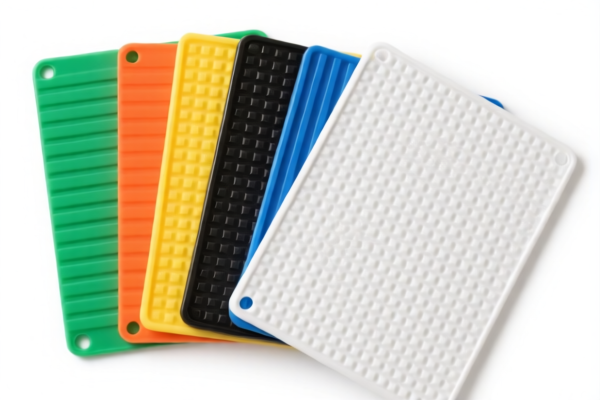
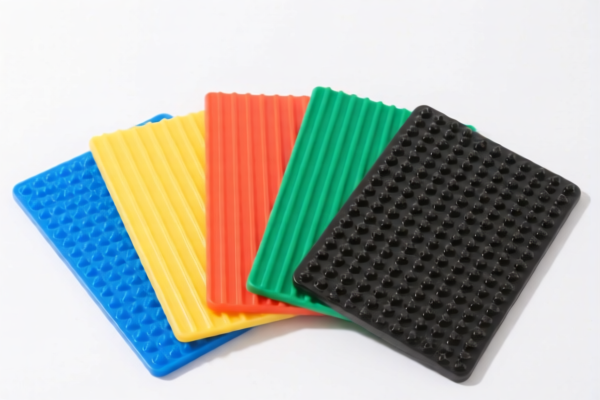
AI Analysis
🧱 Other Plastic Textured Boards (Other Plastic Boards, Sheets, Film, Foil and Strip, Textured)
🌐 HS Code Reference & Customs Clearance Guide | 2026 Latest Tariff Analysis | Professional Clearance Strategy
📌 I. Product Definition & Classification: Do You Know the True Nature of "Plastic Boards"?
"Other plastic textured boards" refer to rigid or semi-rigid plastic products that have undergone surface treatment (texturing) to enhance grip, aesthetic appeal, or UV resistance. They are typically in the form of boards, sheets, films, or foils.
In international trade, the classification depends heavily on two factors: 1. Physical Form: Is it a standalone "board/plate" (Chapter 39, Heading 3920/3921) or a finished "article/implementation" (Chapter 39, Heading 3926)? 2. Material Composition: Is it pure plastic, or does it contain other reinforcing materials?
⚠️ Key Distinction Points:
- If the product is raw material (sheets/boards) not yet fashioned into a specific object → Classified under 3920 or 3921.
- If the product is a finished item (e.g., a plastic sign, a specific fixture) → Classified under 3926 (Other articles of plastics).
- Texturing itself does not change the HS code but is described in the summary.
📦 II. HS Code Classification Details (2026 Latest Tariff Authoritative Comparison)
Based on the provided data, here are the precise classifications for "Other plastic textured boards":
| HS Code | Product Description | Summary / Characteristic | Application Scenario |
|---|---|---|---|
3921.19.00.90 |
Other plastic plates, sheets, film, foil, and strip | Textured plastic boards/plates, meeting the material and plate form characteristics | Raw textured sheets for manufacturing, signage, or packaging substrates |
3921.90.50.50 |
Other plates, sheets, film, foil, and strips of plastics | Other plastic boards/films, falling into the "other" category | Non-specified textured plastics, composite layers, or specialty films |
3926.90.99.87 |
Other articles of plastics | Other plastic products, a catch-all category, no material or form conflict | Finished textured plastic goods (e.g., textured panels installed on walls, furniture parts) |
3926.90.99.89 |
Other plastic articles | Other plastic products, material is plastic, belongs to "other" items | Similar to above, generic finished textured plastic items not elsewhere specified |
3920.99.50.00 |
Other plates, sheets, film, foil, and strip of plastics | Other plastic boards, material is plastic, form matches the definition of "plate/board" | General-purpose textured plastic boards not covered by specific subheadings in 3921 |
🔍 Key Reminder:
- 3920/3921: Focus on raw material forms (sheets, plates, films). If you are importing bulk rolls or flat sheets for further processing, these are the likely codes.
- 3926: Focus on finished articles. If the "textured board" is already cut to size, drilled, or designed for a specific final use (like a car interior panel), it may fall here.
- Texturing is a surface feature; it does not automatically qualify the product for a different heading unless it creates a new essential character.
💰 III. 2026 Latest Tariff Rate Details (Including Surtaxes & Policy Add-ons)
✅ Applicable Country: United States (US)
✅ Country of Origin: China (CN)
✅ Effective Date: 2025/2026 (Current Trade Environment)
🎯 1. 3921.19.00.90 —— Other Plastic Plates, Sheets, Film, Foil, and Strip
| Item | Content |
|---|---|
| Base Tariff Rate | 6.5% (ad valorem) |
| Section 301 Surtax | +25.0% (Trade Remedy Duties) |
| Section 122 Tariff | +10.0% (Specific Trade Measure) |
| Total Tariff Rate | 41.5% |
| Tax Calculation | CIF Value × 41.5% |
| De Minimis Eligibility | ❌ No (Subject to high tariffs) |
| Legal Basis Path | Base Tariff (USITC) + 301 Footnote + 122 Specific Clause |
📌 Explanation:
- This code is subject to the highest surtax among the options.
- The 6.5% base is standard for many plastic plates.
- The 25% Section 301 tariff is mandatory for Chinese-origin plastic articles.
- The 10% Section 122 tariff adds an additional layer for strategic materials.
- Total Impact: 41.5%. This is a significant cost burden.
🎯 2. 3921.90.50.50 —— Other Plates, Sheets, Film, Foil, and Strip of Plastics
| Item | Content |
|---|---|
| Base Tariff Rate | 4.8% (ad valorem) |
| Section 301 Surtax | +25.0% |
| Section 122 Tariff | +10.0% |
| Total Tariff Rate | 39.8% |
| Tax Calculation | CIF Value × 39.8% |
| De Minimis Eligibility | ❌ No |
| Legal Basis Path | Base Tariff (USITC) + 301 Footnote + 122 Specific Clause |
📌 Note:
- Slightly lower base rate (4.8%) than3921.19.00.90(6.5%).
- Same surtax structure.
- Savings: ~1.7% compared to the first code. Still a very high tariff.
🎯 3. 3926.90.99.87 & 3926.90.99.89 —— Other Articles of Plastics
| Item | Content |
|---|---|
| Base Tariff Rate | 5.3% (ad valorem) |
| Section 301 Surtax | +7.5% (Reduced Surcharge) |
| Section 122 Tariff | +10.0% |
| Total Tariff Rate | 22.8% |
| Tax Calculation | CIF Value × 22.8% |
| De Minimis Eligibility | ❌ No |
| Legal Basis Path | Base Tariff (USITC) + Reduced 301 Footnote + 122 Specific Clause |
📌 Strategic Advantage:
- Significant Cost Reduction: The total rate is 22.8%, which is ~17-18% lower than the "raw material" classifications (3920/3921).
- Why?: The Section 301 surtax is only 7.5% instead of 25%. This often applies to certain finished plastic articles or specific exclusions.
- Caution: You must prove the product is a "finished article" (e.g., a specific fixture, panel, or item) rather than just a sheet/plate. If customs deems it a "plate," they may reclassify it to 3921/3920, leading to back taxes.
🎯 4. 3920.99.50.00 —— Other Plates, Sheets, Film, Foil, and Strip of Plastics
| Item | Content |
|---|---|
| Base Tariff Rate | 5.8% (ad valorem) |
| Section 301 Surtax | +25.0% |
| Section 122 Tariff | +10.0% |
| Total Tariff Rate | 40.8% |
| Tax Calculation | CIF Value × 40.8% |
| De Minimis Eligibility | ❌ No |
| Legal Basis Path | Base Tariff (USITC) + 301 Footnote + 122 Specific Clause |
📌 Note:
- Similar to3921codes, this is subject to the full 25% Section 301 surtax.
- Total rate is 40.8%, very close to the highest tier.
- Only use if the product strictly fits the "other plate" definition in 3920 and not 3921.
🛠️ IV. Customs Clearance Practical Advice (Battle-Tested Pitfall Guide)
✅ 1. Preparation Checklist (Non-Negotiable)
| Document | Required? | Explanation |
|---|---|---|
| ✅ Product Specifications | ✔️ | Must specify: Material (e.g., PP, PE, PVC), Dimensions, Thickness, Surface Texture Type (e.g., leather grain, embossed). |
| ✅ Photos of Product | ✔️ | Clear images showing the textured surface and the edge/cross-section to prove it is a plate/sheet or finished article. |
| ✅ Commercial Invoice | ✔️ | Clearly describe as "Textured Plastic Board" or "Textured Plastic Panel," not just "Plastic." |
| ✅ Packing List | ✔️ | Detail weight, dimensions, and packaging to confirm it is shipped as raw material or finished goods. |
| ✅ Certificate of Origin | ✔️ | Essential for proving CN origin and applying (or avoiding) surtaxes. |
✅ 2. Declaration Strategy (Critical Mnemonics)
🔥 "Finished Article, Low Tax; Raw Plate, High Tax. Name it Right!"
| Scenario | Recommended HS Code | Reason |
|---|---|---|
| Bulk rolls, flat sheets, raw substrates | 3921.19.00.90 or 3920.99.50.00 |
These are raw materials. Expect ~40%+ total tariff. |
| Cut-to-size panels, installed fixtures, specific plastic articles | 3926.90.99.87 |
Best Option. If eligible, tariff drops to 22.8%. Must prove "finished" nature. |
| Specialty films/foils not elsewhere specified | 3921.90.50.50 |
Middle ground. 39.8% total. |
⚠️ Warning:
- Do NOT declare finished textured panels as "Plastic Plates" (3921) just to simplify. If customs inspects and finds a finished article, they will reclassify it, penalize you, and charge the higher rate.
- Conversely, do NOT declare raw sheets as "Articles" (3926) to get the lower rate. This is fraud.
✅ 3. Special Case Handling
| Situation | Handling Advice |
|---|---|
| Mixed Shipment (Sheets + Finished Parts) | Declare separately. Raw sheets under 3921/3920; Finished parts under 3926. Do not mix in one line item. |
| Textured with Adhesive Backing | May change classification to "Self-adhesive plates" (Check 3919). Tariffs may differ. Verify carefully. |
| Composite Materials (Plastic + Metal Mesh) | If the plastic is not the essential character, it might fall under Chapter 85 or 83. Seek professional advice. |
| Small Sample Shipments | Even small quantities are subject to tariffs. No de minimis exemption for these HS codes. |
🌍 V. Global Market Comparison (2026 Latest)
| Country/Region | Recommended HS Code | Approx. Total Tariff (China Origin) | Notes |
|---|---|---|---|
| 🇺🇸 USA | 3926.90.99.87 |
22.8% (Best Case) | Use 3926 if possible. Otherwise ~40%. |
| 🇨🇳 China | 3926.90.99.87 |
~5-6% | Low import duty. No 301/122 surtaxes. |
| 🇪🇺 EU | 3926.90.99 |
~6.5% | No Section 301/122 equivalents. Standard WTO rates apply. |
| 🇦🇺 Australia | 3926.90.99 |
~5% | Low duty. Check anti-dumping measures. |
📌 Conclusion:
- The US market is the most challenging due to Section 301 and 122 tariffs.
- Strategy: If your product can be defined as a "finished article" (e.g., a textured interior panel for automotive, not just a sheet), insist on 3926 to save ~18% in tariffs.
- Documentation is Key: Provide clear photos and descriptions to support the "finished article" claim.
📌 VI. Common Errors & Pitfalls (Lessons Learned)
❌ Error 1: Declaring all plastic boards as 3921.19.00.90
👉 Consequence: Paying 41.5% tariff when 22.8% was possible.
Fix: Analyze if the product is a "finished article."
❌ Error 2: Describing products vaguely as "Plastic Material"
👉 Consequence: Customs delays, potential reclassification to higher duty codes, or requests for additional info.
Fix: Be specific: "Textured PVC Board for Wall Cladding."
❌ Error 3: Ignoring the 122 Tariff
👉 Consequence: Unexpected 10% surtax on top of 301.
Fix: Always calculate Base + 301 + 122.
✅ Correct Declaration Example:
"Textured Plastic Interior Panel, PVC Material, 2mm Thickness, Surface Leather Grain Finish, Used for Automotive Dashboard, HS Code: 3926.90.99.87"
🎯 VII. Conclusion: Professional Declaration, Save Money, Ensure Clearance!
🎯 Remember the Mantra:
🔹 "Raw Sheets = High Tax (~40%); Finished Panels = Lower Tax (~23%)."
🔹 "Texturing is a Feature, Not a Category. Form Dictates Code."
📌 Pro Tip:
If your product is a custom-designed textured panel for a specific machine or building, argue for 3926. If it's a generic sheet for other manufacturers to cut and shape, stick to 3921.
Request an Advance Ruling from US Customs if the boundary is unclear to avoid future disputes.
📣 Immediate Action:
📞 Contact your customs broker with product photos and intended use.
📝 Submit a binding ruling request if the shipment value is high.
🚀 Optimize your HS Code, and keep your profits high!
✨ Professional clearance starts with accurate classification!
💼 Every percentage point saved is pure profit!
Customer Reviews
About HS Code Classification
The Harmonized System (HS) is an internationally standardized nomenclature developed by the World Customs Organization (WCO) to classify traded products. Over 200 countries use the HS system as the basis for customs tariffs, trade statistics, and import/export regulations.
Each HS code follows a hierarchical structure:
- Chapter (2 digits) — Broad category of goods (e.g., Chapter 84: Machinery and Mechanical Appliances)
- Heading (4 digits) — More specific grouping within the chapter
- Subheading (6 digits) — Internationally standardized breakdown, used by all WCO member countries
- National subdivisions (8-10 digits) — Country-specific extensions for further classification, such as US HTSUS 10-digit codes
Correct HS code classification is essential for smooth customs clearance, accurate duty payment, and compliance with trade regulations. Misclassification can lead to customs delays, overpayment of duties, or penalties.
When importing from CN to US, the applicable tariff rates may include:
- Most-Favored-Nation (MFN) rate — The standard duty rate applied to WTO members
- General rate — Applied to countries without trade agreements
- Trade remedy duties — Additional tariffs such as Section 301 (anti-dumping), Section 232 (national security), or countervailing duties
The information provided on this page is for reference purposes only. For official classification, please consult with your local customs authority or a licensed customs broker.