Other Plastic Wall Decorative Film
CN → US| HS Code | Tariff Rate | Origin | Destination | Doc |
|---|---|---|---|---|
| 3926909989 | 22.8% | CN | US | Official Doc |
| 3919905060 | 40.8% | CN | US | Official Doc |
| 3919102055 | 40.8% | CN | US | Official Doc |
| 3920992000 | 39.2% | CN | US | Official Doc |
| 3920991000 | 41.0% | CN | US | Official Doc |
Product Images
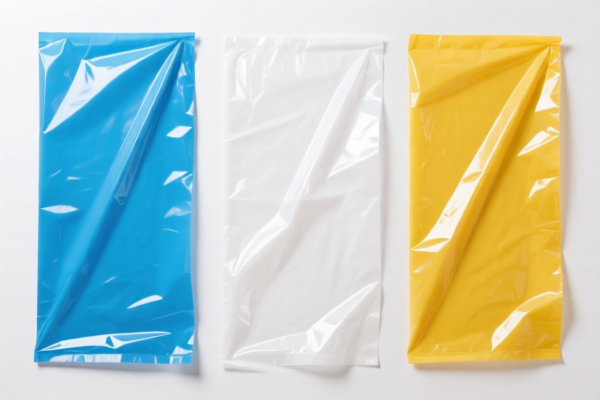
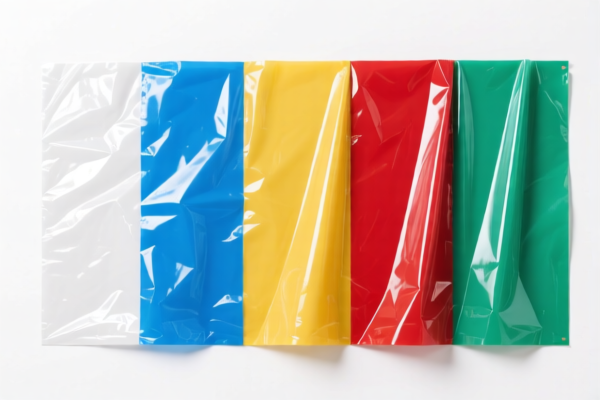
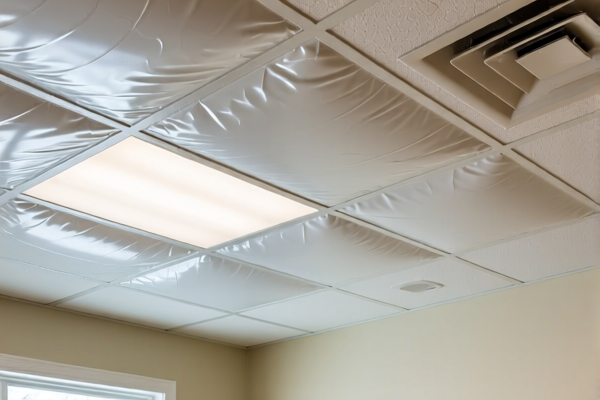
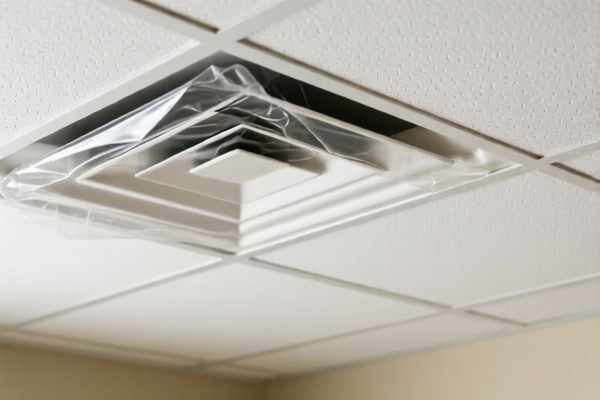
AI Analysis
🏠 Other Plastic Wall Decorative Film: The Ultimate Tariff & Customs Clearance Guide
🌐 HS Code Reference & Customs Strategy | 2026 Latest Tariff Breakdown | Professional Clearance Tactics
📌 I. Product Definition: What Exactly Is "Other Plastic Wall Decorative Film"?
"Other Plastic Wall Decorative Film" is a broad category of polymer-based products used for interior decoration, wall covering, or surface finishing. In international trade, these products are often confused due to their varied forms (rolls, sheets, ready-made strips) and specific applications.
Crucially, customs classification depends heavily on the physical state and functional description: * Is it a bare film/roll? → Likely falls under Chapter 39 (Plastics and Articles Thereof) as a semi-finished good or specific plastic film. * Is it a finished "article" or制品? → Might fall under the "Other" or "Bleed" categories of plastics, potentially with different duty rates depending on specific material properties and USITC notes.
⚠️ Key Distinction Point:
- If the product is described simply as "Plastic Film" without specific end-use limitations in the HS code text, it often triggers Section 301 (122 Clause) and Base Tariffs resulting in high total duties.
- The difference between being classified as a "Film" (3919/3920) vs. an "Other Article" (3926) can change your total tax burden by over 18% (from ~41% down to ~23%).
📦 II. HS Code Classification Matrix (2026 Latest Data)
Based on the provided dataset, here are the five potential HS Codes for "Other Plastic Wall Decorative Film," ranked from lowest to highest tax liability.
| HS Code | Summary Description | Physical State | Key Classification Logic | Total Tax Rate |
|---|---|---|---|---|
| 3926.90.99.89 | Other plastic wall decorative film | Membrane/Finished Product | Falls under the "Other plastic articles" catch-all category. | 22.8% |
| 3920.99.20.00 | Other plastic wall decorative film | Film (Flexible) | Non-cellular, non-reinforced plastic flexible film. | 39.2% |
| 3920.99.10.00 | Other plastic wall decorative film | Film (General) | General "Other" plastic film category, no obvious conflict. | 41.0% |
| 3919.90.50.60 | Other plastic wall decorative film | Film (Flat) | Other plastic flat-shaped products (self-adhesive or not). | 40.8% |
| 3919.10.20.55 | Other plastic wall decorative film | Film (Specific) | Other films falling under specific sub-classes of flat plastic products. | 40.8% |
🔍 Critical Insight:
- 3926.90.99.89 is the most advantageous code in this dataset because it treats the item as an "Other Article" rather than a specific "Film," resulting in significantly lower additional tariffs.
- Codes 3919.xxxx and 3920.99.10 are highly susceptible to the 25% Section 301 tariff + 10% Section 122 tariff, pushing totals above 40%.
💰 III. 2026 Tariff Rate Breakdown (Detailed Analysis)
✅ Applicable Country: USA (US)
✅ Origin: China (CN) (Assumed based on the 122 Clause and 301 Tariff structure in the data)
✅ Effective Time: Current rates applied per 2025/2026 trade policies
🎯 1. The "Low Duty" Option: 3926.90.99.89
- Total Tax Rate: 22.8%
- Breakdown:
- Base Duty: 5.3%
- Section 301 (Trade War) Surcharge: 7.5% (Note: Lower than the standard 25%)
- Section 122 Surcharge: 10%
- 📌 Explanation:
This code classifies the item as an "Other plastic article." By avoiding the specific "Film" definitions in Chapters 3919/3920, it escapes the higher 25% Section 301 surcharge. Instead, it incurs a lower 7.5% surcharge. This is a cost-saving classification strategy if the product can be legally described as a finished decorative article rather than raw material/film.
🎯 2. The "Standard Film" Options: 3919.90.50.60 & 3919.10.20.55
- Total Tax Rate: 40.8%
- Breakdown:
- Base Duty: 5.8%
- Section 301 Surcharge: 25.0% (Standard high tariff for plastics)
- Section 122 Surcharge: 10%
- 📌 Explanation:
These codes classify the product strictly as "Plastic Film" (Chapter 3919). The USITC imposes a 25% penalty on most Chinese-made plastic films and flat shapes. This makes importing via these codes highly expensive.
🎯 3. The "Flexible Film" Options: 3920.99.20.00 & 3920.99.10.00
- Total Tax Rate: 39.2% & 41.0%
- Breakdown:
- Base Duty: 4.2% ~ 6.0%
- Section 301 Surcharge: 25.0%
- Section 122 Surcharge: 10%
- 📌 Explanation:
Similar to the 3919 codes, these fall under "Plastics, non-cellular" (Chapter 3920). They are subject to the full 25% Section 301 tariff. The slight difference between 39.2% and 41.0% depends on the specific base duty (4.2% vs 6.0%) for "Other" films.
🛠️ IV. Customs Clearance Practical Advice (Risk Mitigation)
✅ 1. Documentation Checklist (Mandatory)
| Document | Requirement | Why It Matters |
|---|---|---|
| ✅ Product Spec Sheet | Must clearly define "Physical Form" | Determines if it is a "Film" (3919/3920) or "Article" (3926). |
| ✅ Commercial Invoice | Must state "Plastic Wall Decorative Film" | Cannot be vague (e.g., just "Plastic Sheet"). |
| ✅ Material Composition | 100% Plastic? PVC? PET? | Base duty rates vary slightly by polymer type (4.2% vs 6.0%). |
| ✅ Usage Description | "For Wall Decoration" | Helps support the argument for Chapter 3926 (Finished Article) if applicable. |
| ✅ Country of Origin | China | Triggers Section 301 & 122 tariffs. |
✅ 2. Classification Strategy & Tips
🔥 "Define the Form, Not Just the Function!"
| Scenario | Recommended HS Code | Reasoning |
|---|---|---|
| Rolls of raw plastic film | 3919.90.50.60 or 3920.99.10.00 |
Clearly a "Film" or "Flat Product." High tax (~41%). |
| Self-adhesive decorative strips | 3919.10.20.55 |
Self-adhesive films fall under 3919. High tax (~40.8%). |
| Finished decorative wall panels | 3926.90.99.89 |
If the product is a finished "article" (e.g., pre-cut, textured, or ready-to-hang), argue for 3926. Saves ~18% in taxes! |
📌 Actionable Tip:
If your product is a finished decorative item (e.g., a textured wall cover with adhesive backing, ready for installation), provide photos showing it as a finished good, not just a roll of plastic. This supports classification under 3926.90.99.89, reducing total duty from ~41% to 22.8%.
✅ 3. Common Pitfalls to Avoid
| ❌ Error | ⚠️ Consequence | ✅ Correct Approach |
|---|---|---|
| Calling it "Plastic Sheet" | Ambiguous; may default to higher 3920/3919 codes. | Use specific term "Decorative Film" or "Wall Covering Article". |
| Ignoring Section 122 | Underpayment of duty → Penalties/Interest. | Always add 10% IEEPA/122 Surcharge on top of Base + 301. |
| Assuming All Films Are Equal | Paying 41% when 22.8% is possible. | Analyze if the product qualifies as an "Other Article" (3926) vs. "Film" (3919/3920). |
🌍 V. Global Market Comparison (2026)
| Market | Primary HS Code (Example) | Base Duty | Add-on Tariffs | Total Est. Duty | Notes |
|---|---|---|---|---|---|
| 🇺🇸 USA | 3926.90.99.89 |
5.3% | +7.5% (301) + 10% (122) | 22.8% | Lowest Risk/Cost if classified as Article. |
| 🇺🇸 USA | 3919.90.50.60 |
5.8% | +25% (301) + 10% (122) | 40.8% | High Risk/Cost for Films. |
| 🇪🇺 EU | 3926.90 / 3919.90 | ~3.0-5.0% | None | ~5% | No Section 301/122 equivalent. |
| 🇨🇳 China | 3926.90 / 3919.90 | ~5-6% | None | ~6% | Standard import duty for domestic consumption. |
📌 Conclusion:
- The US market is the most challenging due to Section 301 and 122 tariffs.
- Classification is Key: Choosing3926.90.99.89over3919/3920codes can halve the additional tax burden.
📌 VI. Common Mistakes & Blood-Learnings
❌ Mistake 1: Declaring "Plastic Film" when it is a finished wall cover.
👉 Result: Classified under 3919/3920 → 40.8%+ Duty.
✅ Fix: Describe as "Decorative Wall Article" → 22.8% Duty.
❌ Mistake 2: Ignoring the 10% Section 122 Tariff.
👉 Result: Underpayment → CBP Audit & Penalties.
✅ Fix: Always add 10% to Base + 301 rates for Chinese-origin plastics.
❌ Mistake 3: Confusing "Self-Adhesive" films.
👉 Result: Self-adhesive films go to 3919, not general film codes.
✅ Fix: If it has adhesive backing, verify if 3919 or 3926 is more favorable.
🎯 VII. Conclusion: Strategic Classification for Profit
🎯 Remember This Rule:
🔹 "Film is Expensive (40%+), Article is Cheaper (22.8%)."
🔹 "Don't just say 'Plastic Film.' Say 'Decorative Wall Article' if it fits!"
🔹 "Section 122 is always +10% on Chinese plastics. Factor it in!"
📌 Pro Tip:
If you are importing large volumes, consider requesting an ACE Pre-Advice or Binding Ruling from US Customs to confirm if your specific wall film qualifies as 3926.90.99.89 (Article) rather than a film. This certainty can save thousands of dollars in duties.
📣 Immediate Action:
📞 Contact Your Customs Broker with photos of the finished product (not just the roll).
📄 Submit Spec Sheets highlighting "Decorative Use" and "Finished Form."
🚀 Optimize Your HS Code to3926.90.99.89and save ~18% in taxes!
✨ Smart Classification, Smarter Profits!
💼 Every percent saved in duty is pure profit!
Customer Reviews
About HS Code Classification
The Harmonized System (HS) is an internationally standardized nomenclature developed by the World Customs Organization (WCO) to classify traded products. Over 200 countries use the HS system as the basis for customs tariffs, trade statistics, and import/export regulations.
Each HS code follows a hierarchical structure:
- Chapter (2 digits) — Broad category of goods (e.g., Chapter 84: Machinery and Mechanical Appliances)
- Heading (4 digits) — More specific grouping within the chapter
- Subheading (6 digits) — Internationally standardized breakdown, used by all WCO member countries
- National subdivisions (8-10 digits) — Country-specific extensions for further classification, such as US HTSUS 10-digit codes
Correct HS code classification is essential for smooth customs clearance, accurate duty payment, and compliance with trade regulations. Misclassification can lead to customs delays, overpayment of duties, or penalties.
When importing from CN to US, the applicable tariff rates may include:
- Most-Favored-Nation (MFN) rate — The standard duty rate applied to WTO members
- General rate — Applied to countries without trade agreements
- Trade remedy duties — Additional tariffs such as Section 301 (anti-dumping), Section 232 (national security), or countervailing duties
The information provided on this page is for reference purposes only. For official classification, please consult with your local customs authority or a licensed customs broker.