Other Plastic or Textile Material Exterior Musical Instrument Case
CN → US| HS Code | Tariff Rate | Origin | Destination | Doc |
|---|---|---|---|---|
| 4202925000 | 39.2% | CN | US | Official Doc |
| 4202929700 | 52.6% | CN | US | Official Doc |
| 6307909891 | 24.5% | CN | US | Official Doc |
| 3926909989 | 22.8% | CN | US | Official Doc |
Product Images
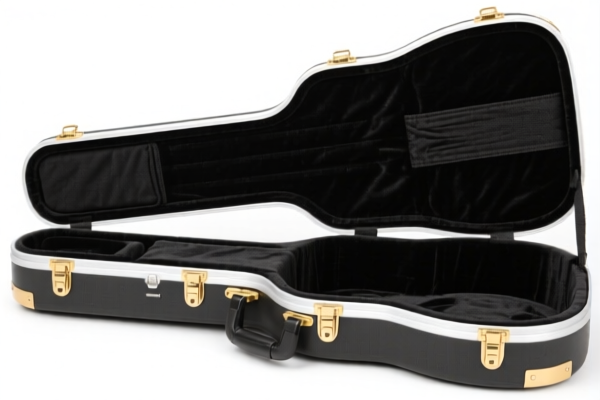
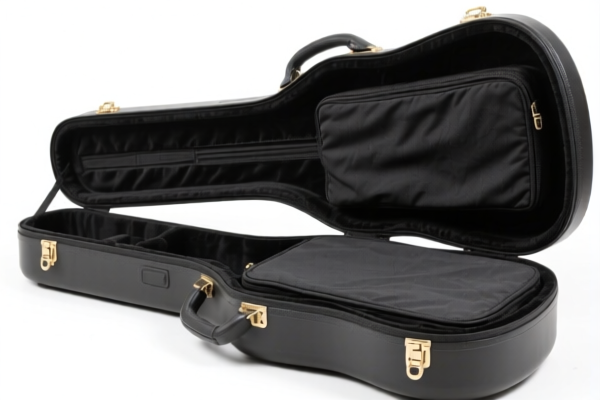
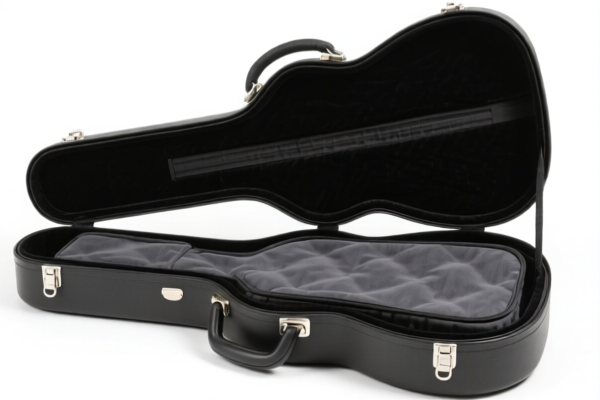
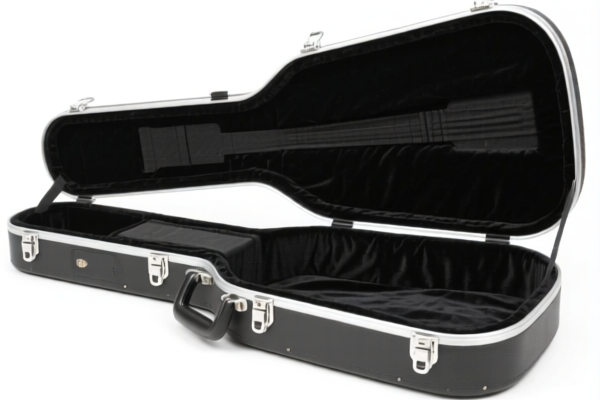
AI Analysis
🎸 Musical Instrument Cases with Plastic or Textile Exterior (2026 Customs Clearance Guide)
🌐 HS Code Reference & Clearance Strategy | 2026 Latest Tariff Analysis | Professional Level Compliance
📌 Product Definition: "Other Plastic or Textile Material Exterior Musical Instrument Cases" refer to protective containers designed specifically for musical instruments, where the outer surface is primarily made of plastics, textiles, or similar materials. These cases range from hard-shell gig bags and soft cases to semi-rigid plastic instrument boxes.
⚠️ Key Classification Challenge: - Function vs. Material: Are they primarily "containers of heading 4202" or "other manufactured articles of plastics/textiles (heading 6307 or 3926)"? - Specificity Rule: Heading 4202 is specific to "trunks, suitcases, vanity cases... and similar containers." If the item is clearly a case for an instrument, it should generally fall under 4202. However, if the material composition or form factor doesn't strictly match the standard "case" definition in some jurisdictions, customs may pivot to generic material headings (6307/3926), which carry different tax implications.
📦 II. HS Code Classification Matrix (Based on Provided Data)
| HS Code | Product Description | Material/Usage Match | Total Tax Rate | Key Tax Components |
|---|---|---|---|---|
| 4202.92.50.00 | Other cases of plastics or textile materials, fully matched in material and use. | ✅ Perfect Match: Exterior is plastic/textile, purpose is instrument protection. | 39.2% | Base: 4.2% Add'l: 25.0% Sec 301: 10% |
| 4202.92.97.00 | Other cases of plastics or textile materials, similar container type. | ⚠️ Partial Match: Material consistent, but deemed a "similar container" rather than specific instrument case. | 52.6% | Base: 17.6% Add'l: 25.0% Sec 301: 10% |
| 6307.90.98.91 | Other made-up articles, categorized as other finished products. | ❌ Mismatch: Classified as generic textile/plastic finish goods, not specific instrument cases. | 24.5% | Base: 7.0% Add'l: 7.5% Sec 301: 10% |
| 3926.90.99.89 | Other plastic articles, fitting general plastic product requirements. | ❌ Mismatch: Classified as generic plastic goods, ignoring instrument-specific function. | 22.8% | Base: 5.3% Add'l: 7.5% Sec 301: 10% |
🔍 Critical Insight: - HS 4202 is the most accurate classification for instrument cases. - However, HS 6307/3926 offer significantly lower base tariffs (7% and 5.3% vs 4.2%/17.6%), resulting in lower total effective rates (24.5% and 22.8% vs 39.2% and 52.6%). - Risk: Misclassification to 6307/3926 may lead to customs disputes if the product is undeniably an "instrument case."
💰 III. 2026 Tariff Rate Detailed Breakdown
✅ Applicable Country: USA
✅ Origin: China (CN)
✅ Effective Date: Current tariffs apply as per 2025-2026 trade data.
🎯 1. HS Code 4202.92.50.00 – Preferred Classification (Accurate)
| Item | Details |
|---|---|
| Description | Other plastic or textile material exterior musical instrument cases, material & use fully matched. |
| Base Tariff | 4.2% |
| Section 301 Add'l Tariff | +25.0% |
| Section 122 Tariff | +10.0% |
| Total Effective Rate | 39.2% |
| Calculation | CIF Value × 39.2% |
| De Minimis Exemption | ❌ Not Eligible (High tariff rate usually blocks de minimis under current rules) |
📌 Explanation: - This is the standard classification for instrument cases made of textile/plastic. - The 4.2% base is moderate, but the 25% Section 301 tariff drives the cost up significantly. - Section 122 adds another 10%, likely due to specific trade enforcement actions.
🎯 2. HS Code 4202.92.97.00 – Alternative "Similar Container"
| Item | Details |
|---|---|
| Description | Other plastic or textile material exterior musical instrument cases, material consistent, used as similar container. |
| Base Tariff | 17.6% |
| Section 301 Add'l Tariff | +25.0% |
| Section 122 Tariff | +10.0% |
| Total Effective Rate | 52.6% |
| Calculation | CIF Value × 52.6% |
⚠️ Warning: - This classification is worse than
4202.92.50.00because the base tariff is much higher (17.6%). - Use this only if the product does not fit the specific "instrument case" definition in50.00but still falls under Heading 4202.
🎯 3. HS Code 6307.90.98.91 – "Other Made-up Articles"
| Item | Details |
|---|---|
| Description | Other plastic or textile material exterior musical instrument cases, categorized as other finished products. |
| Base Tariff | 7.0% |
| Section 301 Add'l Tariff | +7.5% |
| Section 122 Tariff | +10.0% |
| Total Effective Rate | 24.5% |
| Calculation | CIF Value × 24.5% |
💡 Strategic Note: - Lower Total Rate (24.5%): Compared to 39.2%. - Risk: Customs may argue that a musical instrument case is not a generic "other made-up article" but a specific "container." This classification might be challenged during audit.
🎯 4. HS Code 3926.90.99.89 – "Other Plastic Articles"
| Item | Details |
|---|---|
| Description | Other plastic or textile material exterior musical instrument cases, fitting general plastic product requirements. |
| Base Tariff | 5.3% |
| Section 301 Add'l Tariff | +7.5% |
| > Section 122 Tariff | +10.0% |
| Total Effective Rate | 22.8% |
| Calculation | CIF Value × 22.8% |
💡 Strategic Note: - Lowest Total Rate (22.8%). - High Risk: Musical instrument cases are rarely classified as generic "plastic articles" if they have textile elements or specific instrument-shaped padding. This is only viable if the case is 100% rigid plastic with no textile components and no specific instrument-shaped molding that suggests a "case" function over a generic "container."
🛠️ IV. Clearance Operational Advice (Pitfall Avoidance Guide)
✅ 1. Documentation Checklist (Non-negotiable)
| Document | Required? | Purpose |
|---|---|---|
| Product Photos | ✅ | Show exterior material (plastic/textile) and interior padding. |
| Material Composition Statement | ✅ | Detail % of plastic vs. textile. Crucial for HS 3926 vs 6307 vs 4202. |
| Intended Use Statement | ✅ | Explicitly state: "Case specifically designed for [Instrument Name]." |
| Internal Structure Diagram | ✅ | Show padding, straps, handles – proves it’s a "case" (Heading 4202). |
| Commercial Invoice | ✅ | Describe as "Musical Instrument Case" or "Gig Bag," not just "Plastic Box." |
| Bill of Lading | ✅ | Ensure no conflicting descriptions. |
✅ 2. Classification Strategy & Warnings
🔥 Golden Rule: "Function Defines, Material Supports, Tax Minimizes Risk!"
| Scenario | Recommended HS Code | Tax Rate | Risk Level |
|---|---|---|---|
| Soft Case / Gig Bag (Textile + Plastic coating) | 4202.92.50.00 |
39.2% | ✅ Low (Accurate) |
| Hard Shell Case (Plastic exterior, textile interior) | 4202.92.50.00 |
39.2% | ✅ Low (Accurate) |
| Generic Plastic Box (No straps, no instrument-specific shape) | 3926.90.99.89 |
22.8% | ⚠️ High (May be rejected as "not a case") |
| Textile Bag (No plastic, just fabric) | 6307.90.98.91 |
24.5% | ⚠️ Medium (Is it a "made-up article" or "case"?) |
📌 Critical Warning: - Do NOT arbitrarily choose
3926or6307to save 15% tax unless the product is clearly NOT an instrument case (e.g., a generic plastic tote). - Customs can impose penalties + back-tariffs if they reclassify your goods from4202to4202.92.97.00(higher base) or if they deem your lower-tax classification as "misdeclaration."
✅ 3. Special Handling Tips
| Situation | Advice |
|---|---|
| Mixed Materials | If the case is 50% plastic shell + 50% textile bag, Heading 4202 still applies because it’s a "case." Emphasize the protective function. |
| OEM/Private Label | Ensure the invoice matches the product photo. Discrepancies trigger audits. |
| High-Value Cases | For expensive cases, consider Advance Ruling from CBP to lock in 4202.92.50.00 and avoid surprises. |
| Section 122 Impact | Note that the 10% Section 122 tariff is significant. Factor this into pricing strategies. |
🌍 V. Global Market Comparison (2026)
| Market | Recommended HS Code | Est. Total Tax (China Origin) | Notes |
|---|---|---|---|
| 🇺🇸 USA | 4202.92.50.00 |
39.2% | High Section 301 + 122 tariffs. |
| 🇪🇺 EU | 4202.92 |
~7-10% | No Section 301. Lower base tariffs. |
| 🇨🇳 China | 4202.92 |
~7-10% | Export from China to China? N/A. Import into China from elsewhere. |
| 🇬🇧 UK | 4202.92 |
~12-15% | Post-Brexit tariffs apply. |
📌 Conclusion: - USA is the most challenging market due to high additive tariffs. - EU/UK are more favorable for plastic/textile instrument cases. - Consider supply chain diversification if exporting to the US with high-value cases.
📌 VI. Common Mistakes & Pitfalls (Blood & Tears Lessons)
❌ Mistake 1: Classifying a musical instrument case as a generic "plastic box" (3926) to save tax.
👉 Consequence: Customs audit → Repossession of goods + Back-tariff + Fines. The product is clearly a "case" by design (straps, padding, instrument-specific shape).
❌ Mistake 2: Ignoring the Section 122 Tariff. 👉 Consequence: Unexpected 10% charge at border → Cash flow crisis. Always include this in cost calculations.
❌ Mistake 3: Mixing textile and plastic descriptions on the invoice. 👉 Consequence: Customs confusion → Delayed clearance. Be precise: "Exterior: Polypropylene; Interior: Felt."
✅ Best Practice:
"Describe as: 'Musical Instrument Gig Bag, Polyester Exterior with Plastic Reinforcement, Includes Shoulder Strap.' This anchors it to
4202.92.50.00(39.2%) but avoids the higher 52.6% rate and prevents misclassification flags."
🎯 VII. Conclusion: Precision in Classification Saves Money
🎯 Key Takeaway:
🔹
4202.92.50.00(39.2%) is the safest and most accurate classification. 🔹3926.90.99.89(22.8%) and6307.90.98.91(24.5%) offer lower rates but carry high misclassification risk. 🔹 Do not gamble unless your product lacks clear "case" features (straps, handles, padding).🔹 "HS Code is Destiny. One digit wrong, thousands of dollars lost."
📌 Pro Tip:
If your product is 100% plastic and not shaped for a specific instrument (e.g., a generic plastic storage box), you might successfully argue for 3926.90.99.89. However, if it has textile elements or instrument-specific padding, stick to 4202.
📣 Action Plan:
1. Review Product: Is it clearly an "instrument case"?
2. Choose HS: 4202.92.50.00 for accuracy.
3. Calculate Cost: Include 39.2% total tax.
4. Document: Prepare material statements and photos.
5. Consult: If in doubt, file for an CBP Advance Ruling.
✨ Professional Clearance Starts with Accurate Classification!
💼 Your Margin Depends on It!
Customer Reviews
About HS Code Classification
The Harmonized System (HS) is an internationally standardized nomenclature developed by the World Customs Organization (WCO) to classify traded products. Over 200 countries use the HS system as the basis for customs tariffs, trade statistics, and import/export regulations.
Each HS code follows a hierarchical structure:
- Chapter (2 digits) — Broad category of goods (e.g., Chapter 84: Machinery and Mechanical Appliances)
- Heading (4 digits) — More specific grouping within the chapter
- Subheading (6 digits) — Internationally standardized breakdown, used by all WCO member countries
- National subdivisions (8-10 digits) — Country-specific extensions for further classification, such as US HTSUS 10-digit codes
Correct HS code classification is essential for smooth customs clearance, accurate duty payment, and compliance with trade regulations. Misclassification can lead to customs delays, overpayment of duties, or penalties.
When importing from CN to US, the applicable tariff rates may include:
- Most-Favored-Nation (MFN) rate — The standard duty rate applied to WTO members
- General rate — Applied to countries without trade agreements
- Trade remedy duties — Additional tariffs such as Section 301 (anti-dumping), Section 232 (national security), or countervailing duties
The information provided on this page is for reference purposes only. For official classification, please consult with your local customs authority or a licensed customs broker.