Other Polyacetal Boards
CN → US| HS Code | Tariff Rate | Origin | Destination | Doc |
|---|---|---|---|---|
| 3907210000 | 41.5% | CN | US | Official Doc |
| 3907100000 | 41.5% | CN | US | Official Doc |
| 3920300000 | 40.8% | CN | US | Official Doc |
| 3920991000 | 41.0% | CN | US | Official Doc |
Product Images
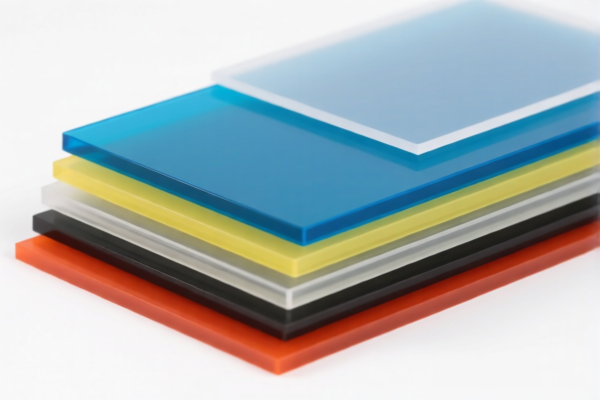
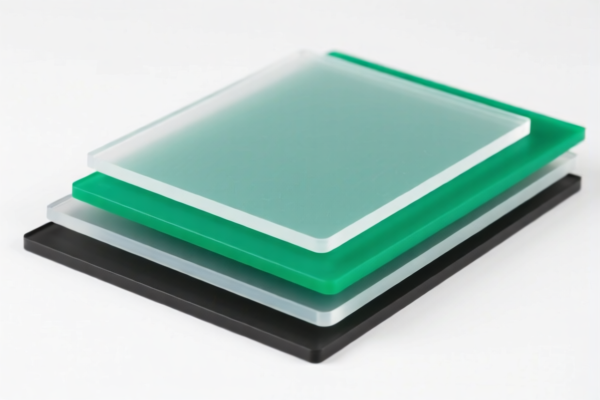
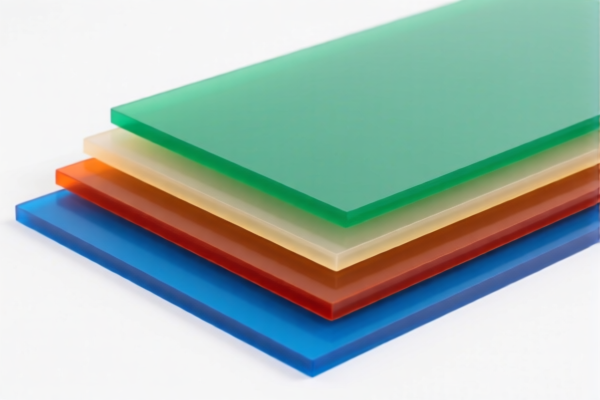
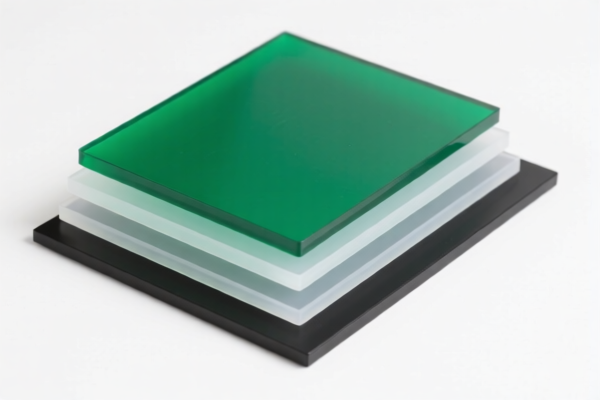
AI Analysis
🧪 Other Polyacetal Boards (POM Boards)
🌐 HS Code Reference & Customs Clearance Guide | 2026 Latest Tariff Analysis | Professional Level Clearance Strategy
📌 I. Product Definition & Classification: What Exactly is "Other Polyacetal Boards"?
Polyacetal, commonly known as Polyoxymethylene (POM) or Acetal Resin, is a high-performance engineering plastic with high stiffness, low friction, and excellent dimensional stability. In international trade, the classification of POM products depends heavily on their physical form (resin pellets vs. solid boards/sheets).
Key Distinction for Importers: * POM Resin (Raw Material): Granules or powders used for molding → Classified under Chapter 3907. * POM Boards/Sheets (Semi-finished/Finished): Solid plates, sheets, or films → Classified under Chapter 3920.
⚠️ Critical Note: The term "Other Polyacetal Boards" implies the product is in a solid board/sheet form, not raw resin. Therefore, it falls under Chapter 3920 (Plastics in primary forms), specifically non-foam plates, sheets, film, foil, and strip.
📦 II. HS Code Classification Details (2026 Latest Tariff Authority)
Based on the provided data, there are two potential HS Codes depending on the specific subheading interpretation of the board's material characteristics. However, since both codes apply to "Polyacetal/Polyoxymethylene Boards," the distinction is often administrative within Chapter 3920.
| HS Code | Product Description | Application Scenario | Material Consistency |
|---|---|---|---|
3907.21.00.00 |
Polyoxymethylene Resin (Note: Data summary mentions POM resin) | Raw material for injection molding; If imported as boards, this code may be incorrect unless declared as specific resin forms. | ✅ POM Resin |
3907.10.00.00 |
Polyoxymethylene (Polyacetal) Resin | General-purpose acetal resin; Similarly, if the item is a solid board, this may be a misclassification. | ✅ POM Resin |
3920.30.00.00 |
Polyacetal Boards (Non-foam) | Solid POM sheets/plates, non-foamed, used for machining, gears, industrial parts. | ✅ POM Board |
3920.99.10.00 |
Other Plates, Sheets, Film, Foil, and Strip of Plastics | Alternative classification for POM boards if specific subheading 3920.30 is restricted; covers plastic boards not elsewhere specified. |
✅ POM Board |
🔍 Key Clarification from DATA: - The provided data lists
3907.xxas "POM Resin" and3920.xxas "Polyacetal Boards." - If your product is strictly boards/sheets, the correct classification should logically be3920.30.00.00or3920.99.10.00. - Using3907.xxfor boards may trigger customs queries for incorrect classification.
💰 III. 2026 Latest Tariff Rate Details (Including Surtaxes & Policy Surcharges)
✅ Applicable Country: United States (US)
✅ Country of Origin: China (CN)
✅ Effective Time: Current tariffs (as per data provided)
🎯 1. 3920.30.00.00 —— Polyacetal Boards (Non-foam Plastic Sheets)
| Item | Content |
|---|---|
| Base Tariff Rate | 5.8% (Ad Valorem) |
| Section 301 Surcharge | +25.0% (USITC Footnote 9903.88.01 / Trade Act) |
| Section 122 Tariff | +10.0% (Specific provision mentioned in data) |
| Total Tariff Rate | 40.8% |
| Tax Calculation | CIF Value × 40.8% |
| De Minimis Exemption | ❌ Not Available (Deny De Minimis) |
| Legal Basis Path | Base Tariff → Section 301 → Section 122 |
📌 Explanation: - Base 5.8%: Standard MFN tariff for plastic plates/sheets of certain polymers. - 25% Section 301: Standard punitive tariff on Chinese plastics under U.S. Trade Act Section 301. - 10% Section 122: Additional tariff as specified in the source data. - Total 40.8%: This is a high-cost classification. Ensure your pricing model accounts for this significant duty burden.
🎯 2. 3920.99.10.00 —— Other Plastic Boards (General Plastic Plate/Sheet)
| Item | Content |
|---|---|
| Base Tariff Rate | 6.0% (Ad Valorem) |
| Section 301 Surcharge | +25.0% |
| Section 122 Tariff | +10.0% |
| Total Tariff Rate | 41.0% |
| Tax Calculation | CIF Value × 41.0% |
| De Minimis Exemption | ❌ Not Available |
| Legal Basis Path | Base Tariff → Section 301 → Section 122 |
📌 Explanation: - Slightly higher base rate (6.0%) compared to
3920.30(5.8%). - Same surcharges apply. - Total tariff is 41.0%, marginally higher than3920.30.00.00.
🎯 3. 3907.21.00.00 & 3907.10.00.00 —— POM Resin (If Misclassified as Boards)
| Item | Content |
|---|---|
| Base Tariff Rate | 6.5% |
| Section 301 Surcharge | +25.0% |
| Section 122 Tariff | +10.0% |
| Total Tariff Rate | 41.5% |
| Tax Calculation | CIF Value × 41.5% |
| De Minimis Exemption | ❌ Not Available |
⚠️ Warning: If you declare boards as "Resin," you risk misdeclaration penalties. The total rate here is 41.5%, the highest in the dataset. However, customs may reject this if the physical form is clearly a solid board.
🛠️ IV. Customs Clearance Practical Advice (Battle-Tested Pitfall Guide)
✅ 1. Required Documentation Checklist (Non-Negotiable)
| Document | Mandatory? | Purpose |
|---|---|---|
| ✅ Product Specification Sheet | ✔️ | Must clearly state: Material (POM/Acetal), Form (Board/Sheet), Dimensions, Color, Density. |
| ✅ Photos of Product | ✔️ | Show cross-section to prove it is a solid board, not pellets/resin. |
| ✅ Commercial Invoice | ✔️ | Description must match HS Code exactly (e.g., "Polyacetal (POM) Plastic Board, Non-Foam"). |
| ✅ Bill of Lading (B/L) | ✔️ | Ensure packaging details match invoice. |
| ✅ Certificate of Origin | ✔️ | Required for verifying country of origin (China). |
| ✅ Material Safety Data Sheet (MSDS) | ✔️ | May be requested for chemical compliance. |
✅ 2. Declaration Tips (Crucial Keywords)
🔥 "Form Matters: Board = 3920, Resin = 3907. Don't Mix!"
| Scenario | Correct Declaration | Incorrect Declaration | Consequence |
|---|---|---|---|
| Solid POM Sheet | "Polyacetal Board, HS 3920.30.00.00" | "POM Resin, HS 3907.21.00.00" | Customs may downgrade or penalize for misclassification; risk of audit. |
| POM Pellets | "POM Resin, HS 3907.21.00.00" | "POM Board" | Rejected; goods may be held for inspection. |
| Mixed Shipment | Split invoice for Resin and Boards | Single line item "Plastic Products" | Complex customs scrutiny; higher risk of penalty. |
✅ 3. Special Handling for "Polyacetal Boards"
| Situation | Handling Advice |
|---|---|
| High-Value Engineering Boards | Ensure value declaration includes only the board cost. Avoid bundling with unrelated items to keep CIF value accurate for the 40.8% tax base. |
| Custom Shapes (Cut Parts) | If boards are cut into specific parts (e.g., gears), they may still fall under 3920 if they remain simple shapes. If they are "finished articles," they might move to Chapter 39 or 84. Consult a broker. |
| Exemptions? | Currently, no general exemptions for these HS codes from Section 301 or Section 122 for Chinese origin. |
🌍 V. Global Market Comparison (2026 Latest)
| Country/Region | Recommended HS Code | Estimated Tariff | Notes |
|---|---|---|---|
| 🇺🇸 USA | 3920.30.00.00 |
40.8% | High duties due to Section 301 + 122. |
| 🇨🇳 China | 3920.30.00.00 |
~5-7% | Low import duty for raw materials/semi-finished goods. |
| 🇪🇺 EU | 3920.30.00.00 |
~6.5% | No Section 301 equivalent; standard MFN rates. |
| 🇬🇧 UK | 3920.30.00.00 |
~6.5% | Post-Brexit standard rates apply. |
| 🇯🇵 Japan | 3920.30.00.00 |
~6% | Generally favorable for plastics. |
📌 Conclusion: - The USA imposes the heaviest burden on Polyacetal boards from China (40.8%). - For other major markets, the tariff is significantly lower (5-7%). - Strategy: If exporting to the US, consider supply chain diversification (e.g., sourcing from Southeast Asia if eligible for lower tariffs) or factoring the 40.8% duty into your pricing.
📌 VI. Common Mistakes & Pitfalls (Lessons Learned)
❌ Mistake 1: Declaring "POM Boards" as "POM Resin" to avoid higher scrutiny.
👉 Consequence: Customs inspection reveals solid boards. Penalty for misclassification + back taxes.
❌ Mistake 2: Ignoring the 10% Section 122 tariff.
👉 Consequence: Underestimating landed cost. The total is not just Base + 301, but also includes this specific surcharge.
❌ Mistake 3: Using vague descriptions like "Plastic Sheet."
👉 Consequence: Customs may assign a higher default duty or hold the shipment for clarification. Always specify "Polyacetal (POM)" and "Non-Foam."
✅ Correct Practice:
"Polyacetal (POM) Plastic Board, Non-Foam, White, 10mm Thickness, CNC Machinable, HS Code 3920.30.00.00"
🎯 VII. Conclusion: Precision Pays!
🎯 Key Takeaway:
🔹 "Polyacetal Boards are NOT Resin."
🔹 USA Tariff is ~40.8% (Base 5.8% + 301 25% + 122 10%).
🔹 Documentation must prove solid form to justify Chapter 3920.
📌 Pro Tip:
If your Polyacetal boards are exempt from Section 301 (check for exclusions list), the tariff could drop to 15.8% (Base 5.8% + 122 10%). Verify exclusion eligibility before shipping!
📣 Immediate Action:
📞 Confirm HS Code: Choose
3920.30.00.00for standard POM boards.
🚀 Calculate Landed Cost: Factor in 40.8% total duty for US imports.
✨ Clear Customs Smoothly: Provide precise technical specs to avoid delays.
✨ Professional Clearance Starts with Accurate Classification!
💼 Every Percentage Point Matters in Profit Margins!
Customer Reviews
About HS Code Classification
The Harmonized System (HS) is an internationally standardized nomenclature developed by the World Customs Organization (WCO) to classify traded products. Over 200 countries use the HS system as the basis for customs tariffs, trade statistics, and import/export regulations.
Each HS code follows a hierarchical structure:
- Chapter (2 digits) — Broad category of goods (e.g., Chapter 84: Machinery and Mechanical Appliances)
- Heading (4 digits) — More specific grouping within the chapter
- Subheading (6 digits) — Internationally standardized breakdown, used by all WCO member countries
- National subdivisions (8-10 digits) — Country-specific extensions for further classification, such as US HTSUS 10-digit codes
Correct HS code classification is essential for smooth customs clearance, accurate duty payment, and compliance with trade regulations. Misclassification can lead to customs delays, overpayment of duties, or penalties.
When importing from CN to US, the applicable tariff rates may include:
- Most-Favored-Nation (MFN) rate — The standard duty rate applied to WTO members
- General rate — Applied to countries without trade agreements
- Trade remedy duties — Additional tariffs such as Section 301 (anti-dumping), Section 232 (national security), or countervailing duties
The information provided on this page is for reference purposes only. For official classification, please consult with your local customs authority or a licensed customs broker.