Other Polyvinyl Chloride Plastic Strip
CN → US| HS Code | Tariff Rate | Origin | Destination | Doc |
|---|---|---|---|---|
| 3920435000 | 39.2% | CN | US | Official Doc |
| 3920490000 | 40.8% | CN | US | Official Doc |
| 3919905060 | 40.8% | CN | US | Official Doc |
| 3919905040 | 40.8% | CN | US | Official Doc |
| 3904100000 | 41.5% | CN | US | Official Doc |
| 3904210000 | 41.5% | CN | US | Official Doc |
Product Images
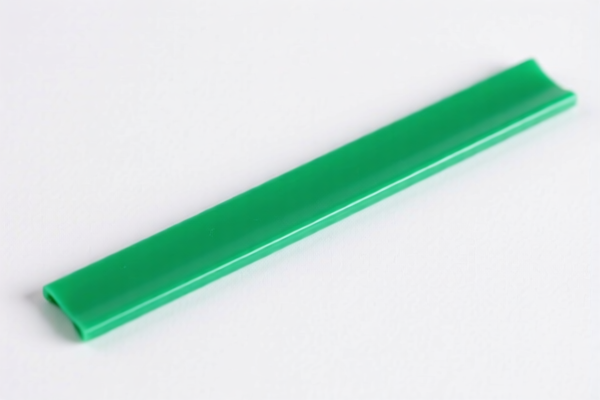
AI Analysis
🧪 PVC Plastic Strips & Sheets (聚氯乙烯塑料片/条)
🌐 HS Code Reference & Customs Clearance Guide | 2026 Latest Tariff Analysis | Professional Clearance Strategy
📌 I. Product Definition & Classification: Do You Really Understand "PVC Strip"?
Polyvinyl Chloride (PVC) is one of the most widely used thermoplastics in global trade. However, in customs classification, "PVC Strip" is a generic term that can refer to several different forms depending on its physical shape, thickness, and intended use.
In international trade, PVC products are generally categorized into two main groups:
- Primary Forms / Raw Materials (Chapter 3904): PVC in granules, powders, or unprocessed sheets.
- Manufactured Articles (Chapter 3920/3919): PVC sheets, films, plates, self-adhesive tapes, or cut strips.
⚠️ Key Classification Point:
- If it is a raw sheet or film not yet cut into specific shapes or adhesive → Likely 3920.xxxx (Plates, Sheets, Film).
- If it is self-adhesive or pre-cut into specific flat shapes → Likely 3919.90 (Self-adhesive Plates/Sheets).
- If it is raw resin → 3904.10.
- Misclassification Risk: Declaring a manufactured sheet as "raw material" or vice versa can lead to significant duty differences and customs delays.
📦 II. HS Code Classification Details (2026 Latest Tariff Authority Comparison)
Based on the provided data, here are the five specific HS Codes applicable to "Other Polyvinyl Chloride Plastic Strip," along with their detailed tax implications for imports from China to the USA.
| HS Code | Product Description | Key Characteristics | Total Tax Rate |
|---|---|---|---|
| 3920.43.50.00 | PVC Sheet, Classified as Plate/Sheet/Film | Standard PVC sheet, non-adhesive, flat shape | 39.2% |
| 3920.49.00.00 | PVC Sheet, Vinyl Polymer Plate/Sheet/Film | Generic PVC sheet, broader category under 3920 | 40.8% |
| 3919.90.50.60 | PVC Sheet, Self-Adhesive Flat Shape | Self-adhesive PVC strip/film | 40.8% |
| 3919.90.50.40 | PVC Sheet, Flat Shape Plastic Article | Non-adhesive, pre-cut flat shapes | 40.8% |
| 3904.10.00.00 | PVC Sheet, Primary Form of Vinyl Polymer | Raw resin/unprocessed form | 41.5% |
🔍 Important Reminder:
- 3919 codes apply to self-adhesive or pre-cut flat items. If your strip has an adhesive backing, it must be classified under 3919.
- 3920 codes apply to non-adhesive plates, sheets, and films.
- 3904 is for primary forms (e.g., pellets, raw sheets before manufacturing). Do not use this for finished strips!
- All these codes are subject to high additional tariffs due to US-China trade policies.
💰 III. 2026 Latest Tariff Rate Breakdown (Including Additional Taxes & Policy Surcharges)
✅ Applicable Country: USA (US)
✅ Country of Origin: China (CN)
✅ Effective Date: From November 10, 2025 (and subsequent imports)
🎯 1. 3920.43.50.00 —— PVC Sheet, Plate/Sheet/Film Category
| Item | Content |
|---|---|
| Base Tariff Rate | 4.2% |
| Section 301 Additional Tariff | +25.0% |
| Section 122 Tariff | +10.0% |
| Total Tariff Rate | 39.2% |
| Tax Calculation | CIF Value × 39.2% |
| De Minimis Exemption? | ❌ No (Not eligible for $800 de minimis exemption for Section 301 goods) |
| Legal Basis Path | USITC:3920.43.50.00 → Section 301 Footnote → Section 122 |
📌 Explanation:
- Base 4.2%: Standard MFN tariff for PVC sheets.
- 25% Section 301: Additional tariff imposed on Chinese goods under U.S. Trade Act Section 301.
- 10% Section 122: Additional tariff under Section 232 or other emergency powers (as per provided data).
- Total 39.2%: This is a very high cost for importers. Pricing strategies must account for this.
🎯 2. 3920.49.00.00 —— Other PVC Sheets (Vinyl Polymer)
| Item | Content |
|---|---|
| Base Tariff Rate | 5.8% |
| Section 301 Additional Tariff | +25.0% |
| Section 122 Tariff | +10.0% |
| Total Tariff Rate | 40.8% |
| Tax Calculation | CIF Value × 40.8% |
| De Minimis Exemption? | ❌ No |
| Legal Basis Path | USITC:3920.49.00.00 → Section 301 → Section 122 |
📌 Note:
- This is a catch-all for PVC sheets not specified in more detail under 3920.43.
- Slightly higher total rate due to higher base tariff (5.8% vs 4.2%).
🎯 3. 3919.90.50.60 & 3919.90.50.40 —— Self-Adhesive or Flat Shape PVC Strips
| Item | Content |
|---|---|
| Base Tariff Rate | 5.8% |
| Section 301 Additional Tariff | +25.0% |
| Section 122 Tariff | +10.0% |
| Total Tariff Rate | 40.8% |
| Tax Calculation | CIF Value × 40.8% |
| De Minimis Exemption? | ❌ No |
| Legal Basis Path | USITC:3919.90.50.xx → Section 301 → Section 122 |
📌 Critical Distinction:
- 3919 covers self-adhesive products. If your PVC strip has a glue backing (e.g., for labeling, sealing, or insulation), it must be classified here.
- 3919.90.50.60 vs 3919.90.50.40: Both have the same tariff rate (40.8%) but may differ in specific product definitions (e.g., width, thickness, or application). Ensure correct sub-classification to avoid audits.
🎯 4. 3904.10.00.00 —— PVC in Primary Form (Raw Sheet/Resin)
| Item | Content |
|---|---|
| Base Tariff Rate | 6.5% |
| Section 301 Additional Tariff | +25.0% |
| Section 122 Tariff | +10.0% |
| Total Tariff Rate | 41.5% |
| Tax Calculation | CIF Value × 41.5% |
| De Minimis Exemption? | ❌ No |
| Legal Basis Path | USITC:3904.10.00.00 → Section 301 → Section 122 |
📌 Warning:
- This code is for primary forms (e.g., PVC resin, unprocessed granules, or raw sheets before cutting/manufacturing).
- If you import finished strips, do not use this code. Misclassification can lead to penalties and back-taxes.
- Highest total rate (41.5%) due to highest base tariff (6.5%).
🛠️ IV. Customs Clearance Practical Advice (Real-World Pitfall Avoidance Guide)
✅ 1. Required Documentation Checklist (None Are Optional)
| Document | Must Provide | Explanation |
|---|---|---|
| ✅ Product Specification Sheet | ✔️ | Include dimensions, thickness, width, color, hardness, and composition. |
| ✅ Product Photos | ✔️ | Clear photos showing the strip’s shape, adhesive backing (if any), and packaging. |
| ✅ Commercial Invoice | ✔️ | Clearly state "Polyvinyl Chloride (PVC) Strip" and HS Code. |
| ✅ Packing List | ✔️ | Detail net/gross weight, number of pieces, and packaging type. |
| ✅ Certificate of Origin (CO) | ✔️ | Required for origin verification. |
| ✅ Third-Party Test Report | ✔️ | RoHS, REACH, or FDA compliance (if applicable for food/medical use). |
| ✅ Adhesive Declaration | ✔️ | If self-adhesive, explicitly state "Self-Adhesive" to justify HS 3919. |
✅ 2. Declaration Tips (Key Mnemonic)
🔥 "Shape Defines Code, Adhesive Means 3919, Raw is 3904, Sheets are 3920!"
| Scenario | Correct Declaration | Wrong Declaration |
|---|---|---|
| PVC strip with glue on one side | 3919.90.50.60 (Self-adhesive) | 3920.43.50.00 → Over/Under-declared |
| Plain PVC strip, no adhesive, flat | 3920.43.50.00 or 3920.49.00.00 | 3919 → Wrong category |
| PVC strips cut to specific shapes (not adhesive) | 3919.90.50.40 (Flat Shape) | 3904 → Raw material misclassification |
| PVC raw sheets/resin before cutting | 3904.10.00.00 | 3920 → Finished goods misclassification |
| Mixed shipment (Adhesive + Non-Adhesive) | Split Declaration | Single HS Code → Customs Hold |
✅ 3. Special Cases Handling
| Scenario | Handling Advice |
|---|---|
| OEM Custom PVC Strips | Provide customer orders + design drawings to prove intended use. |
| Flexible vs. Rigid PVC | Specify if it’s flexible (soft PVC) or rigid (hard PVC) in specs, though HS may not always distinguish. |
| PVC for Food/medical Use | Provide FDA or EU 10/2011 compliance documents. |
| Importing via Third Country | If transshipped through Vietnam/Malaysia, ensure Substantial Transformation occurred, or risk US origin rules applying. |
🌍 V. Global Market Comparison (2026 Latest)
| Country/Region | Recommended HS Code | Tariff (China Origin) | Certification Required | Notes |
|---|---|---|---|---|
| 🇺🇸 USA | 3920.43.50.00 / 3919.90 |
39.2% - 41.5% | RoHS, Prop 65 | High tariffs due to Section 301 & 122 |
| 🇨🇳 China | 3920.43.50.00 |
~5-6% | CCC (if applicable) | Low base tariff, no additional surcharges |
| 🇪🇺 EU | 3920.43.00 |
6.5% | REACH, RoHS | No Section 301 surcharge |
| 🇬🇧 UK | 3920.43.00 |
6.5% | UKCA | Post-Brexit rules apply |
| 🇦🇺 Australia | 3920.43.00 |
5% | RCM | No major surcharges |
📌 Conclusion:
- USA is the most expensive market for PVC strips from China due to Section 301 (25%) and Section 122 (10%) surcharges.
- EU, UK, Australia, and China have much lower effective tariffs.
- Consider supply chain diversification if targeting the US market.
📌 VI. Common Mistakes & Pitfall Avoidance (Lessons Learned)
❌ Mistake 1: Declaring self-adhesive PVC strips as "non-adhesive sheets" (3920)
👉 Consequence: Incorrect classification, potential penalty, or forced reclassification by CBP.
❌ Mistake 2: Using HS Code 3904 for finished PVC strips
👉 Consequence: Higher base tariff (6.5% vs 4.2%) and potential audit for misrepresentation of "primary form."
❌ Mistake 3: Not declaring adhesive presence
👉 Consequence: CBP may classify under 3919 (40.8%) retroactively if discovered during inspection.
❌ Mistake 4: Assuming de minimis ($800) applies
👉 Consequence: Section 301 goods are NOT eligible for de minimis exemption. Small shipments still face full duties.
✅ Correct Approach:
"PVC Strip, 1mm thick, 10cm wide, Non-Adhesive, Soft PVC, For Industrial Sealing, Model XYZ"
or
"Self-Adhesive PVC Tape, 1mm thick, 5cm wide, Backed with Pressure-Sensitive Adhesive, For Packaging"
🎯 VII. Conclusion: Professional Declaration, Time-Saving, Cost-Effective!
🎯 Remember the Mnemonic:
🔹 "Adhesive = 3919 (40.8%), Non-Adhesive Sheet = 3920 (39.2%-40.8%), Raw = 3904 (41.5%)."
🔹 "Section 301 & 122 add 35% total tax. No de minimis! Declare accurately!"
📌 Pro Tip:
If your PVC strips are originally from Vietnam, Malaysia, or Thailand, you may be eligible for IEEPA exemptions or lower tariffs.
Recommend pre-classification ruling (Advance Ruling) from CBP to avoid clearance risks.
📣 Immediate Action:
📞 Contact a licensed customs broker + Provide product photos + Apply for HS Code Advance Ruling
🚀 Let your PVC strips clear smoothly, reduce costs, and boost profits!
✨ Professional clearance starts with accurate classification!
💼 Every cent of cost deserves precise calculation!
Customer Reviews
About HS Code Classification
The Harmonized System (HS) is an internationally standardized nomenclature developed by the World Customs Organization (WCO) to classify traded products. Over 200 countries use the HS system as the basis for customs tariffs, trade statistics, and import/export regulations.
Each HS code follows a hierarchical structure:
- Chapter (2 digits) — Broad category of goods (e.g., Chapter 84: Machinery and Mechanical Appliances)
- Heading (4 digits) — More specific grouping within the chapter
- Subheading (6 digits) — Internationally standardized breakdown, used by all WCO member countries
- National subdivisions (8-10 digits) — Country-specific extensions for further classification, such as US HTSUS 10-digit codes
Correct HS code classification is essential for smooth customs clearance, accurate duty payment, and compliance with trade regulations. Misclassification can lead to customs delays, overpayment of duties, or penalties.
When importing from CN to US, the applicable tariff rates may include:
- Most-Favored-Nation (MFN) rate — The standard duty rate applied to WTO members
- General rate — Applied to countries without trade agreements
- Trade remedy duties — Additional tariffs such as Section 301 (anti-dumping), Section 232 (national security), or countervailing duties
The information provided on this page is for reference purposes only. For official classification, please consult with your local customs authority or a licensed customs broker.