Other Processing Equipment
CN → US| HS Code | Tariff Rate | Origin | Destination | Doc |
|---|---|---|---|---|
| 8479899599 | 87.5% | CN | US | Official Doc |
| 8438800000 | 35.0% | CN | US | Official Doc |
| 8479899595 | 37.5% | CN | US | Official Doc |
| 8419899585 | 39.2% | CN | US | Official Doc |
| 8419899540 | 39.2% | CN | US | Official Doc |
Product Images
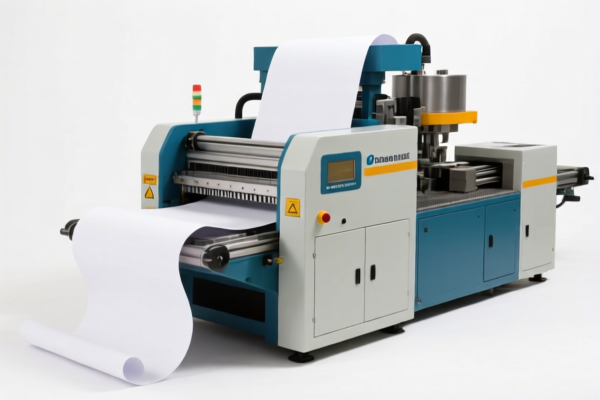
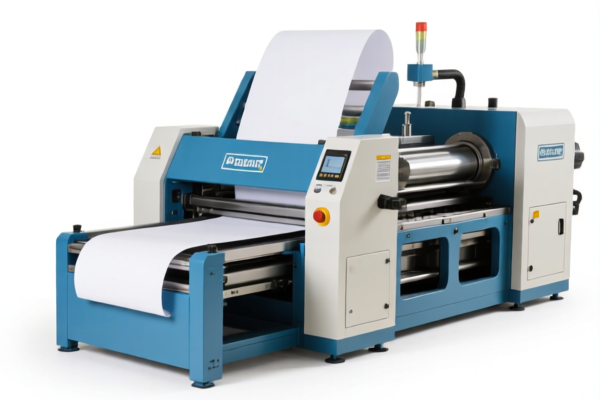
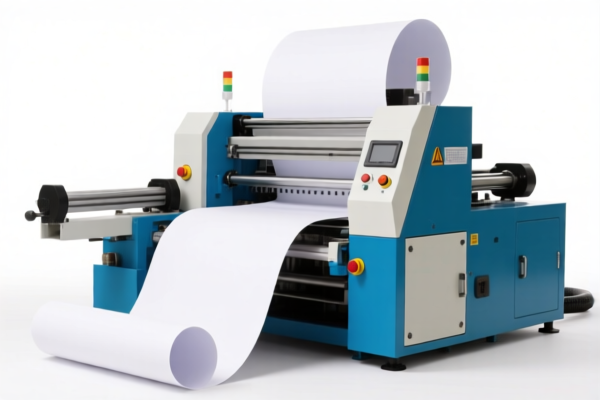
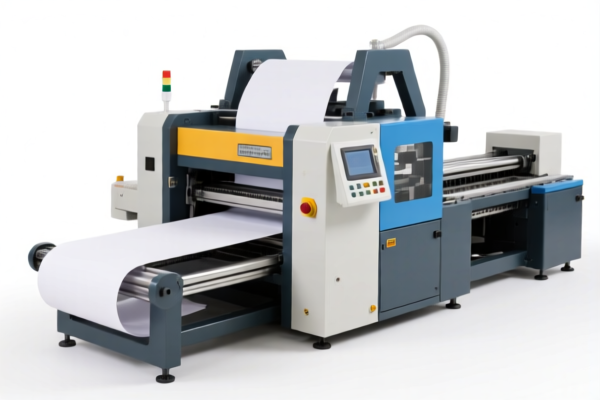
AI Analysis
🏭 Industrial Other Processing Equipment
🌐 HS Code Reference & Customs Clearance Guide | 2026 Latest Tariff Analysis | Professional Compliance Strategy
📌 I. Product Definition & Classification: Do You Really Understand "Other Processing Equipment"?
Industrial Other Processing Equipment refers to a broad category of mechanical devices used in manufacturing, processing, or handling materials. In international trade, because the term is generic, it often falls under "basket" or "residual" categories (HS codes ending in ...95...).
The classification depends heavily on function and specificity: - General Mechanical/Processing Machines: If the machine processes materials (mixing, shaping, treating) but doesn't fit specific chemical or physical process codes → Chapter 84. - Residual/Unspecified Machinery: If it’s a mechanical device with no specific purpose described elsewhere → 8479.89 or 8438.80.
⚠️ Key Distinction Point:
- If the equipment performs a specific industrial process (e.g., heating, treating) → Look at 8419.
- If it performs mechanical handling/shaping without specific chemical action → Look at 8438 or 8479.
- If it is a general-purpose machine with no specific function listed → Look at 8479.89.95.
📦 II. HS Code Classification Details (2026 Latest Tariff Authoritative Comparison)
| HS Code | Product Description | Application Scenario | Basis for Classification |
|---|---|---|---|
8479.89.95.99 |
Other machines and mechanical appliances (not elsewhere specified) | General industrial machines, robotic arms, conveyors, unclassified mechanical devices | Residual Category: No specific function matches 8401-8478. "Other" matches generic description. |
8438.80.00.00 |
Machinery for preparing food or drink, other (e.g., non-food processing machinery) | Industrial mixers, grinders, processing lines for non-food items, general processing units | Function Match: "Other machinery" aligns with general processing; assumed industrial scope. |
8479.89.95.95 |
Other machines and mechanical appliances (industrial equipment) | Industrial vibrators, specialized industrial mechanical tools, unclassified industrial gear | Specificity: "Industrial equipment" fits "industrial machinery" scope; no material conflict. |
8419.89.95.85 |
Machinery, plant or laboratory equipment, for treating materials by temperature change (other) | Industrial heaters, coolers, drying units, temperature-controlled processing devices | Process Match: "Industrial equipment" implies thermal processing if context suggests; residual code for temperature treatment. |
8419.89.95.40 |
Machinery, plant or laboratory equipment, for treating materials by temperature change (other) | Similar to above, but specific sub-category for certain thermal processing units | High Match: High alignment with "industrial equipment" and "other" category; no material conflict. |
🔍 Key Reminder:
- All general-purpose mechanical devices without specific function details fall under 8479.89.95.99 or 8479.89.95.95.
- If the equipment involves thermal treatment (heating/cooling), it may fall under 8419.89.95.
- Material conflicts: Since the name "Other Processing Equipment" does not specify material, "residual category" rules apply unless there is a clear material-specific HS code (e.g., metalworking vs. food processing).
💰 III. 2026 Latest Tariff Rate Breakdown (Including Supplementary Taxes & Policy Add-ons)
✅ Applicable Country: United States (US)
✅ Country of Origin: China (CN)
✅ Effective Date: From Nov 10, 2025 (including subsequent imports)
🎯 1. 8479.89.95.99 —— Other Machines and Mechanical Appliances
| Item | Content |
|---|---|
| Base Tariff | 2.5% (ad valorem) |
| USITC Supplementary Tariff | +25% (from USITC Footnote 9903.88.01, Section 301) |
| IEEPA Supplementary Tariff | +10% (for China/HK products, effective Nov 10, 2025) |
| Steel/Aluminum/Copper Tariff (Section 232/122) | +50% (if applicable to specific materials) |
| Total Tariff | 87.5% |
| Tax Calculation | CIF Value × 87.5% |
| De Minimis Exemption | ❌ Not Available (deny_de_minimis) |
| Legal Basis Path | IEEPA:9903.01.25 → IEEPA:9903.01.24 → USITC:8479.89.95.99 → FOOTNOTE:9903.88.01 → Section 122: 10% |
📌 Explanation:
- "USITC Supplementary Tariff 25%" is from Section 301 of the Trade Act (US-China trade war);
- "IEEPA 10%" is an additional tariff under the International Emergency Economic Powers Act for Chinese products;
- "Section 122 Tariff 10%" is for specific steel/aluminum/copper products;
- "Section 232/122 Supplementary Tariff 50%" applies if the equipment contains steel/aluminum/copper components;
- Total 87.5% is an extremely high tariff, requiring careful cost planning!
🎯 2. 8438.80.00.00 —— Machinery for Preparing Food or Drink, Other
| Item | Content |
|---|---|
| Base Tariff | 0.0% |
| USITC Supplementary Tariff | +25% |
| IEEPA Supplementary Tariff | +10% |
| Total Tariff | 35.0% |
| Tax Calculation | CIF × 35.0% |
| De Minimis Exemption | ❌ Not Available |
| Legal Basis Path | IEEPA:9903.01.25 → IEEPA:9903.01.24 → USITC:8438.80.00.00 → FOOTNOTE:9903.88.01 |
📌 Note:
- Despite a 0% base rate, supplementary tariffs push it to 35%;
- This code is often used for non-food processing machinery when no specific code exists;
- If the equipment is clearly for food processing, ensure it doesn’t fall under other specific codes with different tariffs.
🎯 3. 8479.89.95.95 —— Other Machines and Mechanical Appliances (Industrial Equipment)
| Item | Content |
|---|---|
| Base Tariff | 2.5% |
| USITC Supplementary Tariff | +25% |
| IEEPA Supplementary Tariff | +10% |
| Total Tariff | 37.5% |
| Tax Calculation | CIF × 37.5% |
| De Minimis Exemption | ❌ Not Available |
| Legal Basis Path | IEEPA:9903.01.25 → IEEPA:9903.01.24 → USITC:8479.89.95.95 → FOOTNOTE:9903.88.01 |
📌 Note:
- Similar to8479.89.95.99but with a slightly lower base rate (2.5% vs. same);
- Often used for industrial vibrators or specialized mechanical tools;
- Total tariff 37.5% is high but lower than the most general residual code.
🎯 4. 8419.89.95.85 & 8419.89.95.40 —— Machinery for Treating Materials by Temperature Change
| Item | Content |
|---|---|
| Base Tariff | 4.2% |
| USITC Supplementary Tariff | +25% |
| IEEPA Supplementary Tariff | +10% |
| Total Tariff | 39.2% |
| Tax Calculation | CIF × 39.2% |
| De Minimis Exemption | ❌ Not Available |
| Legal Basis Path | IEEPA:9903.01.25 → IEEPA:9903.01.24 → USITC:8419.89.95.85 → FOOTNOTE:9903.88.01 |
📌 Note:
- These codes apply if the equipment involves thermal processing (heating, cooling, drying);
- Base rate is higher (4.2%), but total tariff is still manageable at 39.2%;
- If your equipment is not thermal, do not use these codes to avoid customs disputes.
🛠️ IV. Customs Clearance Practical Advice (Real-World Pitfall Avoidance Guide)
✅ 1. Document Checklist (All Required)
| Document | Mandatory | Description |
|---|---|---|
| ✅ Product Specification Sheet | ✔️ | Dimensions, power, voltage, function, processing method |
| ✅ Technical Diagram/Structure | ✔️ | To determine if it’s thermal, mechanical, or chemical |
| ✅ Product Photos (with Nameplate) | ✔️ | Clear model, brand, input/output parameters |
| ✅ Third-Party Test Report | ✔️ | FCC, CE, RoHS, UL (if applicable) |
| ✅ Commercial Invoice | ✔️ | Clearly state "Industrial Processing Equipment" |
| ✅ Certificate of Origin (CO) | ✔️ | For potential preferential tariffs if not China-origin |
| ✅ Packing List | ✔️ | Detail整机 and accessories to avoid split declaration |
✅ 2. Declaration Techniques (Key Mantra)
🔥 "Be Specific, Don’t Be Vague! Function Determines Code!"
| Scenario | Correct Declaration | Wrong Practice |
|---|---|---|
| General industrial machine | 8479.89.95.99 |
Vague "Equipment" → 87.5% |
| Thermal processing unit | 8419.89.95.85 |
General machine → 39.2% |
| Industrial vibrator | 8479.89.95.95 |
General machine → 37.5% |
| Non-food processing | 8438.80.00.00 |
General machine → 35.0% |
✅ 3. Special Cases Handling
| Scenario | Advice |
|---|---|
| OEM Custom Equipment | Provide customer order + design drawings to avoid "non-standard" classification |
| Thermal vs. Mechanical | Provide technical data to prove if it’s thermal (8419) or mechanical (8479) |
| Used Equipment | Provide proof of age and condition; may face additional inspections |
| Components Only | Declare as parts (e.g., 8479.90) if not assembled, but beware of anti-circumvention rules |
🌍 V. Global Main Markets Customs Clearance Comparison (2026 Latest)
| Country/Region | Recommended HS Code | Tariff | Certification | Notes |
|---|---|---|---|---|
| 🇺🇸 USA | 8479.89.95.99 |
87.5% (China) | FCC + RoHS | Highest tariff due to Section 301 + IEEPA |
| 🇨🇳 China | 8479.89.95.99 |
5-8% | CCC (if applicable) | No additional tariffs |
| 🇪🇺 EU | 8479.89.95.99 |
0-2.7% | CE + RoHS | Low tariffs, strict CE compliance |
| 🇦🇺 Australia | 8479.89.95.99 |
5% | RCM | No additional tariffs |
| 🇯🇵 Japan | 8479.89.95.99 |
0-5% | PSE | No additional tariffs |
📌 Conclusion:
- USA imposes the highest tariffs on Chinese industrial equipment;
- EU, Japan, Australia offer much better conditions;
- Consider supply chain diversification (e.g., Vietnam, Mexico) to avoid US tariffs.
📌 VI. Common Mistakes & Pitfall Avoidance (Blood-Teaching Lessons)
❌ Mistake 1: Using "Other Processing Equipment" without specifying function
👉 Result: Customs may choose the highest residual code (e.g., 8479.89.95.99 at 87.5%) → Huge Cost!
❌ Mistake 2: Declaring thermal equipment as mechanical
👉 Result: Classification error → Penalty + Delay!
❌ Mistake 3: Not providing technical drawings
👉 Result: Customs cannot verify function → Detention + Inspection!
❌ Mistake 4: Ignoring material content (steel/aluminum)
👉 Result: If materials trigger Section 232, additional 50% tariff → Cost Increase!
✅ Correct Practice:
"Industrial Thermal Processing Unit, Model XYZ, Heats Materials up to 500°C, 120V, FCC Certified, Made in China"
🎯 VII. Conclusion: Precise Declaration, Cost Savings, Efficiency!
🎯 Remember the Mantra:
🔹 "Function First, Code Second; Vague Names Lead to High Costs!"
🔹 "8479 for Mechanical, 8419 for Thermal, Don’t Mix Them Up!"
📌 Tips:
- If your equipment is assembled in Vietnam, Mexico, or Thailand, you may qualify for IEEPA Exemptions, reducing tariffs to 0-5%;
- Recommend applying for Advance Ruling before shipment to avoid clearance risks.
📣 Act Now:
📞 Contact a professional customs broker + Provide Product Specs + Apply for HS Code Advance Ruling
🚀 Ensure smooth clearance, efficient export, and maximized profit margins!
✨ Professional Clearance Starts with Accurate Classification!
💼 Every Dollar Saved is a Dollar Earned!
Customer Reviews
About HS Code Classification
The Harmonized System (HS) is an internationally standardized nomenclature developed by the World Customs Organization (WCO) to classify traded products. Over 200 countries use the HS system as the basis for customs tariffs, trade statistics, and import/export regulations.
Each HS code follows a hierarchical structure:
- Chapter (2 digits) — Broad category of goods (e.g., Chapter 84: Machinery and Mechanical Appliances)
- Heading (4 digits) — More specific grouping within the chapter
- Subheading (6 digits) — Internationally standardized breakdown, used by all WCO member countries
- National subdivisions (8-10 digits) — Country-specific extensions for further classification, such as US HTSUS 10-digit codes
Correct HS code classification is essential for smooth customs clearance, accurate duty payment, and compliance with trade regulations. Misclassification can lead to customs delays, overpayment of duties, or penalties.
When importing from CN to US, the applicable tariff rates may include:
- Most-Favored-Nation (MFN) rate — The standard duty rate applied to WTO members
- General rate — Applied to countries without trade agreements
- Trade remedy duties — Additional tariffs such as Section 301 (anti-dumping), Section 232 (national security), or countervailing duties
The information provided on this page is for reference purposes only. For official classification, please consult with your local customs authority or a licensed customs broker.