Other Rattan Handicrafts
CN → US| HS Code | Tariff Rate | Origin | Destination | Doc |
|---|---|---|---|---|
| 4602121600 | 40.0% | CN | US | Official Doc |
| 4601932000 | 41.6% | CN | US | Official Doc |
| 4602121400 | 35.0% | CN | US | Official Doc |
| 9503000090 | 10.0% | CN | US | Official Doc |
Product Images
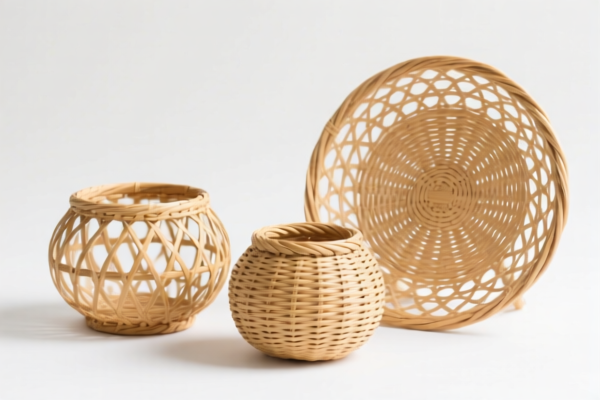
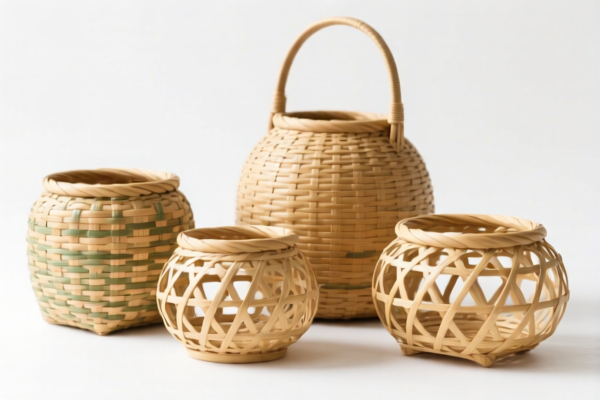
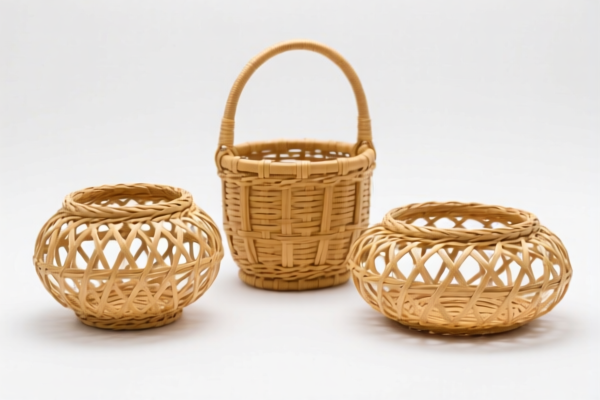
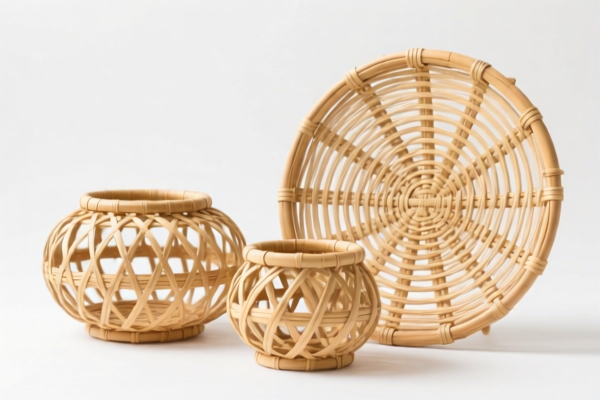
AI Analysis
🌿 Other Rattan Handicrafts (Other Wickerwork)
🌐 HS Code Reference & Customs Clearance Guide | 2024-2025 Latest Tariff Analysis | Professional Entry Strategy
📌 I. Product Definition and Classification: Do You Really Understand "Rattan Handicrafts"?
Rattan handicrafts are woven products made from natural plant fibers, primarily rattan, bamboo, or willow. In international trade, they are categorized based on their form (basket, bag, mat, etc.) and manufacturing method. The term "Other rattan handicrafts" typically refers to items that do not fall into the standard basket categories or are classified under broader weaving product groups.
Key Classification Logic: - Baskets vs. Woven Articles: If the item has a handle and is used for carrying, it’s likely a "basket" (Chapter 46.02). If it’s a flat mat, bag, or decorative piece, it may fall under "other wickerwork" (Chapter 46.01). - Material Specifics: "Rattan" usually refers to the solid core vine, while "willow" or "osier" refers to flexible branches. Both are natural vegetable materials.
⚠️ Critical Distinction:
- If the product is a basket (has a container shape, often with handles) → Generally 4602.12
- If the product is a woven article (mats, bags, mats, decorative items without basket structure) → Generally 4601.93
- If the product is a miscellaneous item with no specific basket definition → May fall under 9503.00 (toys) or other catch-all codes, but this is rare for functional rattan goods.
📦 II. HS Code Classification Details (Based on Provided Data)
| HS Code | Product Description | Application Scenario | Tax Rate (Total) | Tax Detail Breakdown |
|---|---|---|---|---|
4602.12.16.00 |
Other rattan baskets, material: rattan, form: basket type | Standard rattan shopping baskets, storage baskets, fruit baskets | 40.0% | Base: 5.0%, Additional: 25.0%, 122 Clause: 10% |
4601.93.20.00 |
Other rattan baskets, material: rattan, form: woven products | Woven mats, rattan bags, non-basket rattan items | 41.6% | Base: 6.6%, Additional: 25.0%, 122 Clause: 10% |
4602.12.14.00 |
Other rattan baskets, material: rattan/willow, form: baskets/bags | Mixed material rattan/willow baskets, carrier bags | 35.0% | Base: 0.0%, Additional: 25.0%, 122 Clause: 10% |
9503.00.00.90 |
Other rattan baskets, material: vegetable fiber (rattan), use: general | Non-functional, decorative, or toy-like rattan items (fallback category) | 10.0% | Base: 0.0%, Additional: 0.0%, 122 Clause: 10% |
🔍 Key Insight:
- HS Code4602.12.14.00offers the lowest duty rate (35%) if the item is clearly a basket made of rattan or willow. This is because the base tariff is 0%. - HS Code9503.00.00.90has the lowest total rate (10%), but it is only applicable if the item is considered a toy or decorative item with no primary functional use as a container. Misclassification here is high-risk. - HS Code4601.93.20.00is the most expensive (41.6%) due to the higher base tariff (6.6%), even though the additional and 122 clause taxes are the same.
💰 III. 2024-2025 Latest Tariff Rate Breakdown
✅ Applicable Country: United States (US)
✅ Origin: China (CN)
✅ Effective Date: As of current trade policy (2024-2025)
🎯 1. 4602.12.16.00 – Other Rattan Baskets (Rattan Material)
| Item | Content |
|---|---|
| Base Tariff | 5.0% (ad valorem) |
| Section 301 Additional Tariff | +25.0% |
| Section 122 Tariff | +10.0% |
| Total Tariff | 40.0% |
| Calculation | CIF Value × 40% |
| De Minimis Exemption? | ❌ No (Deny de minimis) |
| Legal Basis | HTSUS: 4602.12.16.00 → Section 301 → Section 122 |
📌 Explanation:
- This code applies to pure rattan baskets.
- The 25% Section 301 tariff is a major cost driver.
- The 10% Section 122 tariff is applied to all Chinese-origin goods in this category.
🎯 2. 4601.93.20.00 – Other Wickerwork (Rattan Material)
| Item | Content |
|---|---|
| Base Tariff | 6.6% |
| Section 301 Additional Tariff | +25.0% |
| Section 122 Tariff | +10.0% |
| Total Tariff | 41.6% |
| Calculation | CIF Value × 41.6% |
| De Minimis Exemption? | ❌ No |
| Legal Basis | HTSUS: 4601.93.20.00 → Section 301 → Section 122 |
📌 Note:
- This code is for woven articles that are not baskets (e.g., mats, bags).
- The base tariff is higher than4602.12.16.00, leading to a higher total rate.
🎯 3. 4602.12.14.00 – Other Rattan/Willow Baskets
| Item | Content |
|---|---|
| Base Tariff | 0.0% |
| Section 301 Additional Tariff | +25.0% |
| Section 122 Tariff | +10.0% |
| Total Tariff | 35.0% |
| Calculation | CIF Value × 35.0% |
| De Minimis Exemption? | ❌ No |
| Legal Basis | HTSUS: 4602.12.14.00 → Section 301 → Section 122 |
📌 Strategic Advantage:
- This is the optimal code for functional rattan/willow baskets if you can justify the material mix or willow content.
- The 0% base tariff saves 5-6.6% compared to other codes.
🎯 4. 9503.00.00.90 – Other Toys/Decorative Items
| Item | Content |
|---|---|
| Base Tariff | 0.0% |
| Section 301 Additional Tariff | 0.0% |
| Section 122 Tariff | +10.0% |
| Total Tariff | 10.0% |
| Calculation | CIF Value × 10.0% |
| De Minimis Exemption? | ❌ No (Section 122 still applies) |
| Legal Basis | HTSUS: 9503.00.00.90 → Section 122 |
📌 Warning:
- This code is only for non-functional items (toys, decorations).
- If customs determines the item is a functional basket, they will reclassify it to4602or4601, leading to back taxes, penalties, and seizure.
- Use this code only if the product is explicitly a toy or decorative piece with no storage/carrying function.
🛠️ IV. Customs Clearance Practical Advice
✅ 1. Documentation Checklist
| Document | Required? | Notes |
|---|---|---|
| ✅ Product Photos | ✔️ | Clear images showing material (rattan/willow) and structure (basket vs. mat) |
| ✅ Material Declaration | ✔️ | Specify "100% Natural Rattan" or "Rattan and Willow Mix" |
| ✅ Function Description | ✔️ | Clearly state if it’s for storage, carrying, or decoration |
| ✅ Commercial Invoice | ✔️ | Must match HS Code and description |
| ✅ Packing List | ✔️ | Include dimensions and weight |
| ✅ Origin Certificate | ✔️ | Required for Section 122 and 301 tariff assessment |
✅ 2. Classification Strategy (Key Rules)
🔥 "Function First, Material Second, Form Third!"
| Product Type | Recommended HS Code | Why? |
|---|---|---|
| Rattan Basket (with handles, for carrying) | 4602.12.14.00 |
Lowest total tariff (35%), base rate 0% |
| Rattan Mat (flat, for flooring/decoration) | 4601.93.20.00 |
Classified as woven article, not basket |
| Rattan Bag (soft, no rigid structure) | 4601.93.20.00 |
Not a basket, falls under woven articles |
| Rattan Toy (figurine, non-functional) | 9503.00.00.90 |
Lowest tariff (10%), but high risk if misclassified |
📌 Critical Tip:
- Do not use9503.00.00.90for functional baskets. Customs agents are trained to detect misclassification.
- If your product is a mix of rattan and willow, use4602.12.14.00to benefit from the 0% base tariff.
✅ 3. Special Cases
| Scenario | Handling Advice |
|---|---|
| Customs Audit | Be ready to provide material samples or lab tests proving rattan/willow content |
| Mixed Packaging | Declare each item separately. Do not bundle a basket with a mat under one HS code |
| Private Label | Include your brand name on the product and invoice to avoid confusion |
| Dropshipping | Ensure the supplier provides accurate HS code and material declaration |
🌍 V. Global Market Comparison (2024-2025)
| Country | Recommended HS Code | Total Tariff | Notes |
|---|---|---|---|
| 🇺🇸 USA | 4602.12.14.00 |
35.0% | Best for baskets. Section 122 applies. |
| 🇺🇸 USA | 9503.00.00.90 |
10.0% | Only for toys/decorations. High risk. |
| 🇪🇺 EU | 4602.12.00 |
0% | No additional tariffs. Easier clearance. |
| 🇨🇳 China | 4602.12.00 |
5% | Low tariff for domestic market. |
📌 Conclusion:
- The US market is the most challenging due to Section 301 and 122 tariffs.
- EU and China offer significantly lower tariffs for similar products.
- If targeting the US, optimize your classification to4602.12.14.00to minimize costs.
📌 VI. Common Mistakes & Pitfalls
❌ Mistake 1: Using 9503.00.00.90 for a functional basket
👉 Result: Customs reclassifies, charges 35-41.6% + penalties + seizure.
👉 Fix: Use 4602.12.14.00 for baskets.
❌ Mistake 2: Declaring "wickerwork" without specifying material
👉 Result: Customs may assign a higher default tariff.
👉 Fix: Specify "100% Natural Rattan" or "Rattan/Willow Mix".
❌ Mistake 3: Ignoring Section 122 Tariff
👉 Result: Underpaying duties by 10%, leading to audits and fines.
👉 Fix: Always include 10% Section 122 in cost calculations.
✅ Correct Approach:
"Be honest, be specific, be strategic."
- If it’s a basket →4602.12.14.00
- If it’s a mat/bag →4601.93.20.00
- If it’s a toy →9503.00.00.90(with caution)
🎯 VII. Conclusion: Smart Classification, Lower Costs
🎯 Remember:
🔹 "Basket = 35%, Woven = 41.6%, Toy = 10% (but risky)"
🔹 "Base tariff matters: 0% beats 5% and 6.6%"
🔹 "Section 122 is unavoidable: Plan for 10%"
📌 Pro Tip:
- Apply for an Advance Ruling from US Customs if you are unsure.
- Keep detailed product documentation to defend your classification in case of audit.
- Consider diversifying markets to EU or Asia to reduce tariff burden.
📣 Action Required:
📞 Consult with a licensed customs broker.
📦 Label products clearly with material and function.
🚀 Optimize your supply chain for cost efficiency.
✨ Professional classification saves thousands!
💼 Your profit margin depends on accurate HS codes.
Customer Reviews
About HS Code Classification
The Harmonized System (HS) is an internationally standardized nomenclature developed by the World Customs Organization (WCO) to classify traded products. Over 200 countries use the HS system as the basis for customs tariffs, trade statistics, and import/export regulations.
Each HS code follows a hierarchical structure:
- Chapter (2 digits) — Broad category of goods (e.g., Chapter 84: Machinery and Mechanical Appliances)
- Heading (4 digits) — More specific grouping within the chapter
- Subheading (6 digits) — Internationally standardized breakdown, used by all WCO member countries
- National subdivisions (8-10 digits) — Country-specific extensions for further classification, such as US HTSUS 10-digit codes
Correct HS code classification is essential for smooth customs clearance, accurate duty payment, and compliance with trade regulations. Misclassification can lead to customs delays, overpayment of duties, or penalties.
When importing from CN to US, the applicable tariff rates may include:
- Most-Favored-Nation (MFN) rate — The standard duty rate applied to WTO members
- General rate — Applied to countries without trade agreements
- Trade remedy duties — Additional tariffs such as Section 301 (anti-dumping), Section 232 (national security), or countervailing duties
The information provided on this page is for reference purposes only. For official classification, please consult with your local customs authority or a licensed customs broker.