Other Reciprocating Piston Internal Combustion Engines
CN → US| HS Code | Tariff Rate | Origin | Destination | Doc |
|---|---|---|---|---|
| 8407909040 | 35.0% | CN | US | Official Doc |
| 8407909060 | 35.0% | CN | US | Official Doc |
| 8408909010 | 35.0% | CN | US | Official Doc |
| 8408909020 | 35.0% | CN | US | Official Doc |
Product Images
AI Analysis
🏭 Other Reciprocating Piston Internal Combustion Engines
🌐 HS Code Reference & Customs Clearance Guide | 2026 Latest Tariff Analysis | Professional Clearance Strategy
📌 I. Product Definition and Classification: What Are These Engines?
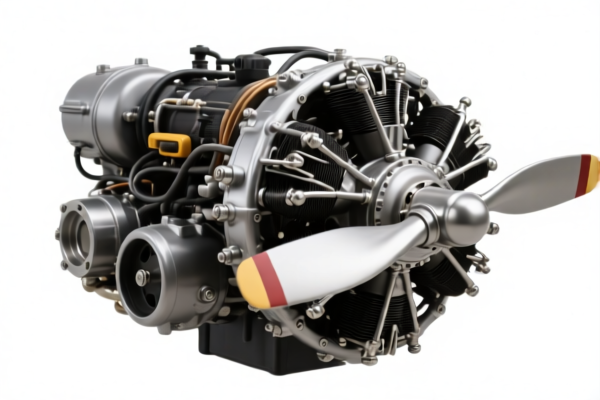
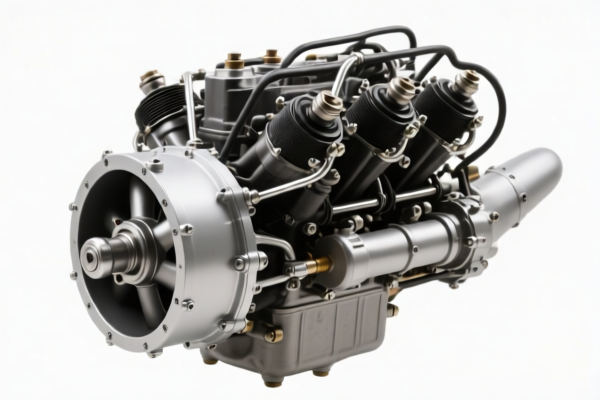
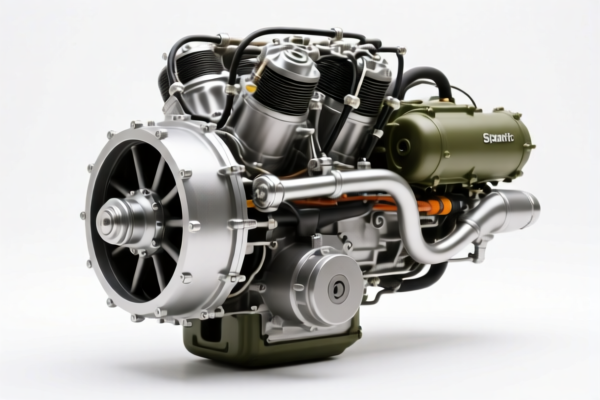
These entries refer to specialized internal combustion engines used in various industrial, marine, or auxiliary applications. They are divided into two main categories based on their ignition method: Compression-Ignition (Diesel) and Spark-Ignition (Gasoline/Petrol). The classification is strictly determined by engine power output (kW or W) and ignition type.
⚠️ Critical Distinction Points: - Diesel/Semi-Diesel: Uses compression to ignite fuel. Classified under 8408.90. - Gasoline/Petrol: Uses spark plugs to ignite fuel. Classified under 8407.90. - Power Thresholds: The cutoff points for tariff rates are 149.2 kW for diesel and specific wattage ranges for gasoline engines.
📦 II. HS Code Classification Details (2026 Latest Tariff Authority Match)
| HS Code | Product Description | Power Range | Ignition Type | Applicable Scenario |
|---|---|---|---|---|
8408.90.90.10 |
Diesel/Semi-Diesel Engines: Other | Not exceeding 149.2 kW | Compression | Small industrial generators, auxiliary marine engines, small construction equipment |
8408.90.90.20 |
Diesel/Semi-Diesel Engines: Other | Exceeding 149.2 kW but not exceeding 373 kW | Compression | Medium-sized industrial machinery, larger marine propulsion, heavy equipment |
8407.90.90.40 |
Gasoline/Petrol Engines: Other | ≥ 746 W but < 4,476 W | Spark | Small outboard motors, power tools, lawnmowers, small vehicles |
8407.90.90.60 |
Gasoline/Petrol Engines: Other | ≥ 4,476 W but not exceeding 18.65 kW | Spark | Larger portable generators, golf carts, small trucks, agricultural helpers |
🔍 Key Reminder: - Do not mix Diesel and Gasoline HS Codes: They are completely different chapters and carry different regulatory requirements. - Power Accuracy is Critical: Misclassifying a 150 kW diesel engine as ≤149.2 kW (
8408.90.90.10) instead of8408.90.90.20can lead to customs penalties. Always use the maximum continuous power output.
💰 III. 2026 Latest Tariff Rate Details (Including Surcharges & Policies)
✅ Applicable Country: United States (US)
✅ Origin: China (CN)
✅ Effective Time: As per current USITC and USTR rulings (25% Section 301 surcharge applies)
🎯 1. 8408.90.90.10 & 8408.90.90.20 —— Diesel/Semi-Diesel Engines
| Item | Content |
|---|---|
| Base Tariff Rate | 0% (Ad valorem) |
| USITC Surcharge (Section 301) | +25% |
| IEEPA Surcharge | N/A (Not listed in current data for these codes) |
| Total Effective Rate | 25.0% |
| Tax Calculation | CIF Value × 25% |
| De Minimis Eligibility | ❌ No (De Minimis does not apply to Section 301 goods) |
| Legal Basis Path | USITC:8408.90.90.10 → FOOTNOTE:9903.88.01 (Section 301) |
📌 Explanation: - Base Rate 0%: Diesel engines typically have a low base MFN (Most Favored Nation) tariff. - 25% Surcharge: This is the standard Section 301 tariff applied to many Chinese-made mechanical components, including engines. - No Exemptions: Unlike some consumer goods, these industrial engines are not exempt from the 25% surcharge.
🎯 2. 8407.90.90.40 & 8407.90.90.60 —— Spark-Ignition (Gasoline) Engines
| Item | Content |
|---|---|
| Base Tariff Rate | 0% (Ad valorem) |
| USITC Surcharge (Section 301) | +25% |
| IEEPA Surcharge | N/A |
| Total Effective Rate | 25.0% |
| Tax Calculation | CIF Value × 25% |
| De Minimis Eligibility | ❌ No |
| Legal Basis Path | USITC:8407.90.90.40 / 8407.90.90.60 → FOOTNOTE:9903.88.01 (Section 301) |
📌 Note: - Both small (<4.4kW) and medium (≥4.4kW) gasoline engines face the same 25% effective tariff. - These engines are often used in portable equipment. Ensure the power rating on the label matches the declared HS Code exactly.
🛠️ IV. Customs Clearance Practical Advice (Battle-Tested Pitfall Avoidance Guide)
✅ 1. Required Documentation Checklist (Non-Negotiable)
| Document | Mandatory? | Details |
|---|---|---|
| ✅ Engine Specification Sheet | ✔️ | Must include: Model, Serial Number, Max Power (kW/hp), Type (Diesel/Gas), Cylinders, Displacement |
| ✅ Technical Diagram | ✔️ | Schematic showing ignition system, cooling method, and fuel type |
| ✅ Product Photos (Nameplate) | ✔️ | Clear image of the nameplate showing Power Output and Model Number |
| ✅ Commercial Invoice | ✔️ | Description must specify: "Reciprocating Piston Internal Combustion Engine" + "Diesel" or "Spark-Ignition" |
| ✅ Packing List | ✔️ | List all accessories (mounts, filters, oil) to avoid separate tariff assessments |
| ✅ Certificate of Origin | ✔️ | Required for verifying China origin and applying Section 301 rates |
✅ 2. Declaration Tips (Key Mantra)
🔥 “Power is King, Fuel is Queen, Exact Code Saves Money!”
| Scenario | Correct Declaration | Incorrect Action |
|---|---|---|
| Diesel Engine, 150 kW | 8408.90.90.20 |
Misdeclare as 8408.90.90.10 → Underdeclaration Penalty |
| Gas Engine, 2,000 W | 8407.90.90.40 |
Misdeclare as 8407.90.90.60 → Overdeclaration Risk |
| Engine with Control Panel | Still Engine Class | Do NOT split into "Engine" + "Control Panel" unless legally distinct |
| Spare Parts (Pistons, Valves) | Different HS Code | Do NOT declare parts as "engines" → 301+ Tariffs + Fraud Risk |
✅ 3. Special Case Handling
| Situation | Handling Advice |
|---|---|
| Variable Power Rating | Declare the maximum continuous power. If it can operate at 150 kW, it falls under the >149.2 kW category for diesel. |
| Dual-Fuel Engines | Classify based on primary design. If designed for Diesel, use 8408. If designed for Gas, use 8407. Provide technical proof. |
| Engines for Marine Use | Still classified by power and ignition. Marine-specific HS codes are limited; most fall under "Other Engines". |
| Export to Non-US Markets | Tariffs vary. EU/China may have different rates. Always check the destination country’s tariff schedule. |
🌍 V. Global Market Customs Comparison (2026 Latest)
| Country/Region | Recommended HS Code | Tariff (China Origin) | Certification Required | Notes |
|---|---|---|---|---|
| 🇺🇸 USA | 8408.90.90.20 / 8407.90.90.60 |
25% (Total) | EPA/CAER (for Gas), CARB (if CA) | High surcharge due to Section 301 |
| 🇨🇳 China | 8408.90.90.20 / 8407.90.90.60 |
0% - 5% | CCC (for some engines) | Low tariff, strict environmental standards |
| 🇪🇺 EU | 8408.90.90 / 8407.90.90 |
0% - 2.7% | CE, Stage V Emissions | Strict emission compliance required |
| 🇦🇺 Australia | 8408.90.90 / 8407.90.90 |
5% - 10% | RCM, ADR | Check emission standards |
| 🇯🇵 Japan | 8408.90.90 / 8407.90.90 |
0% - 3% | Japan Emissions | High technical standards |
📌 Conclusion: - USA imposes the highest effective tariff (25%) due to trade policies. - EU and Japan have lower base tariffs but stricter environmental certifications (EPA Stage V, Euro V). - China Origin goods face significant hurdles in the US due to Section 301.
📌 VI. Common Mistakes & Pitfall Guide (Lessons Learned)
❌ Mistake 1: Declaring "Engine" without specifying Fuel Type or Power.
👉 Consequence: Customs will reject the declaration or assign a default (often higher) rate.
❌ Mistake 2: Misclassifying a 150 kW Diesel Engine as 8408.90.90.10 (≤149.2 kW).
👉 Consequence: Customs audit reveals discrepancy → Back taxes + Penalties.
❌ Mistake 3: Including Accessories (like fuel tanks or mounts) in the engine declaration incorrectly.
👉 Consequence: If not part of the standard packaging, they may be assessed separately at 89.5% or higher.
❌ Mistake 4: Confusing Reciprocating Engines with Turbines.
👉 Consequence: Turbines are classified under 8411, not 8407/8408. Wrong code = Wrong tariff.
✅ Correct Practice:
"Diesel Reciprocating Piston Internal Combustion Engine, 160 kW, Model XYZ, No Emissions Control System, FCC/CE Certified"
🎯 VII. Conclusion: Professional Declaration, Time-Saving, Cost-Effective!
🎯 Remember the Mantra:
🔹 "Diesel vs. Gas, Power Thresholds Check!"
🔹 "149.2 kW is the Line, 25% Tax is the Fine!"
🔹 "Accuracy in Code, Peace of Mind for Clearance!"
📌 Pro Tip: - For Diesel Engines, always verify the EPA certification if exporting to the US. - For Gasoline Engines, check if they fall under small non-road engines rules in the US (EPA 40 CFR Part 1054). - Pre-clearance Ruling: If your engine power is on the edge (e.g., 149 kW), consider applying for a Customs Ruling to confirm the HS Code.
📣 Immediate Action:
📞 Consult with a licensed customs broker + Provide Nameplate Photos + Confirm Power Output
🚀 Ensure your engines clear US Customs smoothly, avoid 25% surprise taxes, and protect your profit margins!
✨ Professional Clearance Starts with Precise Classification!
💼 Every kW Counts in Your Tariff Calculation!
Customer Reviews
About HS Code Classification
The Harmonized System (HS) is an internationally standardized nomenclature developed by the World Customs Organization (WCO) to classify traded products. Over 200 countries use the HS system as the basis for customs tariffs, trade statistics, and import/export regulations.
Each HS code follows a hierarchical structure:
- Chapter (2 digits) — Broad category of goods (e.g., Chapter 84: Machinery and Mechanical Appliances)
- Heading (4 digits) — More specific grouping within the chapter
- Subheading (6 digits) — Internationally standardized breakdown, used by all WCO member countries
- National subdivisions (8-10 digits) — Country-specific extensions for further classification, such as US HTSUS 10-digit codes
Correct HS code classification is essential for smooth customs clearance, accurate duty payment, and compliance with trade regulations. Misclassification can lead to customs delays, overpayment of duties, or penalties.
When importing from CN to US, the applicable tariff rates may include:
- Most-Favored-Nation (MFN) rate — The standard duty rate applied to WTO members
- General rate — Applied to countries without trade agreements
- Trade remedy duties — Additional tariffs such as Section 301 (anti-dumping), Section 232 (national security), or countervailing duties
The information provided on this page is for reference purposes only. For official classification, please consult with your local customs authority or a licensed customs broker.