Other Recovered Paperboard Bleached Chemical Pulp, Uncolored
CN → US| HS Code | Tariff Rate | Origin | Destination | Doc |
|---|---|---|---|---|
| 4703210040 | 35.0% | CN | US | Official Doc |
| 4703290040 | 35.0% | CN | US | Official Doc |
Product Images
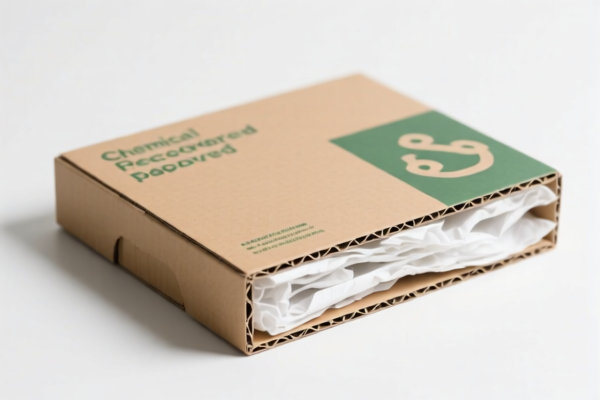
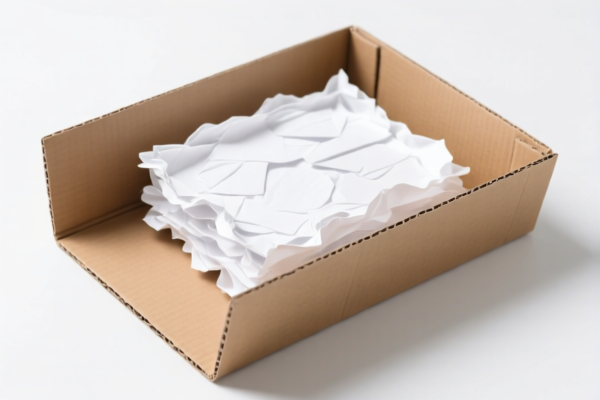
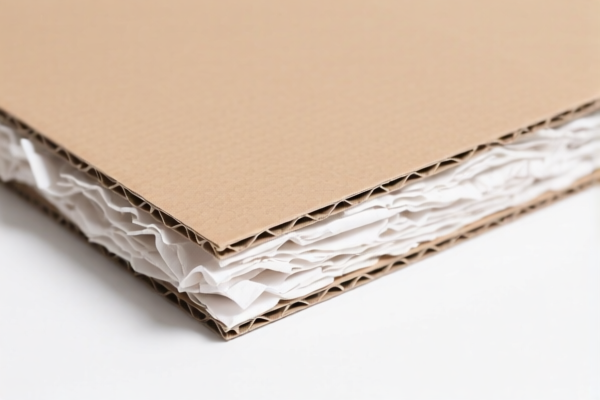
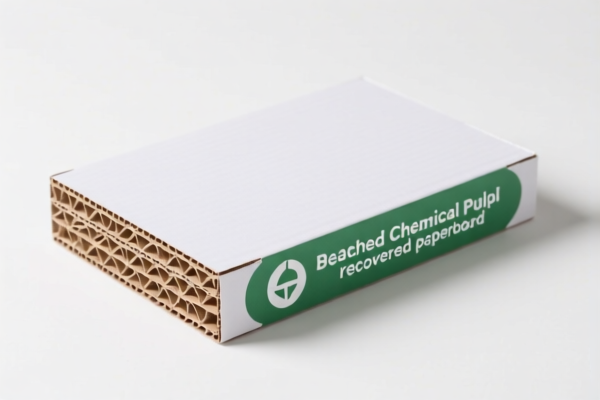
AI Analysis
📜 Kraft & Soda Chemical Woodpulp | Bleached | Non-Coniferous (Other Recovered)
🌐 HS Code Reference & Customs Clearance Guide | 2026 Latest Tariff Analysis | Professional Clearance Strategy
📌 I. Product Definition & Classification: What Exactly Is "Other Recovered Paperboard Bleached Chemical Pulp"?
This commodity refers to chemical woodpulp derived from non-coniferous (hardwood) sources, specifically processed via the soda or sulfate (kraft) methods, which is bleached and not intended for dissolving grades (i.e., not for making rayon or cellulose).
Crucially, the term "Recovered" in this context often implies pulp derived from de-inked recovered paper or secondary fiber that has been chemically treated, OR it may refer to specific grade classifications where "other" excludes coniferous woods (pine, spruce, etc.). However, based on the provided <DATA>, the classification hinges on:
1. Method: Soda or Sulfate (Chemical).
2. Status: Semibleached or Bleached.
3. Source Type: Non-coniferous (Hardwoods like eucalyptus, birch, poplar, or recycled hardwood fibers processed chemically).
4. Exclusion: Not dissolving grade.
⚠️ Key Distinction:
- If the pulp is from Coniferous wood (softwoods) → It falls under 4703.21.00.40.
- If the pulp is from Non-coniferous wood (hardwoods) or other specific sources defined as "other" → It falls under 4703.29.00.40.
- Uncolored: This confirms it is bleached but not dyed or pigmented, which aligns with standard bleached chemical pulp classifications.
📦 II. HS Code Classification Details (2026 Latest Tariff Authority Cross-Reference)
Based strictly on the provided <DATA>, here are the applicable HS Codes and their tax implications:
| HS Code | Product Description | Applicable Scenario | Key Identifier |
|---|---|---|---|
4703.21.00.40 |
Chemical woodpulp, soda or sulfate, semibleached or bleached, coniferous, bleached | Pulp derived from softwoods (pine, spruce, fir, etc.) | ✅ Coniferous |
4703.29.00.40 |
Chemical woodpulp, soda or sulfate, semibleached or bleached, non-coniferous, bleached | Pulp derived from hardwoods (eucalyptus, birch, etc.) or "other" sources specified as non-coniferous | ✅ Non-coniferous |
🔍 Critical Reminder:
- The user input "other recovered paperboard bleached chemical pulp, uncolored" typically points to hardwood-derived pulp or recycled chemical pulp from non-softwood sources. Therefore,4703.29.00.40is the most likely classification.
- "Recovered" may imply secondary fiber, but if it is chemical pulp (not mechanical or semi-chemical), it still falls under Chapter 47. The key is whether it is coniferous or non-coniferous.
- Do not confuse with mechanical pulp (Chapter 47.02) or dissolving pulp (Chapter 47.03.20.10, which is excluded by "other than dissolving grades").
💰 III. 2026 Latest Tariff Rate Details (Including Surtaxes & Policy Add-ons)
✅ Applicable Country: United States (US)
✅ Origin: China (CN) (Assumed based on typical trade context; verify if origin differs)
✅ Effective Date: 2025+ (Current Trade Policy)
🎯 1. 4703.29.00.40 —— Non-coniferous Bleached Chemical Woodpulp (Most Likely for "Other")
| Item | Content |
|---|---|
| Base Tariff Rate | 0.0% (ad valorem) |
| Section 301 Surtax | +25.0% |
| Total Tax Rate | 25.0% |
| Tax Calculation | CIF Value × 25% |
| De Minimis Exemption | ❌ Not Eligible (Large shipments typically exceed $800; even if small, Section 301 taxes often apply regardless of de minimis thresholds for certain goods, but primarily, this is a high-volume industrial good) |
| Legal Basis Path | HTSUS:4703.29.00.40 → USITC Footnote 9903.01.25 → 301 List 4A |
📌 Explanation:
- The base tariff is 0%, meaning no standard duty applies to bleached chemical pulp under normal MFN (Most Favored Nation) treatment.
- However, the 25% Section 301 surtax applies to Chinese-origin goods in this category.
- Total Effective Tax: 25% of the CIF (Cost, Insurance, Freight) value.
- There is no additional IEEPA 10% mentioned in the provided<DATA>, so we strictly follow the 25.0% total.
🎯 2. 4703.21.00.40 —— Coniferous Bleached Chemical Woodpulp (Less Likely if "Other")
| Item | Content |
|---|---|
| Base Tariff Rate | 0.0% |
| Section 301 Surtax | +25.0% |
| Total Tax Rate | 25.0% |
| Tax Calculation | CIF Value × 25% |
| De Minimis Exemption | ❌ Not Eligible |
| Legal Basis Path | HTSUS:4703.21.00.40 → USITC Footnote 9903.01.25 → 301 List 4A |
📌 Note:
- Tax rate is identical to the non-coniferous pulp.
- Misclassification between coniferous and non-coniferous does not change the tax burden but can lead to customs penalties for incorrect declaration.
🛠️ IV. Customs Clearance Practical Advice (Battle-Tested Pitfall Guide)
✅ 1. Preparation Checklist (Mandatory)
| Document | Required | Purpose |
|---|---|---|
| ✅ Product Specification Sheet | ✔️ | Must clearly state: "Bleached Chemical Woodpulp, Soda/Sulfate Process, Non-coniferous/Hardwood Source, Not for Dissolving" |
| ✅ Certificate of Origin (CO) | ✔️ | To prove origin (China vs. Other) and qualify for (or avoid) surtaxes |
| ✅ Commercial Invoice | ✔️ | Must match HS Code 4703.29.00.40 and clearly describe "Bleached Non-coniferous Chemical Pulp" |
| ✅ Packing List | ✔️ | Detail weight (net/gross), number of bags, and dimensions |
| ✅ Lab Test Report | ✔️ | Proves "Chemical Pulp" status (kappa number, brightness) and confirms "Non-coniferous" source if questioned |
| ✅ MSDS (Material Safety Data Sheet) | ✔️ | Required for chemical products, even if dry pulp |
✅ 2. Declaration Tips (Key Mnemonic)
🔥 "Specify Source: Coniferous vs. Non-coniferous; Clarify Process: Chemical vs. Mechanical; Exclude Dissolving!"
| Scenario | Correct Declaration | Common Mistake |
|---|---|---|
| Pulp from Eucalyptus/Birch | 4703.29.00.40 (Non-coniferous) |
Declaring as "General Pulp" → Risk of misclassification penalty |
| Pulp from Pine/Spruce | 4703.21.00.40 (Coniferous) |
Declaring as "Non-coniferous" → Incorrect HS Code |
| Pulp intended for Rayon | Dissolving Grade (Not in <DATA>) |
Declaring as 4703.29.00.40 → Wrong category, wrong tax |
| Mechanical Pulp | Chapter 47.02 | Declaring as Chemical Pulp → 100% error |
✅ 3. Special Case Handling
| Situation | Handling Advice |
|---|---|
| "Recovered" Paperboard Pulp | If it is de-inked recycled pulp processed chemically, ensure it is classified as Chemical Pulp (not mechanical). If it is semi-chemical, it may fall under a different code. Confirm with supplier: Is it 100% Chemical Pulp? |
| Mixed Origin | If blended with other origins, the country of origin rules (substantial transformation) must be applied. Usually, pulping is a substantial transformation, so the origin is where pulping occurred. |
| Large Volume Imports | Consider Advance Ruling from CBP to confirm HS Code classification before shipment to avoid delays and penalties. |
| Tariff Engineering | No obvious way to reduce the 25% surtax unless changing origin to a non-China country (e.g., Brazil, Canada, which may have FTAs or lower rates). |
🌍 V. Global Market Comparison (2026 Latest)
| Country/Region | Recommended HS Code | Tariff Rate | Certification | Notes |
|---|---|---|---|---|
| 🇺🇸 USA | 4703.29.00.40 |
25% (301 Surtax) | None specific | High cost for China-origin |
| 🇨🇳 China | 4703.29.00.40 |
0% | None | Import duty is 0% for bleached chemical pulp |
| 🇪🇺 EU | 4703.29.00.00 |
0% | None | Generally 0% duty for chemical pulp |
| 🇬🇧 UK | 4703.29.00.00 |
0% | None | Post-Brexit tariffs remain 0% for this item |
| 🇦🇺 Australia | 4703.29.00.00 |
5% | None | No 301 surtax equivalent |
📌 Conclusion:
- USA is the only major market imposing significant duties (25%) on this product from China.
- Non-Chinese origins (e.g., Brazil, Canada, EU) can clear US customs at 0% duty (if no Section 301 applies to those origins).
- Recommendation: If sourcing from China, budget for 25% additional cost. Consider shifting supply chain to Brazil (Eucalyptus pulp) or Canada (Softwood pulp) if volume allows.
📌 VI. Common Errors & Pitfall Guide (Blood-Teaching Lessons)
❌ Error 1: Declaring "Recovered Paperboard Pulp" as Mechanical Pulp (4703.29.00.40 is Chemical, not Mechanical)
👉 Consequence: Incorrect HS Code → Penalty + Back Duties + Delay
❌ Error 2: Confusing Coniferous (Softwood) and Non-coniferous (Hardwood)
👉 Consequence: Although tax rate is the same (25%), misclassification can lead to CBP audits and trust issues. Always specify the wood source.
❌ Error 3: Omitting "Not Dissolving Grade" in description
👉 Consequence: CBP may assume it is dissolving pulp (which has different codes and restrictions) → Hold for Inspection
✅ Correct Declaration Example:
"Bleached Chemical Woodpulp, Soda Process, Non-coniferous Source (Eucalyptus), Not for Dissolving Grades, UN3260 (if applicable for packaging), HS Code: 4703.29.00.40"
🎯 VII. Conclusion: Precision in Classification Saves Money!
🎯 Remember Mnemonic:
🔹 "Chemical Pulp: Check Source. Softwood = .21, Hardwood = .29. Both 25% Surtax from China. No Dissolving!"
🔹 "Recovered Paperboard? If Chemical, it's 4703. If Mechanical, it's 4702. Don't Mix Them!"
📌 Pro Tip:
If your pulp is sourced from Brazil, Canada, or New Zealand, you may qualify for 0% duty in the US (depending on current 301 List exclusions).
Action Plan:
1. Confirm Wood Source (Coniferous vs. Non-coniferous).
2. Confirm Pulp Process (Chemical vs. Mechanical).
3. Confirm Origin (China vs. Other).
4. Use HS Code 4703.29.00.40 for Non-coniferous Bleached Chemical Pulp from China.
5. Budget for 25% Total Tax.
📣 Immediate Action:
📞 Contact your customs broker with Spec Sheet + Origin Proof
🚀 Clear customs smoothly, avoid 25% surprises, and optimize your supply chain!
✨ Professional Customs Clearance Starts with Accurate Classification!
💼 Every 0.1% in tax savings is pure profit!
Customer Reviews
About HS Code Classification
The Harmonized System (HS) is an internationally standardized nomenclature developed by the World Customs Organization (WCO) to classify traded products. Over 200 countries use the HS system as the basis for customs tariffs, trade statistics, and import/export regulations.
Each HS code follows a hierarchical structure:
- Chapter (2 digits) — Broad category of goods (e.g., Chapter 84: Machinery and Mechanical Appliances)
- Heading (4 digits) — More specific grouping within the chapter
- Subheading (6 digits) — Internationally standardized breakdown, used by all WCO member countries
- National subdivisions (8-10 digits) — Country-specific extensions for further classification, such as US HTSUS 10-digit codes
Correct HS code classification is essential for smooth customs clearance, accurate duty payment, and compliance with trade regulations. Misclassification can lead to customs delays, overpayment of duties, or penalties.
When importing from CN to US, the applicable tariff rates may include:
- Most-Favored-Nation (MFN) rate — The standard duty rate applied to WTO members
- General rate — Applied to countries without trade agreements
- Trade remedy duties — Additional tariffs such as Section 301 (anti-dumping), Section 232 (national security), or countervailing duties
The information provided on this page is for reference purposes only. For official classification, please consult with your local customs authority or a licensed customs broker.