Other Recycled Paperboard (Bleached Chemical Pulp)
CN → US| HS Code | Tariff Rate | Origin | Destination | Doc |
|---|---|---|---|---|
| 4705000000 | 35.0% | CN | US | Official Doc |
| 4805247000 | 12.0% | CN | US | Official Doc |
| 4805245000 | 35.0% | CN | US | Official Doc |
| 4703210040 | 35.0% | CN | US | Official Doc |
| 4703290040 | 35.0% | CN | US | Official Doc |
Product Images
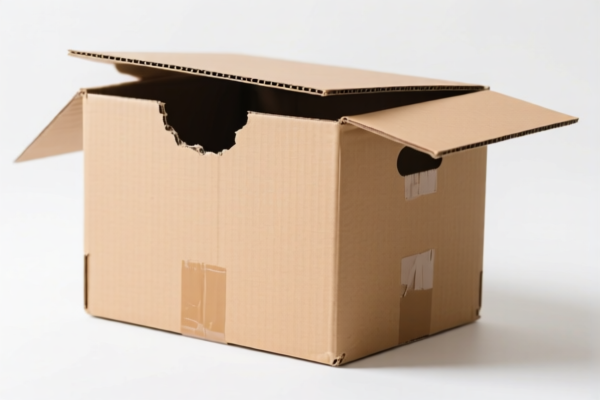
AI Analysis
📄 Other Recycled Paperboard (Bleached Chemical Pulp)
🌐 HS Code Reference & Customs Clearance Guide | 2026 Latest Tariff Analysis | Professional通关 Strategy
📌 Part 1: Product Definition & Classification: Do You Really Understand "Paperboard"?
"Other Recycled Paperboard (Bleached Chemical Pulp)" is a complex category in international trade. It sits at the intersection of raw material processing (chemical pulp) and finished semi-products (recycled paperboard). The classification depends heavily on two factors: 1. Material State: Is it pure chemical pulp (raw material) or a formed paperboard (semi-finished product)? 2. Origin & Policy: Is it subject to specific trade restrictions (like Section 301 or Section 122 tariffs)?
⚠️ Key Distinction Point:
- If the product is pure chemical pulp (powder/fiber form, not yet formed into board), it falls under Chapter 47.
- If the product is formed paperboard (even if recycled or made from chemical pulp), it falls under Chapter 48.
- Critical Note: The phrase "Bleached Chemical Pulp" in the title might mislead buyers into thinking it's just pulp, but if it's "Recycled Paperboard," it is likely a Chapter 48 product. However, if the pulp itself is bleached and chemical, it may trigger different tariff lines within Chapter 47.
📦 Part 2: HS Code Classification Details (2026 Latest Tariff Authority)
Below are the exact HS codes and tax rates from the provided data, with detailed explanations for each.
| HS Code | Product Description | Summary | Total Tax | Tax Breakdown |
|---|---|---|---|---|
| 4705.00.00.00 | Other wood pulp, chemically produced, whether or not bleached | Match with bleached chemical pulp and recycled paperboard categories | 35.0% | Base: 0%, Sec 301: 25%, Sec 122: 10% |
| 4805.24.70.00 | Other uncoated paper and paperboard, made from recycled fibers | Match recycled paperboard and other uncoated paper/board | 12.0% | Base: 0%, Sec 301: 2%, Sec 122: 10% |
| 4805.24.50.00 | Other uncoated paper and paperboard, made from chemical pulp | Match recycled paperboard and other uncoated paper/board attributes | 35.0% | Base: 0%, Sec 301: 25%, Sec 122: 10% |
| 4703.21.00.40 | Bleached chemical wood pulp, non-coniferous | Match bleached and colorless chemical pulp | 35.0% | Base: 0%, Sec 301: 25%, Sec 122: 10% |
| 4703.29.00.40 | Bleached chemical wood pulp, other | Match bleached chemical wood pulp and non-coniferous other categories | 35.0% | Base: 0%, Sec 301: 25%, Sec 122: 10% |
🔍 Key Analysis: - Chapter 47 Codes (4705, 4703): These apply to chemical wood pulp (raw material). If your product is not yet formed into paper/board, but is simply bleached chemical pulp, these codes apply. - Chapter 48 Codes (4805.24): These apply to paper and paperboard (formed products). If the product is recycled paperboard, it usually falls here. However, the tax rate varies significantly based on whether it is classified under 4805.24.70 (12%) or 4805.24.50 (35%). - Why the difference? The distinction often lies in whether the product is explicitly recycled (4805.24.70) or made from chemical pulp (4805.24.50). If it's "Recycled," the lower tax rate (12%) may apply. If it's "Chemical Pulp-based" but not explicitly recycled, the higher rate (35%) applies.
💰 Part 3: 2026 Latest Tariff Rate Details (Including Additional Taxes)
✅ Applicable Country: United States (US)
✅ Origin: China (CN)
✅ Effective Date: From November 10, 2025 (including subsequent imports)
🎯 1. 4705.00.00.00 – Other wood pulp, chemically produced
| Item | Content |
|---|---|
| Base Rate | 0% (ad valorem) |
| USITC Additional Tax | +25% (from USITC Footnote 9903.88.01) |
| IEEPA Additional Tax | +10% (for China/HK products, from Nov 10, 2025) |
| Total Rate | 35.0% |
| Tax Calculation | CIF Value × 35% |
| De Minimis Exemption | ❌ Not Eligible (deny_de_minimis) |
| Legal Basis Path | IEEPA:9903.01.25 → IEEPA:9903.01.24 → USITC:4705.00.00.00 → FOOTNOTE:9903.88.01 |
📌 Explanation:
- This code applies to chemical pulp (raw material).
- The 25% Section 301 tariff and 10% Section 122 tariff make the total 35%.
- This is a high-tax category, so accurate classification is critical.
🎯 2. 4805.24.70.00 – Other uncoated paper/board, made from recycled fibers
| Item | Content |
|---|---|
| Base Rate | 0% |
| USITC Additional Tax | +2% |
| IEEPA Additional Tax | +10% |
| Total Rate | 12.0% |
| Tax Calculation | CIF × 12% |
| De Minimis Exemption | ❌ Not Eligible |
| Legal Basis Path | IEEPA:9901.25 → IEEPA:9903.01.24 → USITC:4805.24.70.00 → FOOTNOTE:9903.88.01 |
📌 Important:
- This code applies specifically to recycled paperboard.
- The Section 301 tariff is only 2% (not 25%), making this a much more favorable classification if your product is genuinely recycled.
- Action: Ensure your product documentation clearly states "100% Recycled" or similar to qualify for this lower rate.
🎯 3. 4805.24.50.00 – Other uncoated paper/board, made from chemical pulp
| Item | Content |
|---|---|
| Base Rate | 0% |
| USITC Additional Tax | +25% |
| IEEPA Additional Tax | +10% |
| Total Rate | 35.0% |
| Tax Calculation | CIF × 35% |
| De Minimis Exemption | ❌ Not Eligible |
| Legal Basis Path | IEEPA:9901.25 → IEEPA:9903.01.24 → USITC:4805.24.50.00 → FOOTNOTE:9903.88.01 |
📌 Note:
- This code applies to paperboard made from chemical pulp but not recycled.
- If your product is bleached chemical pulp but not recycled, it falls here (35% tax).
- Distinction: If it's recycled, use4805.24.70.00(12%). If it's chemical pulp (not recycled), use4805.24.50.00(35%).
🎯 4. 4703.21.00.40 & 4703.29.00.40 – Bleached Chemical Wood Pulp
| Item | Content |
|---|---|
| Base Rate | 0% |
| USITC Additional Tax | +25% |
| IEEPA Additional Tax | +10% |
| Total Rate | 35.0% |
| Tax Calculation | CIF × 35% |
| De Minimis Exemption | ❌ Not Eligible |
| Legal Basis Path | IEEPA:9903.01.25 → IEEPA:9903.01.24 → USITC:4703.*.00.40 → FOOTNOTE:9903.88.01 |
📌 Explanation:
- These codes apply to pure chemical wood pulp (before it becomes paperboard).
- 4703.21.00.40: Bleached, non-coniferous.
- 4703.29.00.40: Bleached, other (coniferous or unspecified).
- If your product is pulp (not paperboard), these codes apply.
- High Tax: 35% total.
🛠️ Part 4: Customs Clearance Practical Advice (Battle-Tested Pitfall Guide)
✅ 1. Preparation Checklist (No Exceptions)
| Document | Required | Description |
|---|---|---|
| ✅ Product Specification Sheet | ✔️ | Must include: Material source (recycled/chemical), bleaching process, pulp type (coniferous/non-coniferous) |
| ✅ Certificate of Origin (CO) | ✔️ | Critical for proving origin. If not China, may qualify for exemptions. |
| ✅ Commercial Invoice | ✔️ | Must clearly state: "Recycled Paperboard" or "Bleached Chemical Pulp" |
| ✅ Packing List | ✔️ | Detail weight, volume, and packaging type |
| ✅ Third-Party Test Report | ✔️ | FSC, PEFC, or recycling certification if claiming "100% Recycled" |
| ✅ Photos (Clear & Detailed) | ✔️ | Show product, labels, and packaging |
✅ 2. Declaration Tips (Key Mantra)
🔥 "Recycled is 12%, Chemical is 35%! Declare correctly, save 23%!"
| Scenario | Correct Declaration | Wrong Action |
|---|---|---|
| Product is 100% Recycled Paperboard | 4805.24.70.00 |
Misdeclare as "Chemical Pulp" → 35% |
| Product is Bleached Chemical Pulp (not recycled) | 4703.21.00.40 or 4703.29.00.40 |
Misdeclare as "Recycled" → 12% (but may be flagged for fraud) |
| Product is Uncoated Paperboard (mixed source) | 4805.24.50.00 |
Ambiguous description → 35% |
| Product is Pulp (not paperboard) | 4705.00.00.00 |
Misdeclare as "Paperboard" → Wrong Chapter |
✅ 3. Special Cases Handling
| Scenario | Handling Advice |
|---|---|
| OEM Custom Paperboard | Provide client orders + design specs to avoid "non-standard" classification |
| Bleached Pulp from Non-Coniferous Trees | Use 4703.21.00.40 to ensure correct subheading |
| Recycled Content < 100% | Do not claim "100% Recycled." Use 4805.24.50.00 (35%) to be safe. |
| Product Used for Medical/Industrial | If specialized, may qualify for different duties, but must provide proof. |
🌍 Part 5: Global Market Comparison (2026 Latest)
| Country/Region | Recommended HS Code | Tariff | Certification Required | Notes |
|---|---|---|---|---|
| 🇺🇸 USA | 4805.24.70.00 (if recycled) |
12% | FSC/PEFC (optional) | Highest risk market due to additional tariffs. |
| 🇨🇳 China | 4805.24.70.00 |
5% | CCC (if applicable) | No additional tariffs. |
| 🇪🇺 EU | 4805.24.70.00 |
0% (if FSC) | CE/REACH | No additional tariffs. |
| 🇦🇺 Australia | 4805.24.70.00 |
5% | RCM | No additional tariffs. |
| 🇯🇵 Japan | 4805.24.70.00 |
0% | PSE | No additional tariffs. |
📌 Conclusion:
- USA is the only market with significant additional tariffs (up to 35%).
- Recycled paperboard has a lower tax rate (12%) in the USA compared to chemical pulp (35%).
- Strategy: If your product is recycled, emphasize "100% Recycled" in all documentation to qualify for the 12% rate.
📌 Part 6: Common Mistakes & Pitfall Guide (Lessons from Blood & Tears)
❌ Mistake 1: Calling "Recycled Paperboard" as "Chemical Pulp"
👉 Consequence: Tax jumps from 12% to 35% → Extra cost of 23% on CIF value!
❌ Mistake 2: Calling "Chemical Pulp" as "Recycled Paperboard"
👉 Consequence: Customs may suspect fraud → Audit, fines, or seizure!
❌ Mistake 3: Not specifying "Bleached" or "Non-Coniferous" in description
👉 Consequence: Ambiguity → Customs may assign worst-case HS code (35%)
❌ Mistake 4: Using "Paperboard" for raw "Pulp"
👉 Consequence: Wrong Chapter (47 vs 48) → Declaration error + Delay
✅ Correct Approach:
"100% Recycled Uncoated Paperboard, Bleached, Model XYZ, FSC Certified, Origin: China"
OR
"Bleached Chemical Wood Pulp (Non-Coniferous), Model ABC, Origin: China"
🎯 Part 7: Conclusion: Professional Declaration, Save Time, Reduce Costs!
🎯 Remember the Mantra:
🔹 "Recycled is 12%, Chemical is 35%! Declare correctly, save 23%!"
🔹 "HS Code decides fate, 23% difference, one wrong step, huge penalty!"
📌 Tips:
- If your paperboard is originally from Vietnam, Mexico, Thailand, or Malaysia, you may qualify for IEEPA exemptions → Tax as low as 0%~5%.
- Apply for Advance Ruling to confirm the correct HS Code before shipment.
📣 Immediate Action:
📞 Contact a professional customs broker + Provide product photos + Apply for HS Code Advance Ruling
🚀 Let your paperboard clear customs smoothly, export efficiently, and double profits!
✨ Professional clearance starts with accurate classification!
💼 Every cent of your cost deserves precise calculation!
Customer Reviews
About HS Code Classification
The Harmonized System (HS) is an internationally standardized nomenclature developed by the World Customs Organization (WCO) to classify traded products. Over 200 countries use the HS system as the basis for customs tariffs, trade statistics, and import/export regulations.
Each HS code follows a hierarchical structure:
- Chapter (2 digits) — Broad category of goods (e.g., Chapter 84: Machinery and Mechanical Appliances)
- Heading (4 digits) — More specific grouping within the chapter
- Subheading (6 digits) — Internationally standardized breakdown, used by all WCO member countries
- National subdivisions (8-10 digits) — Country-specific extensions for further classification, such as US HTSUS 10-digit codes
Correct HS code classification is essential for smooth customs clearance, accurate duty payment, and compliance with trade regulations. Misclassification can lead to customs delays, overpayment of duties, or penalties.
When importing from CN to US, the applicable tariff rates may include:
- Most-Favored-Nation (MFN) rate — The standard duty rate applied to WTO members
- General rate — Applied to countries without trade agreements
- Trade remedy duties — Additional tariffs such as Section 301 (anti-dumping), Section 232 (national security), or countervailing duties
The information provided on this page is for reference purposes only. For official classification, please consult with your local customs authority or a licensed customs broker.