Other Rubber Tire Accessories
CN → US| HS Code | Tariff Rate | Origin | Destination | Doc |
|---|---|---|---|---|
| 4011908050 | 38.4% | CN | US | Official Doc |
| 4012198000 | 20.9% | CN | US | Official Doc |
| 4016996050 | 37.5% | CN | US | Official Doc |
| 4016993550 | 35.0% | CN | US | Official Doc |
| 4012194000 | 39.0% | CN | US | Official Doc |
Product Images
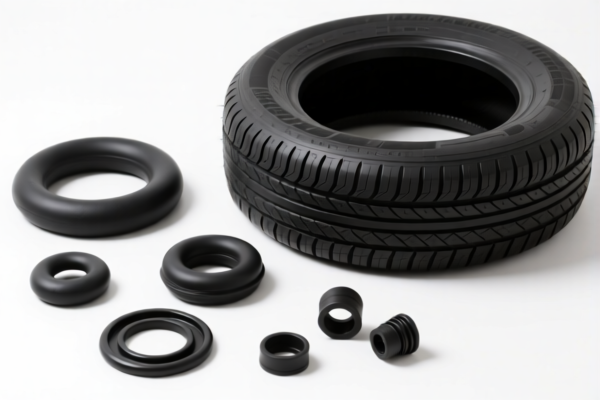
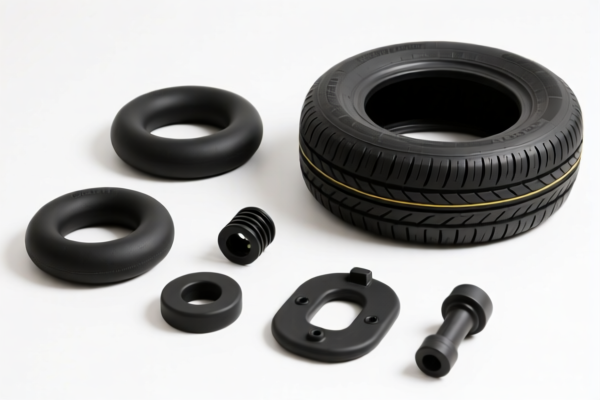
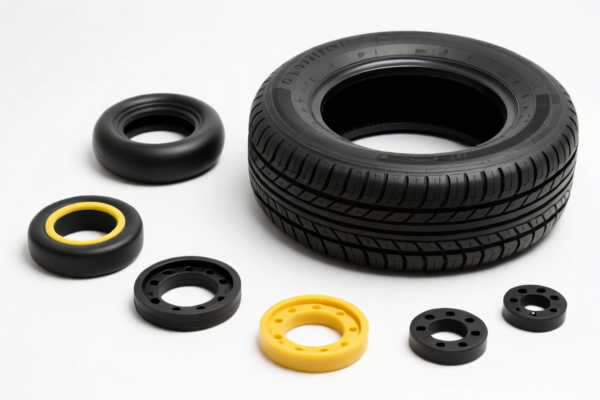
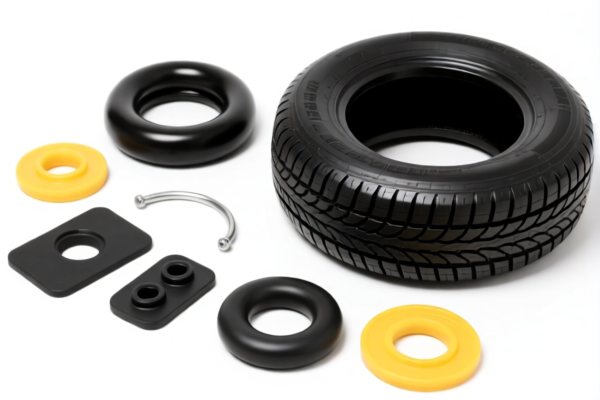
AI Analysis
🛞 Other Rubber Tire Accessories & Retreaded Tires: The Classification Maze
🌐 HS Code Reference & Customs Clearance Guide | 2026 Latest Tariff Analysis | Professional Clearance Strategy
📌 I. Product Definition: What Are "Other Rubber Tire Accessories"?
In international trade, "Other rubber tire accessories" is a broad and often ambiguous category. It typically refers to Retreaded Rubber Tires or related rubber products used in tire manufacturing/maintenance. Unlike brand-new pneumatic tires (which fall under 40.11), retreaded tires are considered used goods that have undergone a specific industrial process (buffing, adding new tread).
⚠️ Critical Distinction:
- New Pneumatic Tires: HS Code 40.11 (Generally low base duty, but subject to Section 301/IEEPA tariffs).
- Retreaded Tires: HS Code 40.12 or 40.16 (Highly regulated, often viewed as "waste" or "used goods" by certain jurisdictions, leading to extremely high tariff rates due to specific punitive clauses).
- Rubber Parts (Non-Tire): HS Code 40.16 (Gaskets, seals, etc., not retreaded tires).🔍 Key Risk Alert:
The Data provided indicates all listed HS Codes are for Retreaded Tires or Vulcanized Rubber Products related to tires. These are NOT standard new tires. They are subject to aggressive punitive tariffs (Section 122, Section 301).
📦 II. HS Code Classification Matrix (2026 Latest Tariff Rules)
| HS Code | Product Description | Tax Detail Breakdown | Total Tax Rate |
|---|---|---|---|
4011.90.80.50 |
Retreaded Pneumatic Tires | Base: 3.4% + Section 301: 25.0% + Section 122: 10% |
38.4% |
4012.19.80.00 |
Other Retreaded Tires | Base: 3.4% + Section 301: 7.5% + Section 122: 10% |
20.9% |
4016.99.60.50 |
Vulcanized Rubber Articles | Base: 2.5% + Section 301: 25.0% + Section 122: 10% |
37.5% |
4016.99.35.50 |
Other Natural Rubber Articles | Base: 0.0% + Section 301: 25.0% + Section 122: 10% |
35.0% |
4012.19.40.00 |
Other Retreaded Tires | Base: 4.0% + Section 301: 25.0% + Section 122: 10% |
39.0% |
🔍 Clarification:
- Why so many codes? Customs officials may classify retreaded tires differently based on the specific rubber compound, tire type (pneumatic vs. solid), or manufacturing process.
- "Section 122": This refers to Section 232 tariffs (National Security) or specific punitive measures against Chinese rubber goods.
- "Section 301": The standard US-China trade war tariff on rubber products.
💰 III. Detailed Tariff Rate Analysis (High-Cost Items!)
✅ Applicable Country: United States (US)
✅ Origin: China (CN)
✅ Status: High-Risk Category
🎯 1. 4011.90.80.50 – Retreaded Pneumatic Tires
| Item | Detail |
|---|---|
| Base Duty | 3.4% (Ad Valorem) |
| Section 301 Surcharge | +25.0% |
| Section 122 Surcharge | +10.0% |
| Total Effective Rate | 38.4% |
| Calculation | CIF Value × 38.4% |
| De Minimis Exemption? | ❌ NO (Deny De Minimis) |
| Legal Basis | USITC:4011.90.80.50 → Footnote: 9903.88.01 → IEEPA:9903.01.25 |
📌 Explanation:
- Even though the base duty is low (3.4%), the 35% in additional tariffs makes this product prohibitively expensive for most importers.
- This code is typically for pneumatic retreaded tires (the most common type).
🎯 2. 4012.19.80.00 – Other Retreaded Tires (Lower Rate Option)
| Item | Detail |
|---|---|
| Base Duty | 3.4% |
| Section 301 Surcharge | +7.5% (Note: Lower than others!) |
| Section 122 Surcharge | +10.0% |
| Total Effective Rate | 20.9% |
| Calculation | CIF Value × 20.9% |
| De Minimis Exemption? | ❌ NO |
| Legal Basis | USITC:4012.19.80.00 → IEEPA:9901.25 → IEEPA:9903.01.24 |
📌 Strategy Note:
- This code offers the lowest total tax (20.9%).
- It may apply to non-pneumatic retreaded tires (e.g., solid rubber tires for forklifts, industrial vehicles) or specific types classified under 40.12 rather than 40.11.
- Action: Verify if your product qualifies for this lower bracket.
🎯 3. 4016.99.60.50 & 4016.99.35.50 – Vulcanized Rubber Articles
| Item | Detail |
|---|---|
| Base Duty | 2.5% (60.50) / 0.0% (35.50) |
| Section 301 Surcharge | +25.0% |
| Section 122 Surcharge | +10.0% |
| Total Effective Rate | 37.5% (60.50) / 35.0% (35.50) |
| De Minimis Exemption? | ❌ NO |
📌 Explanation:
- These codes are for rubber parts (e.g., tire repair kits, rubber patches, gaskets) NOT full retreaded tires.
- If you are importing only accessories (like rubber valves, patches, or repair strips), you MUST classify under 40.16, not 40.11/40.12.
- Warning: If you misclassify a full tire as a "rubber article," you risk seizure and penalties.
🎯 4. 4012.19.40.00 – Other Retreaded Tires (Highest Risk)
| Item | Detail |
|---|---|
| Base Duty | 4.0% |
| Section 301 Surcharge | +25.0% |
| Section 122 Surcharge | +10.0% |
| Total Effective Rate | 39.0% |
| De Minimis Exemption? | ❌ NO |
📌 Explanation:
- This is another variant of retreaded tires, possibly with different rubber composition or intended use.
- Highest total tax among the options. Avoid unless no other classification applies.
🛠️ IV. Customs Clearance Practical Advice
✅ 1. Documentation Checklist (Mandatory)
| Document | Requirement | Notes |
|---|---|---|
| Commercial Invoice | ✔️ | Must clearly state "Retreaded Tire" or "Rubber Accessory," NOT just "Tire." |
| Bill of Lading | ✔️ | Ensure goods are not mixed with new tires. |
| Certificate of Origin | ✔️ | Essential for tariff calculation. |
| Product Specification | ✔️ | Detail: Is it pneumatic? Solid? Rubber compound? |
| Repair/Retread Certificate | ✔️ | If claiming "Retreaded," provide proof of retreading process. |
| Third-Party Inspection | ✔️ | Recommended to verify product nature. |
✅ 2. Classification Strategy (Critical!)
🔥 "Know Your Product: Tire vs. Accessory vs. Part"
| Product Type | Correct HS Code Family | Key Differentiator |
|---|---|---|
| Full Retreaded Pneumatic Tire | 4011 or 4012 |
Whole tire, with tread added to old casing. |
| Solid/Industrial Retreaded Tire | 4012.19.80.00 |
Non-pneumatic, may qualify for lower 7.5% Section 301. |
| Rubber Patches, Valves, Seals | 4016.99 |
Small components, NOT whole tires. |
| New Pneumatic Tires | 40.11 (Not in Data) |
Brand new, not retreaded. |
📌 Warning:
- Do NOT try to misclassify a full retreaded tire as a "rubber accessory" (40.16) to avoid high tariffs. Customs will detect this via weight, description, and physical inspection.
- Penalty Risk: Misclassification can lead to 100% duty reassessment + penalties.
✅ 3. Special Cases
| Scenario | Recommendation |
|---|---|
| Importing for Personal Use | Still subject to 20.9%–39.0% tariff. No de minimis exemption. |
| OEM Retreading Service | If you are shipping casings only (no new tread), classification may differ. Consult a specialist. |
| Rubber Repair Kits | Classify under 4016.99 if containing only rubber parts (patches, glue). |
| Mixed Containers | If new tires and retreaded tires are in the same container, separate shipments. Mixed classification is a red flag. |
🌍 V. Global Market Comparison (2026)
| Region | Typical Treatment of Retreaded Tires | Notes |
|---|---|---|
| 🇺🇸 USA | High Tariffs (20.9%–39.0%) | Heavy Section 301 & 122 duties. Strict rules on origin. |
| 🇨🇳 China | Prohibited | China bans import of retreaded tires for safety reasons. |
| 🇪🇺 EU | Restricted | Many EU countries ban import of retreaded tires from outside EU. |
| 🇦🇺 Australia | Strict | Requires pre-import approval. High standards. |
📌 Conclusion:
- The US market is the primary outlet for retreaded tires, but costs are high.
- Alternative Markets: Consider countries with fewer restrictions (e.g., Southeast Asia, Africa) if feasible.
- Domestic Use: If importing for US domestic use, ensure the cost-benefit analysis justifies the 20–39% tariff.
📌 VI. Common Mistakes & Pitfalls (Learn from Others!)
❌ Mistake 1: Calling retreaded tires "New Tires"
👉 Result: Fraud investigation, seizure, and criminal penalties.
❌ Mistake 2: Classifying full tires as "Rubber Accessories" (40.16)
👉 Result: Duty underpayment, back taxes, and fines. Customs will reclassify and charge 38.4%.
❌ Mistake 3: Ignoring Section 122 (10%)
👉 Result: Unexpected cost increase. Always calculate Total Tax = Base + 301 + 122.
❌ Mistake 4: Assuming De Minimis Exemption Applies
👉 Result: Packages under $800 are NOT exempt for retreaded tires.
✅ Correct Practice:
"Retreaded Pneumatic Tire, Size 295/75R22.5, For Commercial Truck, HS Code 4011.90.80.50, Origin: China"
🎯 VII. Final Recommendations
🎯 Action Plan:
1. Verify Product Type: Is it a whole tire or a part?
2. Select Best HS Code:
- For pneumatic retreads: 4011.90.80.50 (38.4%)
- For solid/industrial retreads: 4012.19.80.00 (20.9%) ← Best Option
- For parts: 4016.99 (35–37.5%)
3. Calculate Landed Cost: Include 20–39% tariff in your pricing model.
4. Consult a Customs Broker: Get a Pre-Ruling if possible to avoid disputes.
📌 Pro Tip:
If you are importing large volumes, consider supply chain diversification (e.g., retreading in a third country) to mitigate US-China tariff risks.
📣 Immediate Action:
📞 Contact a licensed customs broker with experience in rubber products.
📄 Provide samples and specs for accurate classification.
🚀 Avoid penalties by classifying correctly from Day 1!
✨ Professional Clearance Starts with Accurate Classification!
💼 Your Profit Margin Depends on Precise Tariff Calculation!
Customer Reviews
About HS Code Classification
The Harmonized System (HS) is an internationally standardized nomenclature developed by the World Customs Organization (WCO) to classify traded products. Over 200 countries use the HS system as the basis for customs tariffs, trade statistics, and import/export regulations.
Each HS code follows a hierarchical structure:
- Chapter (2 digits) — Broad category of goods (e.g., Chapter 84: Machinery and Mechanical Appliances)
- Heading (4 digits) — More specific grouping within the chapter
- Subheading (6 digits) — Internationally standardized breakdown, used by all WCO member countries
- National subdivisions (8-10 digits) — Country-specific extensions for further classification, such as US HTSUS 10-digit codes
Correct HS code classification is essential for smooth customs clearance, accurate duty payment, and compliance with trade regulations. Misclassification can lead to customs delays, overpayment of duties, or penalties.
When importing from CN to US, the applicable tariff rates may include:
- Most-Favored-Nation (MFN) rate — The standard duty rate applied to WTO members
- General rate — Applied to countries without trade agreements
- Trade remedy duties — Additional tariffs such as Section 301 (anti-dumping), Section 232 (national security), or countervailing duties
The information provided on this page is for reference purposes only. For official classification, please consult with your local customs authority or a licensed customs broker.