Other School Bags with Outer Surface of Plastics or Textile Materials
CN → US| HS Code | Tariff Rate | Origin | Destination | Doc |
|---|---|---|---|---|
| 6305330080 | 25.9% | CN | US | Official Doc |
| 6305390000 | 25.9% | CN | US | Official Doc |
| 4202923120 | 52.6% | CN | US | Official Doc |
Product Images
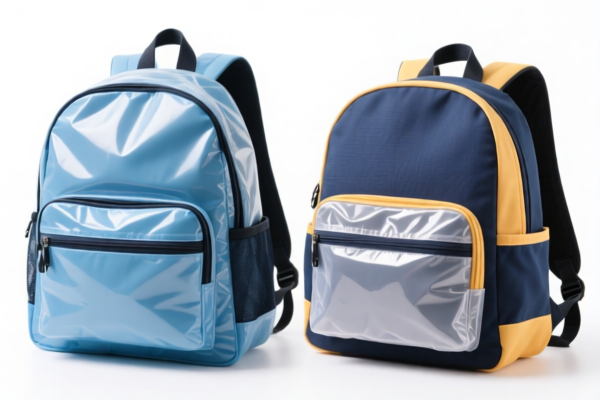
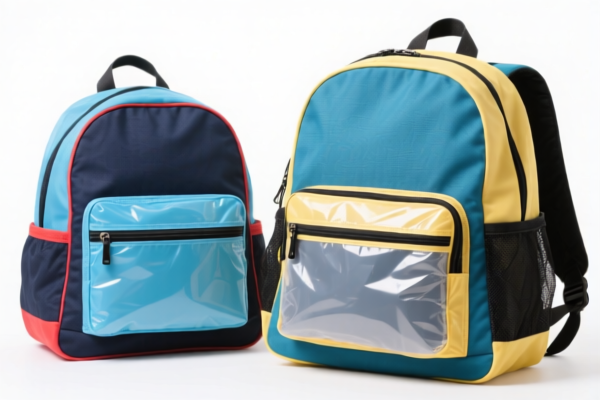
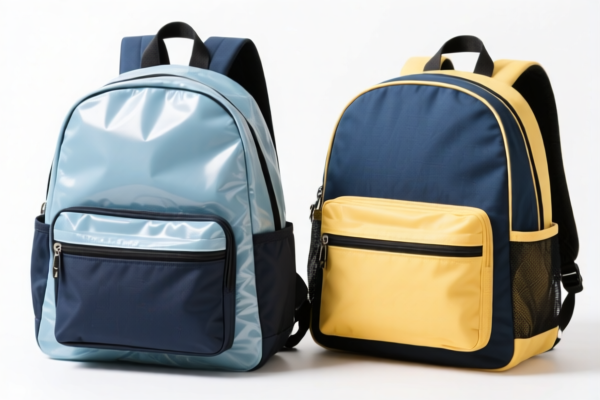
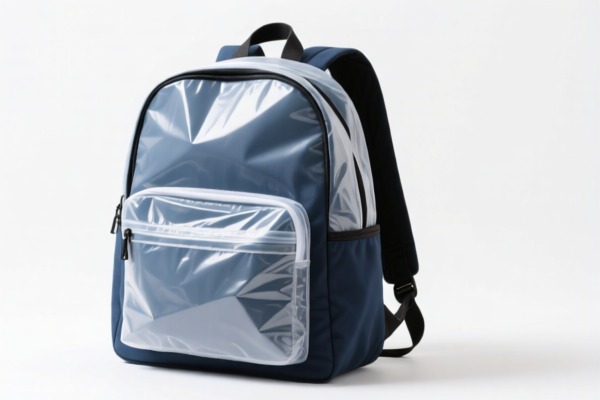
AI Analysis
🎒 Other School Bags with Outer Surface of Plastics or Textile Materials
🌐 HS Code Reference & Customs Clearance Guide | 2026 Latest Tariff Analysis | Strategic Entry for US Market
📌 I. Product Definition & Classification: What Exactly Are "Other School Bags"?
In international trade, "School Bags" are broadly categorized by their primary function and construction. While standard backpacks, briefcases, and handbags have specific HS codes, the catch-all category "Other School Bags" captures items that serve an educational purpose but do not fit the strict definitions of primary backpacks or book bags.
Key Characteristics of "Other School Bags" (Heading 4202 vs. 6305): * Primary Use: Designed for carrying school materials, stationery, or personal effects by students. * Material Constraint: The outer surface must be made of plastics or textile materials (e.g., PVC, nylon, polyester, canvas). * Exclusions: This category typically excludes: * Standard backpacks with main compartments (often归入 4202.12 or 4202.22 depending on specific design). * Pencil cases or stationery bags (often归入 4202.92). * Non-textile/non-plastic bags (e.g., leather, paper).
⚠️ Critical Distinction:
- If the item is a standard backpack with a main compartment and shoulder straps, it is usually classified under 4202.92.
- If the item is a bag for packaging goods (e.g., reusable shopping bags, sacks) made of plastics/textiles but not specifically designed as a school bag, it may fall under 6305.33 or 6305.39.
- Note: The data provided suggests a conflict or overlap between "School Bags" (4202) and "Packaging Bags" (6305). Customs officials will scrutinize the primary design intent. If it looks like a backpack or tote for students, it should likely be 4202. If it is a bulk sack for transporting goods, it is 6305.
📦 II. HS Code Classification Details (2026 Latest Tariff Authority Comparison)
Based on the provided data, there are three potential HS Codes depending on how Customs interprets the product's specific function and construction. This ambiguity is a major risk factor.
| HS Code | Product Description (from Data) | Primary Attribute | Tariff Rate (Total) | Key Risk Factor |
|---|---|---|---|---|
4202.92.31.20 |
Plastic or textile outer surface backpack/school bag | Intended for School Use | 52.6% | 🚨 Highest Risk: Misclassification as a generic "packaging" bag instead of a functional school bag. |
6305.33.00.80 |
Sacks, bags, for packaging goods | Intended for Packaging | 25.9% | ⚠️ High Risk: Must prove it is not a school bag. If used for school, this code is incorrect. |
6305.39.00.00 |
Sacks, bags, for packaging goods | Intended for Packaging | 25.9% | ⚠️ High Risk: Similar to above. "Other" packaging bags. |
🔍 Critical Analysis:
-4202.92.31.20is the correct code for actual school bags made of plastics/textiles. However, it carries a 52.6% total tariff due to additional duties.
-6305.33.00.80and6305.39.00.00are for packaging bags. If you declare a school bag under these codes to avoid the 52.6% tariff, you risk seizure, fines, or forced relabeling because Customs will argue the product is designed for personal use, not commercial packaging.
- Why the Data Shows Both? The data likely reflects a scenario where the importer attempted to classify a school bag under the cheaper 6305 codes, or the product has ambiguous features (e.g., a reusable bag with heavy-duty handles). Do not mix these categories.
💰 III. 2026 Latest Tariff Rate Breakdown (Including Additional Duties)
✅ Applicable Country: United States (US)
✅ Origin: China (CN)
✅ Effective Date: November 10, 2025 (and subsequent imports)
🎯 1. 4202.92.31.20 —— Actual School Bags (Plastic/Textile Outer)
| Item | Content |
|---|---|
| Base Tariff | 17.6% (Ad Valorem) |
| Section 301 Additional Duty | +25.0% (From USITC Footnote 9903.88.01) |
| IEEPA Additional Duty | +10.0% (Against China/HK, from Nov 10, 2025) |
| Total Tariff Rate | 52.6% |
| Tax Calculation | CIF Value × 52.6% |
| De Minimis Eligibility | ❌ NO (deny_de_minimis) |
| Legal Path | IEEPA:9903.01.25 → IEEPA:9903.01.24 → USITC:4202.92.31.20 → FOOTNOTE:9903.88.01 |
📌 Explanation:
- This is the correct code for school bags.
- The 52.6% rate is punitive and includes both Section 301 (25%) and IEEPA (10%) on top of the base rate.
- No exemption available for small packages. Every unit is taxed.
🎯 2. 6305.33.00.80 & 6305.39.00.00 —— Packaging Bags (Plastic/Textile)
| Item | Content |
|---|---|
| Base Tariff | 8.4% (Ad Valorem) |
| Section 301 Additional Duty | +7.5% (From USITC Footnote 9903.88.01) |
| IEEPA Additional Duty | +10.0% (Against China/HK, from Nov 10, 2025) |
| Total Tariff Rate | 25.9% |
| Tax Calculation | CIF Value × 25.9% |
| De Minimis Eligibility | ❌ NO (deny_de_minimis) |
| Legal Path | IEEPA:9901.25 → IEEPA:9903.01.24 → USITC:6305.33.00.80 → FOOTNOTE:9903.88.01 |
📌 Warning:
- These codes are NOT for school bags. They are for sacks and bags used for packaging goods.
- If you import a backpack and declare it under 6305, Customs will reject it unless you can prove it is not designed for personal use (e.g., industrial bulk bags).
- Risk: Misclassification penalty + Back taxes + Potential seizure.
🛠️ IV. Customs Clearance Practical Advice (Pitfall Avoidance Guide)
✅ 1. Essential Documentation Checklist (None Missing)
| Document | Mandatory | Description |
|---|---|---|
| ✅ Product Specification Sheet | ✔️ | Must explicitly state "School Bag" or "Bag for Packaging"? Be honest. If it’s a school bag, say so. |
| ✅ Product Photos | ✔️ | Clear images of the bag, including zippers, straps, compartments, and labels. Show it has shoulder straps or handles suitable for personal use. |
| ✅ Commercial Invoice | ✔️ | Must match the HS Code. If using 4202, description must be "School Backpack." If using 6305, description must be "Polypropylene Sack for Packaging." |
| ✅ Packing List | ✔️ | Quantity, weight, and dimensions. |
| ✅ Origin Certificate | ✔️ | Required for tariff calculation. |
| ✅ Third-Party Test Report | ✔️ | Safety standards (e.g., CPSIA for kids' products in the US). |
✅ 2. Declaration Tips (Key Mnemonic)
🔥 "True Intent Matters: School Bag = 52.6%, Packaging = 25.9%. Lie and Lose!"
| Scenario | Correct Declaration | Consequence of Error |
|---|---|---|
| Standard School Backpack | 4202.92.31.20 |
✅ Legal |
| Student Pencil Case / Tote | 4202.92.31.20 |
✅ Legal |
| Bulk Reusable Shopping Bag | 6305.33.00.80 |
✅ Legal (if not for personal school use) |
| School Bag declared as "Packaging Bag" | 6305.33.00.80 |
❌ Seizure + Fine + Back Taxes (25.9% vs 52.6%) |
✅ 3. Special Cases
| Situation | Handling Advice |
|---|---|
| Bags with Multiple Compartments | If it has a laptop sleeve, water bottle pocket, and school-specific organization → 4202. |
| Generic "Tote" Bags | If it looks like a grocery tote but has a school logo → 4202 (Customs looks at design, not just shape). |
| Sample Imports | Even for samples, if the value exceeds $800, you must pay duties. No de minimis exemption for China-origin goods under these HS codes. |
| OEM Orders for Schools | If the invoice says "Supplier to XYZ School," Customs will automatically classify as 4202. |
🌍 V. Global Customs Comparison (2026 Latest)
| Country/Region | Recommended HS Code | Tariff (China Origin) | Certification | Notes |
|---|---|---|---|---|
| 🇺🇸 USA | 4202.92.31.20 |
52.6% | CPSIA (if for kids) | High tariff due to Section 301 + IEEPA. |
| 🇨🇳 China | 4202.92.31.20 |
10-12% | CCC (if applicable) | Lower entry barriers. |
| 🇪🇺 EU | 4202.92.31.20 |
6.5% | CE | No additional punitive tariffs. |
| 🇬🇧 UK | 4202.92.31.20 |
6.5% | UKCA | Post-Brexit rules apply. |
📌 Conclusion:
- The US market is exceptionally expensive for school bags due to layered tariffs.
- EU and UK are more favorable, but still require strict material compliance.
📌 VI. Common Mistakes & Pitfalls (Lessons Learned)
❌ Mistake 1: Declaring a school backpack as a "plastic sack" to save 26.7% in duties.
👉 Result: Customs audit fails → Product seized → 25% penalty + back taxes.
❌ Mistake 2: Ignoring CPSIA (Consumer Product Safety Improvement Act) for kids' bags.
👉 Result: Product blocked at US border → Return to China or Destruction.
❌ Mistake 3: Assuming "De Minimis" ($800) applies.
👉 Result: Incorrect. Section 301 goods from China do not qualify for de minimis entry under 321. You must file formal entry.
✅ Correct Approach:
"School Backpack, Nylon, Red, 12L, with Laptop Compartment, Model XYZ, CPSIA Compliant."
→ Declare under 4202.92.31.20. Pay 52.6%. Accept the cost as part of doing business in the US.
🎯 VII. Conclusion: Professional Declaration, Risk Reduction
🎯 Remember the Rule:
🔹 "If it’s for school, it’s 4202. If it’s for packing goods, it’s 6305. Don’t fake it!"
🔹 "52.6% is the cost of truth. 25.9% is the cost of lies (and fines)."
📌 Pro Tip:
If your product is borderline (e.g., a reusable bag that could be a school bag), consider:
1. Adding specific school features (pencil pockets, logo space) to justify 4202.
2. Or, strictly designing it as a commercial packaging bag (no ergonomic straps, no child-safe materials) to justify 6305.
3. Apply for a Customs Binding Ruling before shipping to lock in the HS Code legally.
📣 Immediate Action:
📞 Consult a licensed customs broker.
📦 Prepare detailed product specs.
🚀 Ensure CPSIA compliance for the US market.
✨ Professional Clearance Starts with Accurate Classification!
💼 Your bottom line depends on getting the HS Code right the first time!
Customer Reviews
About HS Code Classification
The Harmonized System (HS) is an internationally standardized nomenclature developed by the World Customs Organization (WCO) to classify traded products. Over 200 countries use the HS system as the basis for customs tariffs, trade statistics, and import/export regulations.
Each HS code follows a hierarchical structure:
- Chapter (2 digits) — Broad category of goods (e.g., Chapter 84: Machinery and Mechanical Appliances)
- Heading (4 digits) — More specific grouping within the chapter
- Subheading (6 digits) — Internationally standardized breakdown, used by all WCO member countries
- National subdivisions (8-10 digits) — Country-specific extensions for further classification, such as US HTSUS 10-digit codes
Correct HS code classification is essential for smooth customs clearance, accurate duty payment, and compliance with trade regulations. Misclassification can lead to customs delays, overpayment of duties, or penalties.
When importing from CN to US, the applicable tariff rates may include:
- Most-Favored-Nation (MFN) rate — The standard duty rate applied to WTO members
- General rate — Applied to countries without trade agreements
- Trade remedy duties — Additional tariffs such as Section 301 (anti-dumping), Section 232 (national security), or countervailing duties
The information provided on this page is for reference purposes only. For official classification, please consult with your local customs authority or a licensed customs broker.