Other Seed Machine Rubber Retreaded Tires
CN → USProduct Images
AI Analysis
🚜 Other Seed Machine Rubber Retreaded Tires
🌐 HS Code Reference & Customs Clearance Guide | 2026 Latest Tariff Full Analysis | Professional-Level Clearance Strategy
📌 I. Product Definition & Classification: Do You Really Understand "Retreaded Tires" for Agricultural Machinery?
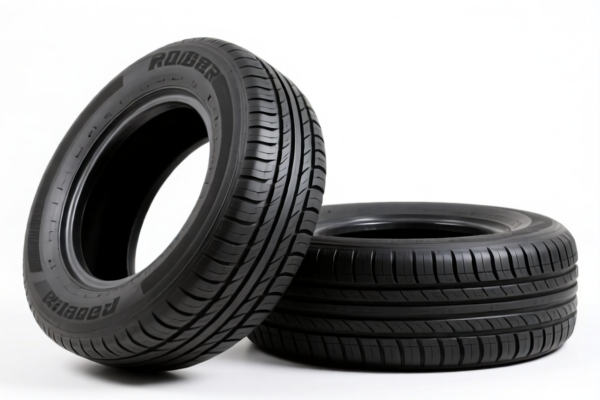
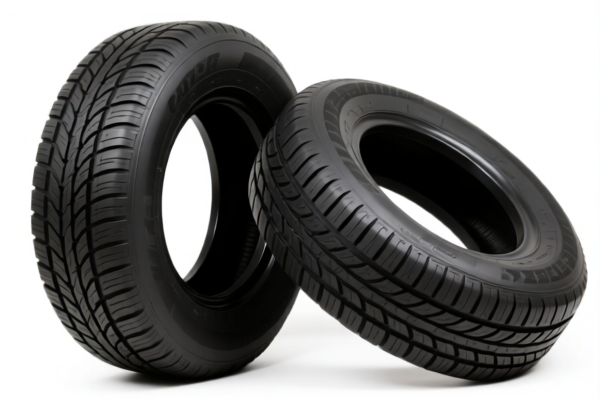
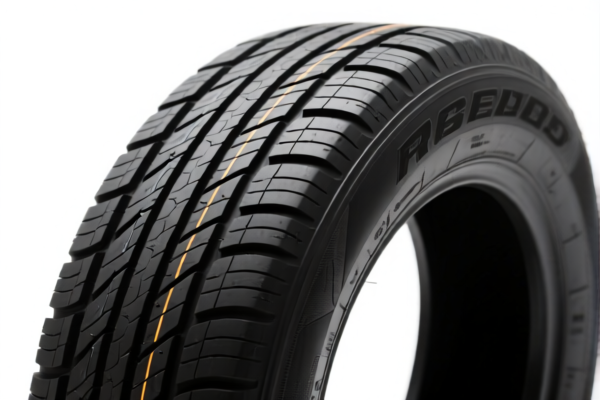
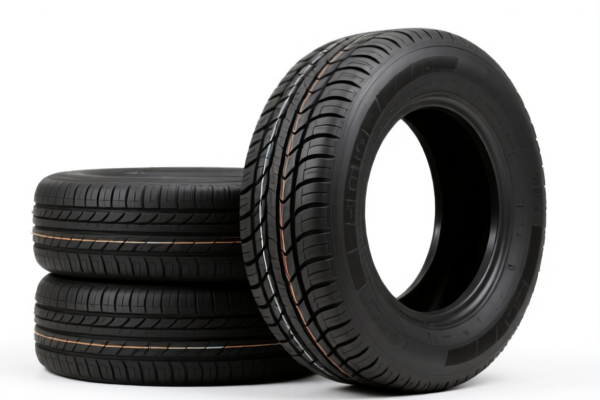
"Other Seed Machine Rubber Retreaded Tires" refers to used pneumatic tires that have been refurbished by applying a new tread rubber layer onto the existing casing. In international trade, these are distinct from new tires and fall under specific HS codes based on their vehicle type and usage.
The phrase "Other Seed Machine" is likely a machine translation or industry slang for Agricultural or Industrial Tractor/Seed Drill Tires. The key classification hinges on two factors: 1. Product State: It is Retreaded (refurbished), not new. 2. Vehicle Type: It is intended for Agricultural/Seed Planting Machinery (Tractors, Harvesters, Seed Drills), which generally falls under "Vehicles for Special Purposes" or specific agricultural machinery categories.
⚠️ Key Distinction:
- Retreaded Tires vs. New Tires: Retreaded tires have a lower HS Code prefix and often different tax treatments compared to new tires. - Agricultural vs. Passenger: Tires for tractors/seed machines are not classified under passenger car tires (8708). They fall under 8708 (Parts/Accessories) or specifically 4012 (Retreaded Pneumatic Tires) depending on the specific national interpretation, but globally, 4012.10 is the standard for retreaded tires. However, for vehicles, parts are often 8708. Let's clarify based on the WCO HS 2022/2026 structure.
Correction/Refinement for HS Classification: * New Tires for Tractors: HS 4011.20 (Pneumatic tires, new, of a kind used on motor vehicles of heading 87.01 or 87.02). * Retreaded Tires: HS 4012.10 (Retreaded pneumatic tires, new).
🚨 Critical Note: If the "Seed Machine" refers to the tire itself being used on a tractor (8701/8702), the retreaded version is HS 4012.10. If it refers to a part of the machine, it might be 8708, but tires are specifically classified in Chapter 40. Therefore, HS 4012.10 is the most accurate global classification for retreaded pneumatic tires.
📦 II. HS Code Classification Details (2026 Latest Tariff Authority Match)
| HS Code | Product Description | Applicable Scenario | Retreaded? |
|---|---|---|---|
4012.10.00.00 |
Retreaded pneumatic tires, new | Tires refurbished for agricultural tractors, seed drills, harvesters (8701/8702 vehicles) | ✅ Yes |
4011.20.00.00 |
Pneumatic tires, new, of a kind used on motor vehicles of heading 87.01 or 87.02 | New agricultural/tractor tires | ❌ No (New) |
4012.90.90.00 |
Other retreaded tires (e.g., for trucks, airplanes) | Retreaded tires for non-agricultural vehicles | ✅ Yes (Wrong Type) |
8708.70.00.00 |
Wheels and parts thereof | Wheels/rims, not rubber tires | ❌ No |
8708.99.90.00 |
Other parts and accessories | Non-tire parts | ❌ No |
🔍 Key Reminder:
- HS 4012.10 is exclusively for retreaded pneumatic tires, regardless of the vehicle (if it's a retread).
- Do not confuse with 4011.20 (New Agricultural Tires). The "Retreaded" keyword is mandatory for correct classification.
- If the product is recapped (a subset of retreaded), it still falls under 4012.10.
💰 III. 2026 Latest Tariff Rate Details (Including Surtaxes, Policy Surcharges)
✅ Applicable Country: United States (US)
✅ Origin: China (CN)
✅ Effective Date: November 10, 2025 (and onwards)
🎯 1. 4012.10.00.00 —— Retreaded Pneumatic Tires, New
| Item | Content |
|---|---|
| Base Rate | 0% (ad valorem) |
| USITC Surtax | +25% (from USITC Footnote 9903.88.01) |
| IEEPA Surtax | +10% (for China/Hong Kong products, effective Nov 10, 2025) |
| Total Tax Rate | 35% |
| Tax Calculation | CIF Value × 35% |
| De Minimis Eligibility | ❌ Not Eligible (deny_de_minimis) |
| Legal Basis Path | IEEPA:9903.01.25 → IEEPA:9903.01.24 → USITC:4012.10.00.00 → FOOTNOTE:9903.88.01 |
📌 Explanation:
- "USITC Surtax 25%" is from Section 301 of the Trade Act;
- "IEEPA 10%" is the additional tariff under the International Emergency Economic Powers Act for Chinese goods;
- Total 35%, which is a high tariff for retreaded tires compared to new tires (which may have different rates). Must be accounted for in advance!
🎯 2. Comparison: New Agricultural Tires (4011.20.00.00)
| Item | Content |
|---|---|
| Base Rate | 0% |
| USITC Surtax | +25% |
| IEEPA Surtax | +10% |
| Total Tax Rate | 35% |
| Note | Same surtax structure, but base rate for retreaded is also 0%. |
📌 Note:
- Both new and retreaded agricultural tires face the same 35% total tariff from China to the US under current 2026 rules.
- However, retreaded tires are often cheaper, so the absolute cost may still be lower than new tires despite the same percentage rate.
🛠️ IV. Customs Clearance Practical Advice (Battle-Tested Pitfall Avoidance Guide)
✅ 1. Required Document Checklist (All are mandatory)
| Document | Mandatory | Description |
|---|---|---|
| ✅ Product Spec Sheet | ✔️ | Tire size, load index, speed rating, retread brand, casing origin |
| ✅ Certificate of Retreading | ✔️ | Proof that the tire was retreaded, not new. Crucial for HS 4012.10 |
| ✅ Commercial Invoice | ✔️ | Must state "Retreaded Pneumatic Tires" explicitly, not just "Tires" |
| ✅ Packing List | ✔️ | Quantity, weight, dimensions |
| ✅ FCC/State Safety Compliance | ✔️ | If applicable for road use |
| ✅ Proof of Origin | ✔️ | If claiming any preferential rates (rare for China-US) |
✅ 2. Declaration Tips (Key Mantra)
🔥 "Specify 'Retreaded', Avoid 'New', Declare Correct HS, Lower the Risk!"
| Scenario | Correct Declaration | Wrong Approach |
|---|---|---|
| Retreaded Tire for Tractor | 4012.10.00.00 + "Retreaded" |
Misdeclare as New (4011) → Seizure/Fine |
| New Agricultural Tire | 4011.20.00.00 |
Misdeclare as Retreaded → Tax Discrepancy |
| Tire with Wheels/Rims | Declare Tire and Rim Separately | Combined Declaration → Complexity/Delay |
✅ 3. Special Situations
| Situation | Handling Advice |
|---|---|
| OEM Retreaded Tires | Provide contract with retreading factory, show casing source |
| Used Tires Imported as Retreaded | Ensure all import laws on used tire imports are met (some states ban used tires) |
| Agricultural Exemption? | Generally, tires do not qualify for agricultural equipment exemption if they are standard retreaded tires. Check specific local exemptions. |
🌍 V. Global Major Markets Customs Comparison (2026 Latest)
| Country/Region | Recommended HS Code | Tariff | Certification | Notes |
|---|---|---|---|---|
| 🇺🇸 US | 4012.10.00.00 |
35% (China) | NHTSA/State Laws | High tariff, strict used tire import laws |
| 🇨🇳 China | 4012.10.00.00 |
0% (Import) | CCC (if applicable) | No surtax for imports into China |
| 🇪🇺 EU | 4012.10.00.00 |
0% (if GSP) | ECE Mark | May apply under GSP if from eligible countries |
| 🇦🇺 Australia | 4012.10.00.00 |
5% | RCM | Standard tariff |
| 🇯🇵 Japan | 4012.10.00.00 |
5-10% | JIS | Standard tariff |
📌 Conclusion:
- US is the most complex market with 35% total tariff and strict used tire import bans in some states.
- Retreaded tires are more restricted than new tires in some jurisdictions due to environmental/safety concerns.
- Always verify state-level regulations in the US for import of used/retreaded tires.
📌 VI. Common Errors & Pitfall Guide (Blood-Tested Lessons)
❌ Error 1: Declaring Retreaded Tires as New Tires (4011)
👉 Consequence: Customs Seizure, Fines for Fraud, Back Taxes + Interest.
❌ Error 2: Not Specifying "Retreaded" on Invoice
👉 Consequence: Customs may classify as New or Other, leading to misclassification penalties.
❌ Error 3: Ignoring State-Level Bans on Used Tires (US)
👉 Consequence: Entry Rejected by State Authorities, even if CBP approves.
❌ Error 4: Confusing "Recapped" with "Retreaded"
👉 Clarification: Both are HS 4012.10, but ensure terminology matches industry standards.
✅ Correct Approach:
"Retreaded Pneumatic Tires, Size 18.4-30, for Agricultural Tractors, HS 4012.10.00.00, Origin: China, Retreading Facility: [Name]"
🎯 VII. Conclusion: Precise Classification Saves Money!
🎯 Remember the Mantra:
🔹 "Retreaded is 4012.10, Not 4011. US Tariff is 35%, Check State Laws."
🔹 "De Minimis Does Not Apply, Always Declare Honestly."
📌 Tip:
If your retreaded tires are originally from Vietnam, Thailand, or Mexico (even if retreaded in China, check origin rules), you may qualify for lower or zero IEEPA tariffs.
Recommend Advance Ruling from CBP for large shipments to avoid clearance delays.
📣 Immediate Action:
📞 Contact your customs broker + Provide Spec Sheet + Verify State Import Laws
🚀 Let your agricultural tires pass smoothly, efficiently, and cost-effectively!
✨ Professional Customs Clearance Starts with Accurate Classification!
💼 Every Dollar of Tariff is Worth Saving!
Customer Reviews
About HS Code Classification
The Harmonized System (HS) is an internationally standardized nomenclature developed by the World Customs Organization (WCO) to classify traded products. Over 200 countries use the HS system as the basis for customs tariffs, trade statistics, and import/export regulations.
Each HS code follows a hierarchical structure:
- Chapter (2 digits) — Broad category of goods (e.g., Chapter 84: Machinery and Mechanical Appliances)
- Heading (4 digits) — More specific grouping within the chapter
- Subheading (6 digits) — Internationally standardized breakdown, used by all WCO member countries
- National subdivisions (8-10 digits) — Country-specific extensions for further classification, such as US HTSUS 10-digit codes
Correct HS code classification is essential for smooth customs clearance, accurate duty payment, and compliance with trade regulations. Misclassification can lead to customs delays, overpayment of duties, or penalties.
When importing from CN to US, the applicable tariff rates may include:
- Most-Favored-Nation (MFN) rate — The standard duty rate applied to WTO members
- General rate — Applied to countries without trade agreements
- Trade remedy duties — Additional tariffs such as Section 301 (anti-dumping), Section 232 (national security), or countervailing duties
The information provided on this page is for reference purposes only. For official classification, please consult with your local customs authority or a licensed customs broker.