Other Seeders Rubber Retreaded Tires
CN → US| HS Code | Tariff Rate | Origin | Destination | Doc |
|---|---|---|---|---|
| 4012909000 | 37.7% | CN | US | Official Doc |
| 4005910000 | 35.0% | CN | US | Official Doc |
| 4006901000 | 35.0% | CN | US | Official Doc |
| 4012904500 | 39.2% | CN | US | Official Doc |
| 4005200000 | 35.0% | CN | US | Official Doc |
Product Images
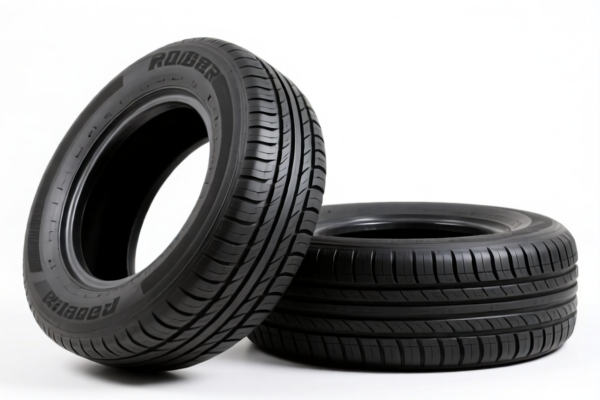
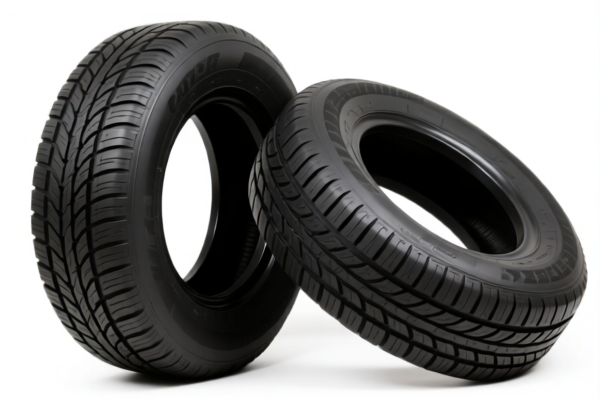
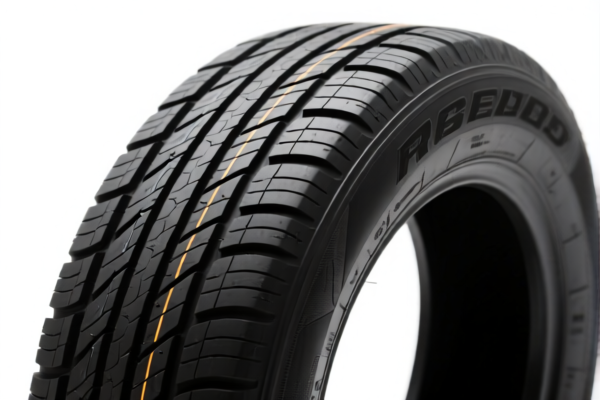
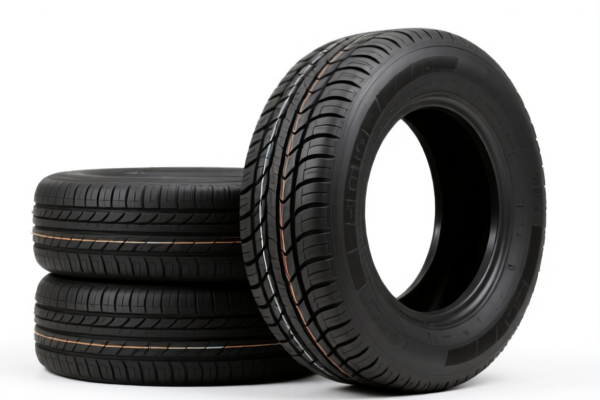
AI Analysis
🚛 Rubber Retreaded Tire Casings / Tread Sections (Other Seeders)
🌐 HS Code Reference & Customs Clearance Guide | 2026 Latest Tariff Analysis | Professional-Level Compliance Strategy
📌 Part I: Product Definition & Classification: What Exactly Are "Other Seeders Rubber Retreaded Tires"?
"Other Seeders Rubber Retreaded Tires" is a complex industrial term. In international trade, these are not finished tires ready for immediate use on a vehicle, but rather intermediate rubber products or specialized components for the retreading process. They generally fall into two categories: 1. Retreaded Tire Casings: Used casings from truck/bus tires that have been inspected and prepared for retreading. 2. Tread Sections (Tread Bundles/Stacks): Raw rubber tread strips or pre-formed tread sections intended to be applied to the casing during the retreading process.
⚠️ Key Distinction Point:
- If the product is a finished, vulcanized tire (fully assembled and ready to roll) → It may fall under 4012.90.
- If the product is unvulcanized rubber in the form of sheets, strips, or bundles (tread stock) → It falls under 4005.
- If the product is a partial article or intermediate rubber shape → It may fall under 4006.
📦 Part II: HS Code Classification Details (2026 Latest Tariff Authority Comparison)
| HS Code | Product Description | Application Scenario | Vulcanization Status |
|---|---|---|---|
4012.90.90.00 |
Other used pneumatic tires; other rubber tires (including solid or cushion tires) | Used retreaded casings; finished retreaded tires (if classified as used tires) | ❌ Used / Retreaded |
4005.91.00.00 |
Other unvulcanized rubber mixtures, in primary forms or in plates, sheets or strip | Unvulcanized tread sections (strips/bundles) for retreading; raw rubber stock | ✅ Unvulcanized |
4006.90.10.00 |
Other articles of unvulcanized rubber | Unvulcanized rubber parts/shapes; intermediate rubber components for retreading | ✅ Unvulcanized |
4012.90.45.00 |
Other tires, new, of a kind used on motor vehicles, pneumatic | New pneumatic tires (if misclassified); typically for new tires, but sometimes confused with retreaded if not specified | ✅ New / Vulcanized |
4005.20.00.00 |
Unvulcanized rubber mixtures, in other forms | Unvulcanized rubber compounds in semi-finished forms; tread profiles | ✅ Unvulcanized |
🔍 Key Reminder:
- Retreaded Tires (Used Casings): Often classified under 4012.90 because they are "used tires."
- Tread Stock (Raw Rubber): If the "seeder" refers to the raw rubber tread material before application, it is unvulcanized rubber, falling under 4005 or 4006.
- Do not mix: Finished retreaded tires (4012) vs. Raw tread components (4005/4006). The tax rates differ significantly.
💰 Part III: 2026 Latest Tariff Rate Details (Including Surtaxes & Policy Add-ons)
✅ Applicable Country: United States (US)
✅ Origin: China (CN)
✅ Effective Date: November 10, 2025 onwards (including subsequent imports)
🎯 1. 4012.90.90.00 —— Used Retreaded Tire Casings / Other Rubber Tires
| Item | Content |
|---|---|
| Base Tariff | 2.7% (ad valorem) |
| USITC Surtax | +25% (Section 301) |
| IEEPA Surtax | +10% (122 Clause: China-specific tariff) |
| Total Rate | 37.7% |
| Tax Calculation | CIF Value × 37.7% |
| De Minimis Exemption | ❌ Not Eligible (deny_de_minimis) |
| Legal Basis Path | IEEPA:9903.01.25 → IEEPA:9903.01.24 → USITC:4012.90.90.00 → FOOTNOTE:9903.88.01 |
📌 Explanation:
- The 2.7% base rate applies to "other used pneumatic tires."
- The 25% Section 301 tariff is standard for many rubber articles from China.
- The 10% IEEPA "122 Clause" tariff is an additional penalty for specific Chinese rubber products.
- Total: 37.7%. This is a high-cost category. Misclassification as unvulcanized rubber could lead to penalties.
🎯 2. 4005.91.00.00 —— Unvulcanized Rubber Mixtures (Primary Forms/Strips)
| Item | Content |
|---|---|
| Base Tariff | 0.0% |
| USITC Surtax | +25% |
| IEEPA Surtax | +10% |
| Total Rate | 35.0% |
| Tax Calculation | CIF Value × 35.0% |
| De Minimis Exemption | ❌ Not Eligible |
| Legal Basis Path | IEEPA:9903.01.24 → USITC:4005.91.00.00 → FOOTNOTE:9903.88.01 |
📌 Note:
- If your "tread sections" are unvulcanized rubber strips (raw material for retreading), they fall here.
- The base rate is 0%, but the surtaxes (25% + 10%) bring the total to 35.0%.
- Crucial: Must prove the product is unvulcanized (soft, pliable, not hardened) via lab tests or specifications.
🎯 3. 4006.90.10.00 —— Other Articles of Unvulcanized Rubber
| Item | Content |
|---|---|
| Base Tariff | 0.0% |
| USITC Surtax | +25% |
| IEEPA Surtax | +10% |
| Total Rate | 35.0% |
| Tax Calculation | CIF Value × 35.0% |
| De Minimis Exemption | ❌ Not Eligible |
| Legal Basis Path | IEEPA:9903.01.24 → USITC:4006.90.10.00 → FOOTNOTE:9903.88.01 |
📌 Note:
- This code covers intermediate rubber shapes that are unvulcanized.
- If the product is a pre-cut rubber shape (not just a strip) for retreading, this may apply.
- Same rate as 4005.91: 35.0%.
🎯 4. 4012.90.45.00 —— Other New Pneumatic Tires (Potential Misclassification Risk)
| Item | Content |
|---|---|
| Base Tariff | 4.2% |
| USITC Surtax | +25% |
| IEEPA Surtax | +10% |
| Total Rate | 39.2% |
| Tax Calculation | CIF Value × 39.2% |
| De Minimis Exemption | ❌ Not Eligible |
| Legal Basis Path | IEEPA:9903.01.25 → IEEPA:9903.01.24 → USITC:4012.90.45.00 → FOOTNOTE:9903.88.01 |
📌 Warning:
- If customs believes these are new tires (not retreaded/used), this code applies.
- 39.2% is the highest rate in this list.
- Never misdeclare retreaded/used items as new tires to avoid audit risks, but also never declare new tires as used to evade tariffs.
🎯 5. 4005.20.00.00 —— Unvulcanized Rubber in Other Forms
| Item | Content |
|---|---|
| Base Tariff | 0.0% |
| USITC Surtax | +25% |
| IEEPA Surtax | +10% |
| Total Rate | 35.0% |
| Tax Calculation | CIF Value × 35.0% |
| De Minimis Exemption | ❌ Not Eligible |
| Legal Basis Path | IEEPA:9903.01.24 → USITC:4005.20.00.00 → FOOTNOTE:9903.88.01 |
📌 Note:
- Covers unvulcanized rubber compounds in semi-finished forms (e.g., tread profiles, blocks).
- Rate: 35.0%.
- Requires proof of unvulcanized status.
🛠️ Part IV: Customs Clearance Practical Advice (Real-World Pitfall Avoidance Guide)
✅ 1. Required Documentation Checklist (Non-Negotiable)
| Document | Mandatory? | Explanation |
|---|---|---|
| ✅ Product Specification Sheet | ✔️ | Must detail: Vulcanization status, material composition, dimensions, intended use (retreading). |
| ✅ Lab Test Report (Vulcanization) | ✔️ | If claiming 4005/4006 (unvulcanized), provide proof of soft/pliable state. If 4012 (used), provide inspection cert. |
| ✅ Commercial Invoice | ✔️ | Clearly state: "Used Retreaded Tire Casings" OR "Unvulcanized Rubber Tread Sections". Avoid vague terms like "Seeding Material." |
| ✅ Packing List | ✔️ | Show weight/volume. Differentiate between casings and tread stock if mixed. |
| ✅ Certificate of Origin | ✔️ | Required for IEEPA surtax assessment. |
| ✅ Pre-Ruling (Optional but Recommended) | ✔️ | Apply for an Advance Ruling from CBP to confirm HS Code. |
✅ 2. Declaration Strategy (Key Mnemonic)
🔥 "Unvulcanized = 4005/4006 (35%); Used/Retreaded = 4012 (37.7-39.2%)!"
| Scenario | Correct HS Code | Incorrect Code | Risk |
|---|---|---|---|
| Raw rubber tread strips (soft, unhardened) | 4005.91.00.00 / 4005.20.00.00 |
4012.90.90.00 |
Overpaying 2.7% base rate + potential scrutiny |
| Used tire casings (hard, vulcanized, used) | 4012.90.90.00 |
4005.91.00.00 |
Underpayment + Penalty + Fraud Risk |
| Pre-formed tread sections (unvulcanized) | 4006.90.10.00 |
4012.90.45.00 |
Misclassification as new tires |
| Finished retreaded tires (ready to use) | 4012.90.90.00 |
4005.91.00.00 |
Severe Penalty (deemed new tires or fraud) |
✅ 3. Special Cases Handling
| Situation | Handling Advice |
|---|---|
| "Seeding" Material | Clarify: Is it the rubber compound (4005) or the tire casing (4012)? "Seeder" is ambiguous. Provide detailed specs. |
| Mixed Containers | Separate declarations required. Do not mix unvulcanized rubber with used tires in one line item. |
| OEM Custom Treads | Provide design drawings + material safety data sheets (MSDS). |
| Vulcanization Test | If disputed, CBP may request a melting point test or solvent test to prove unvulcanized status. |
🌍 Part V: Global Market Comparison (2026 Latest)
| Country/Region | Recommended HS Code | Tariff Rate | Certification | Notes |
|---|---|---|---|---|
| 🇺🇸 USA | 4012.90.90.00 / 4005.91.00.00 |
35.0% - 39.2% | No specific tech certs | High surtaxes apply. |
| 🇨🇳 China | 4012.90.90.00 / 4005.91.00.00 |
0% - 5% | CCC (if applicable) | No US-style surtaxes. |
| 🇪🇺 EU | 4012.90 / 4005.91 |
0% - 4.5% | CE (if applicable) | Lower base rates, no 301 tariffs. |
| 🇦🇺 Australia | 4012.90 / 4005.91 |
5% | RCM | Moderate rates. |
| 🇯🇵 Japan | 4012.90 / 4005.91 |
0% - 3.5% | PSE (if applicable) | Favorable for rubber. |
📌 Conclusion:
- USA is the most expensive market due to Section 301 and IEEPA tariffs.
- EU/Japan/Australia have significantly lower tariffs. Consider supply chain diversification if targeting US with high-volume rubber goods.
- China's domestic rates are low, but exports face US barriers.
📌 Part VI: Common Errors & Pitfall Avoidance (Blood-Teaching Lessons)
❌ Error 1: Declaring used tire casings as "unvulcanized rubber" to save 2.7% base rate.
👉 Consequence: CBP lab tests will prove vulcanization → Penalties + Back Taxes + Suspension of Import Privileges.
❌ Error 2: Declaring new tire casings as "used" to avoid higher tariffs.
👉 Consequence: Fraud Allegation. Fines up to 3x the value of the goods.
❌ Error 3: Vague description "Rubber Parts" or "Tire Components."
👉 Consequence: Customs delays for classification review → Port Demurrage Fees.
❌ Error 4: Not separating unvulcanized tread stock from retreaded tires in the same shipment.
👉 Consequence: Misclassification risk → Partial audit of entire shipment.
✅ Correct Practice:
"Used Pneumatic Tire Casings, Truck Size, 29.5R25, Inspected for Retreading"
OR
"Unvulcanized Rubber Tread Sections, Strip Form, for Tire Retreading, Model XYZ, Unvulcanized Status Certified"
🎯 Part VII: Conclusion: Professional Declaration, Save Time, Reduce Costs!
🎯 Remember the Mnemonic:
🔹 "Unvulcanized = 35% (4005/4006); Used/Retreaded = 37.7-39.2% (4012)!"
🔹 "Vulcanization is the Key: Prove it, or Pay for it!"
🔹 "HS Code determines destiny: 2.7% difference can mean thousands in penalties!"
📌 Pro Tip:
- If your rubber goods are originating from Vietnam, Mexico, Thailand, or Malaysia, you may be eligible for IEEPA Exemptions or lower tariffs under USMCA.
- Always apply for an Advance Ruling (CBP Form 5532) before shipping high-value rubber retreading materials to the US.
- Consult a licensed customs broker to validate the vulcanization status documentation.
📣 Immediate Action:
📞 Contact a Professional Customs Broker + Provide Product Photos + Lab Test Reports
🚀 Ensure Smooth Clearance, Efficient Export, and Maximized Profit!
✨ Professional Clearance Starts with Precise Classification!
💼 Every Dollar of Cost Deserves Precise Calculation!
Customer Reviews
About HS Code Classification
The Harmonized System (HS) is an internationally standardized nomenclature developed by the World Customs Organization (WCO) to classify traded products. Over 200 countries use the HS system as the basis for customs tariffs, trade statistics, and import/export regulations.
Each HS code follows a hierarchical structure:
- Chapter (2 digits) — Broad category of goods (e.g., Chapter 84: Machinery and Mechanical Appliances)
- Heading (4 digits) — More specific grouping within the chapter
- Subheading (6 digits) — Internationally standardized breakdown, used by all WCO member countries
- National subdivisions (8-10 digits) — Country-specific extensions for further classification, such as US HTSUS 10-digit codes
Correct HS code classification is essential for smooth customs clearance, accurate duty payment, and compliance with trade regulations. Misclassification can lead to customs delays, overpayment of duties, or penalties.
When importing from CN to US, the applicable tariff rates may include:
- Most-Favored-Nation (MFN) rate — The standard duty rate applied to WTO members
- General rate — Applied to countries without trade agreements
- Trade remedy duties — Additional tariffs such as Section 301 (anti-dumping), Section 232 (national security), or countervailing duties
The information provided on this page is for reference purposes only. For official classification, please consult with your local customs authority or a licensed customs broker.