Other Sheepskin with Wool (Tanned)
CN → USProduct Images
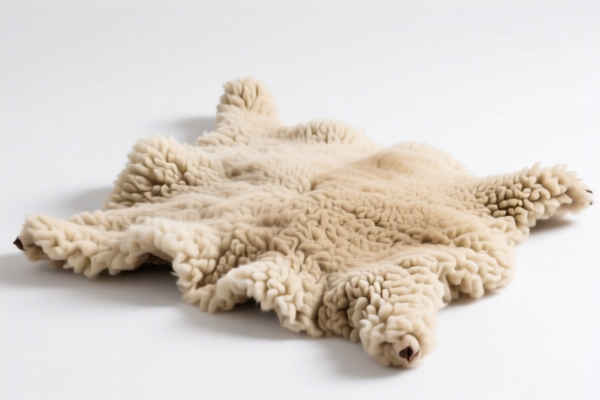
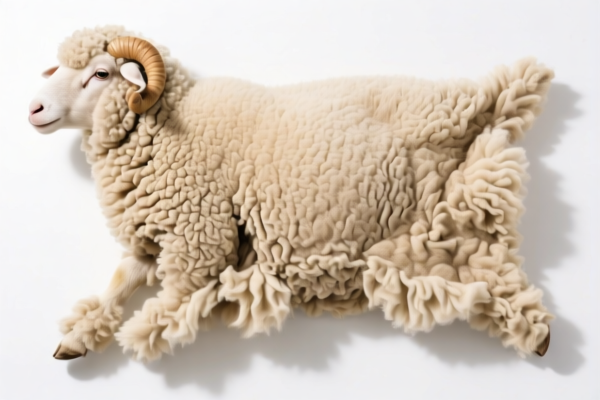
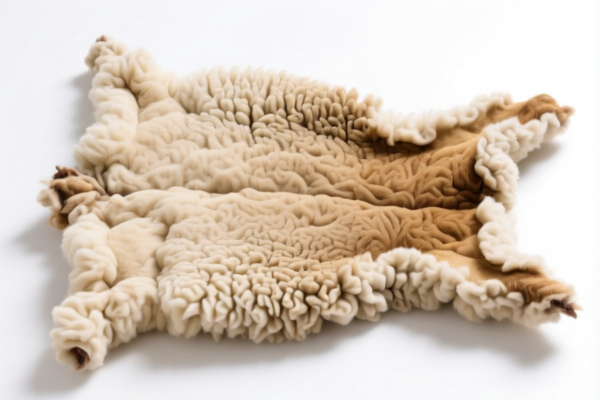
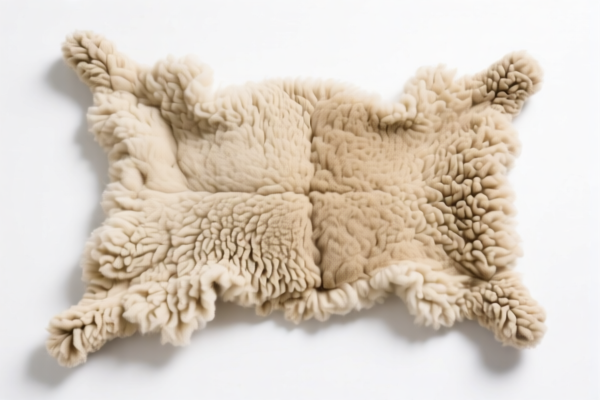
AI Analysis
Based on the constraints provided, here is the detailed classification, tariff analysis, and customs clearance guide for Other Sheepskin with Wool (Tanned).
🐑 Other Sheepskin with Wool (Tanned) – Full Customs Clearance Guide
🌐 HS Code Reference & Clearance Strategy | 2026 Latest Tariff Schedule | Professional Compliance
📌 I. Product Definition: What Exactly is "Other Sheepskin with Wool"?
Sheepskin with wool (tanned) refers to hides or skins of sheep or lambs that have been tanned (usually chrome-tanned or vegetable-tanned) while retaining the wool/fleece. In international trade, this category excludes: 1. Furskins of other animals (e.g., mink, fox) – ❌ Not included. 2. Sheepskins where the wool has been removed (Sheepskin leather) – ❌ Not included (these fall under leather goods). 3. Raw skins (not tanned) – ❌ Not included (these fall under Chapter 41).
⚠️ Key Distinction:
- If the wool is shorn or removed → Classify as Leather (Chapter 41).
- If the wool is intact and tanned → Classify as Sheepskin with Wool (Chapter 41, Heading 4103).
- "Other" implies it does not fall under specific sub-categories like "Karakul" or specific exotic breeds, which may have separate headings.
📦 II. HS Code Classification Details (2026 Latest Schedule)
| HS Code | Product Description | Applicability | Wool Retained? | Tanning Method |
|---|---|---|---|---|
4103.20.00.00 |
Sheepskin with wool, tanned | General sheep/lamb skins with wool, tanned | ✅ Yes | Chrome/Vegetable |
4103.30.00.00 |
Goat kid skins with wool | Specific to goat kids (often confused) | ✅ Yes | Chrome/Vegetable |
4106.21.00.00 |
Sheep/lamb skins, Chrome-tanned (no wool) | Leather without wool | ❌ No | Chrome |
4106.22.00.00 |
Sheep/lamb skins, Vegetable-tanned (no wool) | Leather without wool | ❌ No | Vegetable |
🔍 Critical Note:
- The correct HS Code for tanned sheepskin WITH wool is primarily4103.20.00.00.
- Do NOT classify as4106(leather without wool) or4303(fur coats/articles) unless it is processed into finished articles (e.g., coats). For raw/supplied skins,4103is mandatory.
💰 III. 2026 Latest Tariff Rate Breakdown (US Import from China)
✅ Applicable Country: United States (US)
✅ Origin: China (CN)
✅ Effective Date: November 10, 2025 (and subsequent imports)
🎯 1. 4103.20.00.00 – Sheepskin with Wool, Tanned
| Item | Content |
|---|---|
| Base Duty Rate | 0% (ad valorem) |
| USITC Additional Duty | +25% (From USITC Footnote 9903.88.01) |
| IEEPA Additional Duty | +10% (Against China/HK products, from Nov 10, 2025) |
| Total Duty Rate | 35% |
| Tax Calculation | CIF Value × 35% |
| De Minimis Eligibility | ❌ Denied (deny_de_minimis) |
| Legal Pathway | IEEPA:9903.01.25 → IEEPA:9903.01.24 → USITC:4103.20.00.00 → FOOTNOTE:9903.88.01 |
📌 Explanation:
- "USITC 25%": From Section 301 tariffs on Chinese goods.
- "IEEPA 10%": Additional tariff under the International Emergency Economic Powers Act targeting Chinese animal products.
- Total 35%: This is a significant duty burden. Many traders mistakenly believe animal skins are duty-free, but tanned sheepskin with wool is NOT exempt.
🛠️ IV. Customs Clearance Practical Advice (Real-World Pitfalls)
✅ 1. Required Documentation Checklist (Mandatory)
| Document | Must Provide? | Description |
|---|---|---|
| ✅ Product Specification | ✔️ | Details: Tanning type (Chrome/Veg), wool length, skin size, weight |
| ✅ Photos of Sample | ✔️ | Clear images showing wool retention, tanning quality, and any defects |
| ✅ Commercial Invoice | ✔️ | Must clearly state: "Sheepskin with Wool, Tanned, HS 4103.20.00" |
| ✅ Packing List | ✔️ | Weight (gross/net), number of skins, packaging type |
| ✅ Certificate of Origin | ✔️ | Crucial for proving origin (China vs. non-China) to avoid anti-dumping issues |
| ✅ Tanning Process Certificate | ✔️ | Optional but helpful if challenged on "Tanned" vs "Raw" |
| ✅ Fur/Leather Regulatory Compliance | ✔️ | Ensure no endangered species (e.g., certain wild sheep) are involved |
✅ 2. Declaration Tips (Key Mnemonic)
🔥 “Wool On = 4103, Wool Off = 4106, Don’t Mix!”
| Scenario | Correct Declaration | Wrong Action |
|---|---|---|
| Tanned sheepskin WITH wool | 4103.20.00.00 |
Misdeclare as 4106 (Leather) → Audit Risk |
| Tanned sheepskin WITHOUT wool | 4106.21.00.00 or 4106.22.00.00 |
Misdeclare as 4103 → Overpayment of Duty |
| Raw sheepskin (untanned) | 4101.20.00.00 |
Misdeclare as Tanned → Penalty for False Declaration |
| Finished Sheepskin Coat | 4303.10.00.00 |
Misdeclare as Raw Skin → Misclassification |
✅ 3. Special Handling Cases
| Case | Handling Advice |
|---|---|
| Mixed Containers | Ensure invoices clearly separate "Sheepskin with Wool" (4103.20) from "Leather Without Wool" (4106). Mixed declarations can lead to delays. |
| Endangered Species | Verify if the sheep/lamb breed is protected under CITES. Most domestic sheep are exempt, but wild species require permits. |
| Chrome-Tanned vs. Vegetable-Tanned | Both fall under 4103.20.00.00, but specify in documentation. Chrome-tanned is more common for apparel; vegetable for rugs. |
| Origin Fraud | If goods are transshipped through Vietnam/Malaysia to avoid 35% duty, be aware of Strict Rules of Origin. CBP may deny preference if substantial transformation is not proven. |
🌍 V. Global Market Comparison (2026)
| Country/Region | Recommended HS Code | Duty Rate | Certification | Notes |
|---|---|---|---|---|
| 🇺🇸 USA | 4103.20.00.00 |
35% (China) | None specific | High tariff due to IEEPA + 301 |
| 🇨🇳 China | 4103.20.00.00 |
0-5% | N/A | Low duty for import |
| 🇪🇺 EU | 4103.20.00.00 |
3.7% | REACH (Chemicals) | Moderate duty |
| 🇬🇧 UK | 4103.20.00.00 |
4.0% | UKCA | Post-Brexit rules |
| 🇯🇵 Japan | 4103.20.00.00 |
0% | FFI | Free trade agreement may apply |
📌 Conclusion:
- USA is the highest duty market for Chinese-origin tanned sheepskin with wool (35%).
- EU and Japan offer more competitive rates (3.7% and 0% respectively).
- Strategy: For US-bound goods, consider supply chain diversification (e.g., sourcing from Mongolia, Turkey, or Italy) to mitigate the 35% duty.
📌 VI. Common Mistakes & Pitfalls (Lessons Learned)
❌ Mistake 1: Classifying "Sheepskin with Wool" as "Sheepskin Leather" (4106)
👉 Consequence: Under-declaration of duty (0% vs 35%) → Penalty + Back Taxes + Seizure
❌ Mistake 2: Failing to declare "With Wool" in the product description
👉 Consequence: Customs may reclassify as raw skin (4101) or leather (4106) based on inspection, causing delays
❌ Mistake 3: Ignoring IEEPA 10% Tariff for shipments after Nov 10, 2025
👉 Consequence: Unexpected 10% additional duty at customs → Profit Erosion
❌ Mistake 4: Using "Fur" terminology for raw skins
👉 Consequence: Confusion with Chapter 43 (Fur Articles) → Misclassification Penalty
✅ Correct Practice:
"Tanned Sheepskin with Wool, Chrome-Tanned, Wool Length 5-7cm, Grade A, HS 4103.20.00.00"
🎯 VII. Conclusion: Smart Classification, Save Costs, Ensure Compliance
🎯 Remember the Mantra:
🔹 "Wool On = 4103, 35% Duty in US"
🔹 "Wool Off = 4106, Check for Leather Rules"
🔹 "Don’t Split Socks and Hats – Declare Skins Correctly"
📌 Pro Tip:
If your sheepskins are sourced from non-Chinese origins (e.g., New Zealand, Australia, Turkey), you may qualify for 0% or lower duty in the US under general MFN rates (no IEEPA/301 penalties).
Recommendation:
- Apply for Advance Ruling from CBP if the classification is uncertain.
- Keep photos of tanning process and wool retention proof to defend against customs audits.
📣 Immediate Action:
📞 Consult a licensed customs broker + Provide sample photos + Verify Origin Certificate
🚀 Optimize your supply chain to avoid the 35% US duty trap!
✨ Accurate Classification, Smooth Clearance, Maximized Profit!
💼 Every percentage point matters in international trade!
Customer Reviews
About HS Code Classification
The Harmonized System (HS) is an internationally standardized nomenclature developed by the World Customs Organization (WCO) to classify traded products. Over 200 countries use the HS system as the basis for customs tariffs, trade statistics, and import/export regulations.
Each HS code follows a hierarchical structure:
- Chapter (2 digits) — Broad category of goods (e.g., Chapter 84: Machinery and Mechanical Appliances)
- Heading (4 digits) — More specific grouping within the chapter
- Subheading (6 digits) — Internationally standardized breakdown, used by all WCO member countries
- National subdivisions (8-10 digits) — Country-specific extensions for further classification, such as US HTSUS 10-digit codes
Correct HS code classification is essential for smooth customs clearance, accurate duty payment, and compliance with trade regulations. Misclassification can lead to customs delays, overpayment of duties, or penalties.
When importing from CN to US, the applicable tariff rates may include:
- Most-Favored-Nation (MFN) rate — The standard duty rate applied to WTO members
- General rate — Applied to countries without trade agreements
- Trade remedy duties — Additional tariffs such as Section 301 (anti-dumping), Section 232 (national security), or countervailing duties
The information provided on this page is for reference purposes only. For official classification, please consult with your local customs authority or a licensed customs broker.